Artwork
Poète classique composant une églogue...
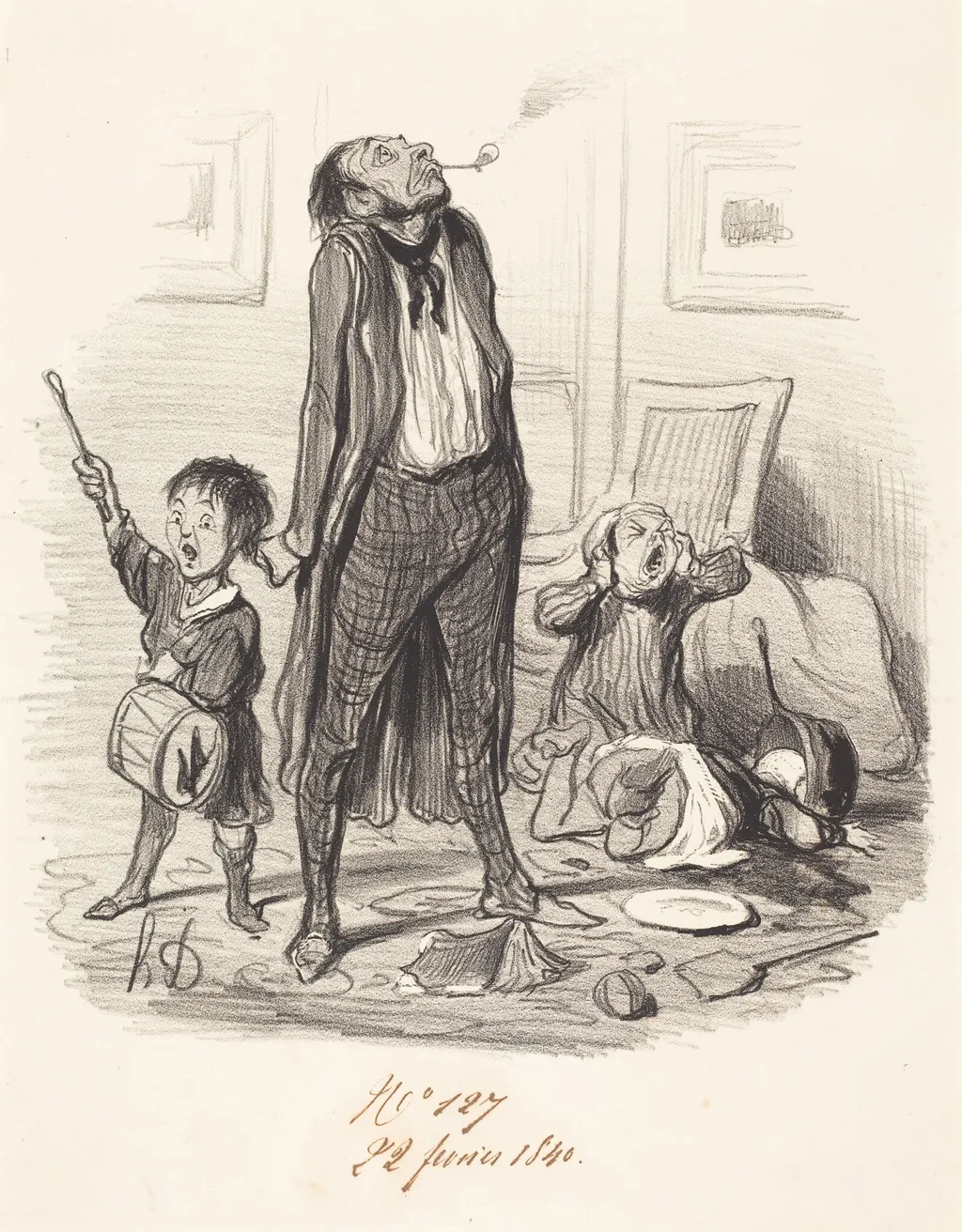
Poète classique composant une églogue... is an ink print by the Romanticist artist Honoré Daumier. It dates from 1840 and is held in the collection of the National Gallery of Art.
About this work
Overview
Created in 1840, this lithograph by Honoré Daumier captures a quiet, humorous moment in a domestic setting. As a printmaker deeply engaged with contemporary French society, Daumier used the accessibility of lithography to observe everyday life with wit and precision. This work, though not overtly political, reflects his broader interest in human behavior and the contrasts between generations.
Subject & Meaning
The children’s responses imply a disconnect between the poet’s elevated world and the unfiltered reality of childhood.
A lone figure, dressed in outdated attire, appears lost in contemplation, pipe in hand, as two children react to his presence, one with gleeful pointing, the other with wide-eyed astonishment. The scene suggests an unexpected narrative unfolding, perhaps a classical poem read aloud in an ordinary home. The children’s responses imply a disconnect between the poet’s elevated world and the unfiltered reality of childhood.
Technique & Style
Daumier employed rapid, expressive linework characteristic of his lithographic method, allowing for spontaneity and movement. The sketchy, energetic strokes define forms without heavy shading, emphasizing gesture over detail. The cluttered interior, scattered toys, overturned chair, is rendered with minimal yet evocative marks, enhancing the sense of lived-in chaos and informal intimacy.
History & Provenance
Produced during Daumier’s most active period as a satirical illustrator for publications like Le Charivari, this print was likely part of a series capturing bourgeois and intellectual life. While not as widely known as his political caricatures, it aligns with his practice of documenting social types through intimate, observational scenes. Its survival reflects the broader circulation of his printed works in 19th-century France.
Context
In the 1840s, France saw growing tensions between traditional cultural ideals and emerging middle-class realities. Daumier’s depiction of a classical poet in a disordered home subtly critiques the fading relevance of academic traditions. The children’s reactions mirror public sentiment: curiosity, amusement, and perhaps bewilderment at the persistence of outdated forms in everyday life.
Legacy
This lithograph exemplifies Daumier’s ability to elevate mundane moments into subtle social commentary. Though less overt than his political cartoons, it influenced later artists who sought to capture psychological nuance through everyday scenes. His use of lithography as a medium for intimate observation helped redefine printmaking’s role in modern visual culture.
Own this work as a print
Artist & collection
Artist
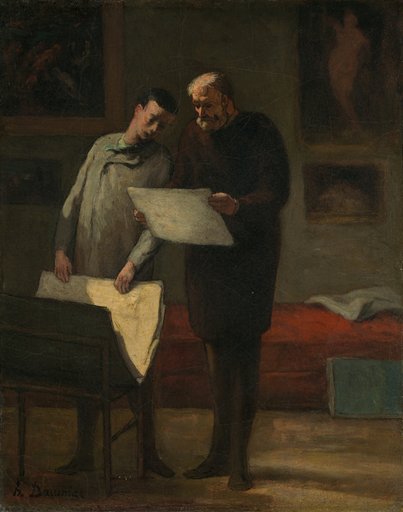
Honoré-Victorin Daumier (French: ; 26 February 1808 – 10 or 11 February 1879) was a French painter, sculptor, and printmaker, whose many works offer commentary on the social and political life in France, from the…









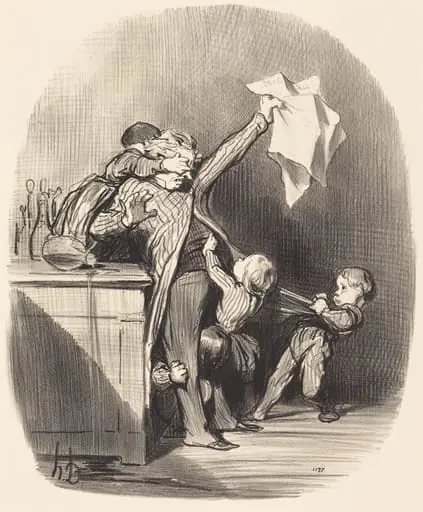
- Plaisirs de la paternité
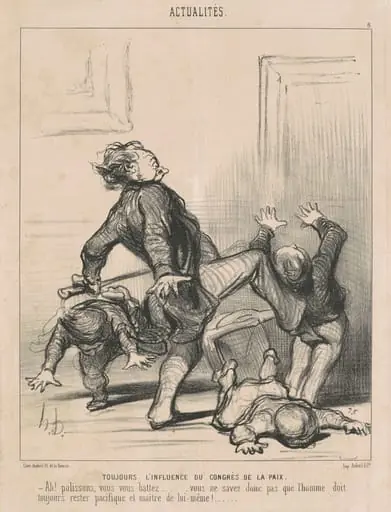 Toujours l'influence du congres de la paix ...
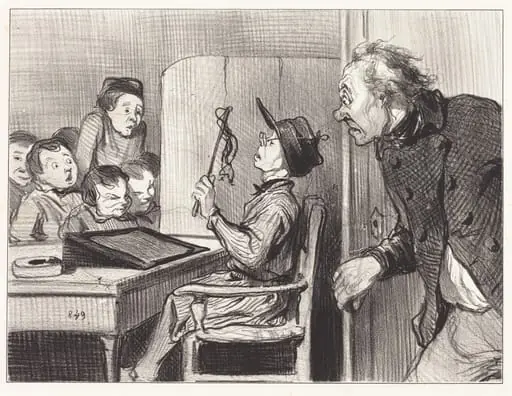 Attends... j'te vas en donner... du maitre d'école
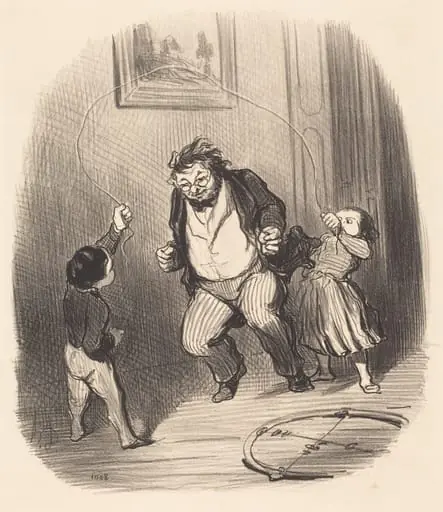 Allons, papa... encore... trente-deux tours!...
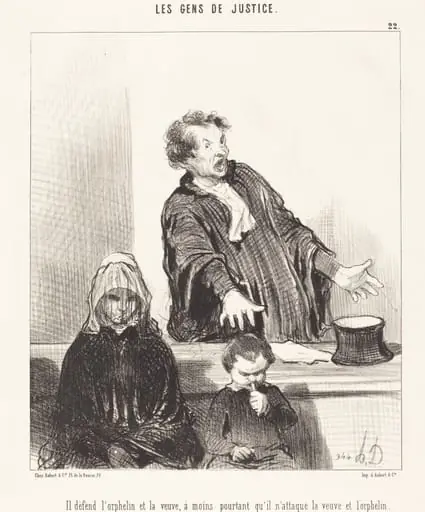 Il défend l'orphelin et la veuve, a moins...
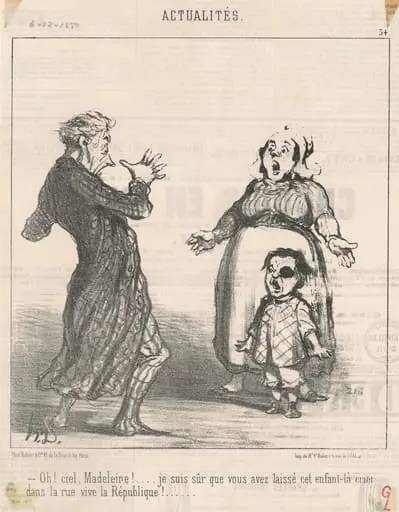 Oh! Ciel Madeleine! ...
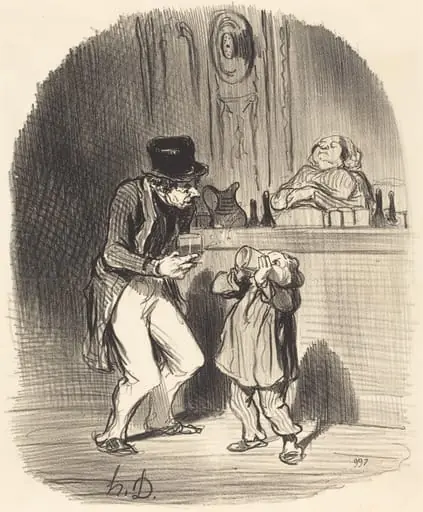 Un Père qui fait sucer à son fils...
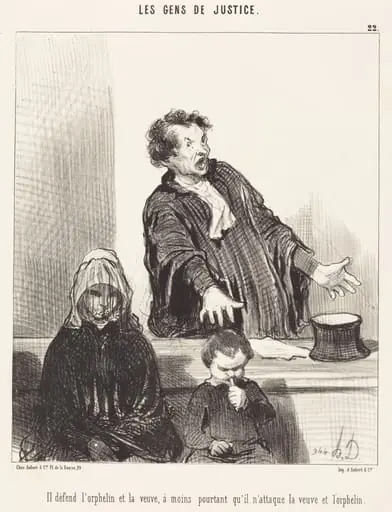 Il défend l'orphelin et la veuve, a moins...
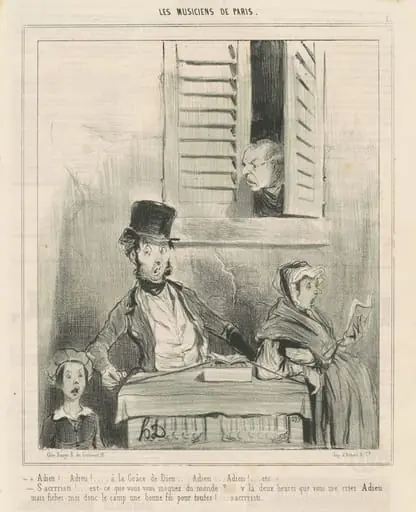 Adieu! ... A la grâce de dieu ...
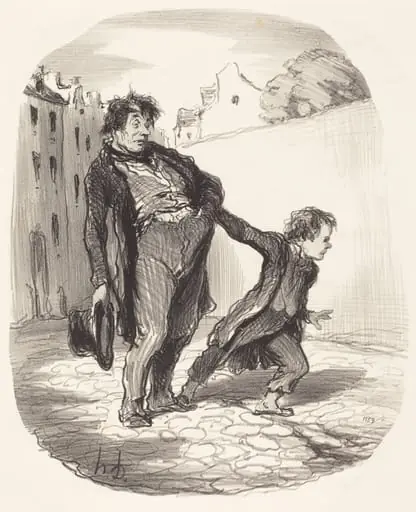 Un Fils modèle
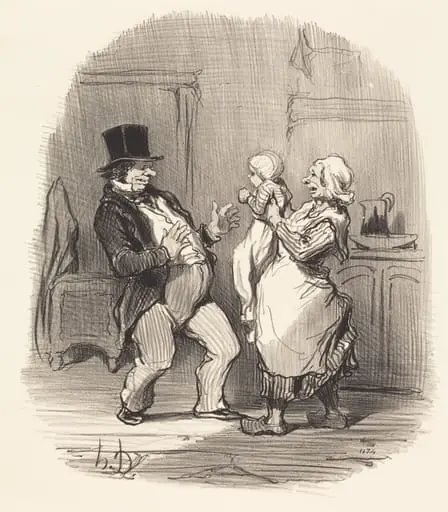 Ah! monsieur... faut pas lui rire comme ça...
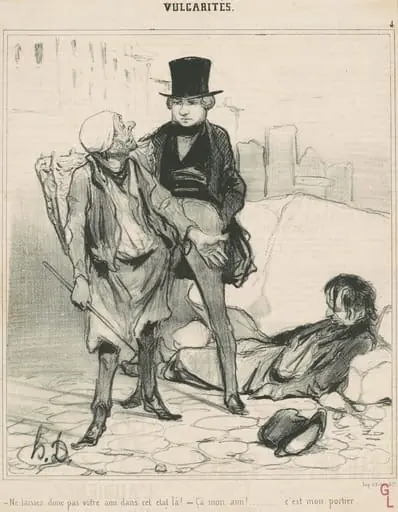 Ne laissez donc pas votre ami dans cet état la!