Artwork
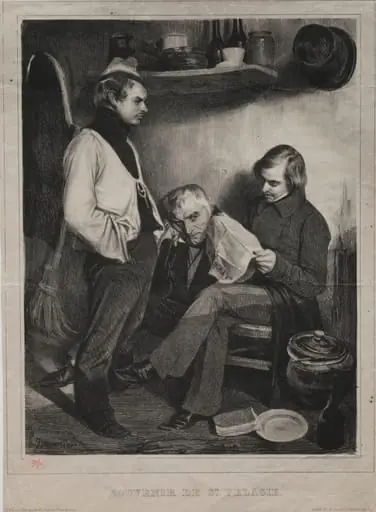
Souvenir de Ste. Pélagie
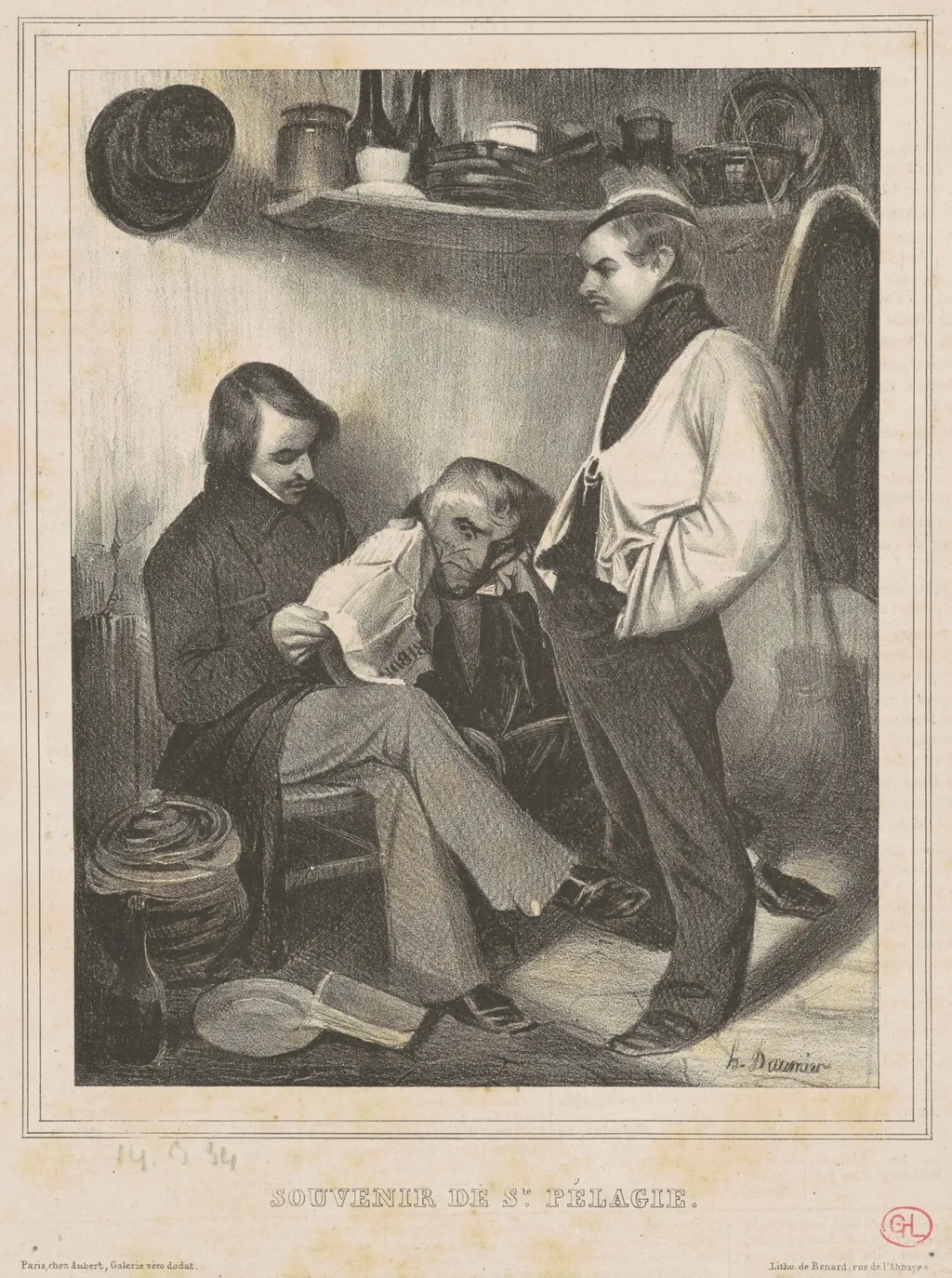
Souvenir de Ste. Pélagie is an ink print by the Romanticist artist Honoré Daumier. It dates from 14 and is held in the collection of the National Gallery of Art.
About this work
Overview
It presents a quiet scene of three men in period clothing, engaged in conversation.
Created by Honoré Daumier, 'Souvenir de Ste. Pélagie' is a lithograph produced in the mid-19th century. It presents a quiet scene of three men in period clothing, engaged in conversation. The work belongs to a series of prints that reflect Daumier’s interest in urban life and institutional settings, particularly those tied to justice and confinement. Though modest in scale, the image carries the weight of social observation.
Subject & Meaning
The three figures appear to be former inmates of the Sainte-Pélagie prison, a facility known for holding political detainees and debtors. Their postures and attire suggest a tentative reintegration into society. The absence of overt drama invites viewers to consider the quiet aftermath of incarceration, the lingering effects on identity, dignity, and social standing in a rigid class structure.
Technique & Style
Daumier employed lithography to achieve a range of tonal gradations with minimal lines. His use of cross-hatching and subtle shading defines facial expressions and fabric textures without excessive detail. The figures are rendered with expressive, slightly exaggerated features, characteristic of his caricatural roots, yet the background is rendered with restrained precision, grounding the scene in a believable urban environment.
History & Provenance
The print was made around 1845–1848, during a period when Daumier was producing political and social commentaries for publications like 'La Caricature' and 'Le Charivari'. 'Souvenir de Ste. Pélagie' was likely part of a private portfolio rather than a widely distributed illustration. Its survival in museum collections suggests early recognition of its documentary and artistic value.
Context
Sainte-Pélagie prison housed a mix of political dissidents, journalists, and debtors during the July Monarchy. Daumier, who had himself been briefly imprisoned for satirical work, was familiar with its atmosphere. This print reflects broader societal tensions, the fragility of freedom, the stigma of incarceration, and the quiet resilience of ordinary individuals navigating a punitive system.
Legacy
The lithograph stands as an early example of social realism in printmaking, influencing later artists who sought to depict marginalized lives with empathy rather than caricature. Unlike overt political cartoons, this work avoids satire, instead offering a contemplative portrait of human endurance. It remains a quiet but potent record of 19th-century penal culture and its human toll.
Own this work as a print
Artist & collection
Artist
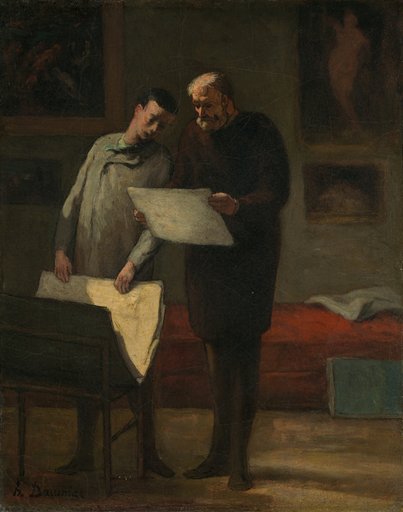
Honoré-Victorin Daumier (French: ; 26 February 1808 – 10 or 11 February 1879) was a French painter, sculptor, and printmaker, whose many works offer commentary on the social and political life in France, from the…









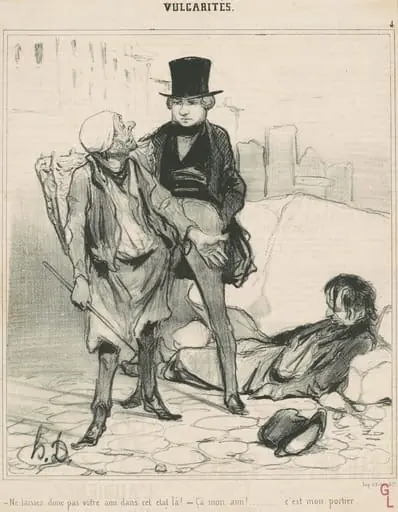
- Ne laissez donc pas votre ami dans cet état la!
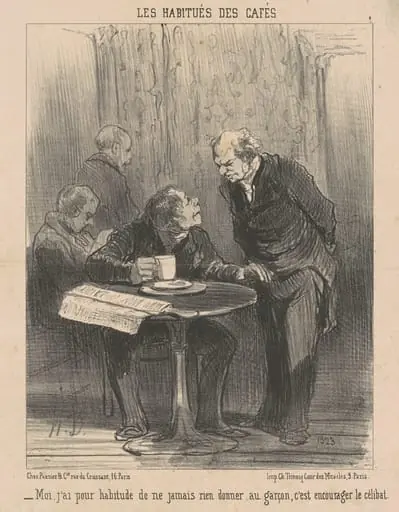 Moi, j'ai habitude de ne ... rien donner
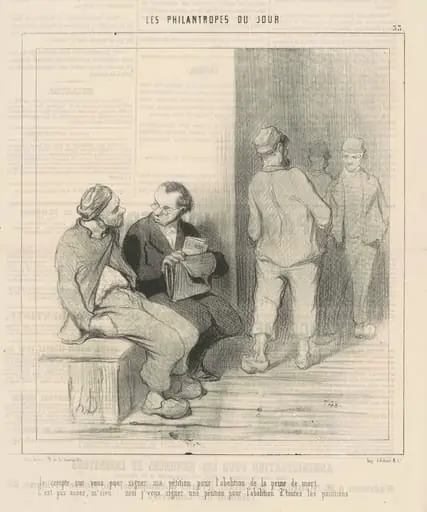 Je compte sur vous pour signer
 Souvenir of the Prison ot Ste. Pélagie
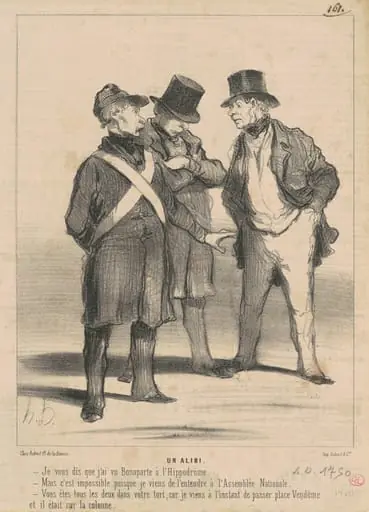 Un alibi
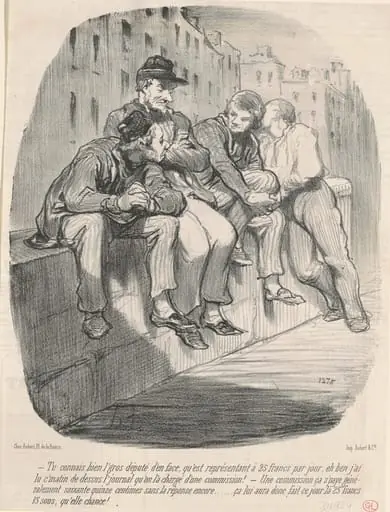 Tu connais bien l'gros député d'en face ...
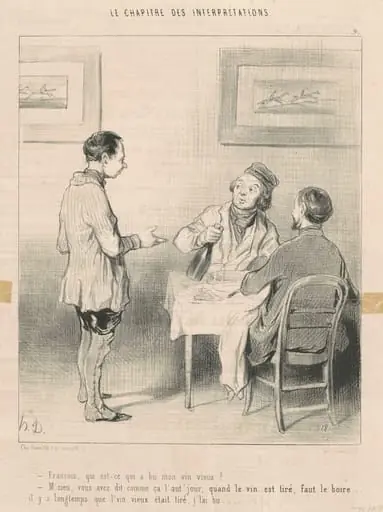 François, qui est-ce qui a bu mon vin ...
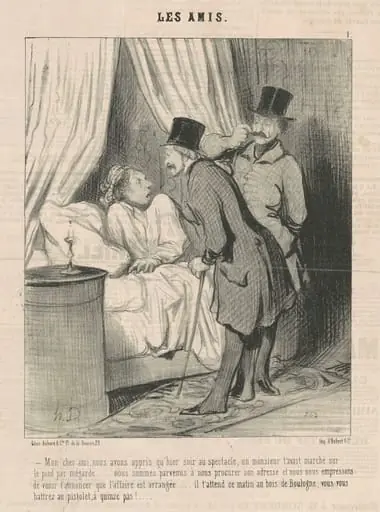 Mon cher ami, nous avons appris ...
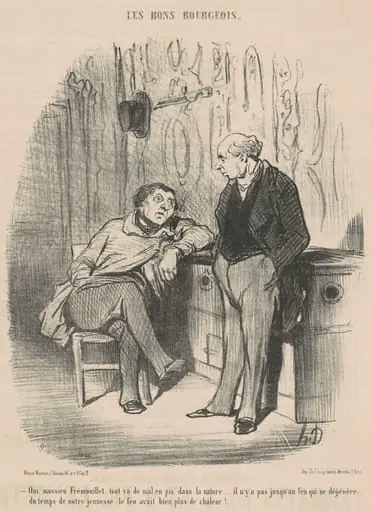 Oui, Mossieu Fremouillet, tout va de mal en pis ...
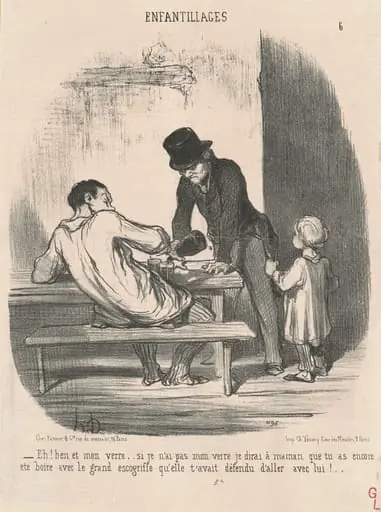 Eh! Ben et mon verre ... si je n'ai pas ...