Artwork
Un triomphe d'avocat
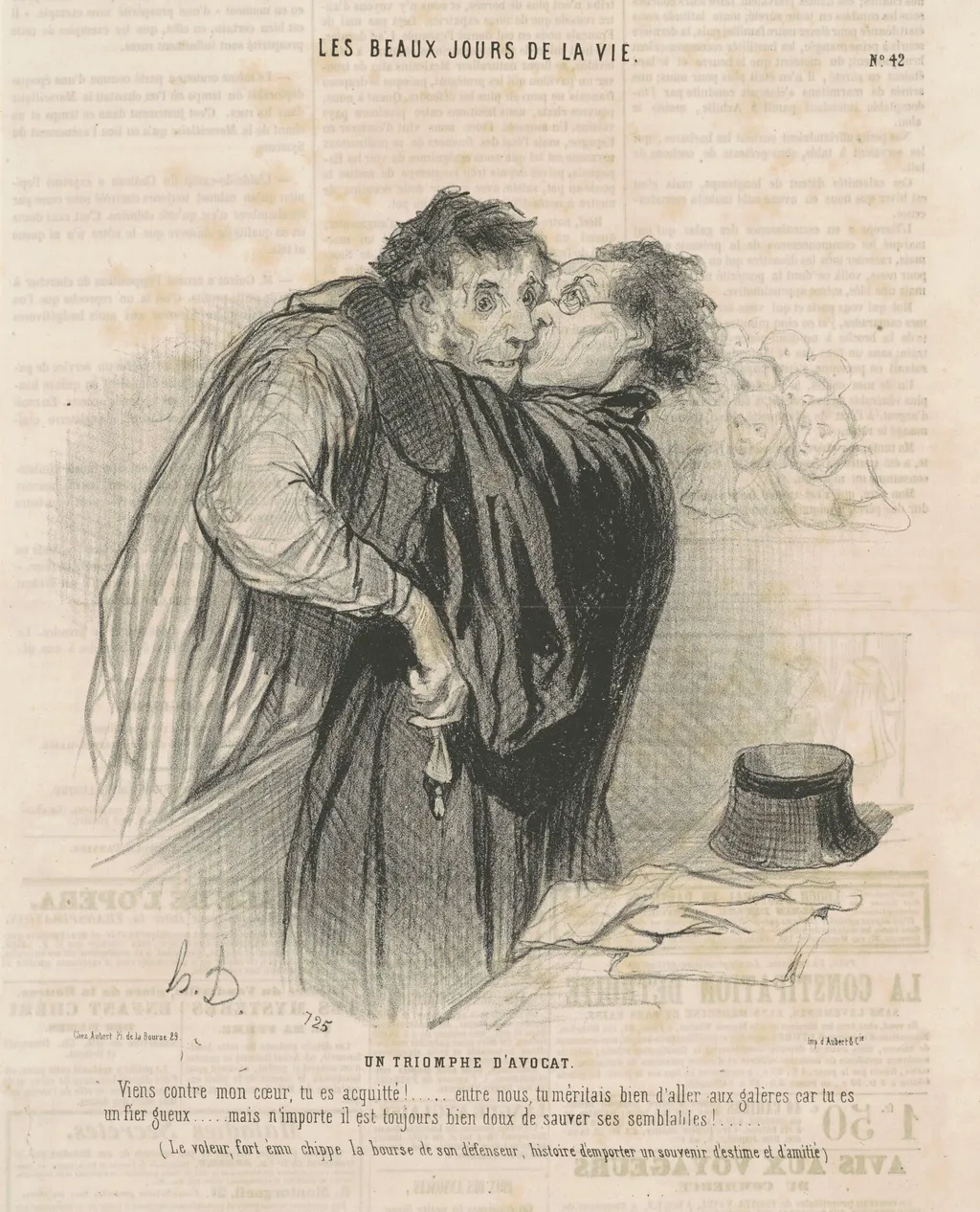
Un triomphe d'avocat is an ink print by the Romanticist artist Honoré Daumier. It dates from 1845 and is held in the collection of the National Gallery of Art.
About this work
Overview
Titled 'Un triomphe d'avocat,' it depicts a man planting a kiss on a woman’s cheek, her expression one of startled discomfort.
Created in 1845 by Honoré Daumier, this lithograph is part of a series critiquing Parisian social pretensions. Titled 'Un triomphe d'avocat,' it depicts a man planting a kiss on a woman’s cheek, her expression one of startled discomfort. The scene is framed by the caption 'LES BEAUX JOURS DE LA VIE,' ironic in tone, suggesting a satirical take on the illusions of social advancement and domestic propriety.
Subject & Meaning
The image portrays a moment of forced intimacy between a man and woman, likely symbolizing the intrusion of social ambition into personal space. The man’s exaggerated cheerfulness contrasts with the woman’s shock, while onlookers react with varying degrees of amusement or unease. The title, referencing a lawyer, mocks the upwardly mobile professional class, suggesting their triumphs are performative rather than genuine.
Technique & Style
Daumier employs bold, fluid lines and minimal shading to convey emotion with striking economy. Facial expressions are exaggerated yet precise, each glance and grimace carries narrative weight. The background figures are rendered with loose strokes, suggesting movement and social noise without detail. The lithographic medium allows for rapid, expressive execution, aligning with Daumier’s journalistic approach to visual storytelling.
History & Provenance
This print was produced during Daumier’s prolific period contributing to the satirical journal Le Charivari. It was one of many lithographs published between 1842 and 1846 targeting Parisian middle-class behavior. Though originally ephemeral, these works were later collected by institutions and private collectors, recognized for their incisive social observation and technical mastery.
Context
In mid-1840s Paris, the rise of the professional class, lawyers, bureaucrats, merchants, brought new social rituals and aspirations. Daumier’s series responded to this shift, mocking the performative nature of etiquette and the obsession with status. The juxtaposition of the title 'A Lawyer’s Triumph' with the phrase 'The Good Old Days' underscores the gap between idealized social norms and their awkward, often absurd reality.
Legacy
Daumier’s lithographs, including this one, influenced later generations of illustrators and cartoonists through their psychological insight and formal simplicity. Though created for mass circulation, they are now studied for their nuanced critique of class and gender dynamics. The work endures not as a novelty, but as a quiet, enduring record of social tension in urban life.
Own this work as a print
Artist & collection
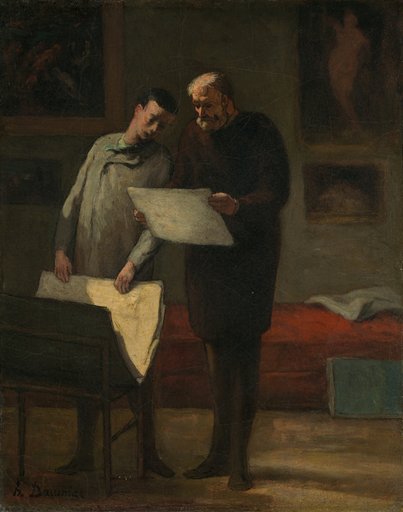
Artist
Honoré-Victorin Daumier (French: ; 26 February 1808 – 10 or 11 February 1879) was a French painter, sculptor, and printmaker, whose many works offer commentary on the social and political life in France, from the…









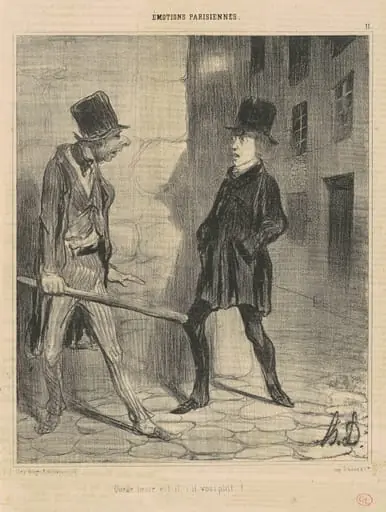
- Quelle heure est'il, s'il vous plait?...
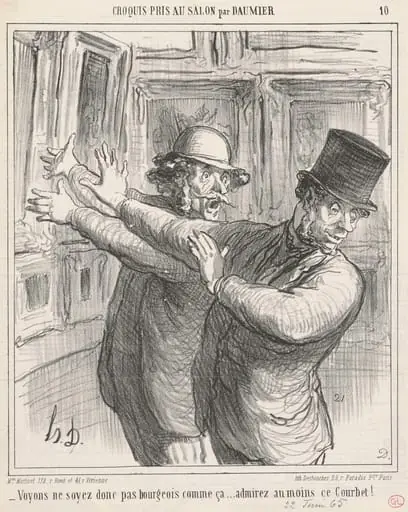 Voyons ... admirez au moins ce Courbet! ...
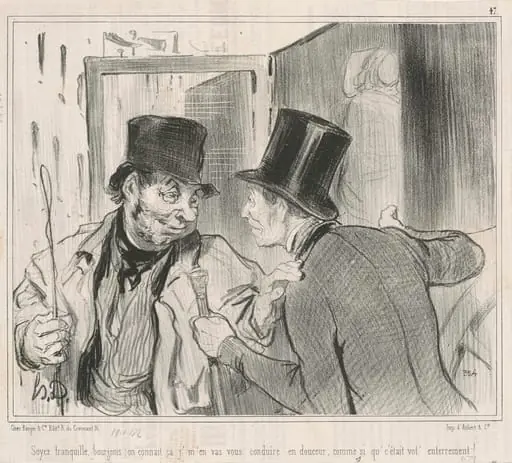 Soyez tranquille bourgeois, on connait
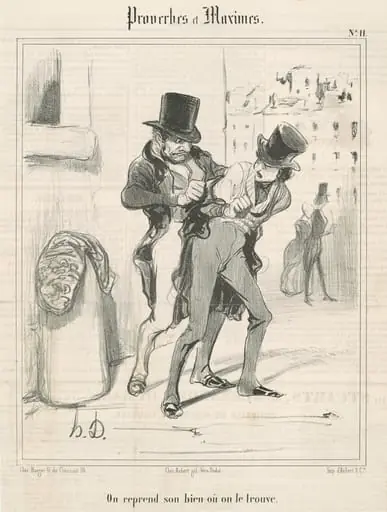 On reprend son bien ou on le trouve
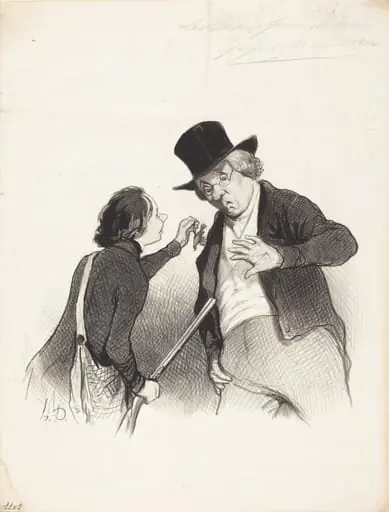 Un Début a la chasse
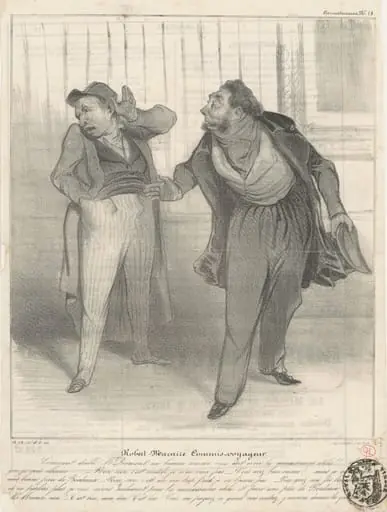 Robert Macaire commis-voyageur
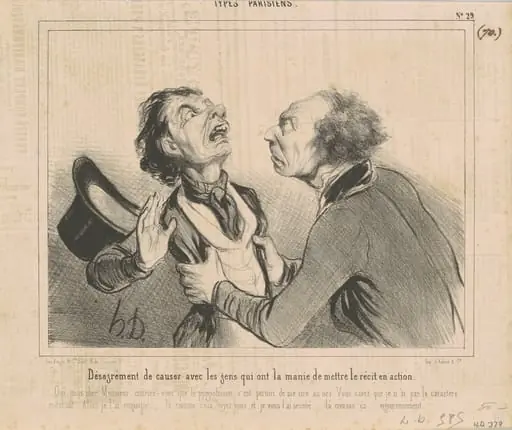 Désagrément de causer avec les gens...
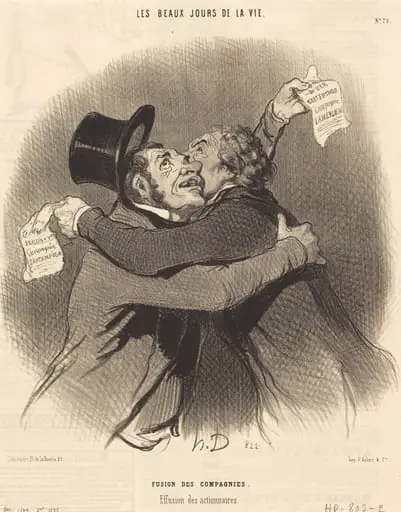 Fusion des compagnies
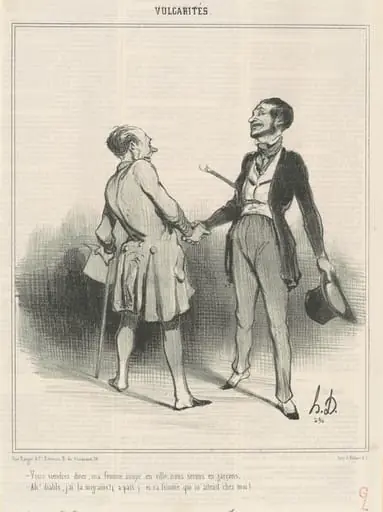 Vous viendrez diner, ma femme soupe en ville ...
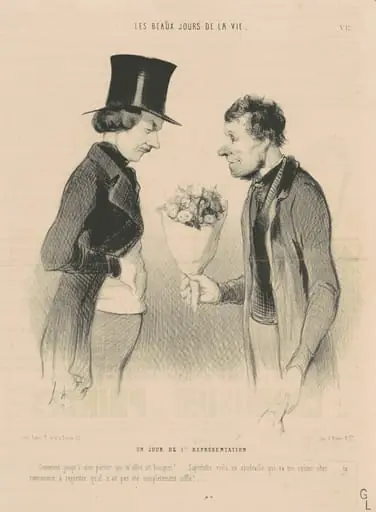 Un Jour de 1ère Représentation
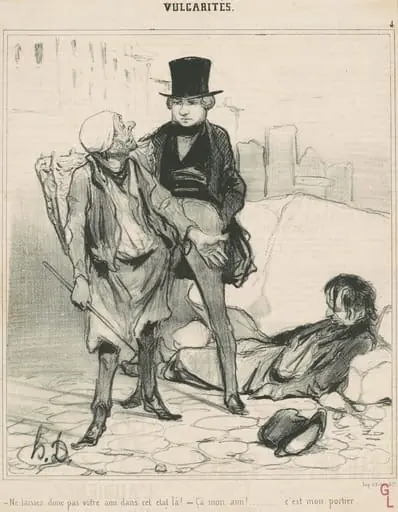 Ne laissez donc pas votre ami dans cet état la!
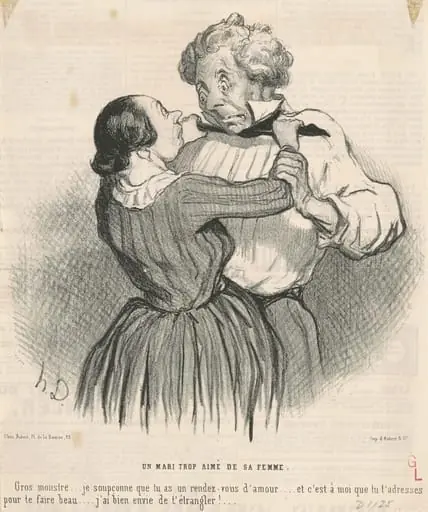 Un mari trop aimé de sa femme