Artwork
Une heure
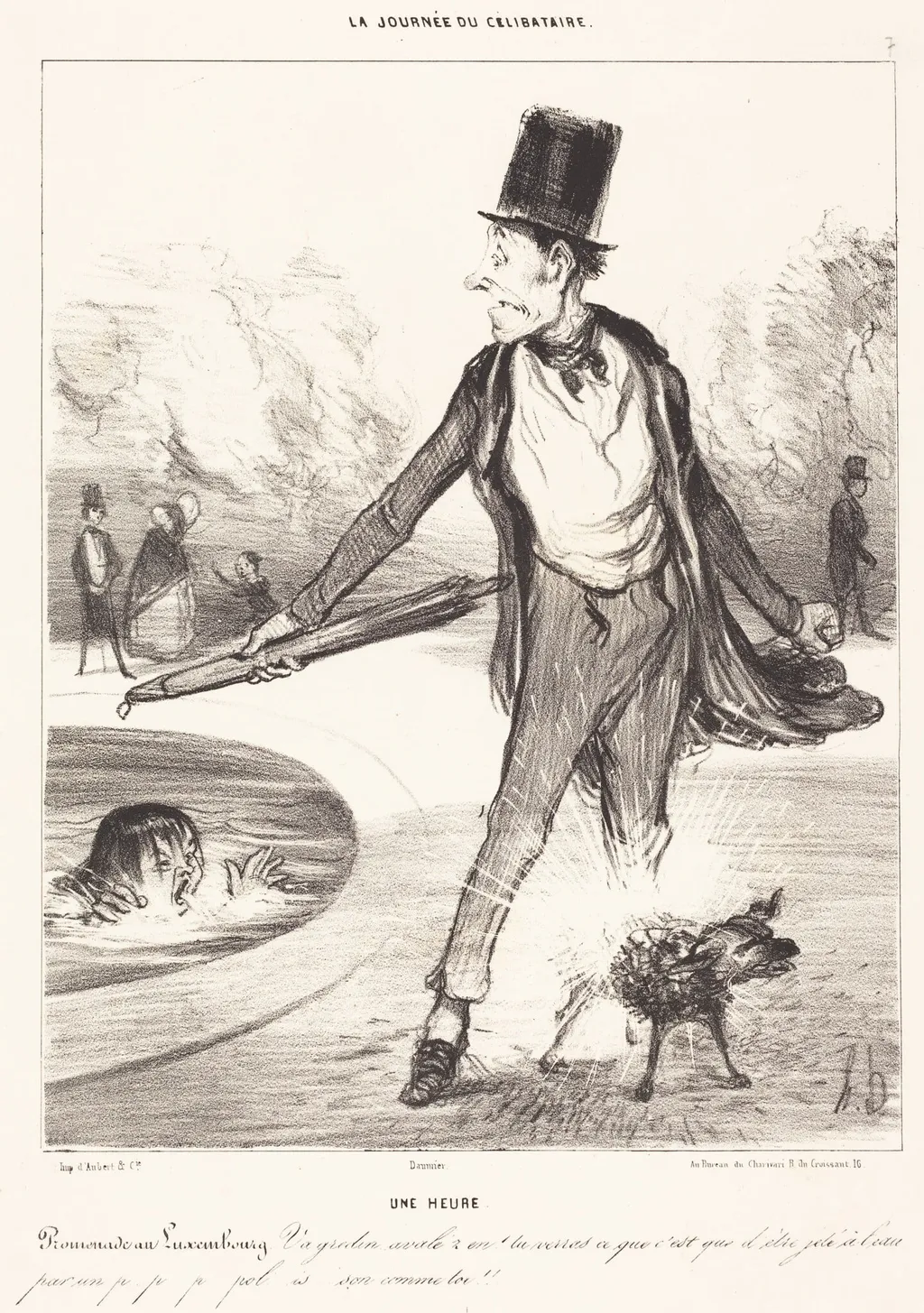
Une heure is a crayon print by the Romanticist artist Honoré Daumier. It dates from 1839 and is held in the collection of the National Gallery of Art.
- Inscription
- Inscribed:upper center in plate: LA JOURNEE DU CELIBATAIRE.; by later hand, upper right in graphite: 7; lower right in image in plate: h.D.; lower left below image in plate: Imp. d'Aubert & Cie.; lower center below image in plate: Daumier.; lower right below image in plate: Au Bureau du Charivari R. du Croissant. 16.; across bottom in plate: UNE HEURE / Promenade au Luxembourg. Va gredin avale'z en! la verras ce que c'est que d'etre jeté à leau / par un p...p...p...pol...is...son comme toi!; by later hand, lower left to lower center in graphite: L.D. 613 HD 2004; by later hand, lower right in grapphite: 21785; by later hand, lower right verso in graphite: os 14 Set of 12
About this work
Overview
Created in 1839, Une heure is a black crayon lithograph on wove paper by the French artist Honoré Daumier. The work belongs to his extensive output of satirical prints made for popular Parisian periodicals such as La Caricature and Le Charivari. It exemplifies Daumier’s habit of using the lithographic medium to comment on contemporary society with a sharp, humorous edge.
Subject & Meaning
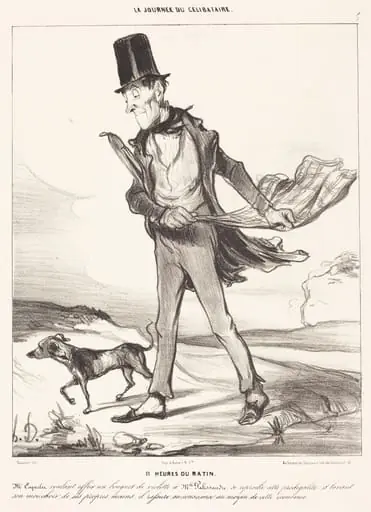
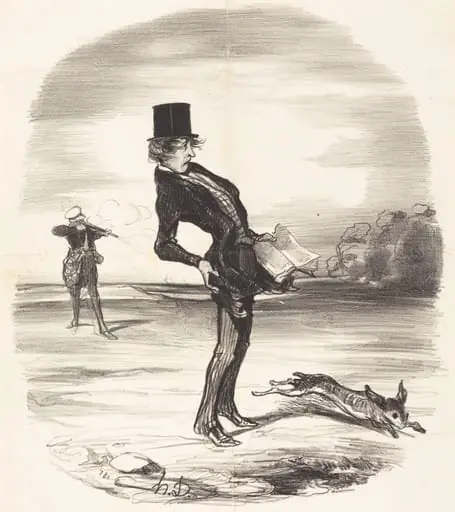
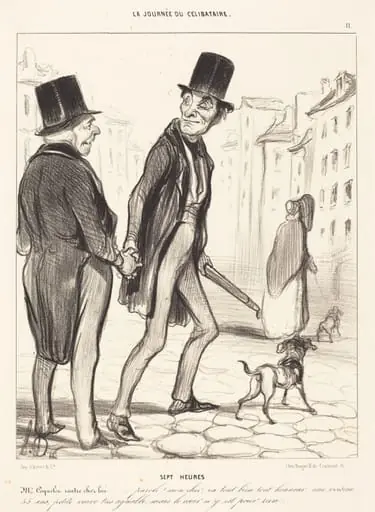
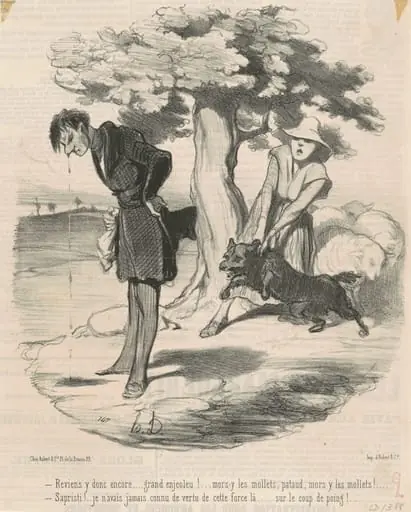
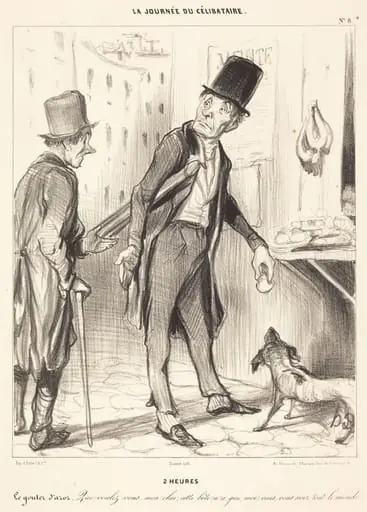
The image depicts a flamboyantly dressed man with an oversized nose and a wide grin, captured mid‑stride as he kicks a small dog. Two other figures sit passively on a bench, while a tiny inset shows a sleeping face under a blanket. The exaggerated pose and title, meaning “an hour,” suggest a fleeting, comic moment that mocks pretentious behavior and indifference within everyday life.
Technique & Style
The fluid handling of the medium reflects his practice of rapid, observational drawing suited to the fast‑turnaround demands of newspaper illustration.
Daumier employed crayon on lithographic stone, producing quick, sketch‑like lines that convey movement and spontaneity. The use of black ink on smooth wove paper enhances contrast, allowing the artist’s caricatured features and dynamic composition to stand out. The fluid handling of the medium reflects his practice of rapid, observational drawing suited to the fast‑turnaround demands of newspaper illustration.
History & Provenance
The print emerged during a period of intense political change in France following the 1830 July Revolution, a time when Daumier’s republican sympathies informed his critique of monarchy, aristocracy, and clergy. Originally published in a satirical journal, the work later entered private collections and is now documented in museum catalogues as a representative example of Daumier’s early lithographic output.
Own this work as a print
Artist & collection
Artist
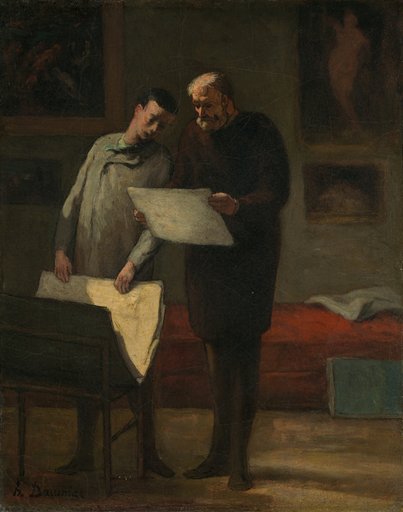
Honoré-Victorin Daumier (French: ; 26 February 1808 – 10 or 11 February 1879) was a French painter, sculptor, and printmaker, whose many works offer commentary on the social and political life in France, from the…