Artwork
At Grandmother's
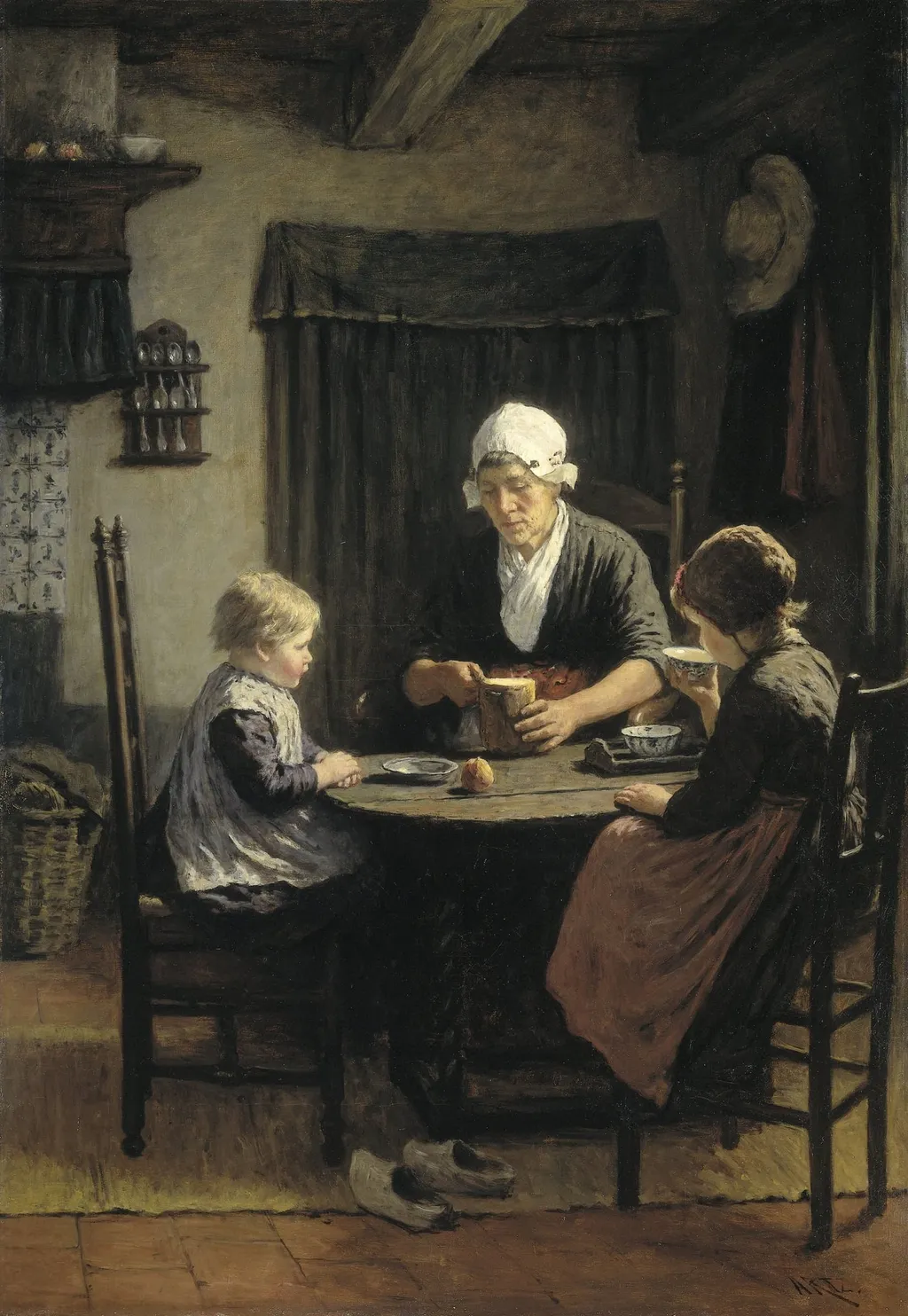
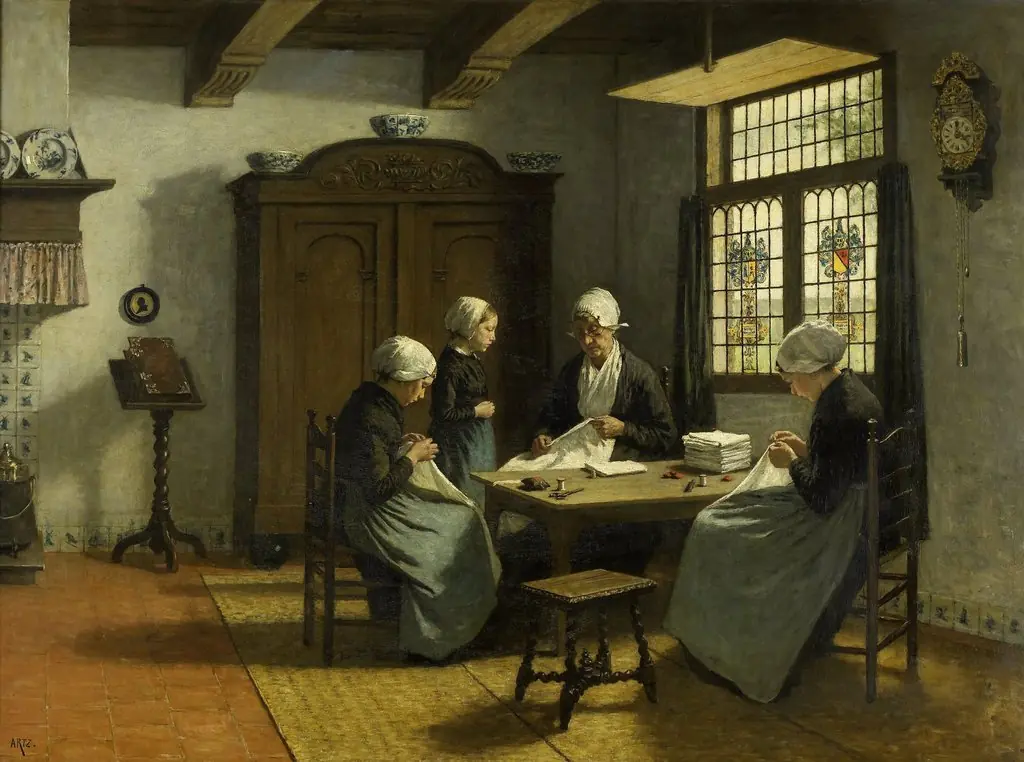
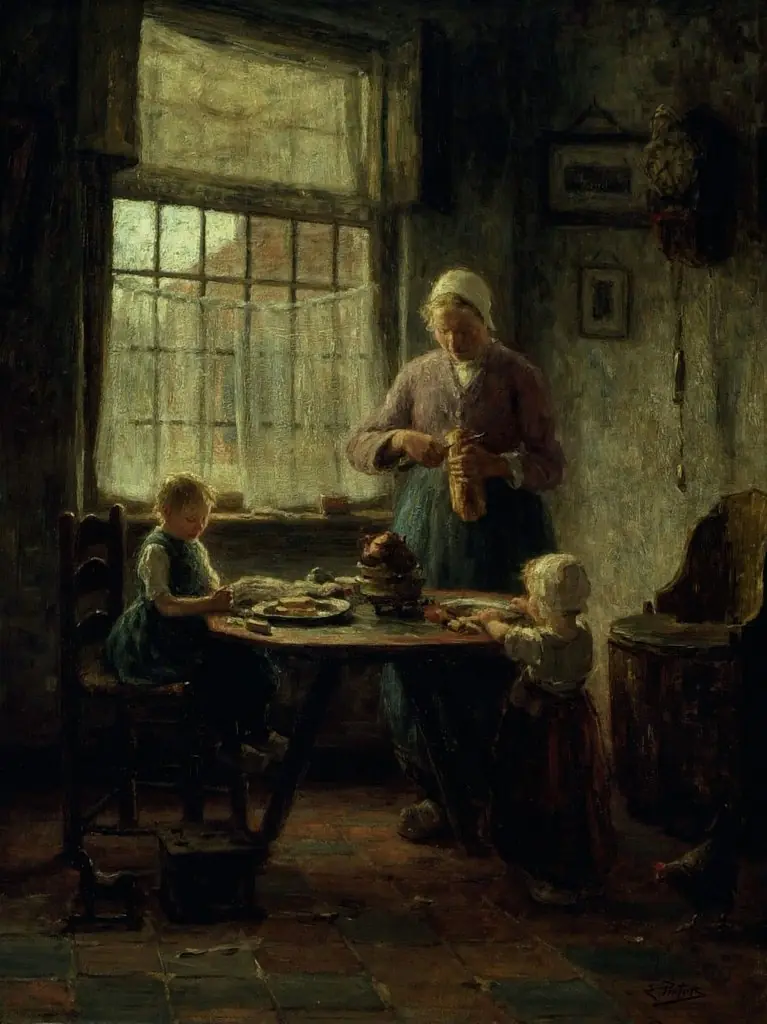
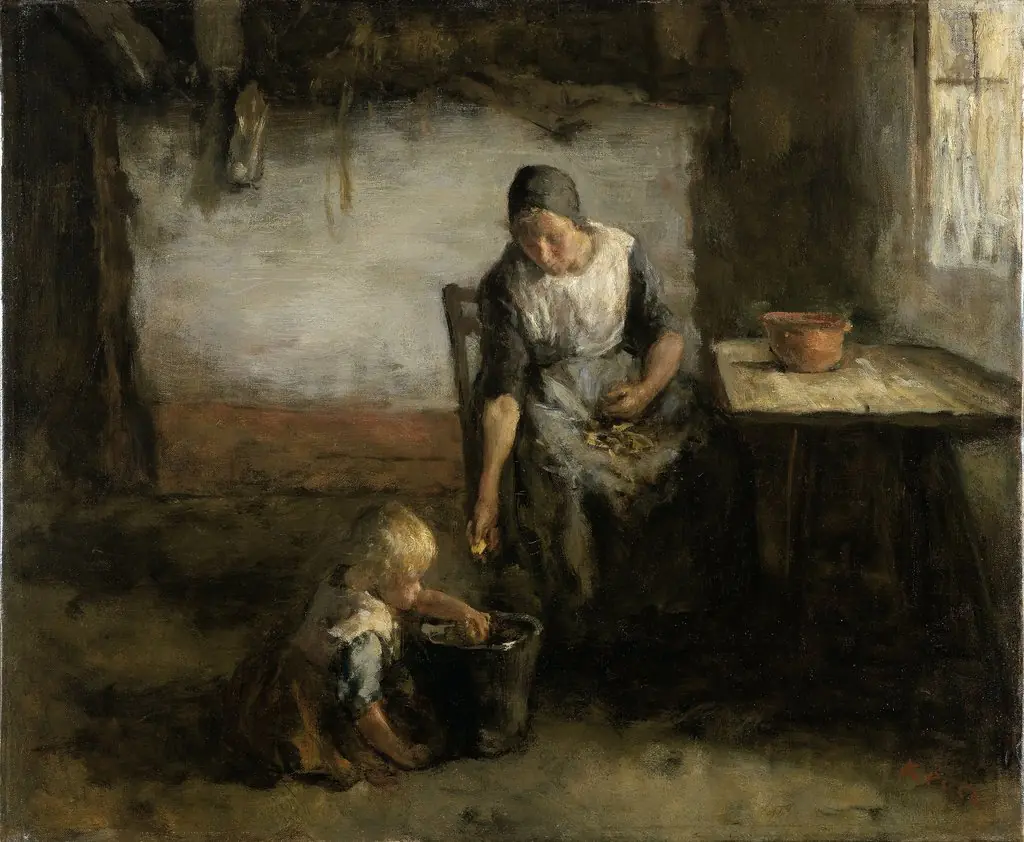
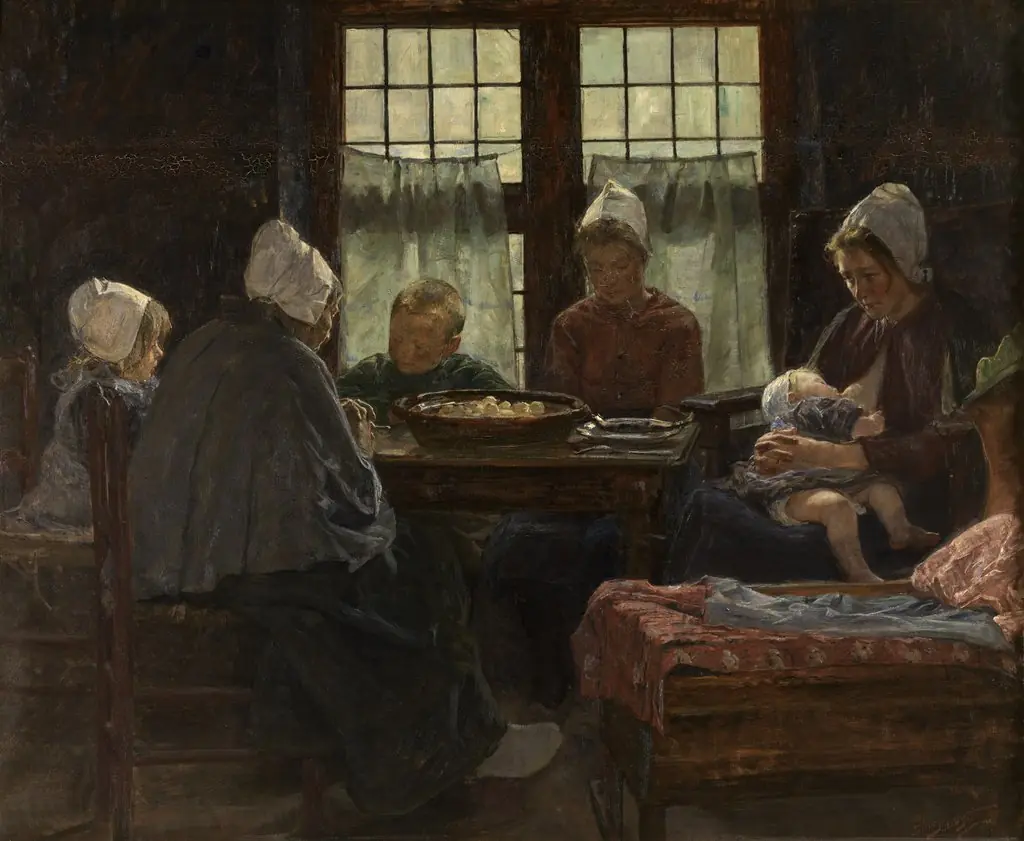
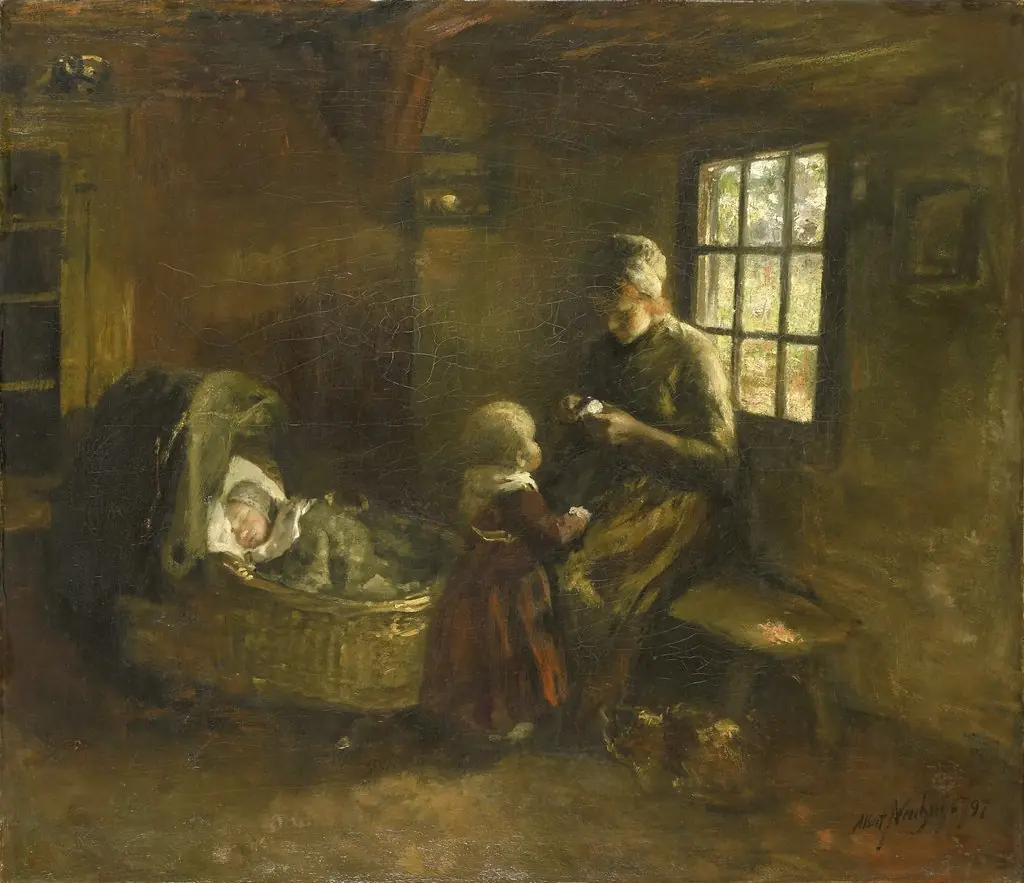
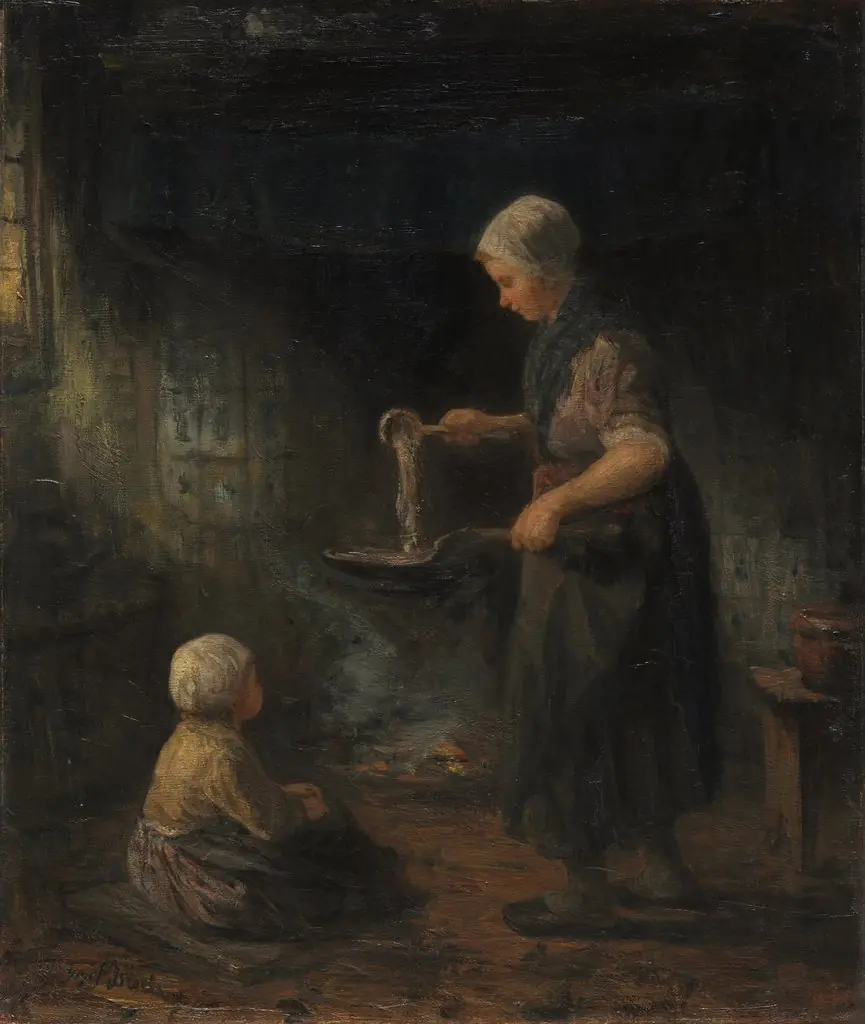
At Grandmother's is an unspecified painting by the Japonisme artist David Adolph Constanz Artz. It dates from 1883 and is held in the collection of the Rijksmuseum. Painted in the late 19th century, this intimate interior scene captures a quiet moment in a modest Dutch home.
About this work
Overview
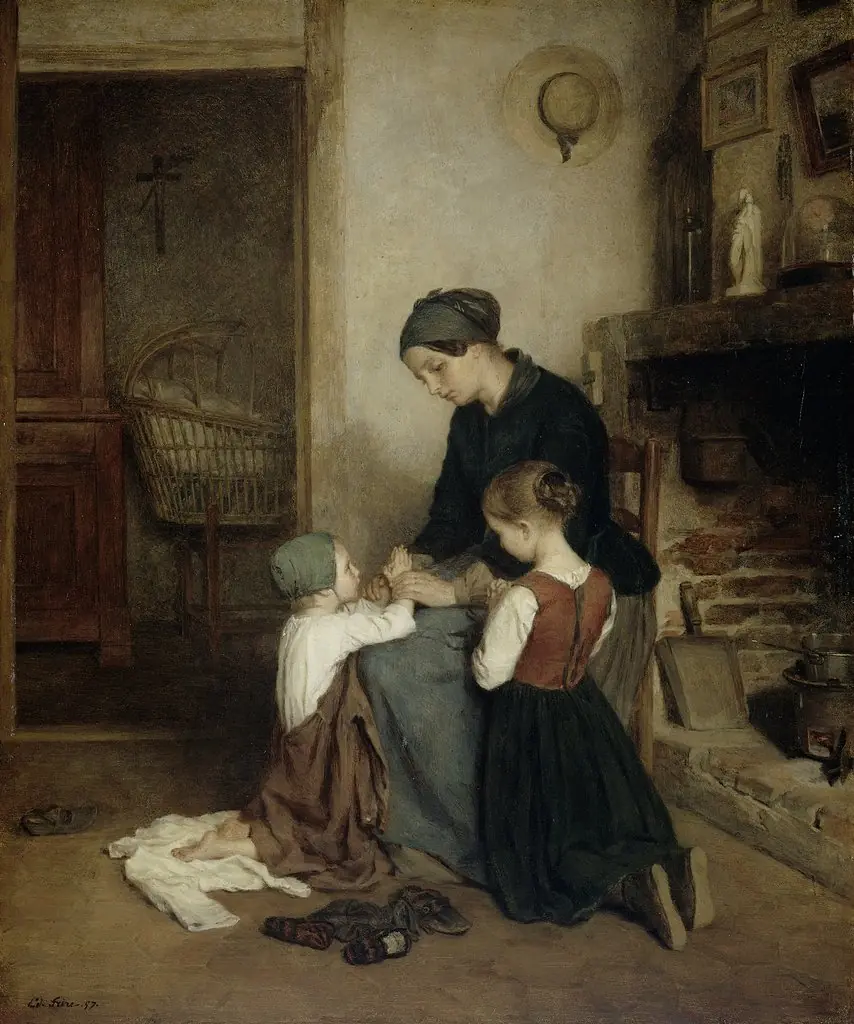
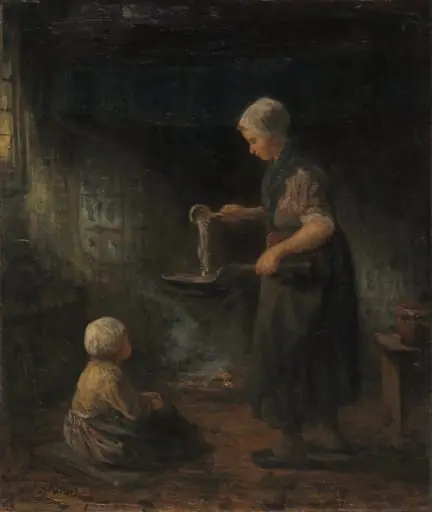
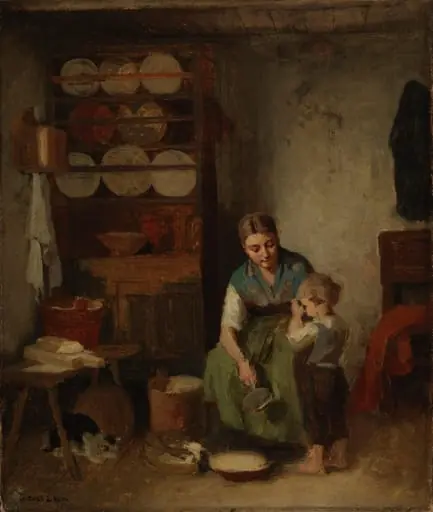
The composition centers on an elderly woman and two children gathered around a wooden table, their stillness suggesting a pause in daily life.
Painted in the late 19th century, this intimate interior scene captures a quiet moment in a modest Dutch home. The composition centers on an elderly woman and two children gathered around a wooden table, their stillness suggesting a pause in daily life. The dim, contained space and subdued palette reflect the aesthetic priorities of the Hague School, which favored unidealized domestic realism over theatricality.
Subject & Meaning
The figures, grandmother and two young children, suggest intergenerational care and routine. No narrative action is depicted; instead, the painting conveys presence and quiet endurance. The absence of overt emotion or gesture invites contemplation of ordinary life, aligning with the Hague School’s interest in unembellished, authentic moments of rural and working-class existence.
Technique & Style
The artist employed fine, blended brushwork to soften edges and diffuse light, creating a hazy, almost atmospheric effect. Light enters from one side, illuminating surfaces without casting sharp shadows, enhancing the sense of a fleeting, unposed moment. The muted tones and restrained detail avoid sentimentality, favoring tonal harmony and subtle texture over dramatic contrast.
History & Provenance
The work was created during the height of the Hague School’s influence, likely in the 1880s or early 1890s. It remained in private Dutch collections for much of the 20th century before entering a public institution. Its title, 'Bij grootmoeder,' confirms its domestic focus and regional roots, reflecting the artist’s connection to Scheveningen’s coastal community.
Context
This painting emerged alongside a broader movement in Dutch art that rejected academic idealism in favor of naturalism. Artists of the Hague School turned to rural and seaside interiors, portraying everyday life with empathy and restraint. The work aligns with contemporaneous efforts by painters like Jozef Israëls to elevate the dignity of ordinary people through quiet observation.
Legacy
Though not widely exhibited outside the Netherlands, the painting exemplifies the Hague School’s enduring contribution to European realism. Its emphasis on atmosphere, subdued color, and unadorned subject matter influenced later generations of regional painters who sought to capture the quiet rhythms of domestic life without embellishment.
Own this work as a print
Artist & collection
Artist
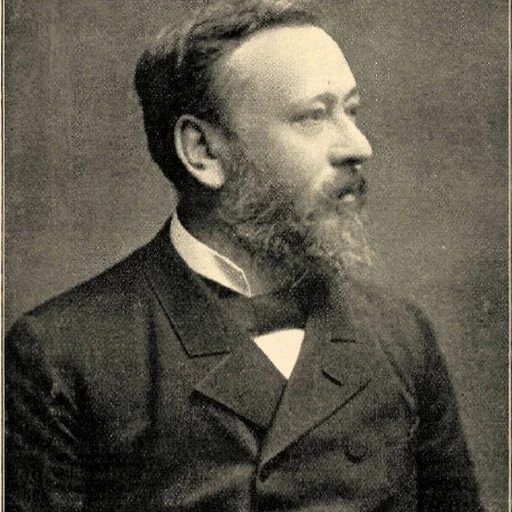
David Adolph Constant Artz (The Hague, 1837 – The Hague, 1890) was a Dutch painter and collector who associated with some members of the Hague School.