Artwork
Two Studies of a Standing Indian from Calcutta
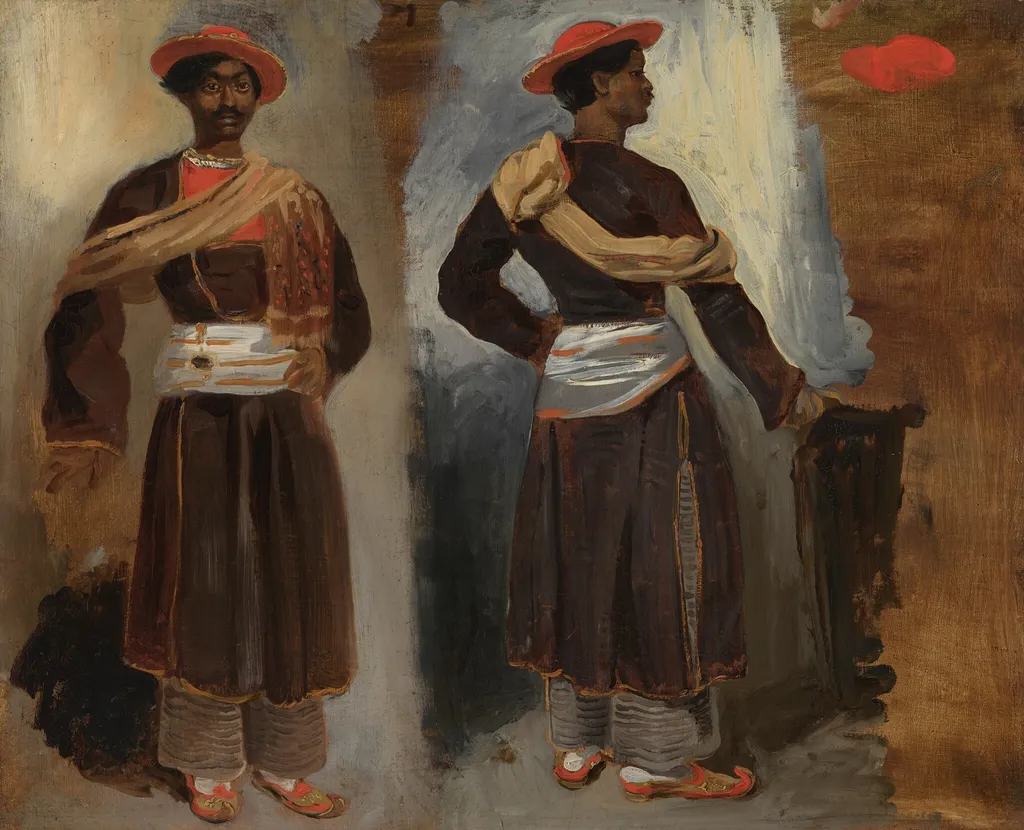
Two Studies of a Standing Indian from Calcutta is an oil painting by the Orientalist artist Eugène Delacroix. It dates from 1824 and is held in the collection of the National Gallery of Art.
About this work
Subject & Meaning
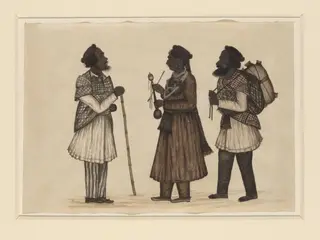
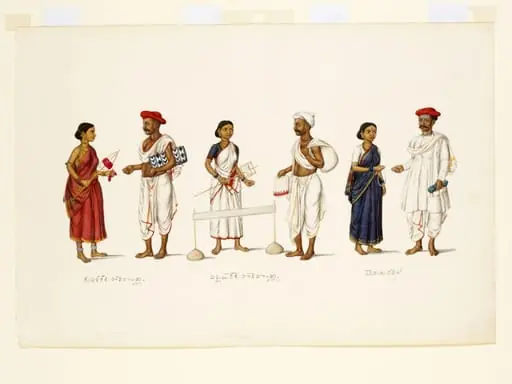
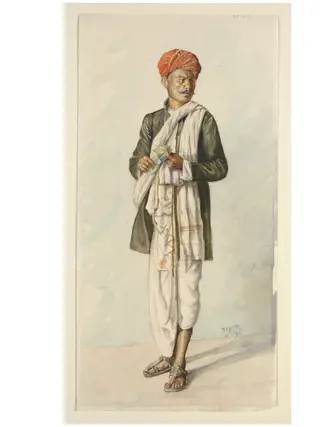
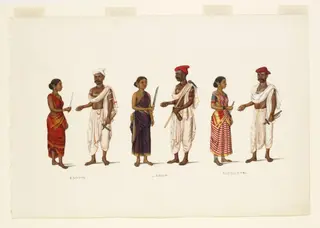
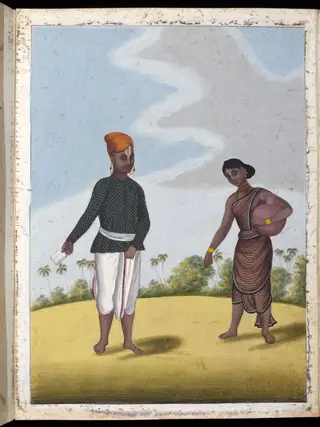
The painting depicts a solitary Indian figure rendered in two separate compositional studies, both showing him standing upright.
The painting depicts a solitary Indian figure rendered in two separate compositional studies, both showing him standing upright. The dual format suggests Delacroix’s exploration of posture, cultural identity, and the exoticized subject typical of early‑19th‑century European fascination with the Orient. By presenting the same individual in varying poses, the work comments on representation and the artist’s attempt to capture the dignity and presence of an Indian subject within a Western academic context.
Technique & Style
Executed in 1823, Two Studies of a Standing Indian from Calcutta is an oil painting on canvas. The work measures 36.8 cm in height and 45.7 cm in width. As a study, the piece reflects Eugène Delacroix's engagement with Orientalist subjects, capturing the figure with the immediacy typical of his preparatory works from this period.
The medium of oil on canvas allows for the rich textural handling characteristic of the artist's early style.
History & Provenance
Executed in 1823 by Eugène Delacroix, this oil on canvas remained in the artist's possession until his estate sale at Hôtel Drouot in February 1864. It was subsequently acquired by Édouard Frère, passing to his estate sale in November 1889, before entering the collection of Paul Arthur Chéramy in Paris. The work appeared in Chéramy's sales in 1908 and 1913, later moving through dealers Cassirer and Bloomingdale by 1953.
Following a 1957 auction at Galerie Charpentier and a tenure at Galerie Moos in Toronto, Eugene Thaw sold the painting to Paul Mellon in 1969. Mellon bequeathed the piece to the National Gallery of Art in 1999, retaining a life interest for his wife that was released in 2006.
The work is held by the National Gallery of Art in Washington, D.C. Its accession number is not specified in the source. It was exhibited in the 1957 Galerie Charpentier sale in Paris before entering the collection of Paul Mellon, who acquired it in 1969. The painting was bequeathed to the National Gallery of Art in 1999 by Paul Mellon, with a life interest retained by his wife that was released in 2006.
Context
The work is catalogued as Two Studies of a Standing Indian from Calcutta, 1823, oil on canvas, measuring 36.8 cm × 45.7 cm, and is housed in the National Gallery of Art in Washington, D.C.
Delacroix’s early Indian subjects attracted scholarly attention, with Lee Johnson identifying the piece as no. 24 in his critical catalogue of the 1816‑1831 paintings, underscoring its significance within the artist’s oeuvre and its reception in European art circles.
Overview
Eugène Delacroix created the oil painting Two Studies of a Standing Indian from Calcutta circa 1824. Executed in a loose, expressive manner, the canvas presents two figures in traditional dress, set against a simple, lightly textured backdrop. The work exemplifies Delacroix’s early Romantic interest in vivid colour and dynamic composition rather than strict academic realism.
Own this work as a print
Artist & collection
Artist
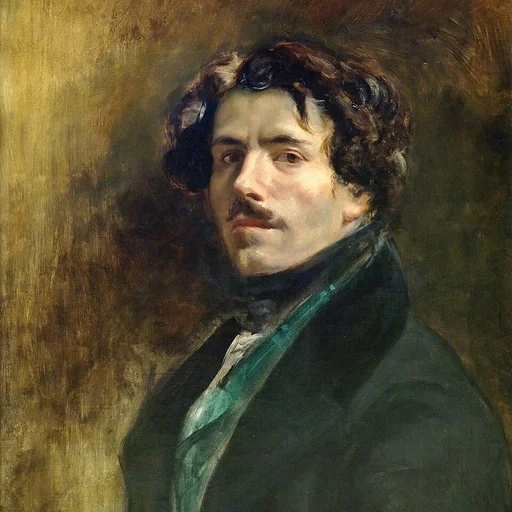
Ferdinand Victor Eugène Delacroix ( DEL-ə-krwah, -KRWAH; French:; 26 April 1798 – 13 August 1863) was a French Romantic artist who was regarded as the leader of the French Romantic school.