Artwork
Screen Depicting the Italian Rebus of Love
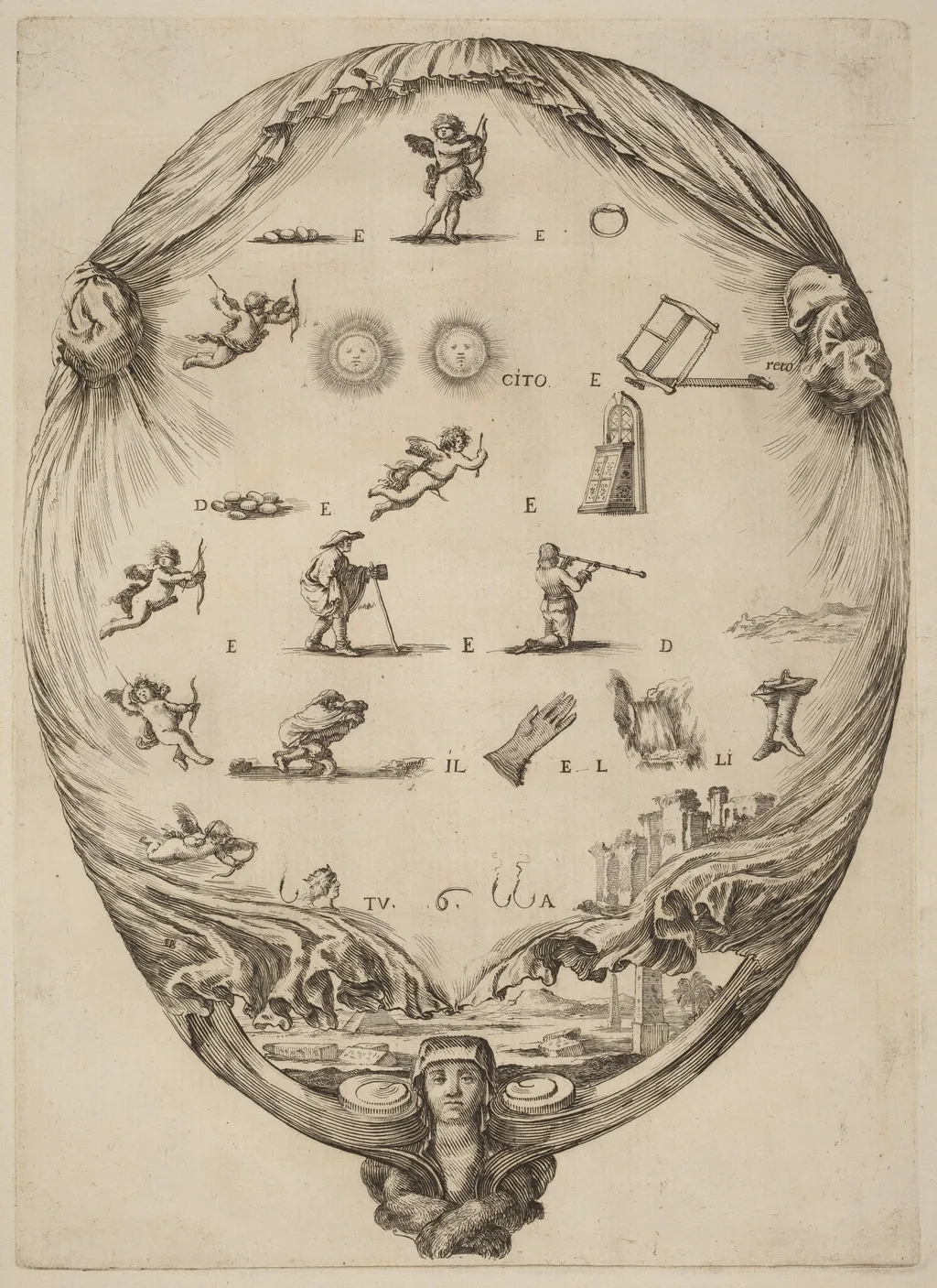
Screen Depicting the Italian Rebus of Love is an ink print by the Baroque artist Stefano Della Bella. It dates from 1637 and is held in the collection of the National Gallery of Art.
About this work
Overview
Created in 1637 by Stefano della Bella, this etching on laid paper is a restrike of an original print that functions as a visual riddle. Della Bella, known primarily for his prolific graphic output, used the medium to encode a complex allegory of love through symbolic imagery. The composition arranges dozens of small scenes within a circular frame, inviting close examination and interpretation.
Subject & Meaning
Each visual element corresponds to a letter in the Italian phrase for 'I love you,' with symbols like suns, bows, and lanterns hinting at phonetic components.
The print presents a rebus, a puzzle where images represent syllables or words, centered on the theme of love. Each visual element corresponds to a letter in the Italian phrase for 'I love you,' with symbols like suns, bows, and lanterns hinting at phonetic components. The arrangement of figures and objects forms a coded message, transforming emotional sentiment into a visual game that demands both literacy and imagination to decode.
Technique & Style
Della Bella employed fine-line etching to achieve intricate detail across the compact composition. The use of laid paper and precise acid-bitten lines allowed for delicate textures and sharp contrasts, characteristic of his draftsmanship. His style blends observational realism with fantastical elements, rendering each vignette with clarity while maintaining a cohesive, puzzle-like structure.
History & Provenance
The original 1637 etching was part of della Bella’s broader output of allegorical prints, circulated among collectors in Italy and beyond. This version is a later restrike, likely produced from the original plate after his death. While the print’s early ownership is undocumented, its survival in multiple impressions suggests sustained interest in his intellectual and visual puzzles during the 17th and 18th centuries.
Context
In mid-17th-century Florence, visual riddles were popular among educated elites who appreciated wordplay and classical allusion. Della Bella’s work reflects this cultural taste, aligning with the Baroque fascination with hidden meanings and the intersection of art, literature, and logic. His prints often bridged the gap between entertainment and erudition, appealing to both connoisseurs and curious viewers.
Legacy
Though not widely exhibited today, the print exemplifies della Bella’s role in advancing narrative printmaking beyond mere illustration. His integration of linguistic puzzles into visual form influenced later generations of artists exploring allegory and symbolism. The work remains a testament to the intellectual engagement demanded by early modern graphic art.
Own this work as a print
Artist & collection
Artist
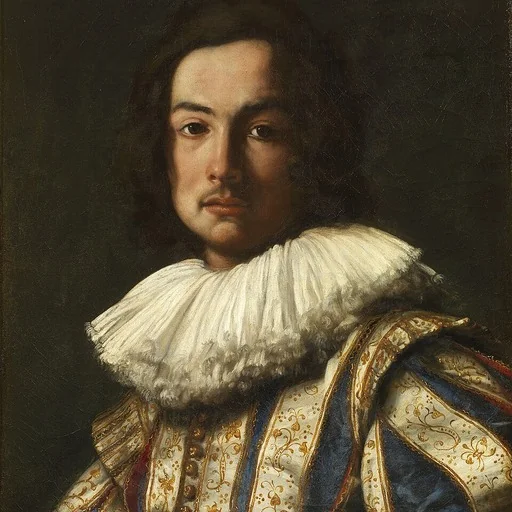
Stefano della Bella (18 May 1610 – 12 July 1664) was an Italian draughtsman and printmaker known for etchings of a great variety of subjects, including military and court scenes, landscapes, and lively genre scenes.

![The Flight into Egypt [verso], by Stefano Della Bella](https://artifactworldgallery.com/img/stefano-della-bella--the-flight-into-egypt-verso--3a100db72e6d25e3-w320.webp)
 Allegory of Spring (Allegorie des Frühlings)
 Printer's Device for Jan van Keerbergen: Vignette for Biblia Cum Glossa Ordinaria
![Archetypa studiaque patris Georgii Hoefnagelii [Part 4, Title Page], by Jacob Hoefnagel](https://artifactworldgallery.com/img/jacob-hoefnagel--archetypa-studiaque-patris-georgii-hoefnagelii-part-4-title--d842859cac0814bc-w320.webp) Archetypa studiaque patris Georgii Hoefnagelii [Part 4, Title Page]
Archetypa studiaque patris Georgii Hoefnagelii [Part 4, Title Page]![Archetypa studiaque patris Georgii Hoefnagelii [Part 4, Titlepage], by Jacob Hoefnagel](https://artifactworldgallery.com/img/jacob-hoefnagel--archetypa-studiaque-patris-georgii-hoefnagelii-part-4-titlep--a48938e411f894b0-w320.webp) Archetypa studiaque patris Georgii Hoefnagelii [Part 4, Titlepage]
Archetypa studiaque patris Georgii Hoefnagelii [Part 4, Titlepage] The Opening of the Seventh Seal
 Diana
Diana Buried with Him by Baptism
 The Tree of Man's Life
 St. Servatius; St. Boniface; St. Pachomius; St. Corona
 Thesis
 Rays of the Sun
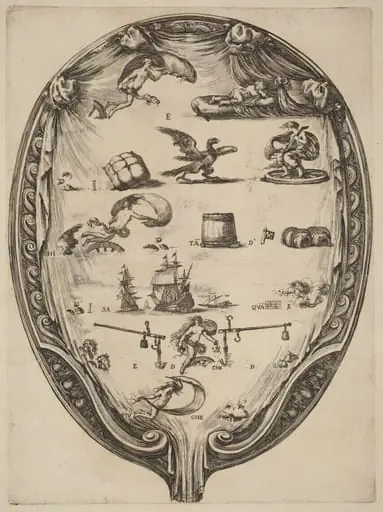
- Screen Depicting the Italian Rebus of Fortune