Artwork
Justus Lipsius
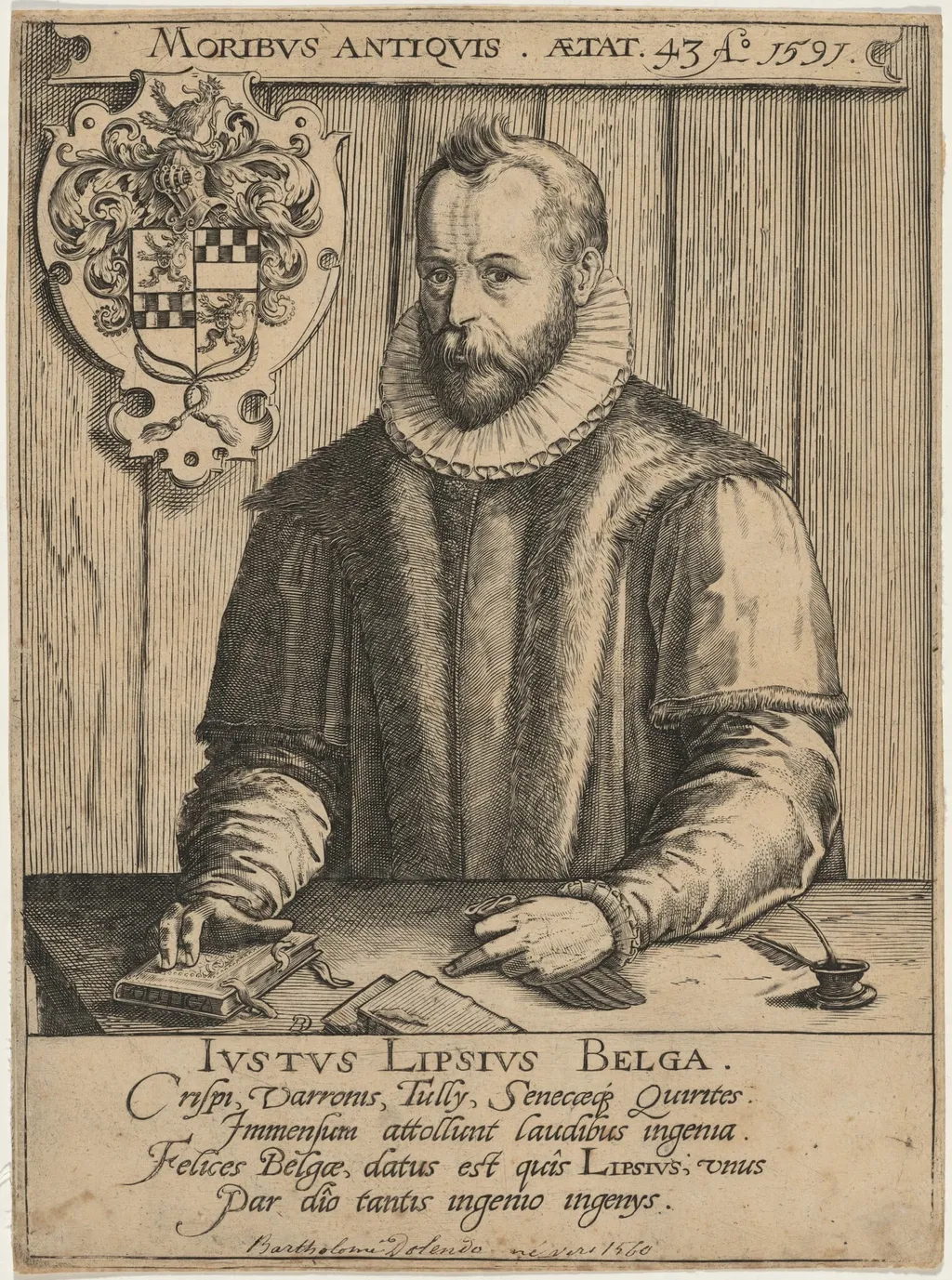
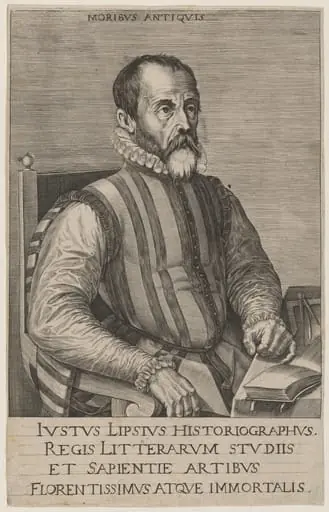
Justus Lipsius is an ink print by the Renaissance artist Bartolomeus Willemsz Dolendo. It dates from 1591 and is held in the collection of the National Gallery of Art.
About this work
Overview
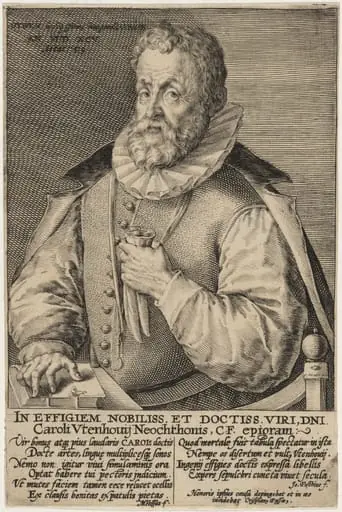
Justus Lipsius is a 1591 engraving by Bartolomeus Willemsz Dolendo, depicting the titular figure in a seated portrait. The work combines fine-line details with symbolic elements, set against a plain background.
Subject & Meaning
The engraving portrays Justus Lipsius, a historical figure, engaged in scholarly activity: holding a quill in one hand and a book/paper in the other. Above, the inscription 'Moribus Antiquis' (With Ancient Morals) contextualizes Lipsius, aligning him with classical values. A coat of arms behind him, featuring a lion and geometric shapes, further emphasizes his status or affiliations.
Technique & Style
Executed using the engraving technique, the artist etched lines into a metal plate to achieve the image. Characterized by fine lines, the portrait showcases Dolendo's mastery of this method, capturing intricate details in the subject's beard, ruff, and the decorative coat of arms.
History & Provenance
Created in 1591 by Bartolomeus Willemsz Dolendo, the engraving is signed by the artist at the bottom. The subject, Justus Lipsius, was a contemporary figure, suggesting the print may have been produced during his lifetime or shortly after, potentially for dissemination among scholarly or noble circles.
Context
Emerging in the late 16th century, this engraving reflects the Renaissance's revival of classical ideals, as hinted at by 'Moribus Antiquis'. It also speaks to the era's flourishing print culture, where engravings served as a means to widely distribute images of esteemed individuals.
Legacy
As a portrait of Justus Lipsius, the engraving contributes to the visual record of this historical figure. While its direct influence on subsequent art is not prominently documented, it remains a testament to the artistic and intellectual values of its time, and the role of engraving in early modern Europe's cultural landscape.
Own this work as a print
Artist & collection