Artwork
Charles Baudelaire
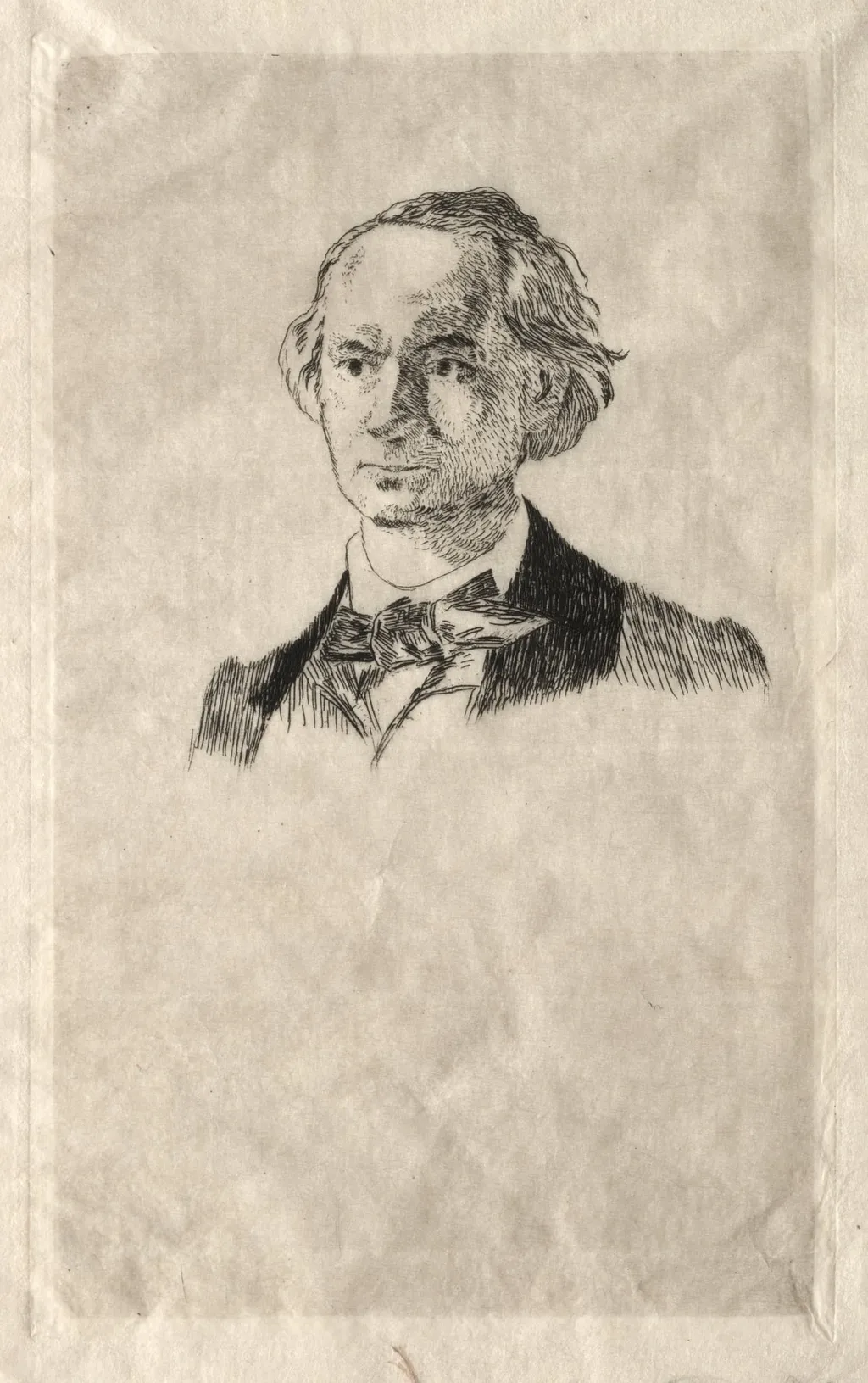
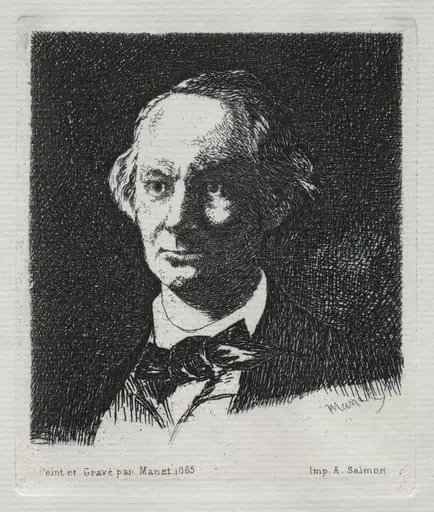
Charles Baudelaire is a print by the Impressionist artist Édouard Manet. It dates from 1865 and is held in the collection of the Cleveland Museum of Art.
- Accession no.
- 1981.92
- Credit line
- Gift of The Print Club of Cleveland
About this work
Overview
Rendered in ink or graphite, the portrait captures the subject from the shoulders up, emphasizing facial expression and textile detail.
Executed in 1865, this black-and-white drawing by Édouard Manet depicts the French poet Charles Baudelaire. Rendered in ink or graphite, the portrait captures the subject from the shoulders up, emphasizing facial expression and textile detail. The work is part of the collection at The Cleveland Museum of Art, where it stands as a modest yet intense study of a literary figure central to 19th-century French culture.
Subject & Meaning
Baudelaire, known for his provocative poetry and critical essays, is portrayed with a solemn, introspective gaze and a furrowed brow. Manet avoids idealization, instead conveying the poet’s intellectual intensity and emotional gravity. The portrait reflects a personal engagement with a figure who challenged bourgeois norms, suggesting an alignment between artist and subject in their shared resistance to convention.
Technique & Style
Manet employed swift, economical lines to define Baudelaire’s wavy hair, high collar, and bow tie, prioritizing immediacy over finish. The drawing relies on tonal contrast and loose hatching to suggest volume and fabric texture. This approach aligns with contemporary sketching practices among artists seeking to capture character through gesture rather than polished detail, reflecting a shift toward expressive realism.
History & Provenance
The drawing was likely made during Manet’s personal or professional interactions with Baudelaire in the mid-1860s. It remained in private hands until entering The Cleveland Museum of Art’s collection, where it is now preserved as a rare visual record of the poet’s likeness. Its modest scale and medium suggest it was not a commissioned work but a private study or tribute.
Context
In 1860s Paris, portrait drawings served as intimate alternatives to formal paintings, often used to explore character before larger works. Manet’s depiction of Baudelaire fits within a circle of artists and writers who valued psychological depth over social decorum. The image reflects the era’s growing interest in the inner life of intellectuals, particularly those associated with modernist thought.
Legacy
Though not widely exhibited, this drawing contributes to the visual record of Baudelaire’s public persona and Manet’s engagement with literary figures. Its unembellished style anticipates later modernist portraiture that favored authenticity over ornament. It remains a quiet testament to the connection between two pivotal figures in French cultural history.
Own this work as a print
Artist & collection
Artist
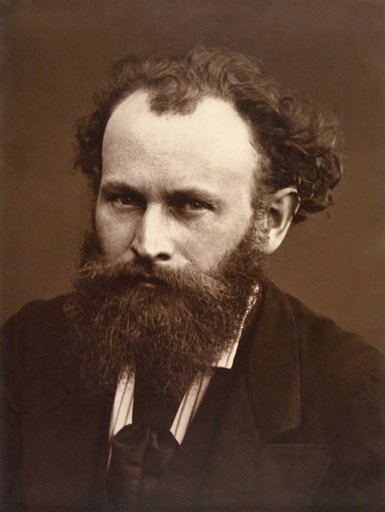
Édouard Manet was a French modernist painter. He was one of the first 19th-century artists to paint modern life, as well as a pivotal figure in the transition from Realism to Impressionism.