Artwork
Le Suicidé
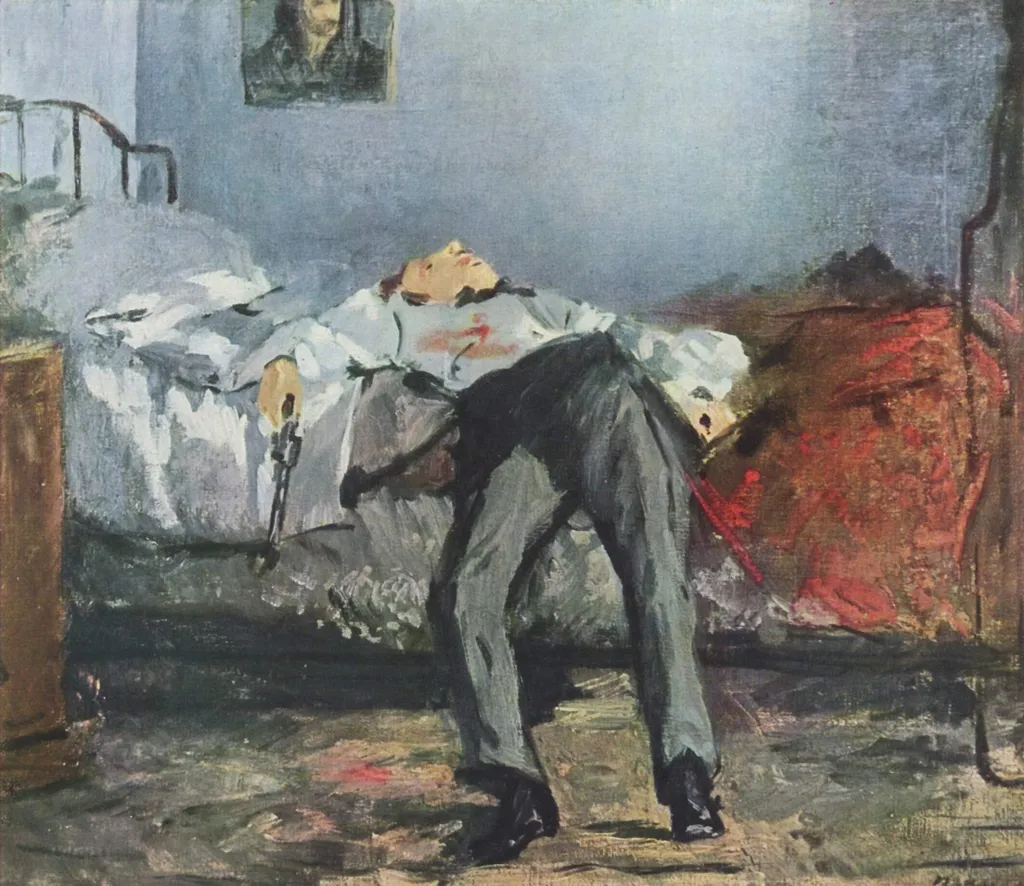
Le Suicidé is an oil painting by the Impressionist artist Édouard Manet. It is held in the collection of the Foundation E.G. Bührle Collection.
About this work
Le Suicidé is a painting by Édouard Manet. It's an oil painting completed between 1877 and 1881.
The painting has been little studied within Manet's oeuvre. Art historians have had difficulty finding a place for the work within the development of Manet's art, which makes it interesting to learn more about.
You can learn more about the artist who created this work, Édouard Manet.
Subject & Meaning
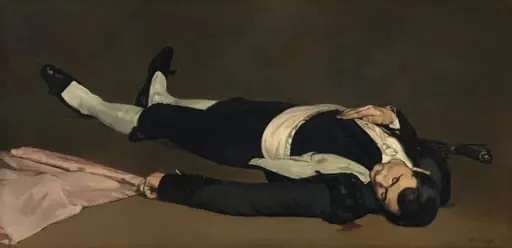
Le Suicidé depicts a man slumped on a bed after shooting himself, holding a revolver, with bloodstains on his white shirt and a plain, furnished bedroom interior. The painting strips away narrative or moralizing elements common in academic depictions of suicide, focusing instead on stark realism and a contemporary, unheroic subject. This departure from tradition, avoiding the heroic or sacrificial framing of death seen in works like David's The Death of Socrates, reflects Manet's break from academic conventions. The work's plain setting, limited palette of grays and browns punctuated by red bloodstains, and the ambiguous, almost agonal state of the figure emphasize physical reality over symbolic meaning. The subject's identity remains unknown, though speculation links it to the suicide of Manet's assistant Alexandre in 1859 or artist Jules Holzapffel in 1866, both referenced in contemporary accounts.
Technique & Style
This approach strips the scene of traditional narrative or moralizing context, focusing instead on the raw, unadorned aftermath of the act.
Le Suicidé is an oil painting on canvas measuring 38 cm in height and 46 cm in width. Executed between 1877 and 1881, the work features a restrained palette dominated by whites, blacks, greys, and browns, with the red of blood providing a stark focal point. The brushwork is characterized by a rapid, almost feverish application, described by critics as a "hasty script" or "feverish staccato," which contrasts with the stark realism of the subject. The composition presents a man in evening dress slumped on a bed, his face obscured and his hand loosely gripping a revolver, while a pool of blood stains the white shirt and floor. The setting is a sparsely furnished room with a metal bedstead and a partially visible portrait on the wall, rendered with a plain construction that avoids academic idealization. This approach strips the scene of traditional narrative or moralizing context, focusing instead on the raw, unadorned aftermath of the act.
History & Provenance
The exact creation date of *Le Suicidé* remains uncertain, with scholarly consensus placing its execution between 1877 and 1881. Édouard Manet donated the work in 1881 to a charity auction organized by painter Pierre Franc-Lamy to support the ailing composer Ernest Cabaner. Following the sale, the painting entered the collection of dealer Paul Durand-Ruel, who subsequently transferred it to collector Auguste Pellerin. Pellerin then passed the work to Baron Ferenc Hatvany. In 1948, the painting was acquired by the E.G. Bührle Foundation, where it has remained in the collection ever since, currently held as a permanent loan at the Kunsthaus Zürich. While the specific circumstances of its initial commission are not fully documented, the 1881 donation marks the first confirmed point in its ownership chain.
Le Suicidé is held by the Foundation E.G. Bührle Collection at Kunsthaus Zürich. Its inventory number is not specified in the sources. The work was owned by Ferenc Hatvany, Fritz Nathan, and the Foundation E.G. Bührle Collection before entering the foundation's permanent collection in 1948. It has been exhibited in exhibitions titled "Edouard Manet" and was part of the collection that was loaned for display at the Kunsthaus Zürich. The painting was created between 1877 and 1881 and was donated by Édouard Manet in 1881 for a charity auction.
Context
Le Suicidé has long occupied a marginal position in Édouard Manet's oeuvre, with scholars historically struggling to assign it a precise place within his artistic development. Often dismissed by early critics like Adolphe Tabarant as a mere "palette incident," the work is now recognized for its radical departure from academic conventions. Unlike traditional history paintings that framed suicide as heroic or sacrificial, Manet presented a mundane, unidealized death devoid of narrative moralizing. This stark realism, which some associate with Gustave Courbet, deliberately stripped the subject of grandeur, depicting a common man in a shabby interior rather than a noble martyr. Later interpretations have viewed the figure as a modern symbol of passion or a Christ-like martyr, while others link the work's somber tone to the artist's own physical decline. The painting remains a unique anomaly in Manet's late career, challenging viewers with its graphic brutality and refusal to provide context or resolution.
Legacy
Le Suicidé has historically been regarded as an outlier within Édouard Manet's oeuvre, often described by art historians as little studied or difficult to place within his artistic development. Early criticism included Adolphe Tabarant's dismissal of the work as a mere "palette incident," while others, such as Georges Bataille, interpreted it as an attempt to strip the horror of death down to the innocence of light. Some scholars have viewed the figure as a modern symbol of passion, transforming the artist into a Christ-like figure. The painting's reputation shifted significantly in popular culture following its prominent appearance in François Ozon's 2016 film Frantz, where it served as a focal point for the narrative despite never having been displayed at the Louvre, the museum depicted in the movie. Contemporary analysis frequently highlights the work's raw realism and its deliberate rejection of academic heroism in favor of depicting an ordinary, tragic end.
Own this work as a print
Artist & collection
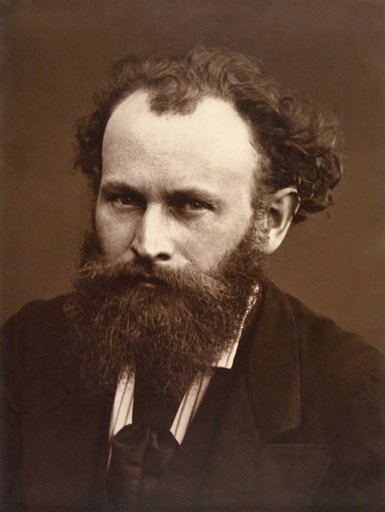
Artist
Édouard Manet was a French modernist painter. He was one of the first 19th-century artists to paint modern life, as well as a pivotal figure in the transition from Realism to Impressionism.