Artwork
The Funeral
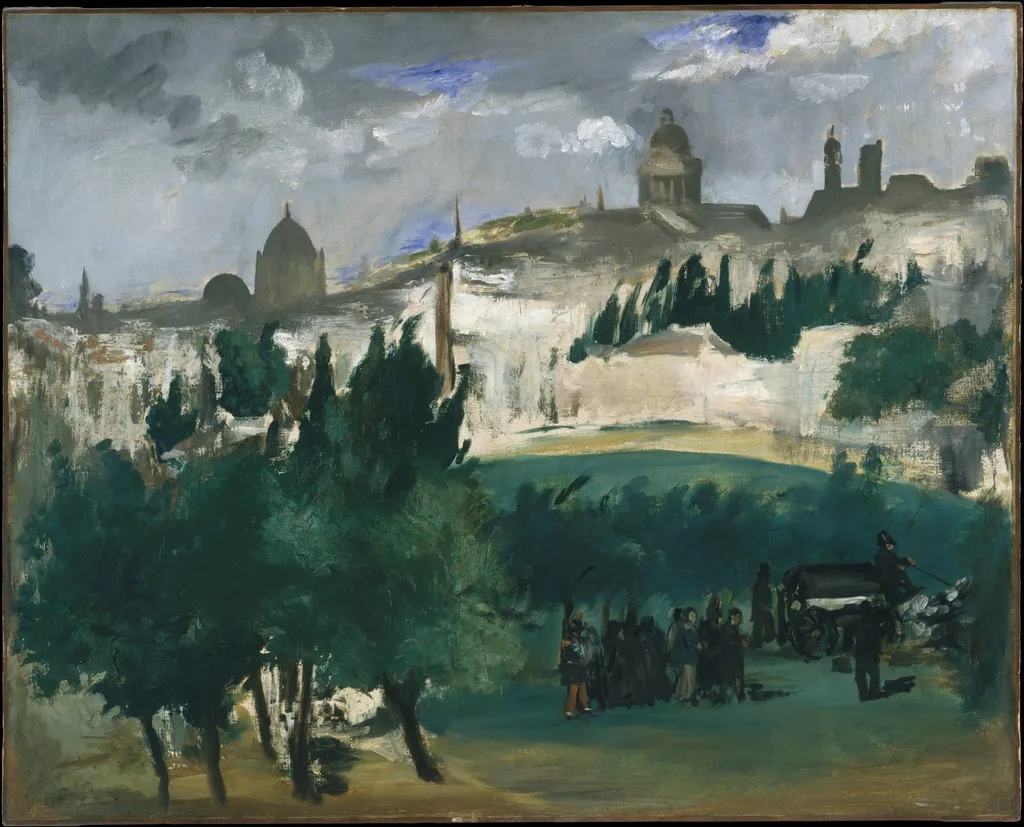
The Funeral is an oil painting by the Realist artist Édouard Manet. It dates from 1869 and is held in the collection of the Metropolitan Museum of Art.
About this work
Subject & Meaning
The painting's somber, stormy atmosphere and heavy sky likely reflect the actual weather on that day, while a small patch of blue sky may symbolize hope.
The Funeral depicts a hearse and its attendants in the Mouffetard district, heading toward Montparnasse Cemetery with Parisian landmarks like the Panthéon and Val-de-Grâce in the distance. Although the specific individuals in the procession are indistinct, the work is widely interpreted as a tribute to the poet Charles Baudelaire, whose funeral Manet attended on September 2, 1867. The painting's somber, stormy atmosphere and heavy sky likely reflect the actual weather on that day, while a small patch of blue sky may symbolize hope.
Art historians note that Manet took artistic license by compressing the city's domes for compositional balance and including a horse grenadier of the Imperial Guard, which suggests the scene predates the fall of the Second Empire. The unfinished state of the canvas leaves the mourners anonymous, emphasizing the universal nature of the event rather than specific portraiture, though the presence of the uniformed soldier anchors the work in a specific historical moment.
Technique & Style
The Funeral is an unfinished oil on canvas work measuring roughly 72.7 × 90.5 cm. Executed in oil paint, the painting was created on a stretched canvas support;. Manet’s handling is loose and sketch‑like, leaving parts of the composition under‑developed, a trait that aligns it formally with his contemporary landscape studies such as Effect of Snow on Petit‑Montrouge and the 1867 Exposition Universelle scene;. The work depicts a hearse and attendants moving through a Parisian quarter, with recognizable landmarks rendered in a loosely brushed, atmospheric style.
Its composition, dating to around 1867–1870, reflects the stormy mood of Charles Baudelaire’s funeral that inspired the subject.
History & Provenance
Likely executed around 1867, possibly inspired by the funeral of Charles Baudelaire on September 2 of that year, this unfinished oil painting was initially dated to 1870 by Adolphe Tabarant before he revised his assessment to an earlier period. The presence of an Imperial Guard soldier suggests the scene predates the fall of the Second Empire. Following Manet's death, his widow Suzanne sold the work to dealer Alphonse Portier in August 1894 for 300 francs.
By 1902, the canvas belonged to Camille Pissarro, though Dutch records indicate a temporary exchange with Ambroise Vollard in 1894 and a potential resale by Pissarro's widow in 1903. Vollard ultimately sold the piece to the Metropolitan Museum of Art; sources cite the price variously as $2,319 or 12,000 francs around 1909. The work appears in the posthumous inventory by Denis Rouart and Daniel Wildenstein under the title Burial at the Glacière.
The painting is held by the Metropolitan Museum of Art in New York. Its collection entry lists the work as part of the museum's holdings, and it was acquired from the dealer Ambroise Vollard, who sold it to the museum for $2,319, a transaction recorded in 1902. The work entered the museum after being sold by Suzanne Manet to the dealer Portier in August 1894 and later passing through the ownership of Camille Pissarro. No specific accession number is provided in the sources.
Context
Scholars widely interpret The Funeral as an unfinished tribute to the poet Charles Baudelaire, whose 1867 burial Manet attended under stormy skies. The work's stylistic proximity to Effect of Snow on Petit-Montrouge and The Exposition Universelle of 1867 situates it within Manet's late Second Empire output, a dating reinforced by Henri Loyrette's identification of an Imperial Guard soldier in the procession. Art historians note Manet's deliberate compositional alterations, such as compressing the distance between the Observatoire and Val-de-Grâce domes to enhance visual balance, despite the background not matching the actual view of Montparnasse Cemetery.
While Adolphe Tabarant initially dated the piece to 1870, he later revised this to 1867, aligning with the Baudelaire hypothesis. The painting's incomplete state, featuring indistinct mourners against a threatening sky, reflects both the specific atmospheric conditions of the funeral and Manet's evolving approach to modern life subjects.
Overview
Édouard Manet's The Funeral, an oil on canvas created between 1867 and 1870, depicts a somber procession. This painting, also known as Burial at the Glacière, remains unfinished. It is currently housed in the Metropolitan Museum of Art in New York.
Art historical analysis notes its stylistic similarities to other Manet works from the period, such as Effect of Snow on Petit-Montrouge and The Exposition Universelle of 1867, reflecting a consistent approach during this phase of his career.
Own this work as a print
Artist & collection
Artist
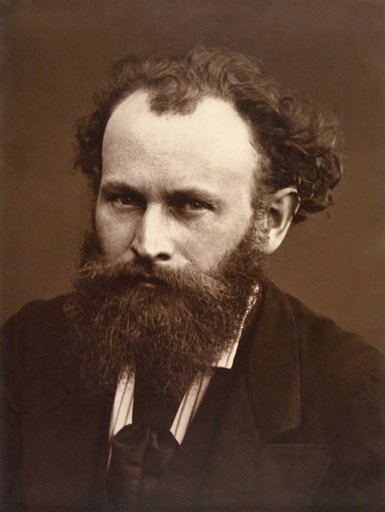
Édouard Manet was a French modernist painter. He was one of the first 19th-century artists to paint modern life, as well as a pivotal figure in the transition from Realism to Impressionism.

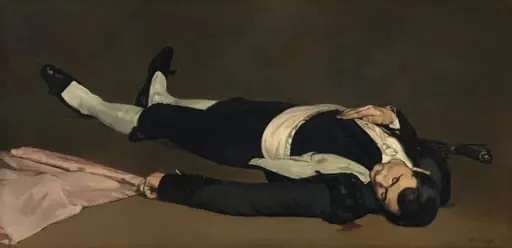
- Mont Sainte-Victoire and the Viaduct of the Arc River Valley
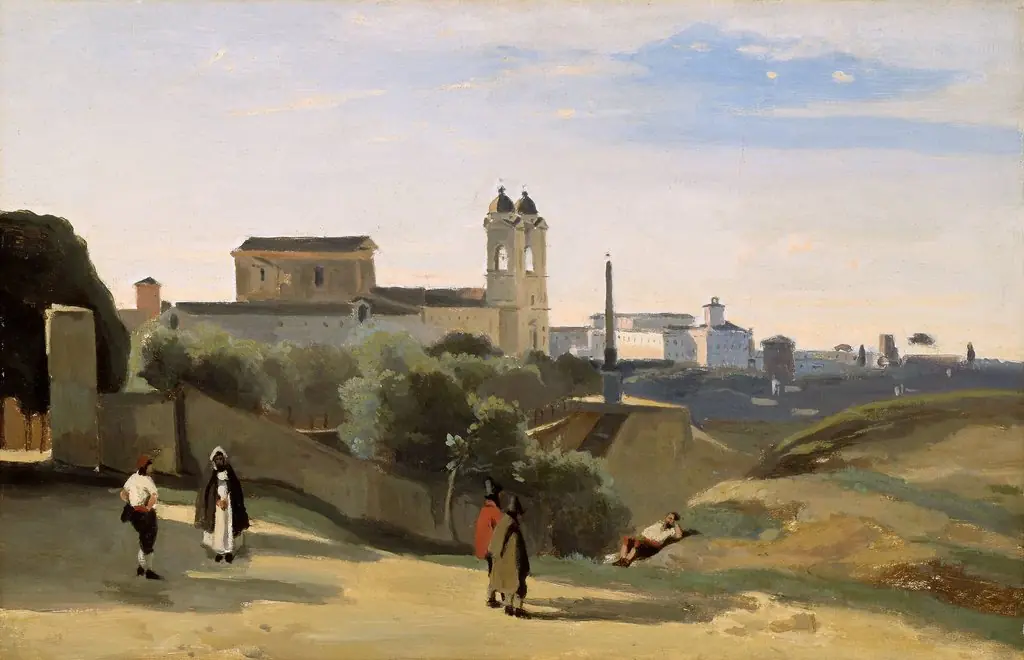 Monte Pincio, Rome
 Villa d'Este in Tivoli, sketch
 View on the Outskirts of Caen
 Les Peupliers
 Morning View of L'Estaque Against the Sunlight
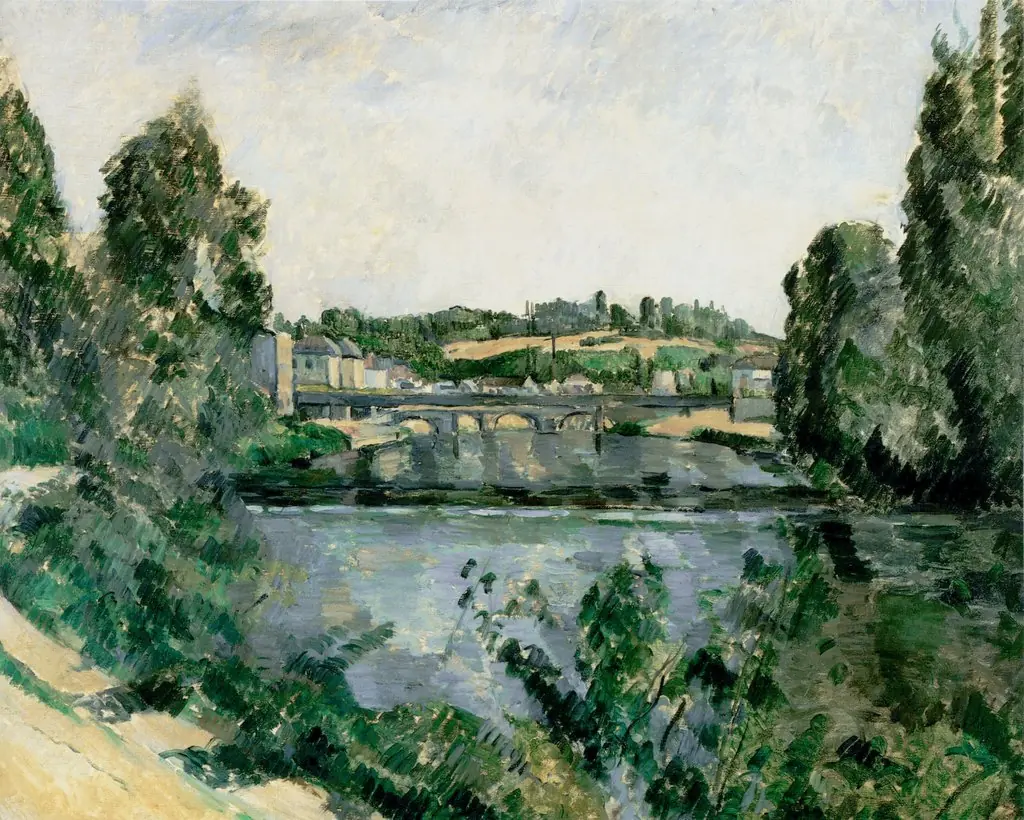 The Bridge and Dam at Pontoise (Le Pont et le déversoir à Pontoise)
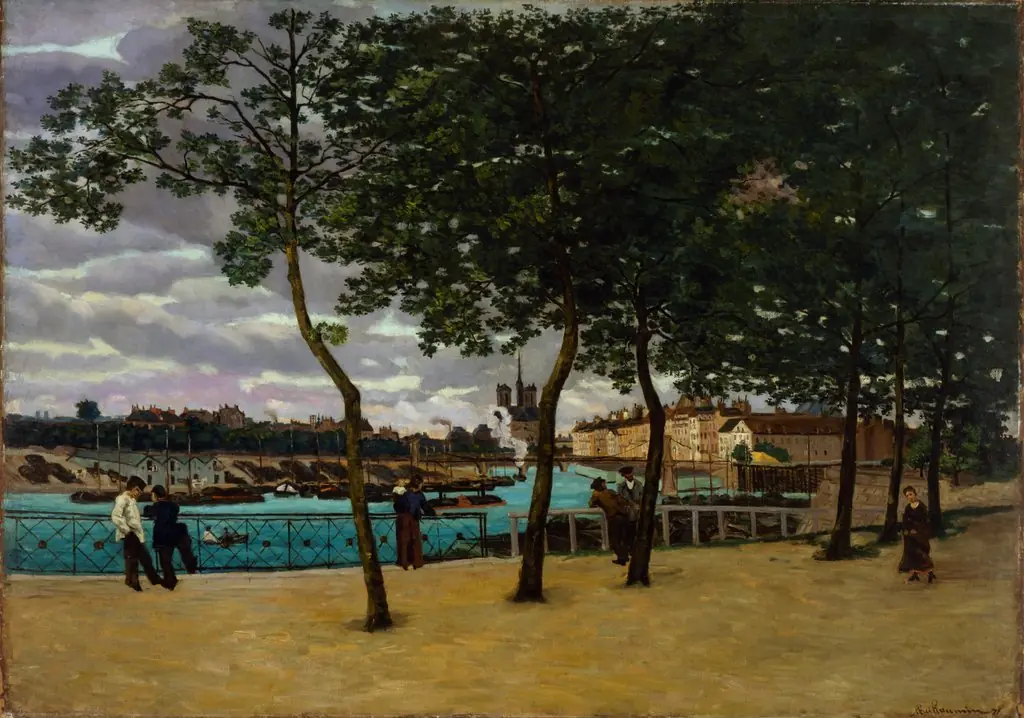 View of the Seine, Paris
 Pont Royal in Paris. Sketch
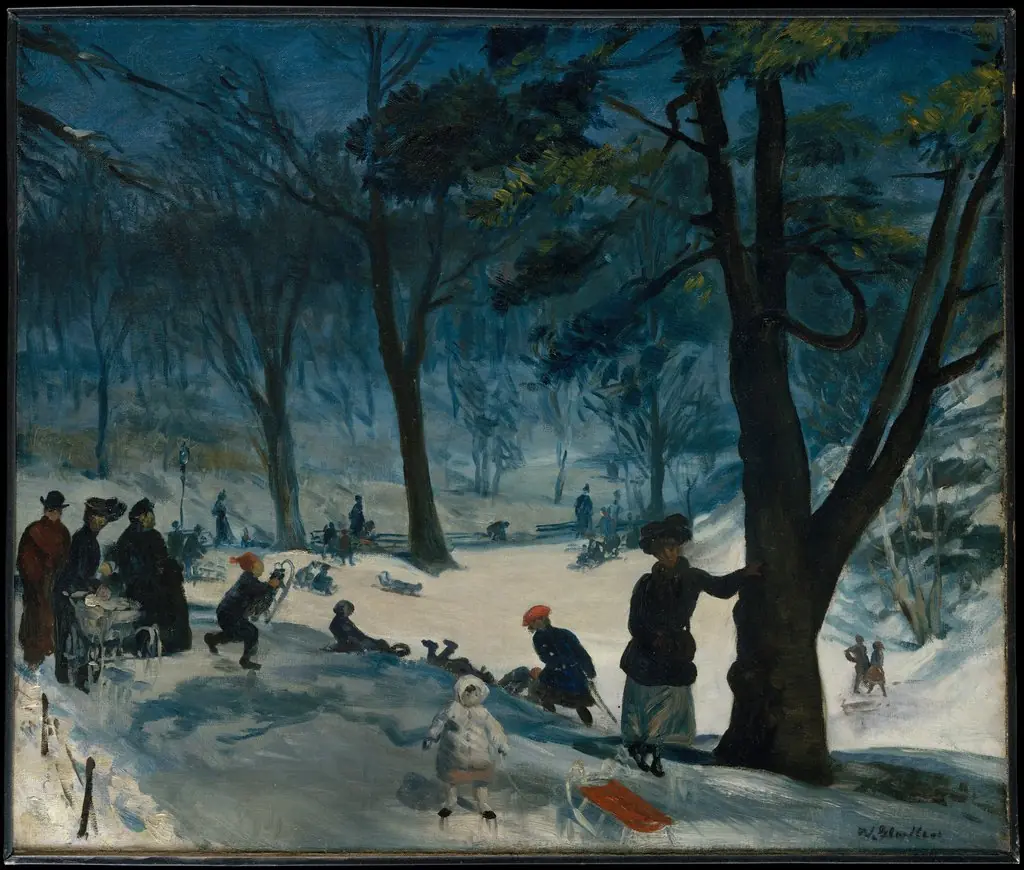 Central Park, Winter
 Landscape near Vence in Provence
 Monte Pincio, Rome