Artwork
Les Peupliers
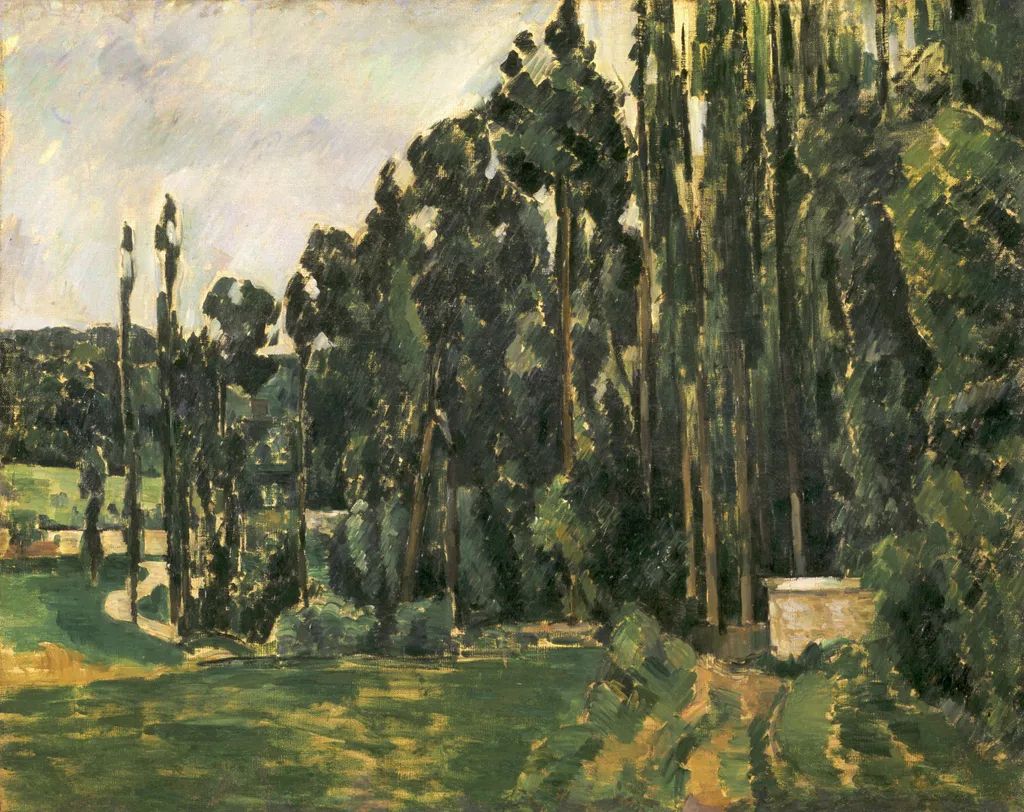
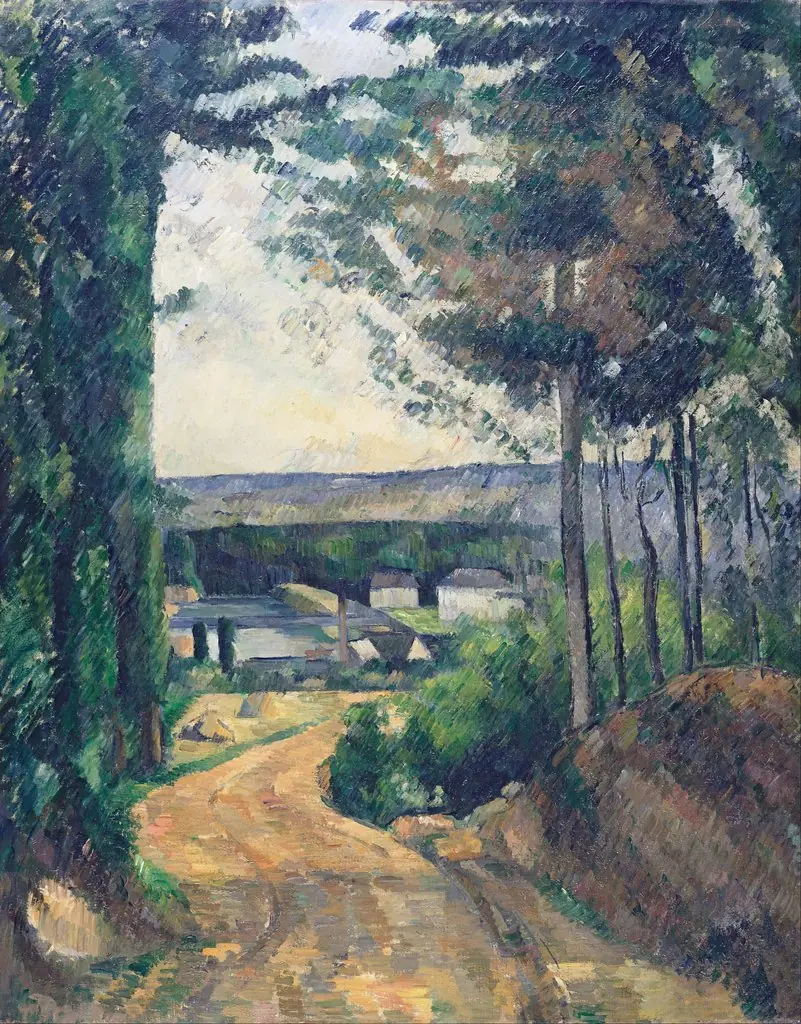
Les Peupliers is an oil painting by the Post-Impressionist artist Paul Cézanne. It dates from 1890 and is held in the collection of the Musée d'Orsay.
About this work
Overview
Painted in 1890, Les Peupliers is an oil-on-canvas landscape by Paul Cézanne that reflects his mature engagement with the natural world.
Painted in 1890, Les Peupliers is an oil-on-canvas landscape by Paul Cézanne that reflects his mature engagement with the natural world. Part of a broader series of rural scenes from this period, the work exemplifies his shift away from Impressionist spontaneity toward a more deliberate structuring of form. The composition centers on a quiet path flanked by poplars, rendered with methodical brushwork and layered color.
Subject & Meaning
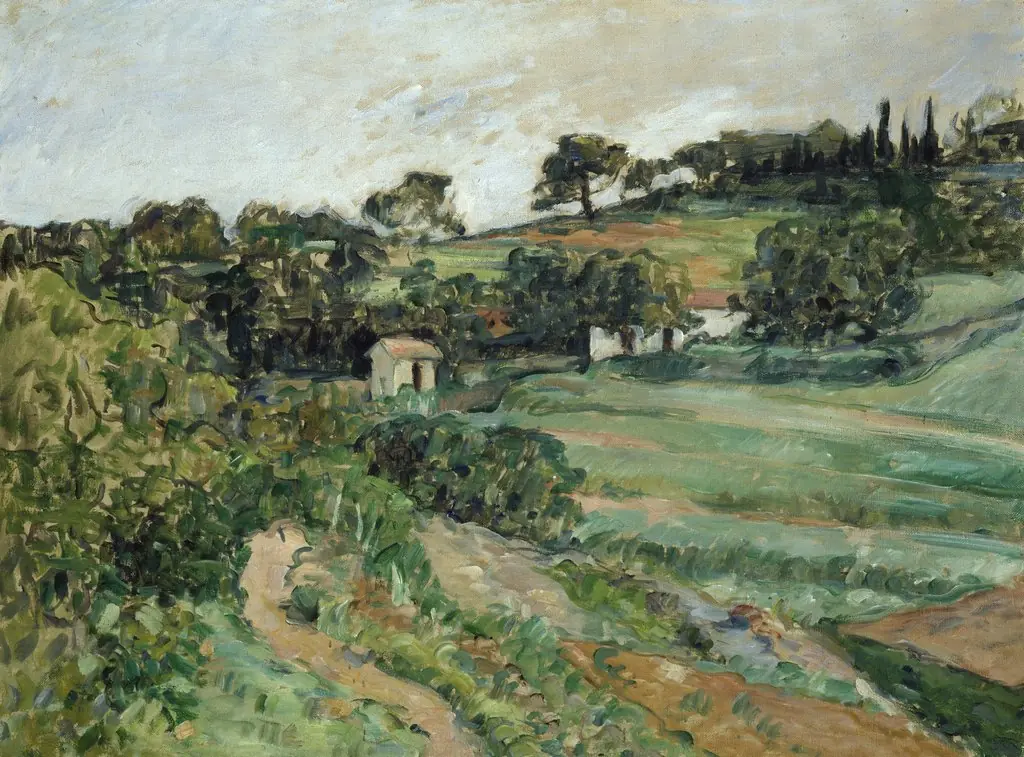
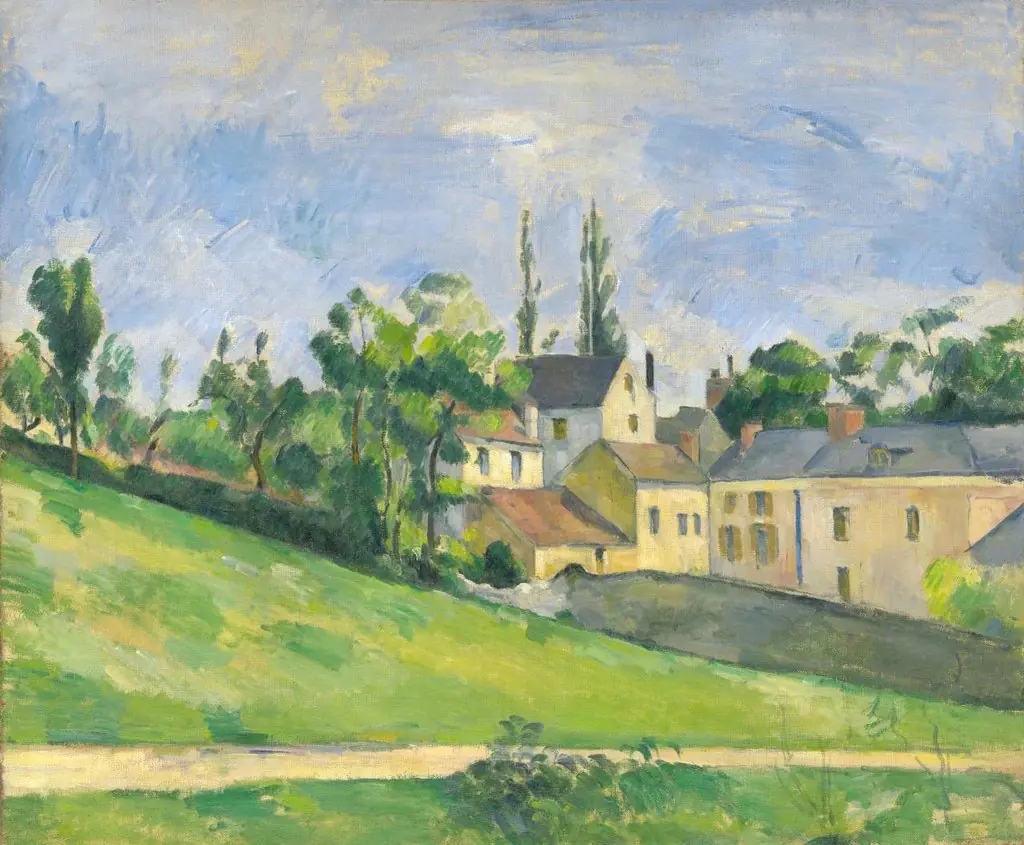
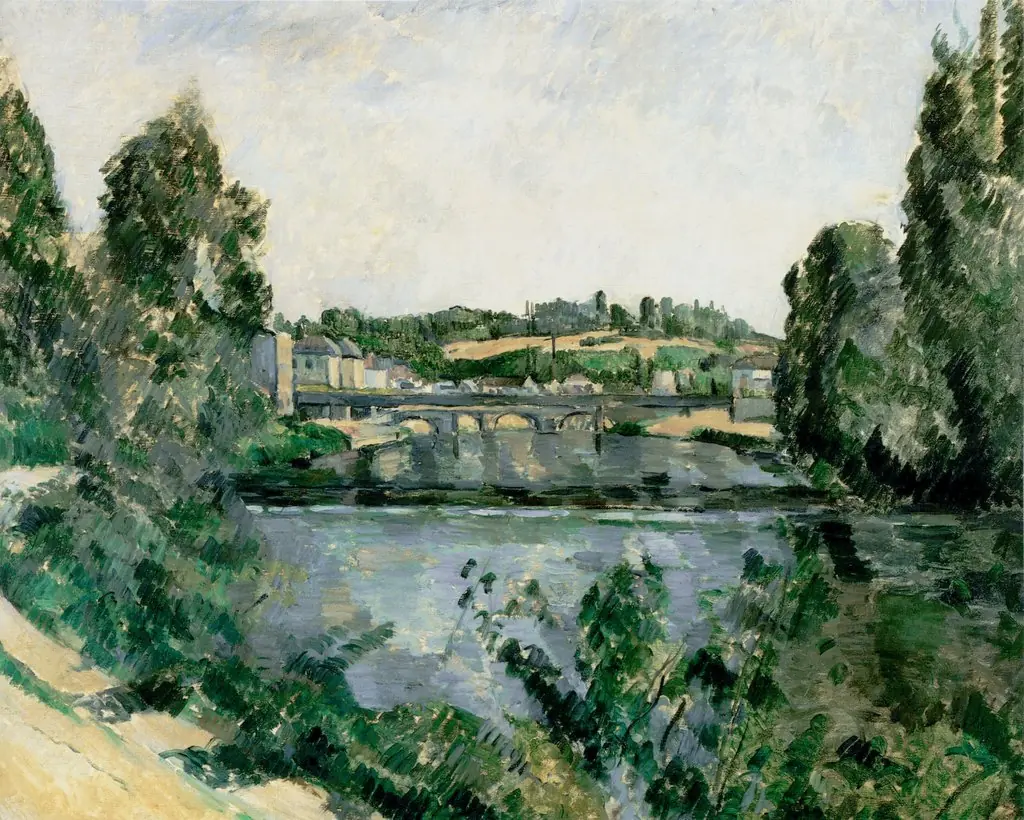
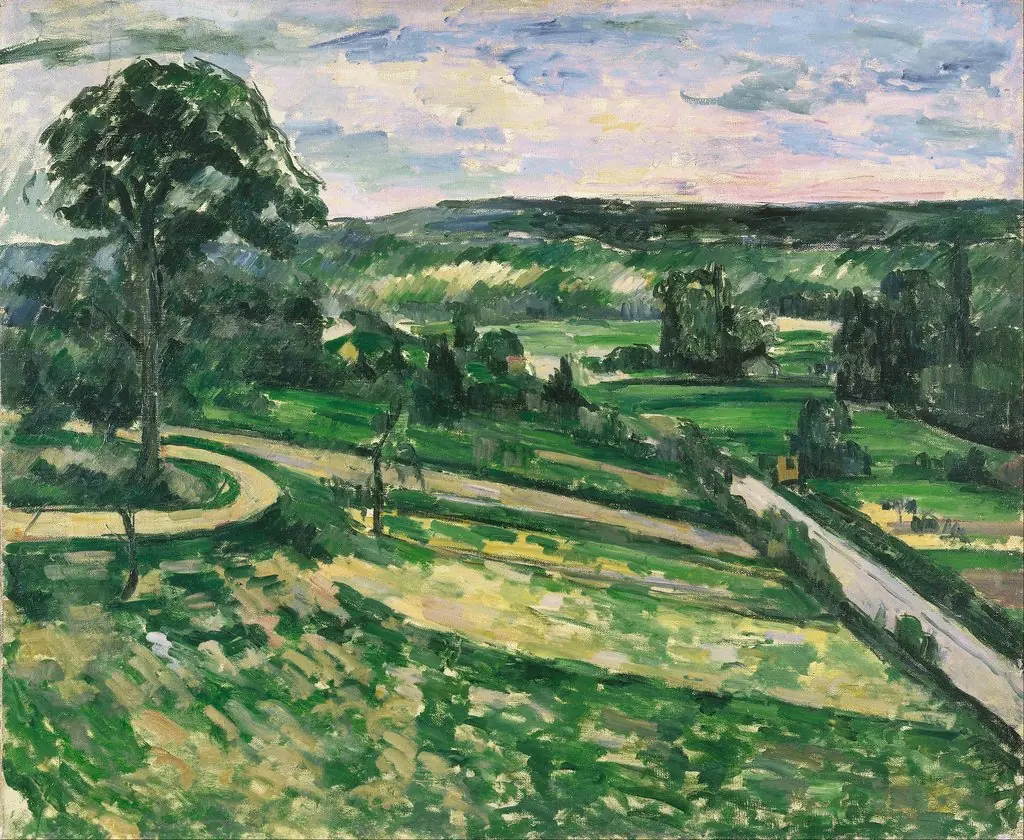
The painting portrays a modest country lane bordered by tall poplar trees, their vertical forms echoing the rhythm of the path. Distant buildings suggest human presence without intrusion, grounding the scene in everyday rural life. Cézanne avoids narrative or sentimentality; instead, he invites contemplation of spatial relationships and the quiet persistence of nature, framing the landscape as an enduring structure rather than a fleeting moment.
Technique & Style
Cézanne applied oil paint in distinct, directional strokes that build volume rather than blur into atmospheric effects. Color is used constructively, greens and ochres are modulated to suggest depth and light without traditional perspective. The brushwork is deliberate and visible, each mark contributing to the underlying geometry of the scene. This approach prioritizes structural integrity over illusion, anticipating later developments in modernist abstraction.
History & Provenance
Created during Cézanne’s years in Aix-en-Provence, Les Peupliers entered the collection of the Museum of Fine Arts of Lyon in the early 20th century. It was acquired following the artist’s growing recognition among avant-garde circles and later institutional collectors. The painting has remained in the museum’s holdings since, consistently exhibited as a key example of his landscape oeuvre.
Context
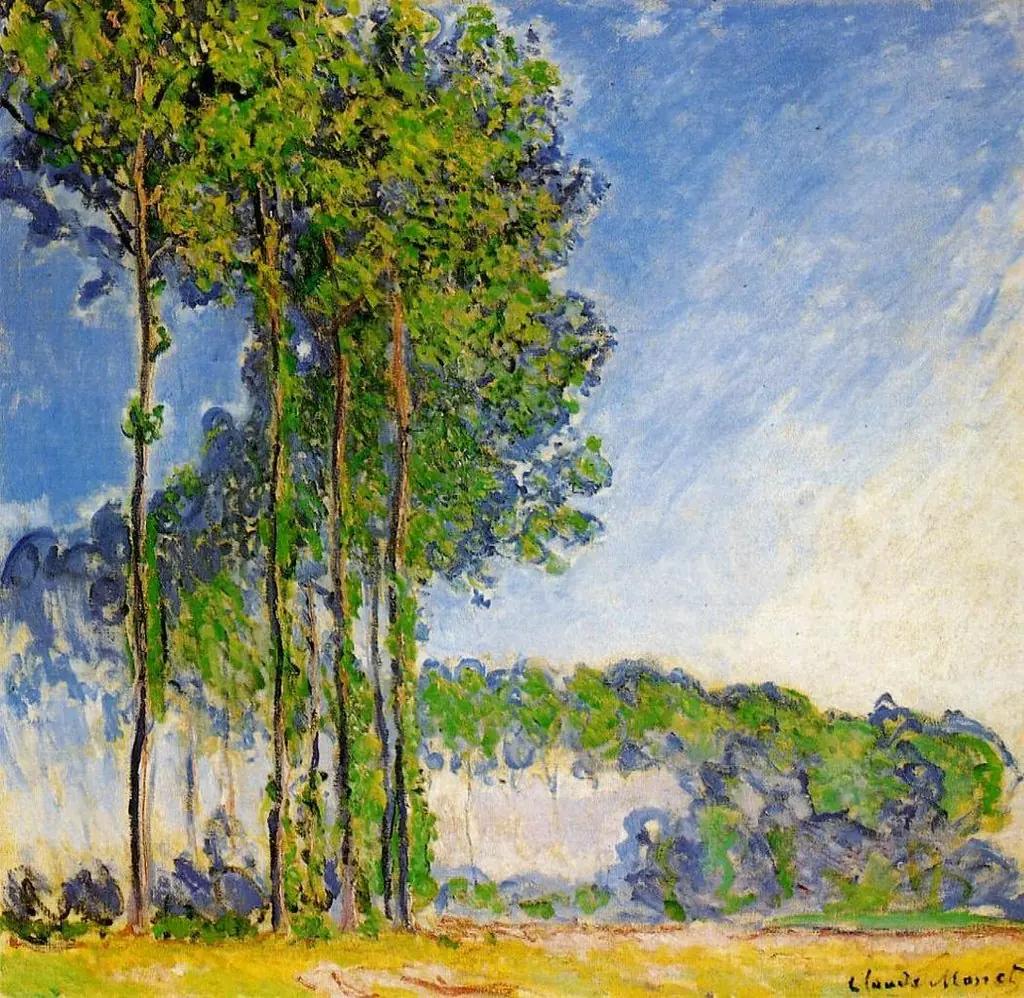
In the 1890s, Cézanne was refining his vision beyond Impressionism, seeking to reconcile sensory observation with formal order. While contemporaries like Monet pursued transient light, Cézanne focused on the underlying architecture of nature. Les Peupliers aligns with his broader project of redefining landscape painting through geometric simplification and chromatic harmony, influencing artists such as Picasso and Braque in the coming decades.
Legacy
The painting stands as a quiet but pivotal step in the evolution of modern art. Its emphasis on structure over atmosphere, and color as a means of spatial definition, helped dismantle traditional pictorial conventions. Though not widely publicized in its time, Les Peupliers contributed to the foundation of Cubist principles and remains a touchstone for understanding Cézanne’s methodical reimagining of visual reality.
Own this work as a print
Artist & collection

Artist
Paul Cézanne ( say-ZAN, UK also siz-AN, US also say-ZAHN; French: ; Occitan: Pau Cesana; 19 January 1839 – 22 October 1906) was a French Post-Impressionist painter whose work introduced new modes of representation,…

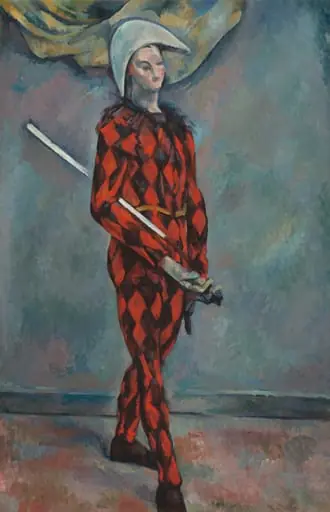 Harlequin
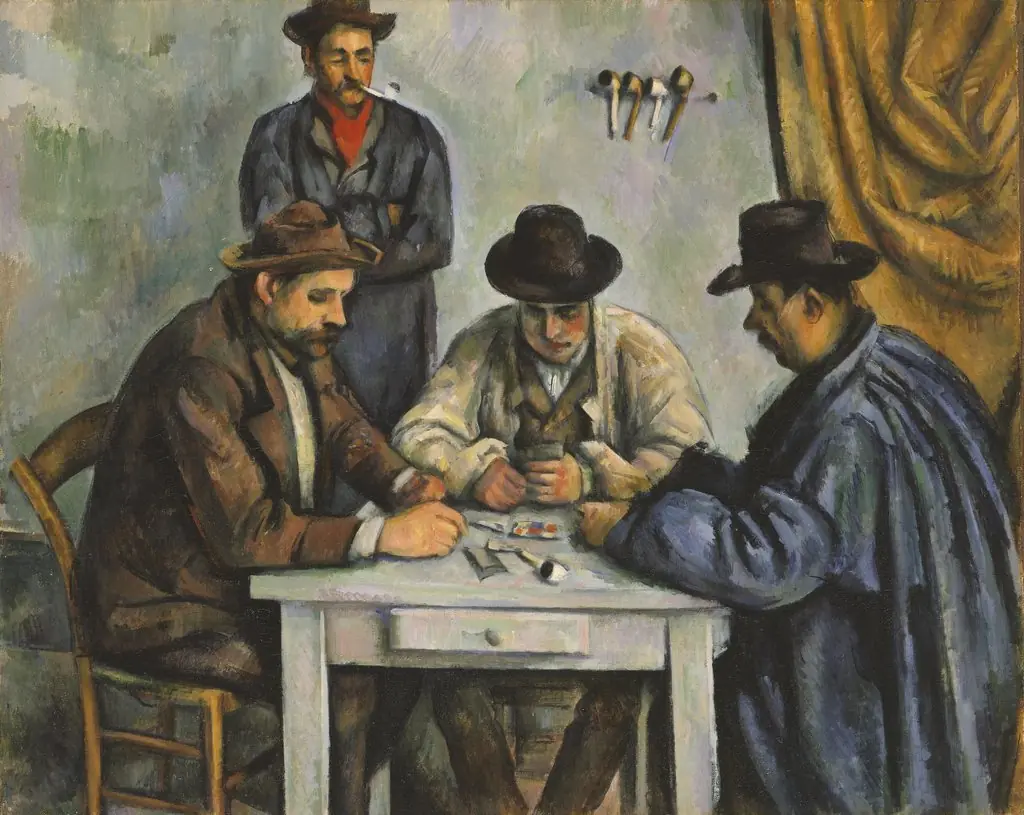 The Card Players
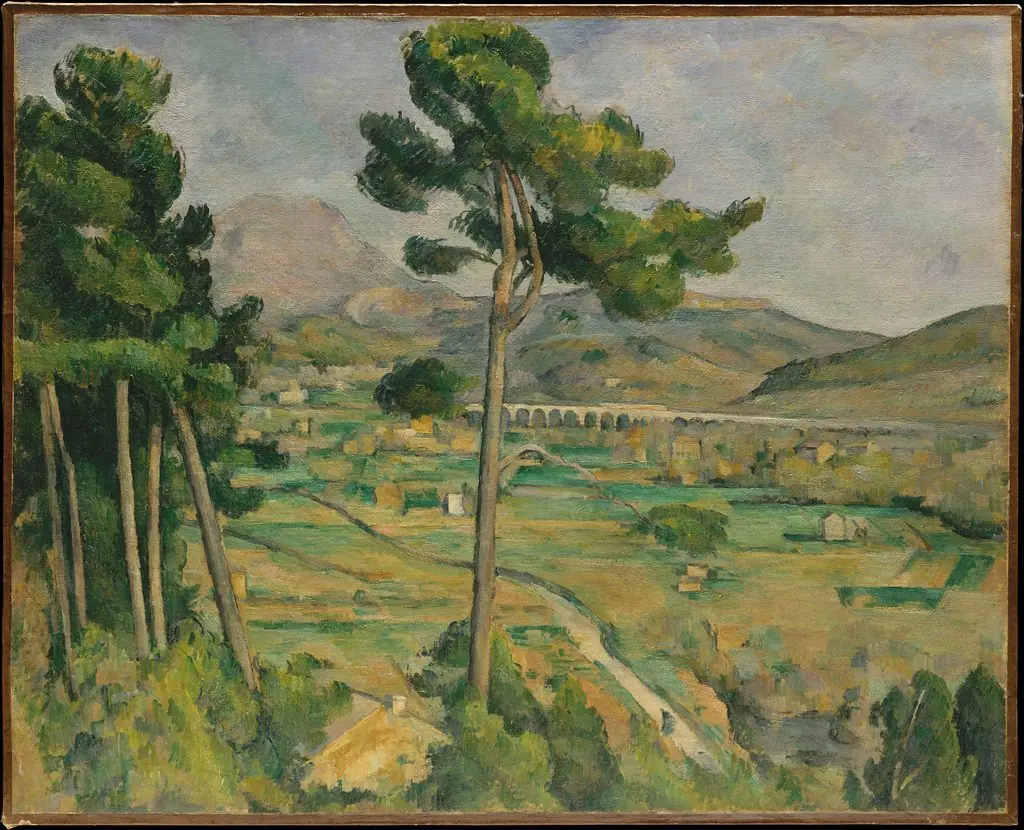 Mont Sainte-Victoire and the Viaduct of the Arc River Valley
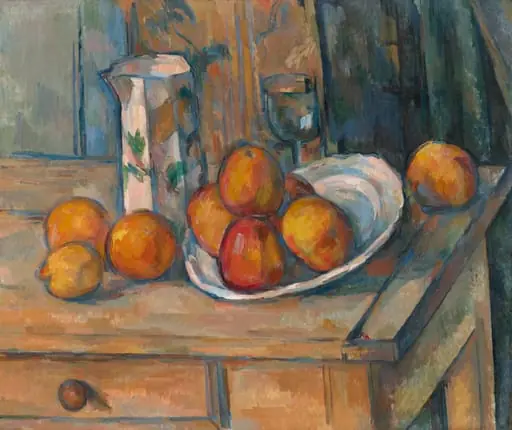 Still Life with Milk Jug and Fruit
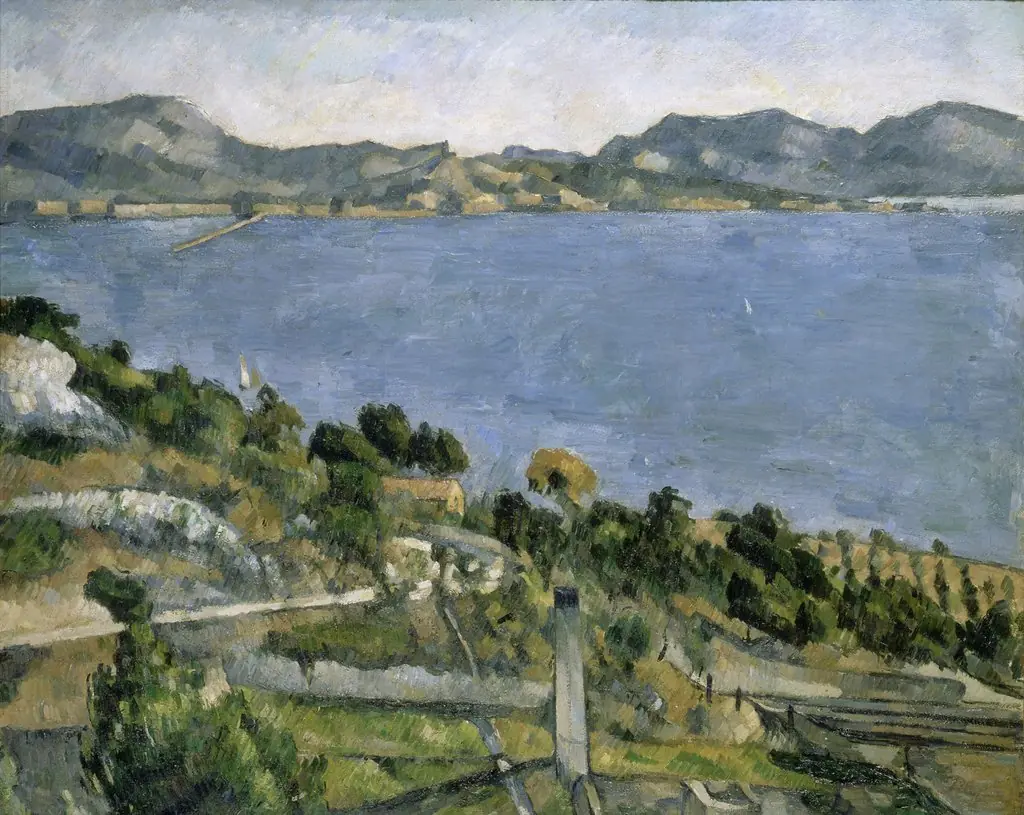 Le Golfe de Marseille vu de l'Estaque (The Gulf of Marseille Seen from L'Estaque)
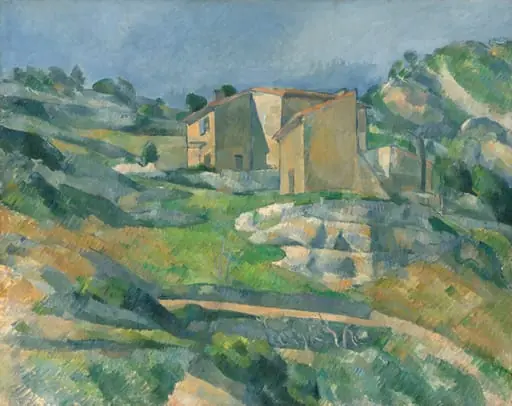 Houses in Provence: The Riaux Valley near L'Estaque
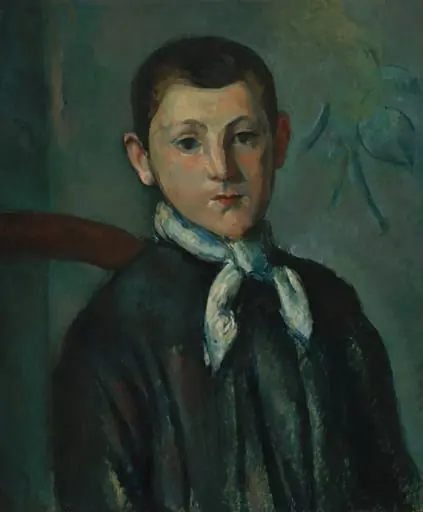 Louis Guillaume
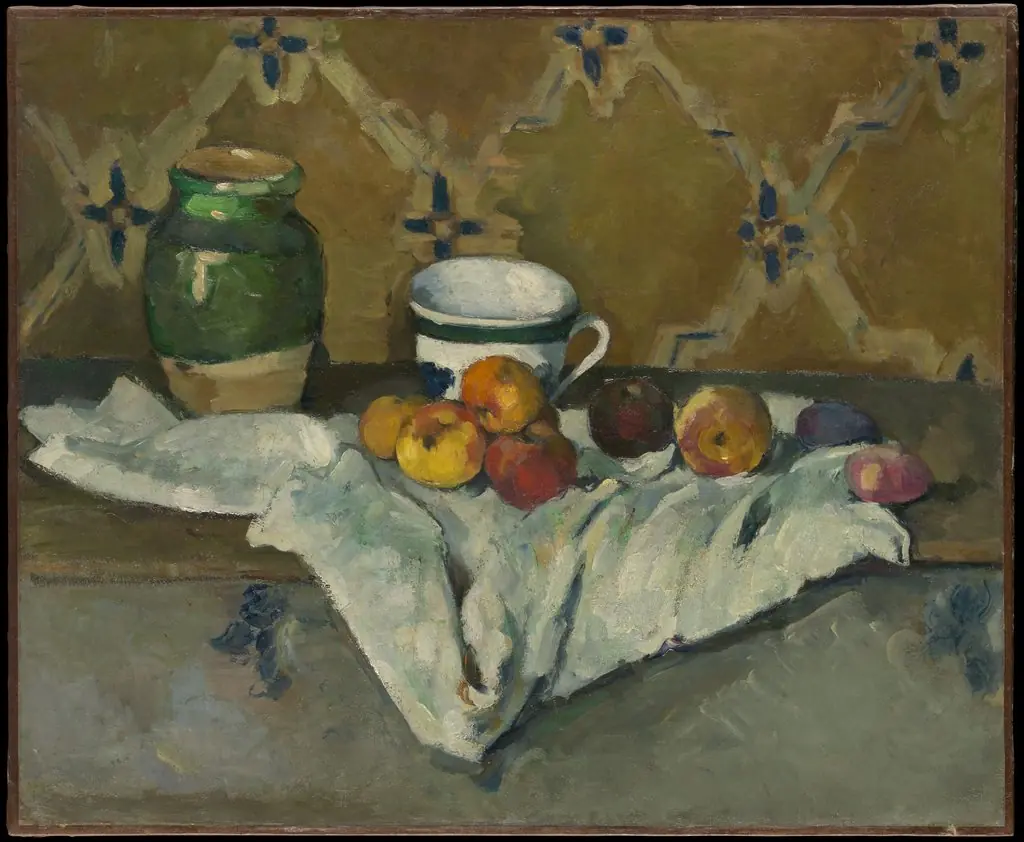 Still Life with Jar, Cup, and Apples