Artwork
The Races at Longchamp
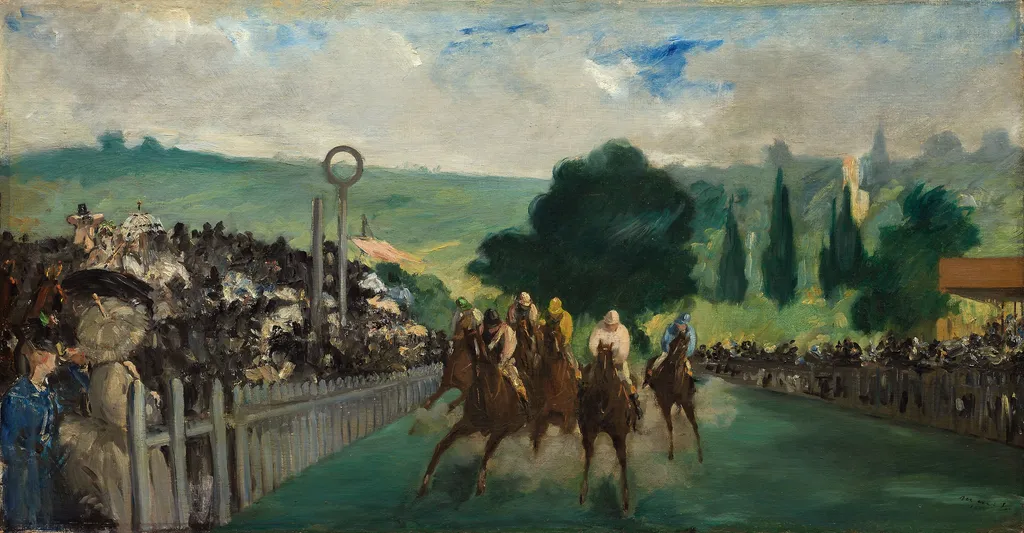
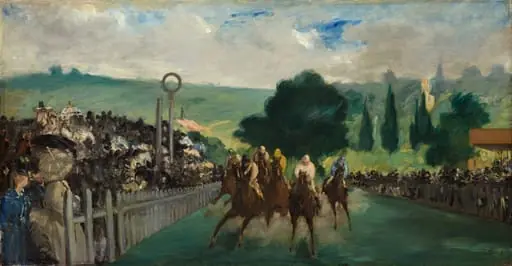
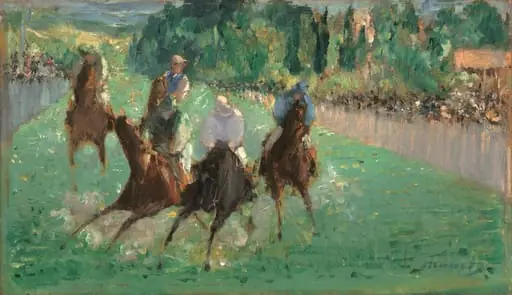
The Races at Longchamp is an oil painting by the Realist artist Édouard Manet. It dates from 1866 and is held in the collection of the Art Institute of Chicago.
About this work
Subject & Meaning
The composition deliberately flattens the depth of field, resembling a telescopic photograph, to emphasize the explosive motion of the animals.
The Races at Longchamp depicts the conclusion of the 1864 Grand Prix de Paris at the Hippodrome de Longchamp in Paris. The scene captures the cultural rise of horse racing in France, an activity adopted from British influence and popularized among the bourgeoisie during the Second Empire. Rather than showing a side profile typical of the genre, Manet presents six horses charging directly toward the viewer, creating an unprecedented sense of immediacy and speed. This frontal perspective places the observer on the track, surrounded by a cloud of dust and the frenetic energy of the event. The composition deliberately flattens the depth of field, resembling a telescopic photograph, to emphasize the explosive motion of the animals. The work reflects the modernity of Parisian leisure, where the race served as a pretext for social gathering among the elite.
Technique & Style
The Races at Longchamp is an oil painting on canvas, measuring 44 cm in height by 84 cm in width, a relatively small, horizontally oriented format that has led some scholars to suggest it may have been conceived as a study for a larger, unrealized composition. Manet's handling is loose and abbreviated, with much of the scene only lightly sketched in a deliberately "out-of-focus" manner that heightens the sensation of speed and movement. The paintwork lingers on the running clouds in the sky and the dust cloud kicked up by the galloping horses, reinforcing the painting's dynamic energy. Stylistically, the work is closely associated with Impressionism. Its most radical formal device is the frontal viewpoint: the six horses charge directly toward the viewer rather than being shown in profile, an unprecedented choice in horse-race painting. Manet further compresses spatial depth by placing the viewer on the track itself, with the railing extended into the lower-left corner, producing a telescoping effect comparable to a zoom-lens photograph.
History & Provenance
Manet began planning a major horse-racing composition as early as 1863, though only a watercolor study and two spectator portraits survive from that initial project. The Races at Longchamp, a smaller oil on canvas, was painted in 1866 or 1867 and may itself have been conceived as a study for a larger, unrealized canvas. It depicts the second running of the Grand Prix de Paris at the Hippodrome de Longchamp, held on June 5, 1864, which Manet attended among the crowd.
The painting's documented ownership chain begins in 1877, when Manet probably sold it to the British composer Frederick Delius for 1,000 French francs. By 1895 it had passed to the dealer Paul Durand-Ruel, who sold it in 1896 to the Chicago real-estate magnate Potter Palmer. After Palmer's death in 1902 the work remained with his family until 1922, when it was bequeathed to the Art Institute of Chicago, where it remains today.
The Races at Longchamp is held in the permanent collection of the Art Institute of Chicago. The work entered the museum's holdings in 1922, having been bequeathed by Potter Palmer, a Chicago real estate magnate who acquired it in 1896. Prior to this, the painting passed through the hands of British composer Frederick Delius, who likely purchased it from the artist in 1877, and dealer Paul Durand-Ruel in 1895. While the provided sources detail this specific provenance chain, they do not list a unique inventory or accession number for the piece, nor do they record specific exhibition histories or dates the work has been displayed publicly.
Context
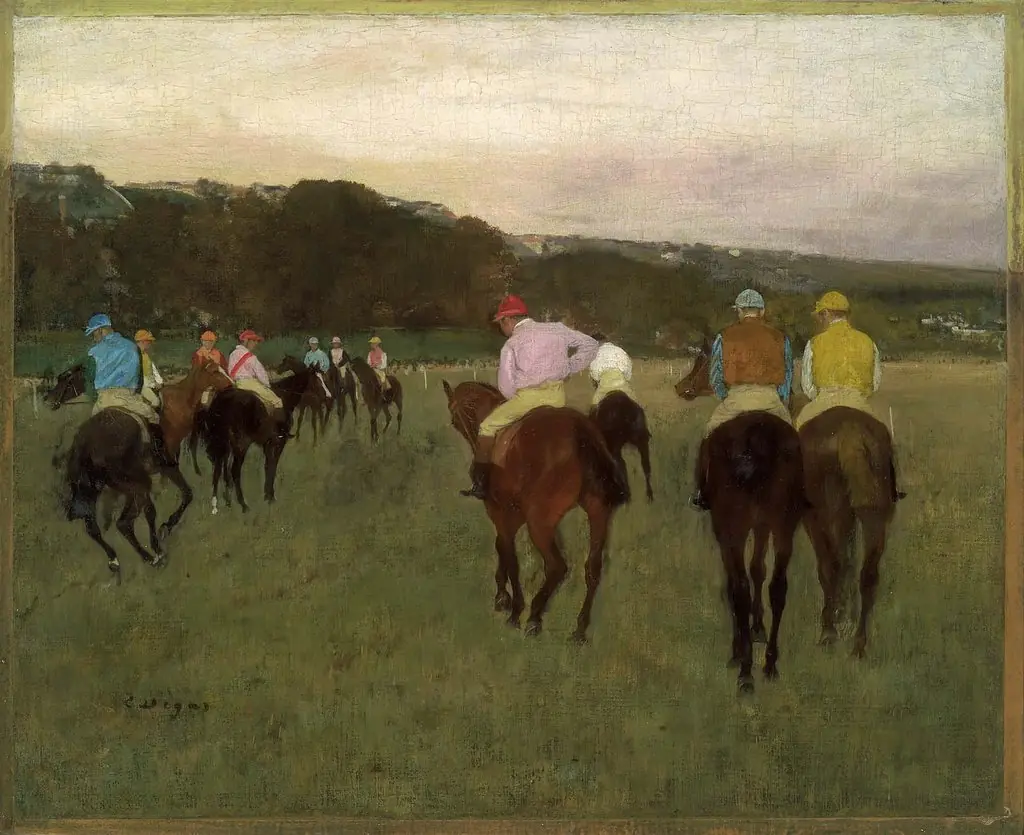
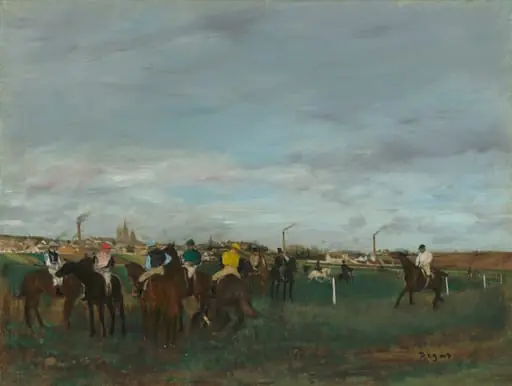
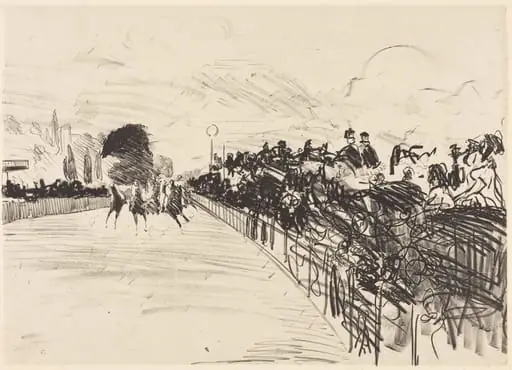
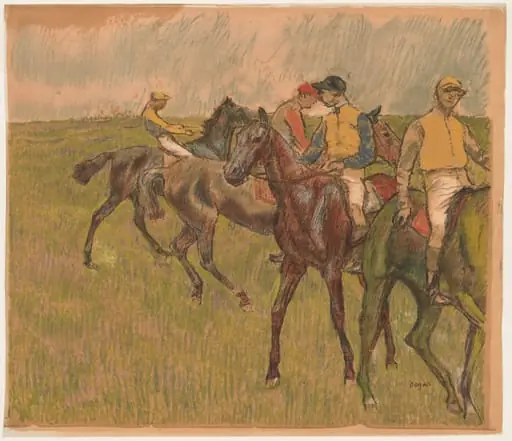
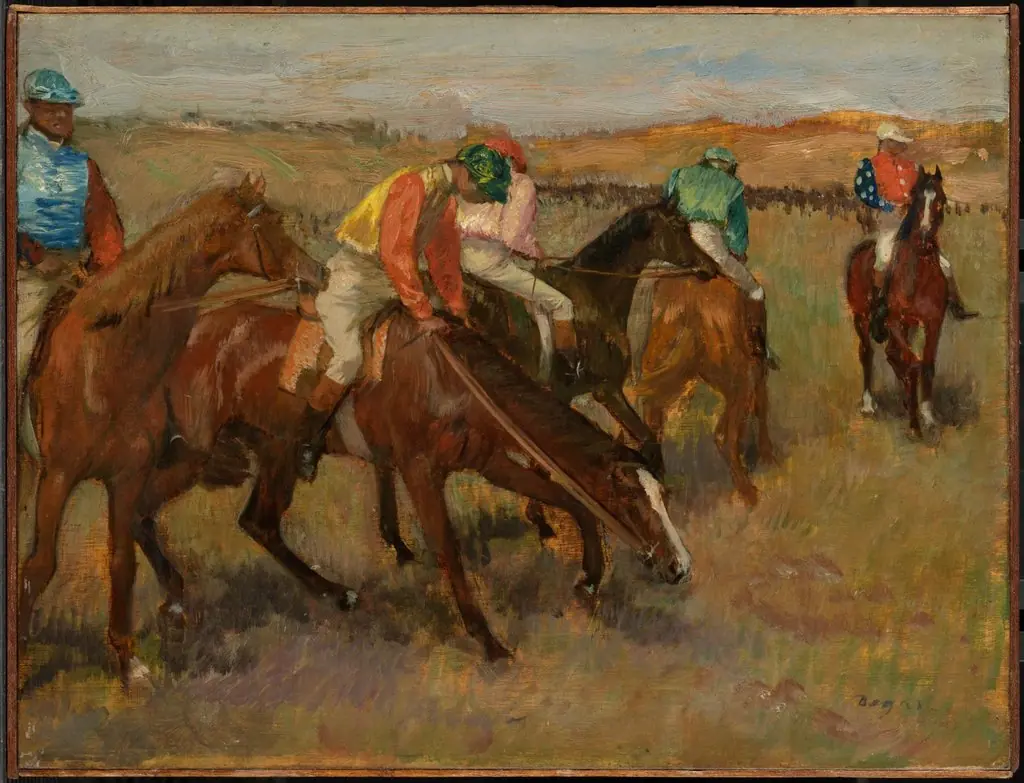
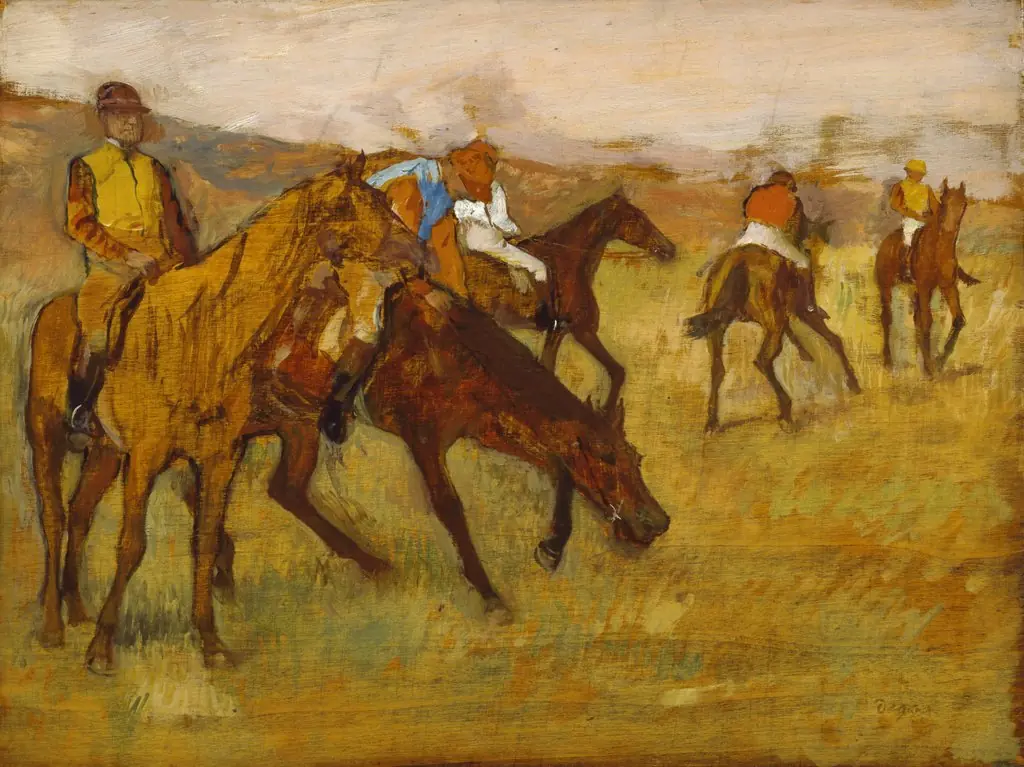
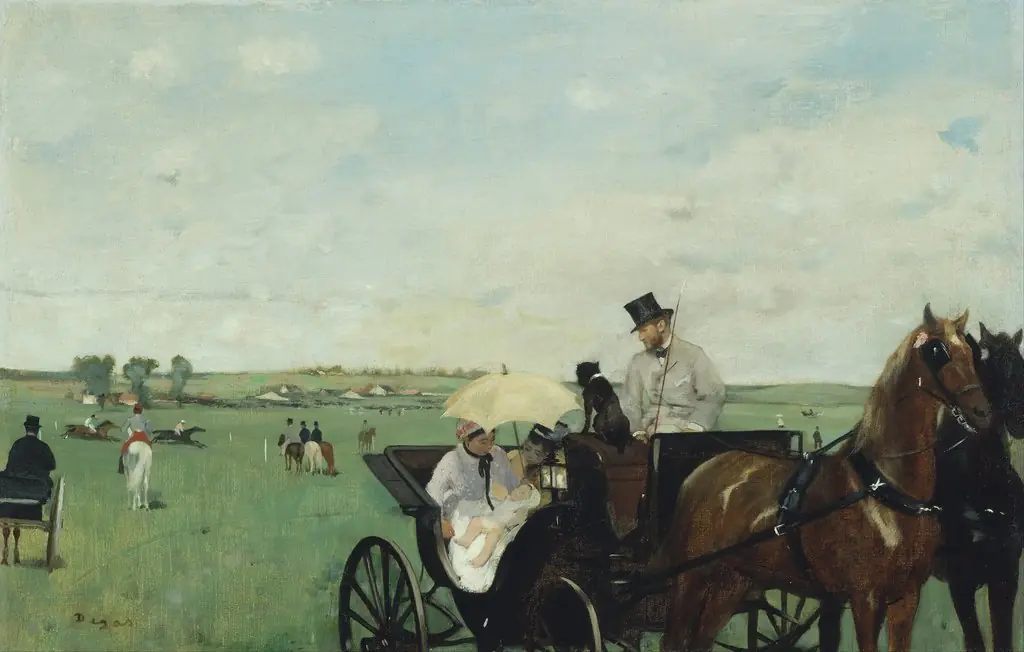
The Races at Longchamp (1866) is recognized as a pivotal work in the development of Impressionism due to its unprecedented frontal depiction of horses charging directly toward the viewer. Art historians Juliet Wilson-Bareau and Françoise Cachin note that Manet manipulated depth to create a flattened, telephoto effect, making the animals appear to explode from the background. This compositional innovation distinguishes the painting from earlier equestrian art, which typically utilized side profiles. The work reflects the broader cultural shift in France during the Second Empire, where the British-influenced rise of horse racing became a central social activity for the bourgeoisie. While Manet planned a larger composition on this theme that was never realized, this canvas serves as a significant study of modern life. Its dynamic, sketch-like execution and focus on contemporary leisure align it with the works of Edgar Degas, cementing its status as a major contribution to the genre of modern genre painting.
Legacy
The Races at Longchamp is recognized for its unprecedented composition, being the first painting to depict horses racing directly toward the viewer rather than from the side. This frontal perspective creates a dynamic sense of immediacy, placing the observer on the track itself. Art historians attribute the work's innovative status to its manipulation of depth, which resembles a telescopic photographic effect that compresses the background and foreground.
The painting is also noted for its stylistic kinship with Edgar Degas, as both artists sought to capture modern life and the frenetic energy of the racecourse. While the work was likely conceived as a study for a larger, unrealized masterpiece, its small scale and blurred details successfully convey the sensation of speed and dust. These formal innovations established the piece as a significant precursor to Impressionist techniques in depicting motion.
Artist & collection
Artist
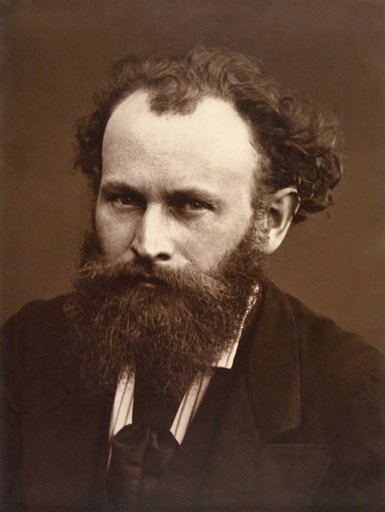
Édouard Manet was a French modernist painter. He was one of the first 19th-century artists to paint modern life, as well as a pivotal figure in the transition from Realism to Impressionism.