Artwork
The Rue Mosnier Dressed with Flags
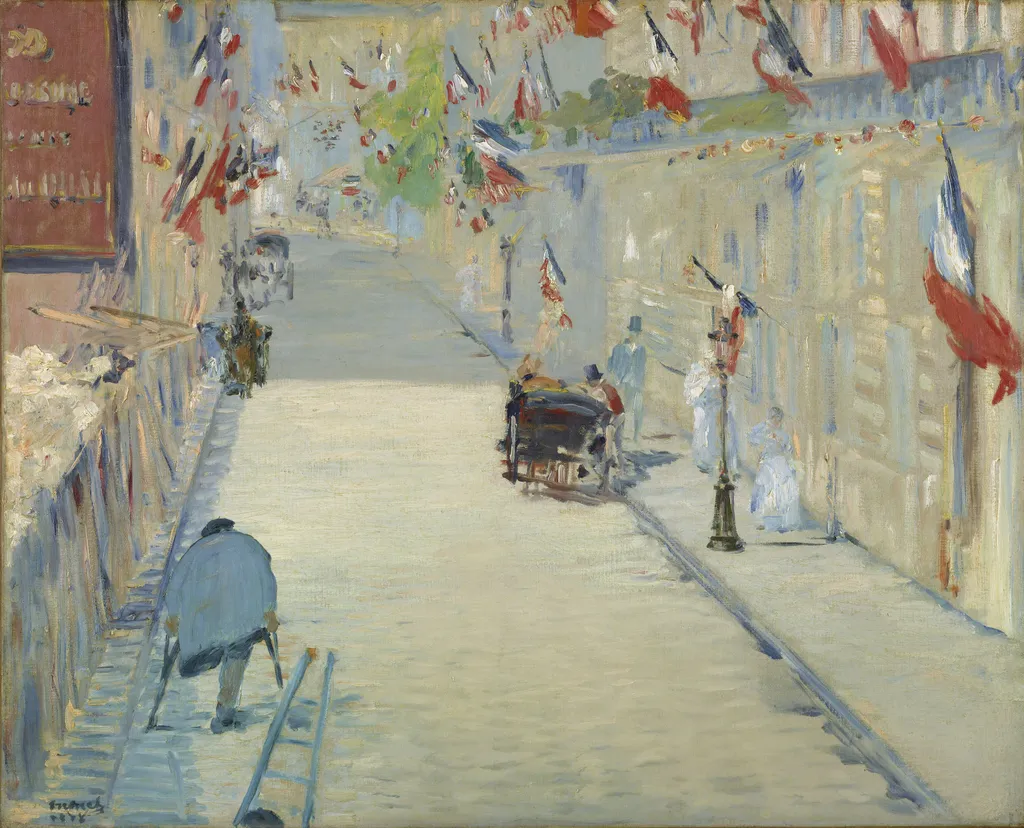
The Rue Mosnier Dressed with Flags is an oil painting by the Impressionist artist Édouard Manet. It dates from 1878 and is held in the collection of the J. Paul Getty Museum.
About this work
Subject & Meaning
While the flags and passing carriages suggest celebration, the composition introduces a somber counter-narrative through specific foreground details.
Painted from an upper-story window on June 30, 1878, this work depicts the Rue Mosnier (now Rue de Berne) adorned with French tricolor flags for the Fête de la Paix. This national holiday, held during the Exposition Universelle, symbolized France's recovery following the Franco-Prussian War and the Paris Commune. While the flags and passing carriages suggest celebration, the composition introduces a somber counter-narrative through specific foreground details.
A one-legged man on crutches, likely a war veteran, traverses the street near rubble from construction works expanding the Gare Saint-Lazare. This inclusion creates an austere atmosphere that contrasts sharply with the jubilant tone found in Claude Monet's contemporary paintings of similar flag-draped streets. By juxtaposing symbols of republican renewal with the physical scars of conflict and urban disruption, the painting offers a complex, ambiguous view of progress rather than a purely festive record.
Technique & Style
Édouard Manet executed this cityscape in 1878 using oil paint on a canvas measuring 65.4 × 80 cm. The composition was painted from an upstairs window, capturing the street below with tricolour flags hanging from buildings, passing carriages, and pedestrians. Stylistically, the work aligns with Impressionism and modernism, rendered with confident brushstrokes. However, unlike Claude Monet's more jubilant contemporary scenes of the same holiday, Manet's painting possesses a distinctly austere and almost arid quality, conveying a darker, ambiguous vision of the summer day.
This somber tone is anchored in the foreground, where a one-legged man on crutches, possibly a war veteran, and building rubble behind a fence contrast sharply with the festive decorations and elegantly dressed figures, demonstrating Manet's eye for the shadowed sides of prosperity and progress. The painting is signed and dated "Manet / 1878" in the lower left corner.
History & Provenance
The painting is held in the collection of the J. Paul Getty Museum at the Getty Center in Los Angeles. It was acquired by the institution in 1989 following a sale at Christie's in New York.
Prior to this acquisition, the work passed through several notable private collections. It was owned by Jean-Baptiste Faure during the 1890s and subsequently by Auguste Pellerin until 1910. Later owners included the Hungarian collectors Marcell Nemes and Baron Mór Lipót Herzog.
Before 1932, the piece was sold to the German banker Jakob Goldschmidt. Following Goldschmidt's death in 1955, his estate sold the work in London in 1958 to Paul Mellon, who retained it until the 1989 auction.
Context
Scholars position this work within the broader Impressionist response to the Fête de la Paix on June 30, 1878, contrasting it directly with Claude Monet's contemporaneous depictions of the Rue Montorgueil and Rue Saint-Denis. While Monet's versions convey a jubilant atmosphere, Manet's interpretation is characterized by an austere, almost arid quality that offers a darker vision of summer in Paris. This critical distinction highlights Manet's focus on the shadow sides of progress and prosperity, specifically through the inclusion of a one-legged veteran on crutches, likely wounded in the Franco-Prussian War, who traverses a scene of rubble and construction near the Gare Saint-Lazare.
The painting is historically situated as part of France's recovery following the Paris Commune and the war, serving as a counter-narrative to the official celebration of national renewal. Art historical analysis notes that the composition echoes Manet's other 1878 work, Road-menders in the Rue Mosnier, and suggests a lineage of influence extending to Childe Hassam's 1917 painting The Avenue in the Rain. By juxtaposing festive tricolor flags with the reality of physical disability and urban debris, the work provides a complex commentary on the Third Republic's self-presentation during the Exposition Universelle.
Legacy
Manet's painting established a compositional and thematic precedent for depicting flag-draped urban streets, directly contrasting with Claude Monet's more jubilant contemporary scenes of the Rue Montorgueil and Rue Saint-Denis on the same 1878 holiday. Unlike Monet's celebratory atmosphere, Manet's austere vision, incorporating a wounded veteran and construction debris, offered a complex, ambiguous reflection on national recovery. These 1878 Parisian street works by Manet and Monet subsequently influenced Childe Hassam's 1917 painting of New York, The Avenue in the Rain.
Within Manet's own output, the canvas echoes the composition of his 1878 Road-menders in the Rue Mosnier, while a similar scene of the decorated street resides in a private collection.
Overview
Édouard Manet’s 1878 oil on canvas, titled The Rue Mosnier Dressed with Flags, measures roughly 65 by 80 centimetres. Executed from the artist’s studio window overlooking the street, it records a brief moment when the thoroughfare was festooned with French tricolour banners for a national celebration. The composition captures everyday pedestrians, a ladder‑bearing worker, and a crutch‑using figure against the backdrop of ongoing urban construction.
Own this work as a print
Artist & collection
Artist
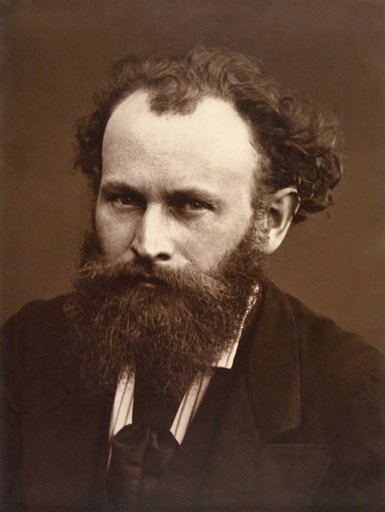
Édouard Manet was a French modernist painter. He was one of the first 19th-century artists to paint modern life, as well as a pivotal figure in the transition from Realism to Impressionism.

 The Grands Boulevards
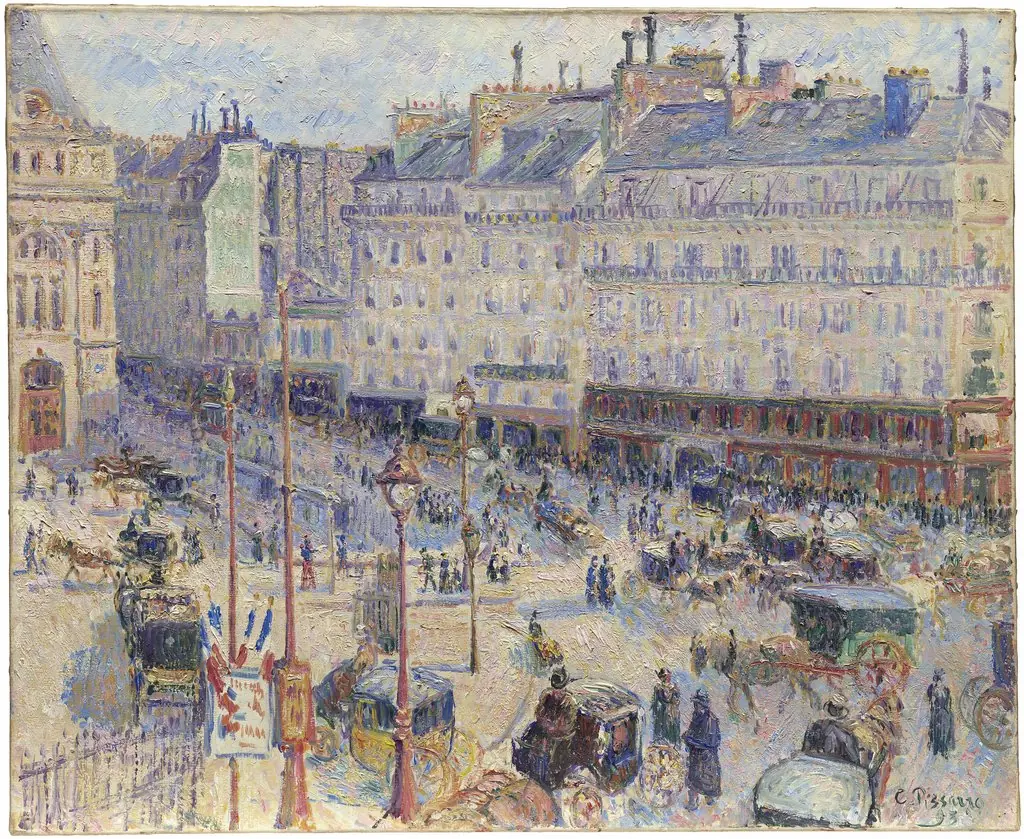 The Place du Havre, Paris
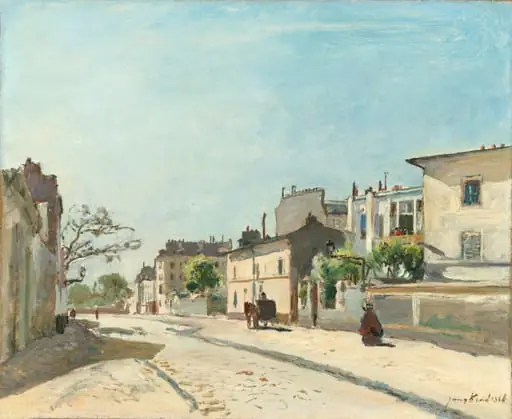 Rue Notre-Dame, Parijs
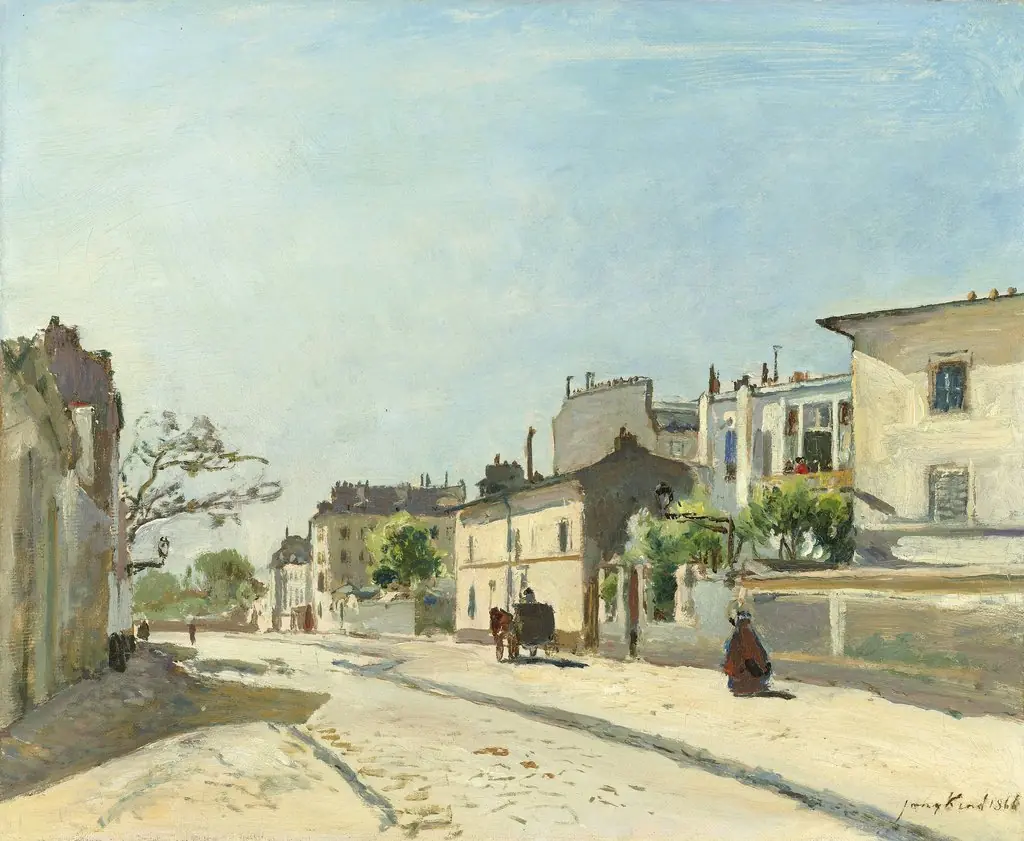 Rue Nôtre-Dame, Paris
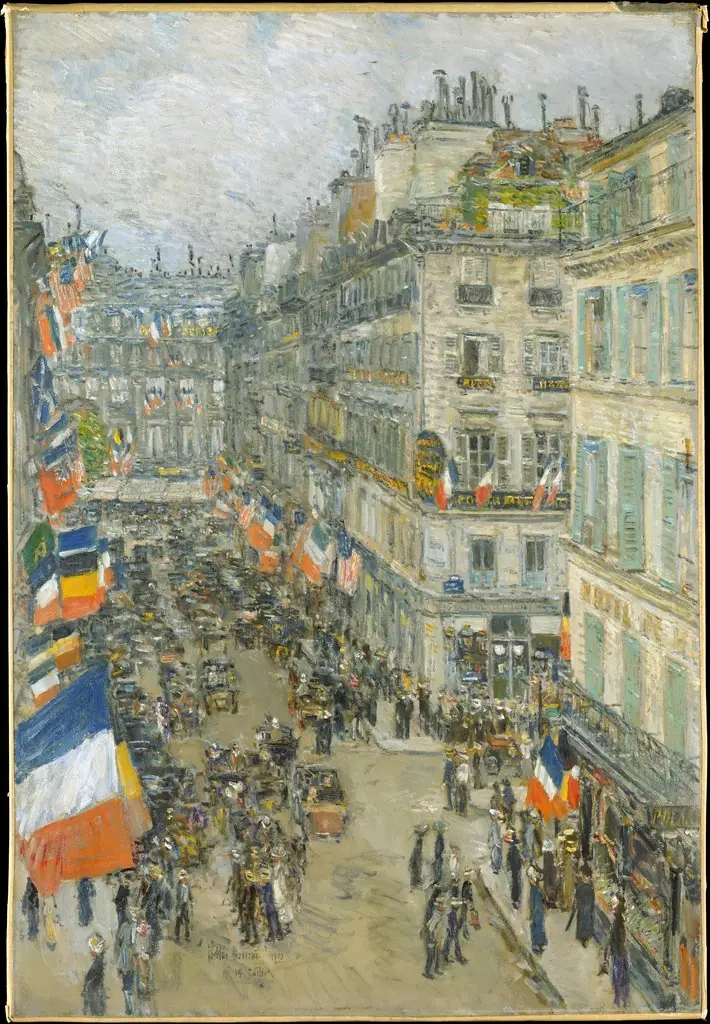 July Fourteenth, Rue Daunou, 1910
 A Turn in the Road
 A Turn in the Road
 Afternoon Sunshine, Pont Neuf
 Place Clichy
 Luxembourgin puistosta
 Udsigt fra vinduet i Café Osborne op ad Frederiksberg Allé
- Rue Eugène Moussoir at Moret: Winter