Artwork
Rucellai Madonna
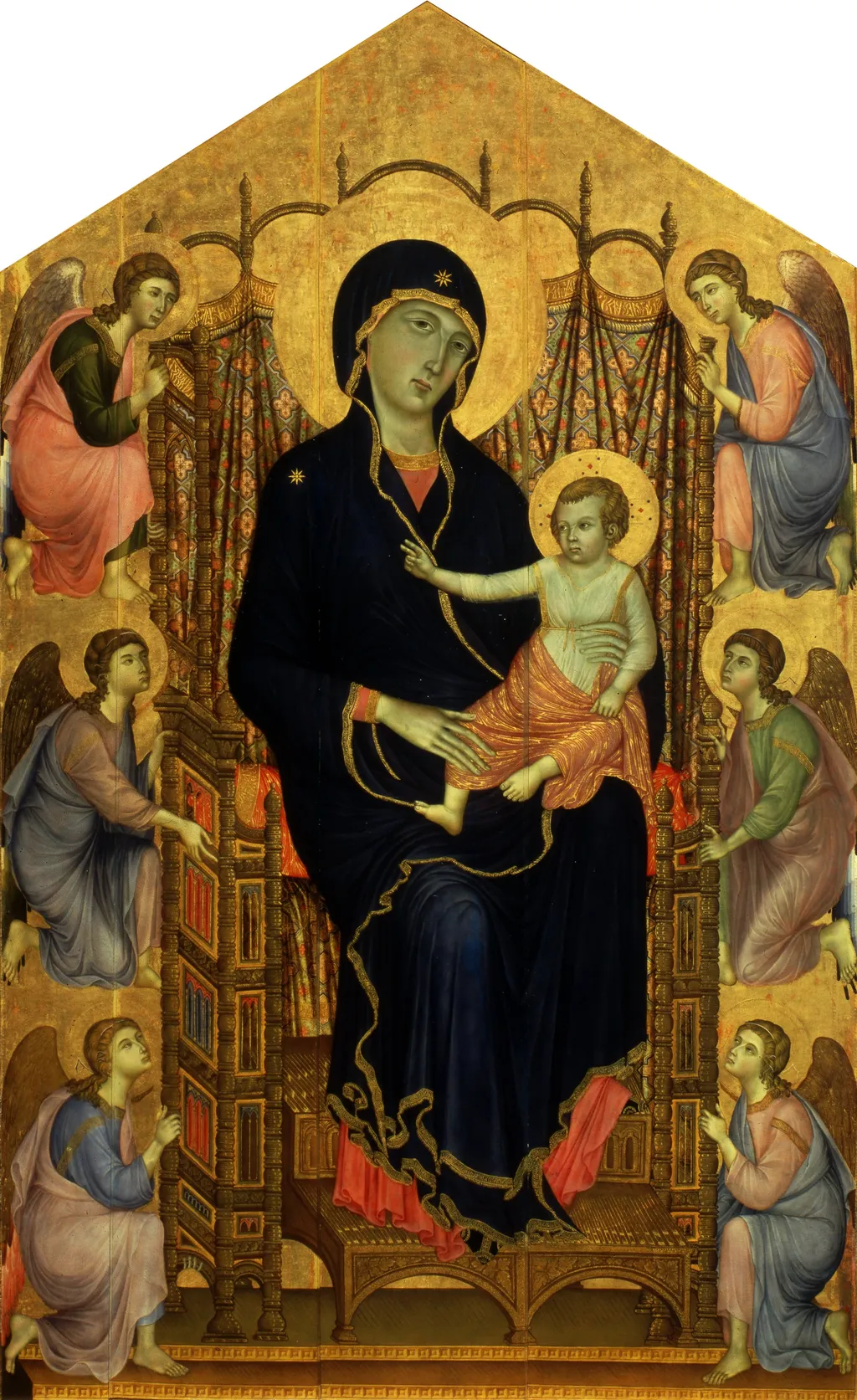
Rucellai Madonna is a tempera painting by the Byzantine icon painting artist Duccio di Buoninsegna. It dates from 1293 and is held in the collection of the Uffizi Gallery.
About this work
Overview
The Rucellai Madonna is a monumental panel painting by the Sienese master Duccio di Buoninsegna, executed in tempera on panel in 1285.
The Rucellai Madonna is a monumental panel painting by the Sienese master Duccio di Buoninsegna, executed in tempera on panel in 1285. Measuring 450 by 290 centimeters, it is the largest surviving panel painting from the 13th century and one of only two works by Duccio for which written documentation exists. The painting depicts the Virgin Mary enthroned with the Christ Child, flanked by six angels, in the traditional Maestà format. Commissioned by the Compagnia dei Laudesi, a lay confraternity devoted to the Virgin, for their chapel in the Dominican church of Santa Maria Novella in Florence, the work now resides in the Galleria degli Uffizi in Florence, where it is displayed in Room A4 alongside Cimabue's Santa Trinità Maestà and Giotto's Ognissanti Madonna. Its significance extends beyond its imposing scale to its pivotal role in the transition from Italo-Byzantine formalism toward a more refined, emotionally resonant Gothic sensibility in Italian painting.
Subject & Meaning
The iconography of the Rucellai Madonna centers on the Maestà, or Virgin and Child enthroned in majesty, a subject determined by the devotional needs of the Laudesi confraternity and the Dominican order. The central group shows the Virgin Mary seated frontally on an elaborate architectural throne, holding the Christ Child on her lap; both figures bear circular gold halos, with a star adorning Mary's veil and shoulder. Six winged angels flank the throne in symmetrical pairs, three on each side, arranged in kneeling positions at graduated levels, their gazes directed toward the Virgin rather than the viewer. The Christ Child, dressed in a white tunic with a pinkish-red draped cloth, raises his right hand in blessing but, unlike in Cimabue's earlier version, holds no scroll or book in his left hand. The frame contains roundels with busts of apostles, saints, and prominent Dominican figures including Saints Dominic, Thomas Aquinas, and Peter Martyr, the founder of the Laudesi. This programmatic imagery served as a focal point for the confraternity's practice of singing lauds, Latin hymns praising the Virgin, while also asserting Dominican spiritual authority and Marian devotion within a Florentine civic context.
Technique & Style
The Rucellai Madonna was painted in egg tempera on a five-piece poplar panel supplied by the patrons, with a frame of the same wood. The contract specified the use of costly ultramarine blue for the Virgin's robe and real gold leaf for the background, though conservation analysis during a 1989 restoration revealed that Duccio substituted the cheaper mineral pigment azurite for the ultramarine. Over centuries, the blue pigments darkened considerably and the green bole underpainting of the flesh tones became more visible; subsequent restoration has rectified these issues, enhancing the tonal unity and subtle naturalism of the work. The palette is dominated by gold, deep blue, and rose tones, with the angels' robes rendered in pink, blue, green, and mauve. Light is even and non-naturalistic, with minimal shadow, consistent with Byzantine iconographic tradition. The surface is smooth with fine linear details in drapery and gold patterning. Duccio's handling shows distinctive departures from his model, Cimabue's Louvre Maestà: the angels' transparent garments are more refined and coloristically varied, the Virgin's expression is gentler and more approachable, and the gold hem of her mantle traces an elaborate arabesque from breast to feet, suggesting Gothic influences possibly derived from French enamels, miniatures, and ivories. The throne itself is more complexly rendered, with openwork Gothic panels, bifora and trifora, and a sumptuous silk drapery on the backrest.
History & Provenance
The contract for the Rucellai Madonna, dated 15 April 1285, is the oldest surviving Italian document of its kind. It stipulates that Duccio was to receive 150 lire in small florins upon completion, that he work on no other commissions during execution, and that he paint the entire work himself without workshop assistance; the patrons retained the right of refusal. The panel was likely completed in 1286 and installed on the altar of the Laudesi chapel in Santa Maria Novella, where it visually coordinated with contemporary or slightly earlier frescoes in the chapel. In 1335, the chapel and altarpiece were sold to the Bardi family. The painting was moved in 1591 to the adjacent, larger Rucellai family chapel, from which its modern title derives. It remained there until 1937, when it was exhibited in a major Giotto exhibition in Florence. In 1948, it was transferred to the Galleria degli Uffizi, where it has remained. The work underwent revision in 1947-1948 and restoration in 1989 by Alfio Del Serra.
Context
The commission of a Sienese artist by a Florentine civic confraternity is notable given the political enmity between the two republics. Siena's special devotion to the Virgin as patron saint and queen of the city had fostered local artistic specialization in Marian imagery, making Sienese painters like Duccio natural candidates for such commissions. Giorgio Vasari's mistaken attribution of the Rucellai Madonna to Cimabue in his Lives, perpetuated by a 14th-century commentator on Dante and reinforced by Vasari's anecdote about Charles of Anjou's visit, went unchallenged for centuries. Frederic Leighton even depicted the painting in his 1853-55 work Cimabue's Celebrated Madonna Carried in Procession. In 1889, the art historian Franz Wickhoff compared the Rucellai Madonna stylistically with Duccio's documented Maestà of 1308-11, leading to the correct attribution, though some scholars as late as the 1920s attempted to posit collaborations or independent masters. The painting's display in the Uffizi's first gallery, alongside works by Cimabue and Giotto, follows Vasari's teleological narrative of Renaissance origins, a placement that modern scholarship critiques for imposing naturalistic and spatial concerns foreign to 13th-century artistic intentions.
Legacy
The Rucellai Madonna occupies a foundational position in narratives of Italian art history, though its interpretation has shifted significantly. Long celebrated as a step toward Renaissance naturalism, it is now understood as a sophisticated expression of late medieval visual culture, more closely related to Paleologan icons than to the innovations of Masaccio. Its influence on subsequent generations is evident in the Maestà tradition, yet its particular blend of Byzantine formality and Gothic refinement remained distinctive. The painting has entered broader cultural consciousness through its inclusion in Paul Veyne's imaginary museum, described in his book Mon musée imaginaire. In scholarly discourse, it serves as a critical case study for examining the construction of art historical narratives and the dangers of reading later stylistic developments into earlier works. The Rucellai Madonna continues to attract attention for its documented creation, its exceptional scale, and its value as a benchmark for understanding the transition between Byzantine, Gothic, and Renaissance visual languages in Italy.
Own this work as a print
Artist & collection


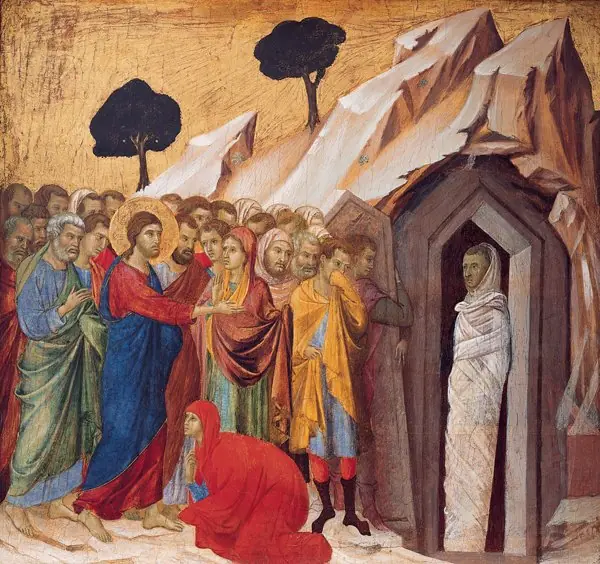
- Madonna of Humility
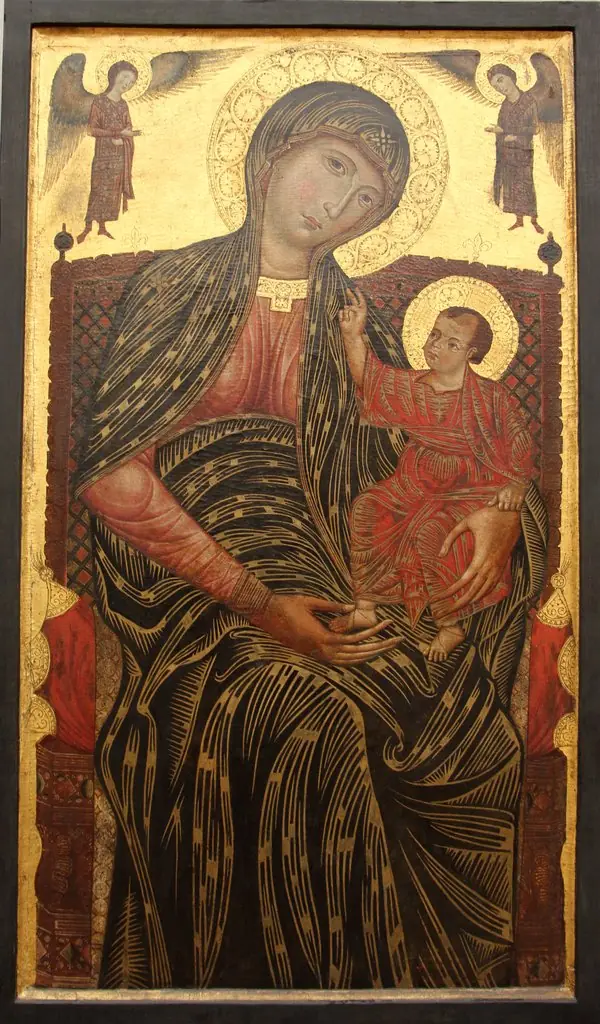 Madonna enthroned with two angels
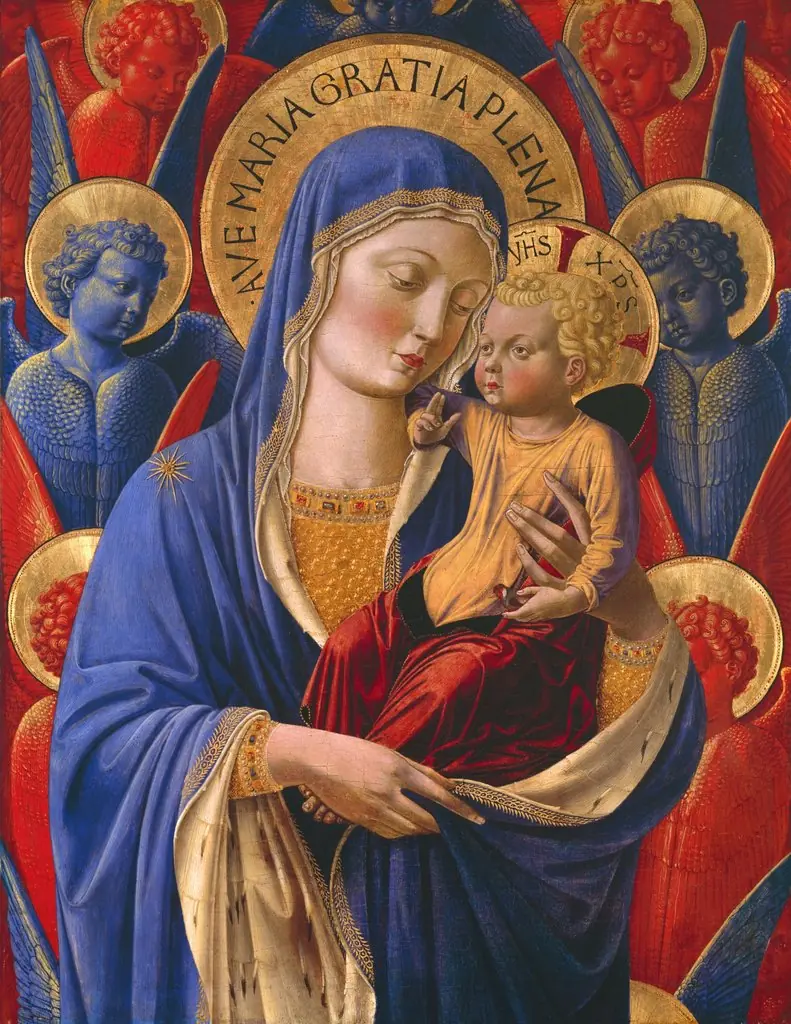 Virgin and Child with Angels
 Madonna and Child with God the Father Blessing and Angels
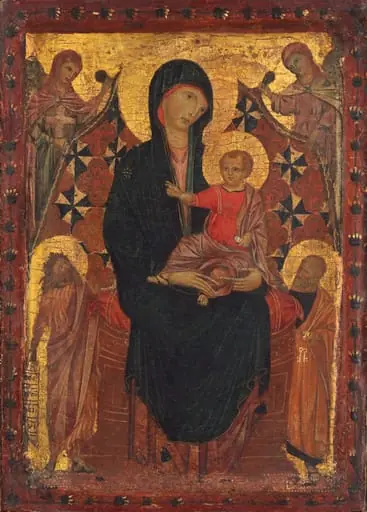 Madonna and Child with Saint John the Baptist, Saint Peter, and Two Angels
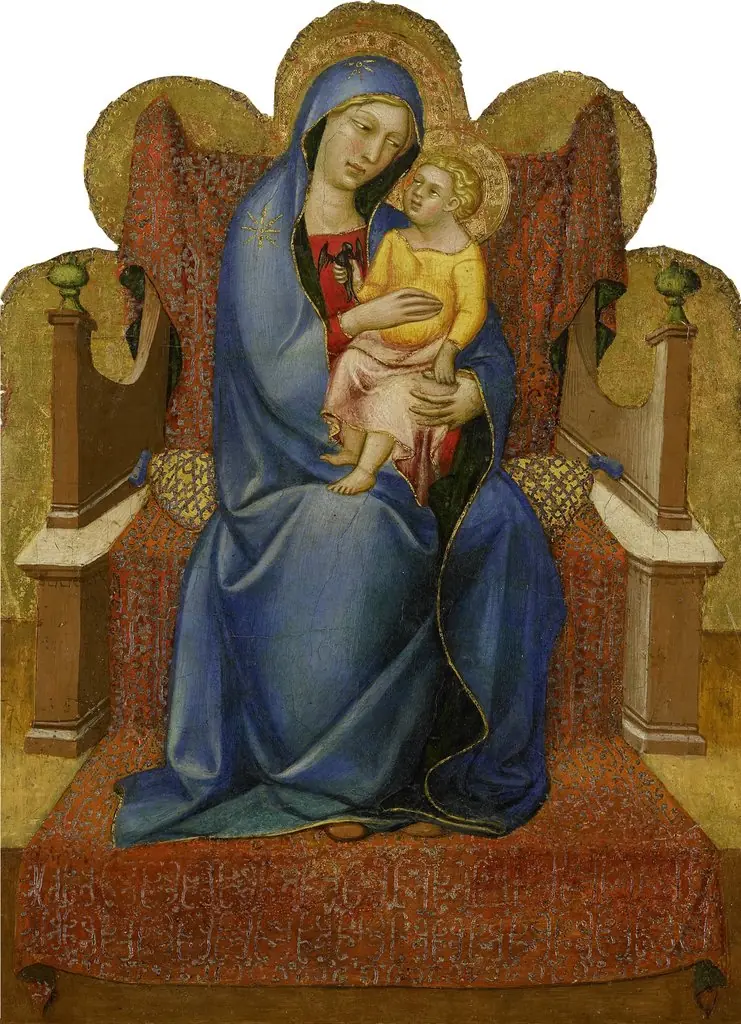 Virgin and Child
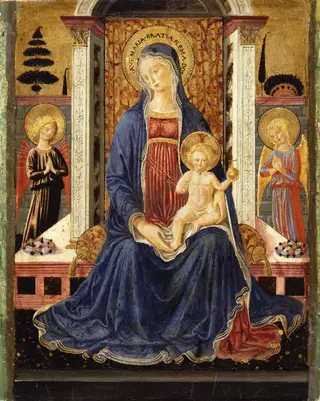 The Virgin and Child enthroned with two angels
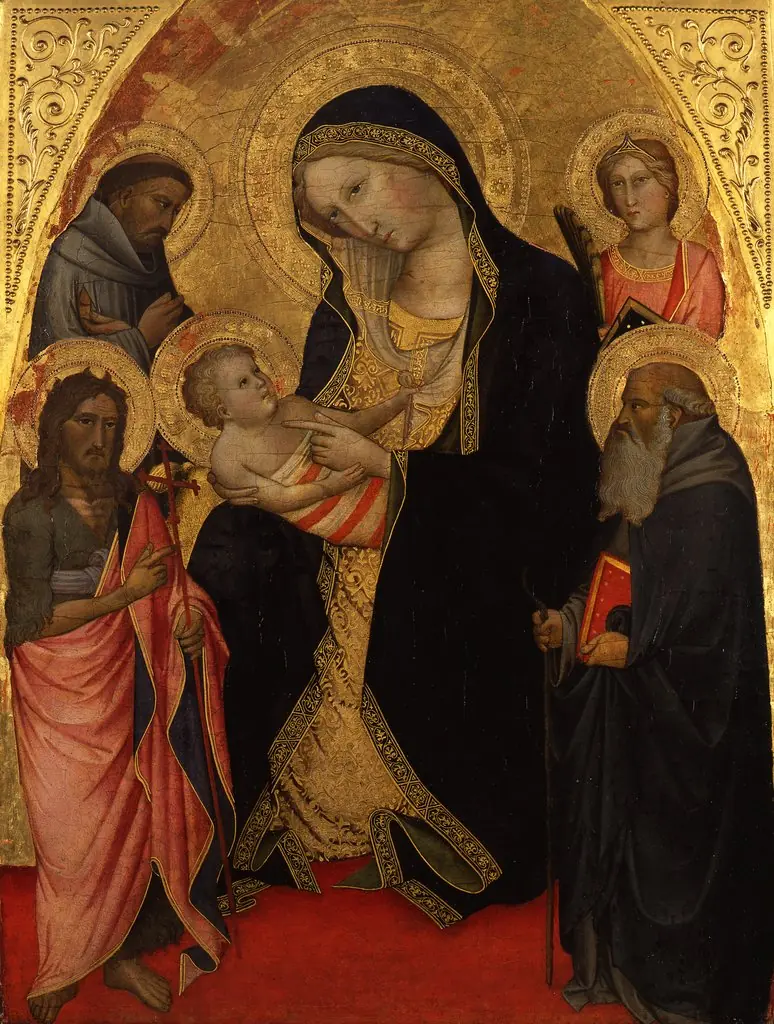 Madonna with the child, St. John the Baptist, St. Francis and St. Anthony and a martyr
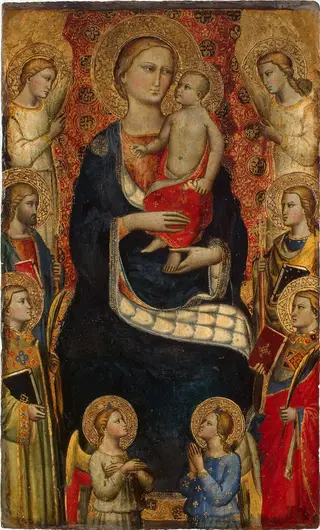 Madonna and Child, Four Saints and Four Angels
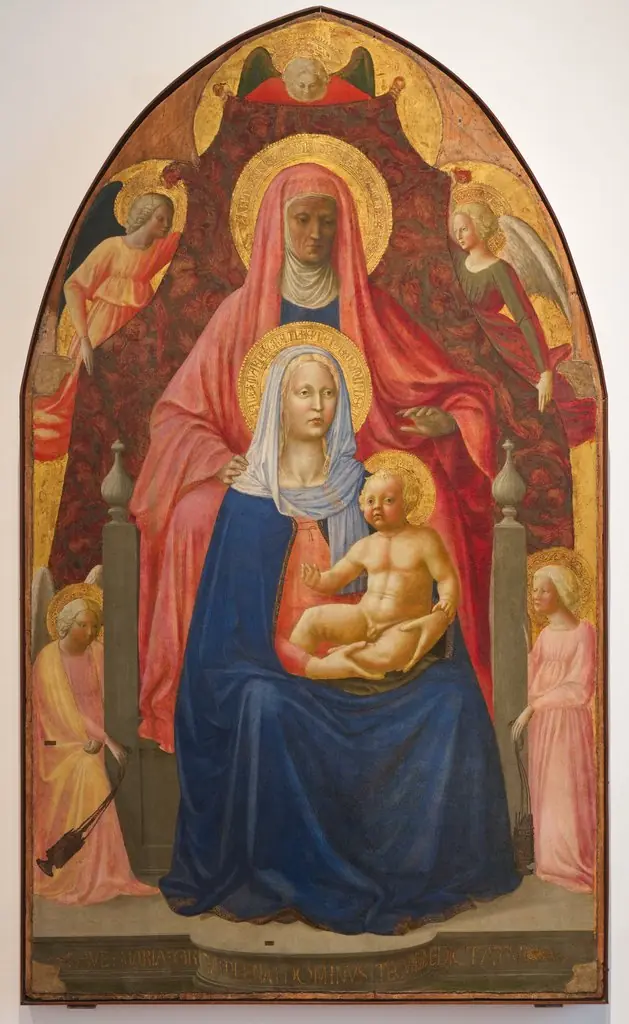 Virgin and Child with Saint Anne
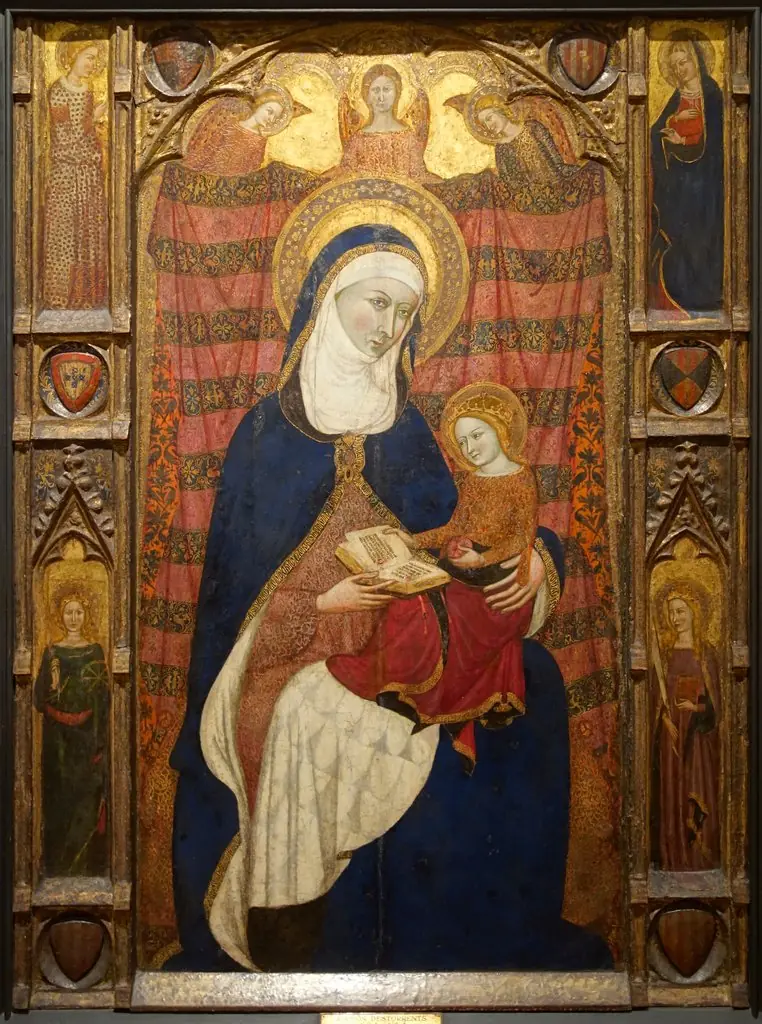 Retaule de Santa Anna i la Mare de Déu
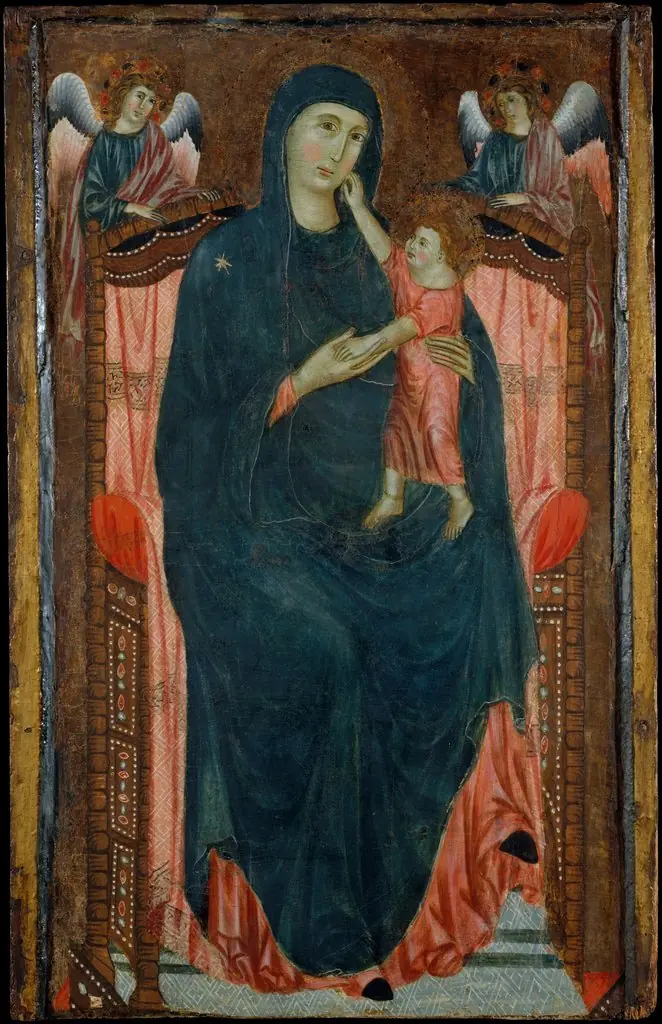 Madonna and Child Enthroned with Angels