Artwork
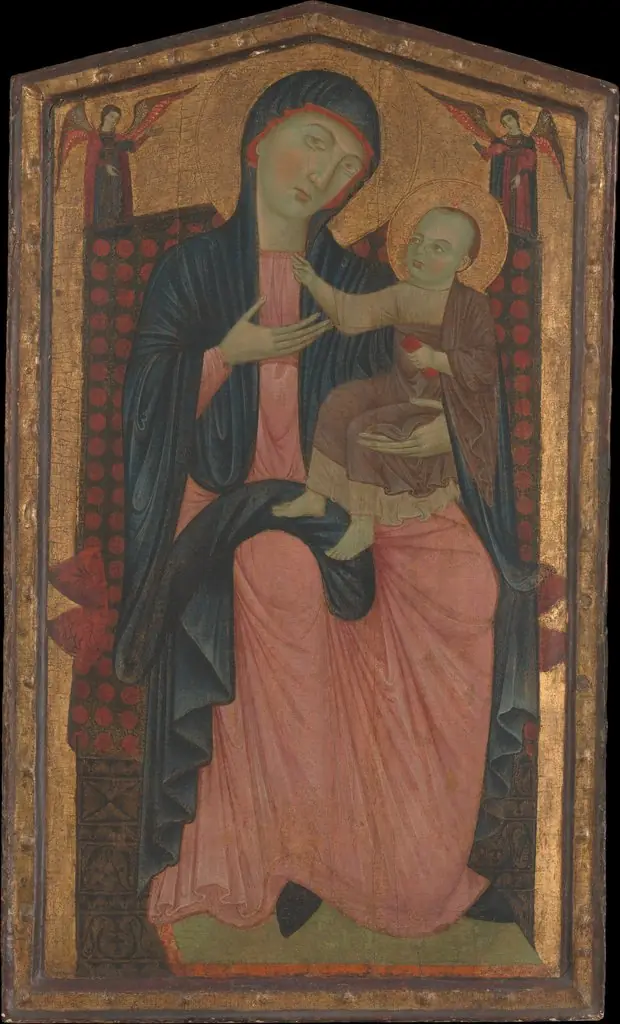
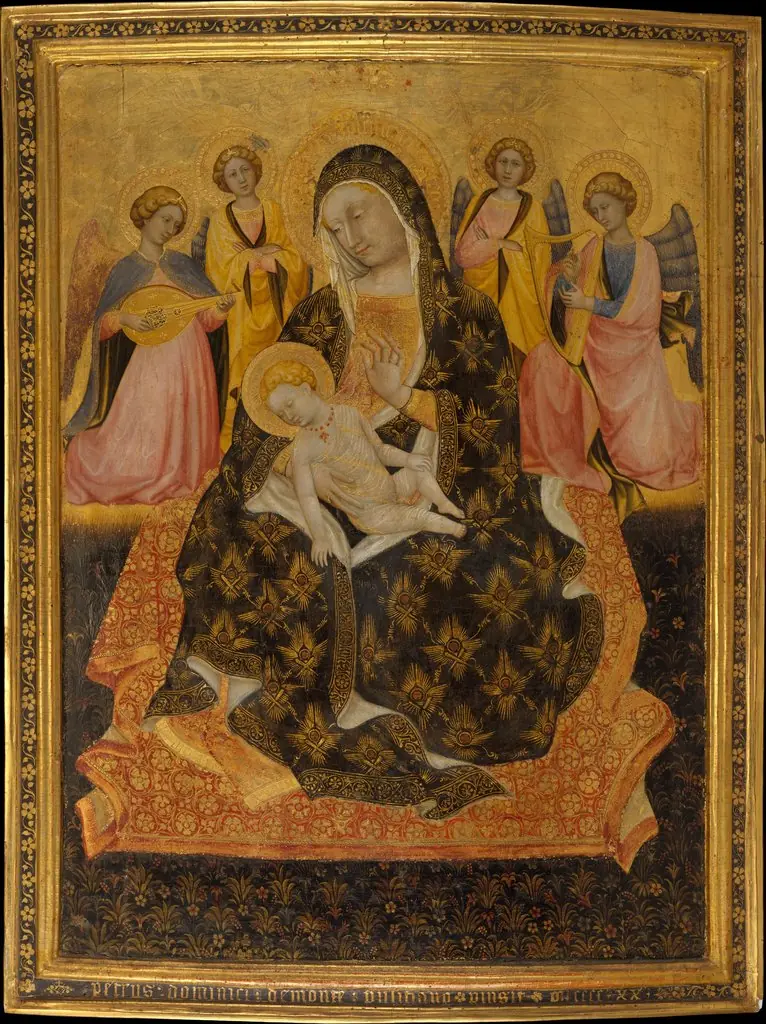
Madonna and Child Enthroned with Angels
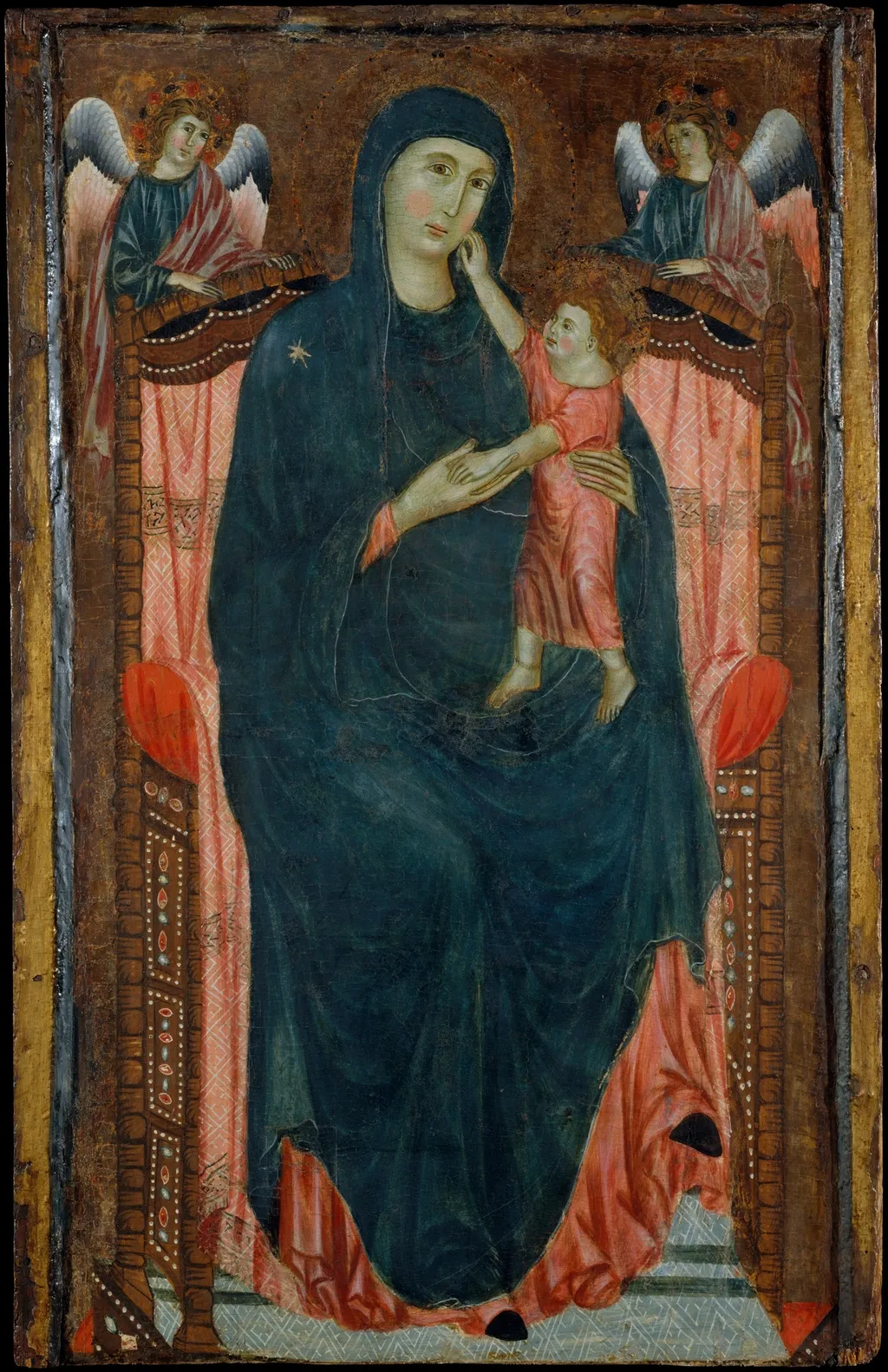
Madonna and Child Enthroned with Angels is a tempera painting by the Byzantine icon painting artist Master of Varlungo. It dates from 1293 and is held in the collection of the Metropolitan Museum of Art.
About this work
Subject & Meaning
According to the cataloguing data, the work explicitly depicts Mary, the Christ Child, and angels within the traditional Madonna and Child iconography.
The panel depicts the Madonna and Child enthroned with angels, a devotional subject central to late medieval Italian religious art. The Virgin Mary is shown seated in majesty with the Christ Child, accompanied by attendant angels who frame the holy figures. According to the cataloguing data, the work explicitly depicts Mary, the Christ Child, and angels within the traditional Madonna and Child iconography.
The use of silver ground, a technique typical of late thirteenth-century Tuscan panel painting, would have created a luminous, otherworldly backdrop that emphasized the sacred and heavenly nature of the enthroned figures, reinforcing the theological idea of Mary as Queen of Heaven. The composition reflects the devotional function of such images, inviting contemplation of the Incarnation and the intercessory role of the Virgin, themes especially resonant in Florentine religious culture of the period around 1285.
Technique & Style
Created in 1285, the Madonna and Child Enthroned with Angels is executed in tempera on a wooden panel support. The artist, identified as the Master of Varlungo, utilized a silver ground beneath the paint layers, a technique characteristic of the period's religious art. The work measures 130.2 cm in height and 82.9 cm in width.
As a panel painting, it depicts the Virgin Mary and the Christ Child surrounded by angels, adhering to the formal conventions of late thirteenth-century Florentine religious imagery. The combination of tempera pigment, wood substrate, and metallic ground reflects the standard materials and handling methods of the era, resulting in a durable devotional object that has survived into modern collections.
History & Provenance
The work titled Madonna and Child Enthroned with Angels was executed circa 1285 by the Master of Varlungo on a wooden panel using tempera, silver ground and silver leaf. Its original function was a devotional panel for the Franciscan church of Santa Croce in Florence, where it remained until entering the collection of Philip Lehman and later Robert Lehman before being acquired by the Metropolitan Museum of Art. The painting is documented in the museum’s records as part of the Florentine Paintings exhibition and has been displayed under the title Madonna and Child Enthroned with Angels.
The attribution to the Master of Varlungo and the date 1285 are recorded in both the work’s catalogue entry and scholarly references.
The panel is held by the Metropolitan Museum of Art in New York, where it forms part of the museum's holdings of medieval Italian painting. According to the Wikidata record, the work is associated with a provenance that includes the Basilica of Santa Croce, the Philip Lehman collection, and the Robert Lehman collection, indicating a passage through both ecclesiastical and private ownership before entering the museum. The painting has been included in two documented exhibitions: "Florentine Paintings in the Metropolitan Museum" and "Art in Florence in the Age of Dante (1250–1300)."
These displays situate the work within the broader context of late Duecento Florentine devotional painting, consistent with its 1285 date and attribution to the Master of Varlungo.
Context
Attributed to the Master of Varlungo and dated to 1285, this tempera and silver-ground panel on wood represents a significant example of late-thirteenth-century Florentine religious art. The work's inclusion in exhibitions such as 'Art in Florence in the Age of Dante (1250-1300)' underscores its scholarly importance within the specific historical and artistic milieu of Dante's era. Currently held by the Metropolitan Museum of Art, the painting was previously part of the collection of the Basilica of Santa Croce and the Robert and Philip Lehman collections, reflecting a provenance that connects it to major ecclesiastical and private holdings.
As a depiction of the Madonna and Child surrounded by angels, it serves as a key reference point for understanding the development of devotional imagery in Florence during the transition from the Duecento to the Trecento.
Overview
The Madonna and Child Enthroned with Angels, a painted wood panel from 1293, is attributed to the Master of Varlungo, an Italian artist active in Florence during the late thirteenth century. This religious composition features the Virgin Mary holding the Christ Child, flanked by attendant angels. The work is now part of the collection at The Metropolitan Museum of Art, representing a significant example of early Florentine painting traditions.
Own this work as a print
Artist & collection
Artist
The Master of Varlungo was an Italian painter active in a Gothic style around Florence between 1285 and 1310.

- Madonna and Child with Five Angels
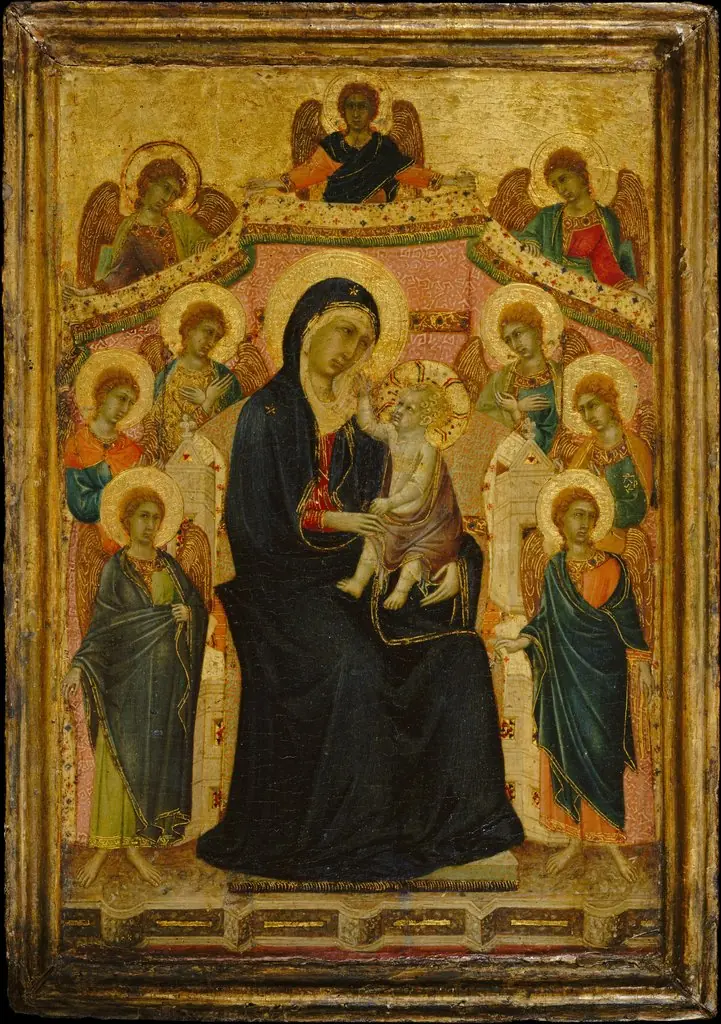 Madonna and Child with Nine Angels
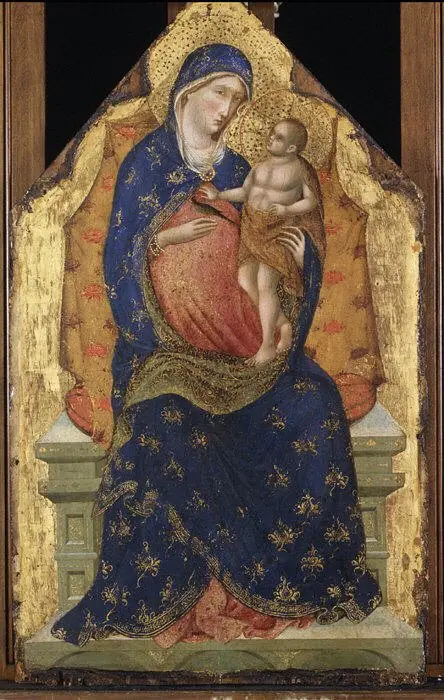 Madonna and Child Enthroned
 Madonna and Child Enthroned
 Maestà (Madonna and Child with Four Angels)
 Madonna and Child with Saint John the Baptist, Saint Peter, and Two Angels
 Virgin and Child
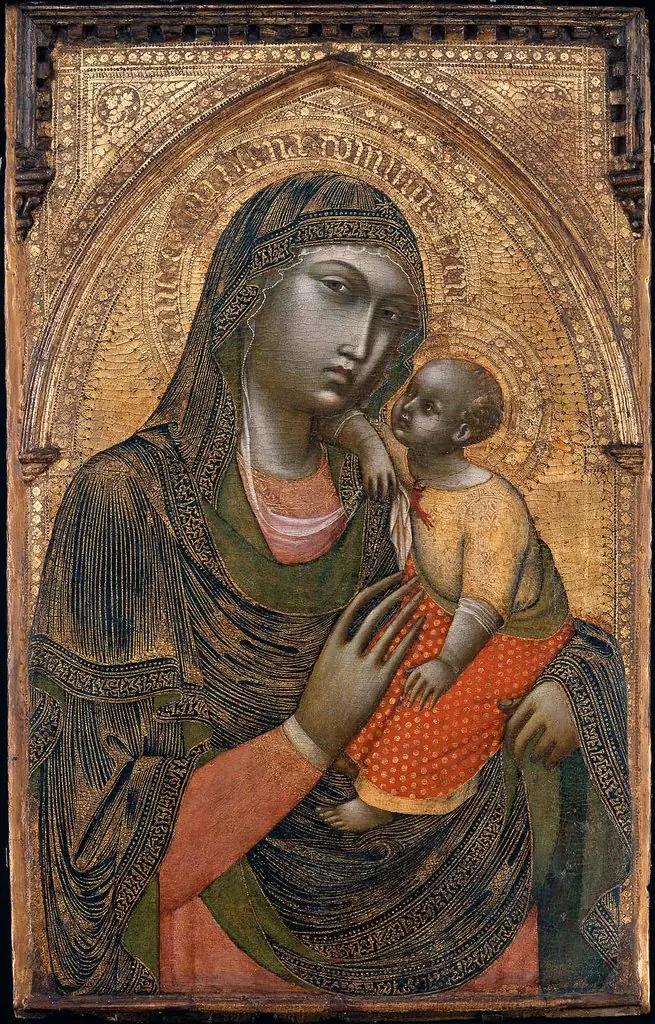 Virgin and Child
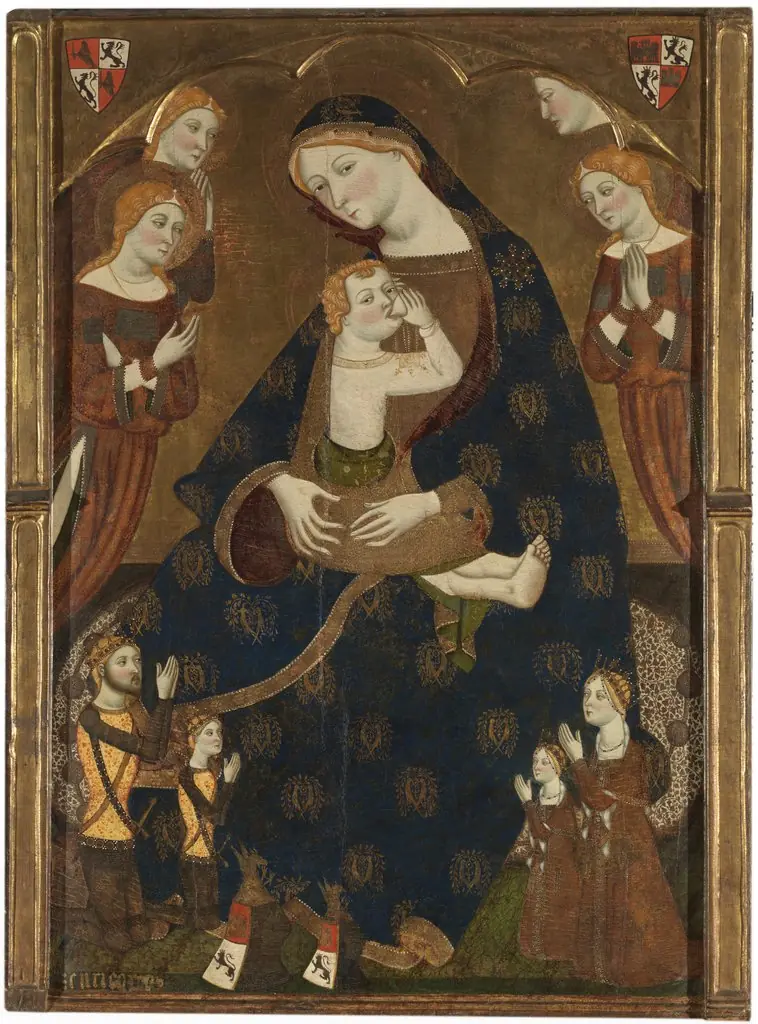 Madonna and Child
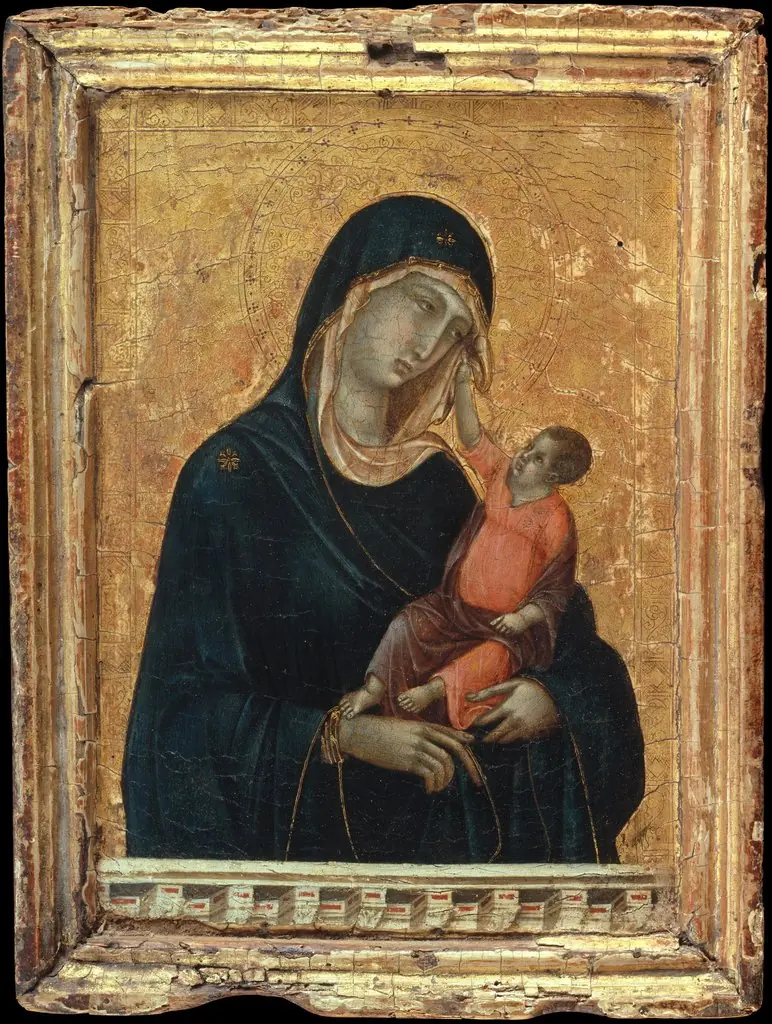 Madonna and Child
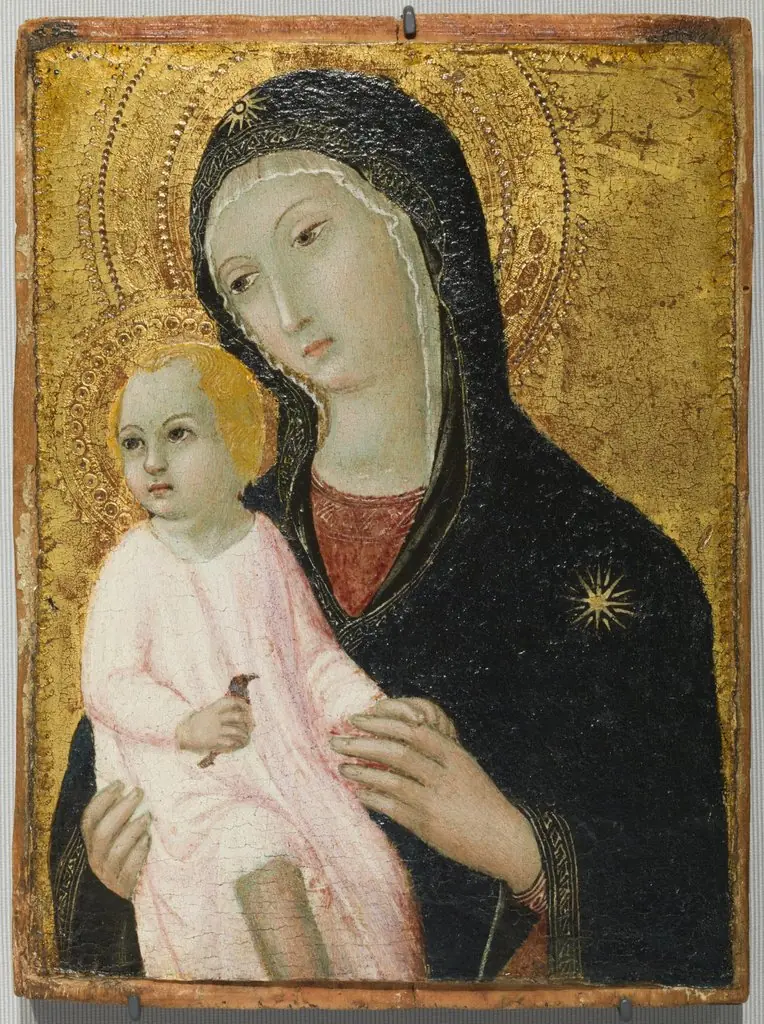 Madonna and Child
 Madonna and Child with Angels