Artwork
Charles, Prince of Wales
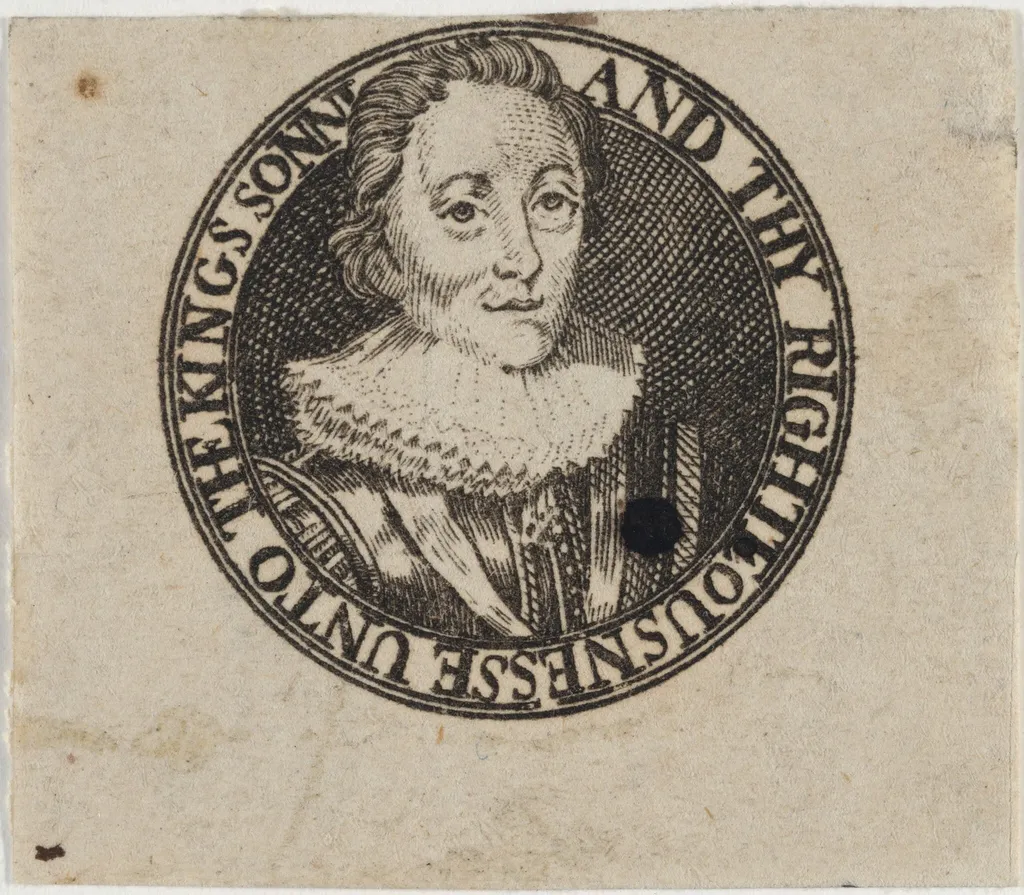
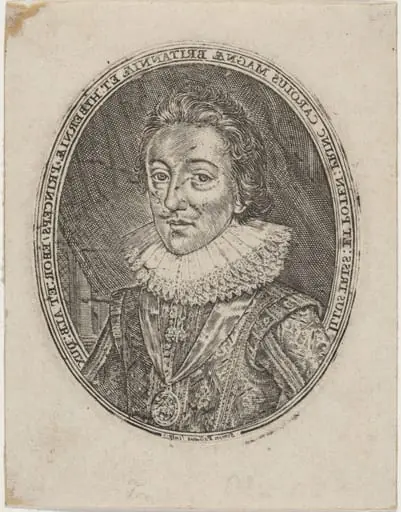
Charles, Prince of Wales is an ink print by the Baroque artist Dutch 17th Century. It dates from 1650 and is held in the collection of the National Gallery of Art.
About this work
Overview
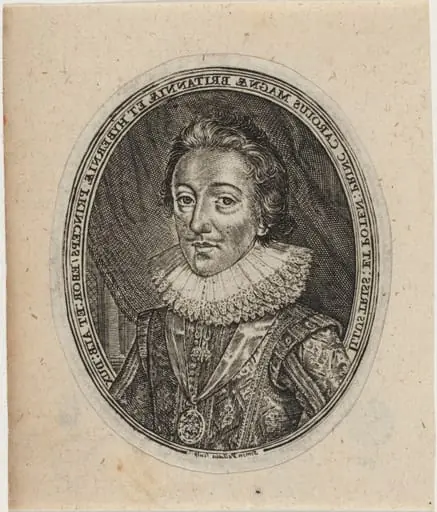
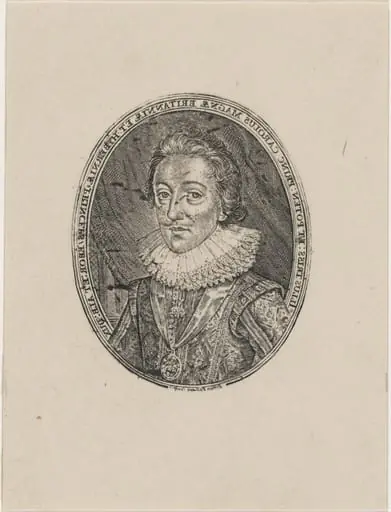
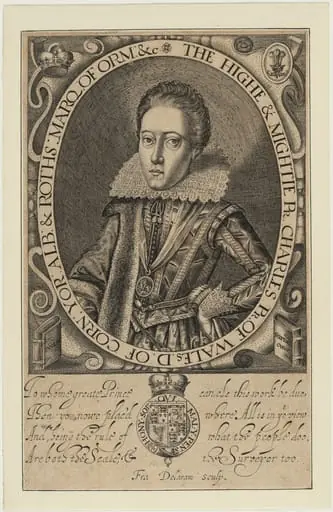
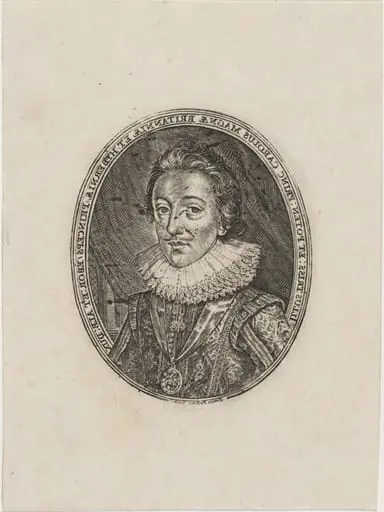
The work is a black‑and‑white portrait of Charles, Prince of Wales, rendered within a circular frame. The figure is shown with curly hair and a ruffled collar, surrounded by a border bearing the inscription “CHARLES PRINCE OF WALES” and the title “SOLE OWNER OF IRELAND.” The image is executed as an engraving taken from a silver medal.
Subject & Meaning
The portrait presents the heir apparent to the English throne, emphasizing his royal status through the inclusion of his full title and the claim to Ireland. The formal attire and the decorative collar signal his aristocratic rank, while the circular composition mirrors the shape of the original medal, reinforcing the work’s commemorative purpose.
Technique & Style
The image was produced by engraving, a process in which lines are incised into a metal surface, here, a silver medal, and then printed. Fine parallel strokes create a cross‑hatching pattern that builds tonal variation and depth, allowing the artist to model facial features and the texture of the collar without the use of color.
History & Provenance
The engraving is a direct reproduction of a medal struck to honor Charles, Prince of Wales, likely dating from the early 17th century when such portrait medals were common in England. As a print, it would have been distributed more widely than the original metal piece, serving both as a souvenir and a political statement of the prince’s authority.
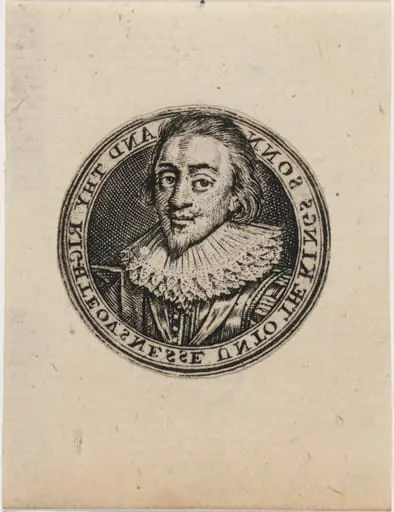
Artist & collection

Artist
This Dutch printmaker made small, sharp engravings and etchings, mostly portraits and sea battles pulled from metal plates.

- Charles, Prince of Wales
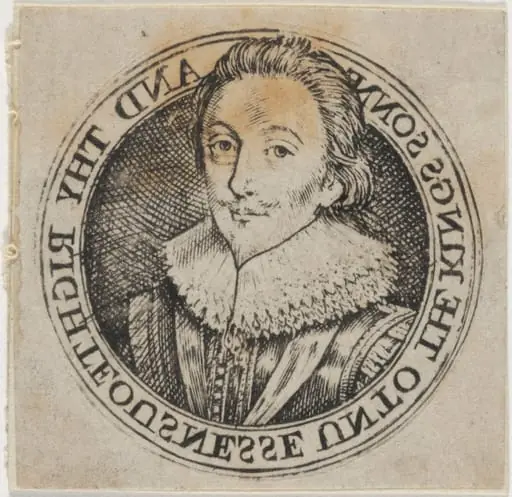 Charles, Prince of Wales
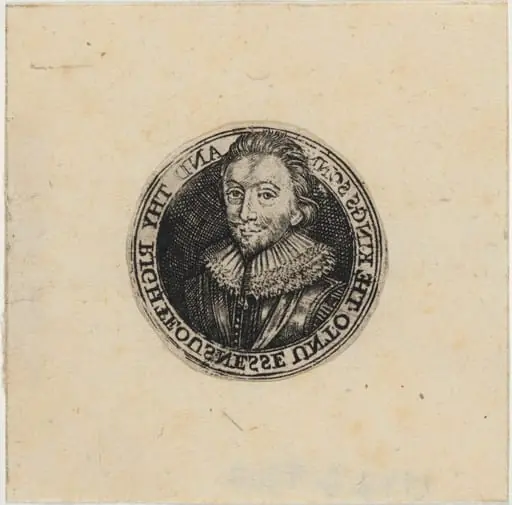 Charles, Prince of Wales
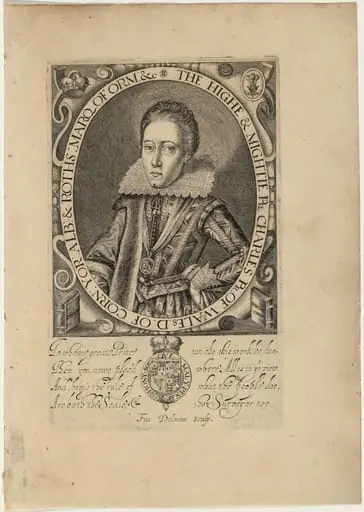 Charles I, as Prince of Wales
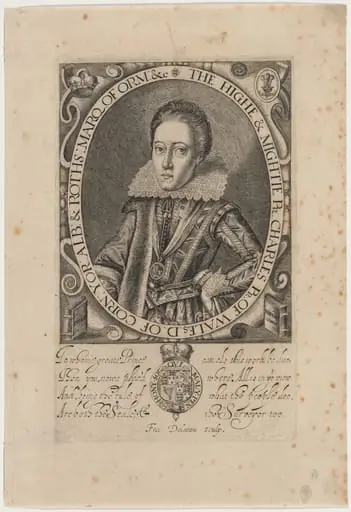 Charles Prince of Wales (Charles I)
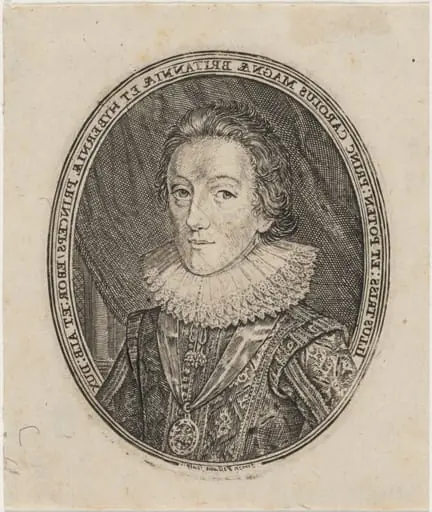 Charles I, King of England
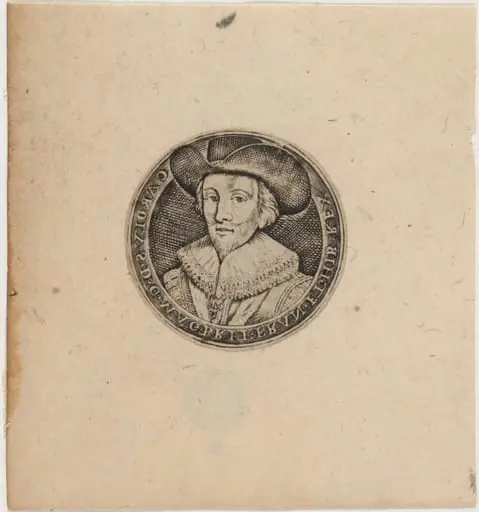 Charles I, King of England
 Charles I, King of England
 Charles I, King of England
 Charles I, as Prince of Wales
 Charles I, King of England
 Charles I, King of England