Artwork
The Philosopher
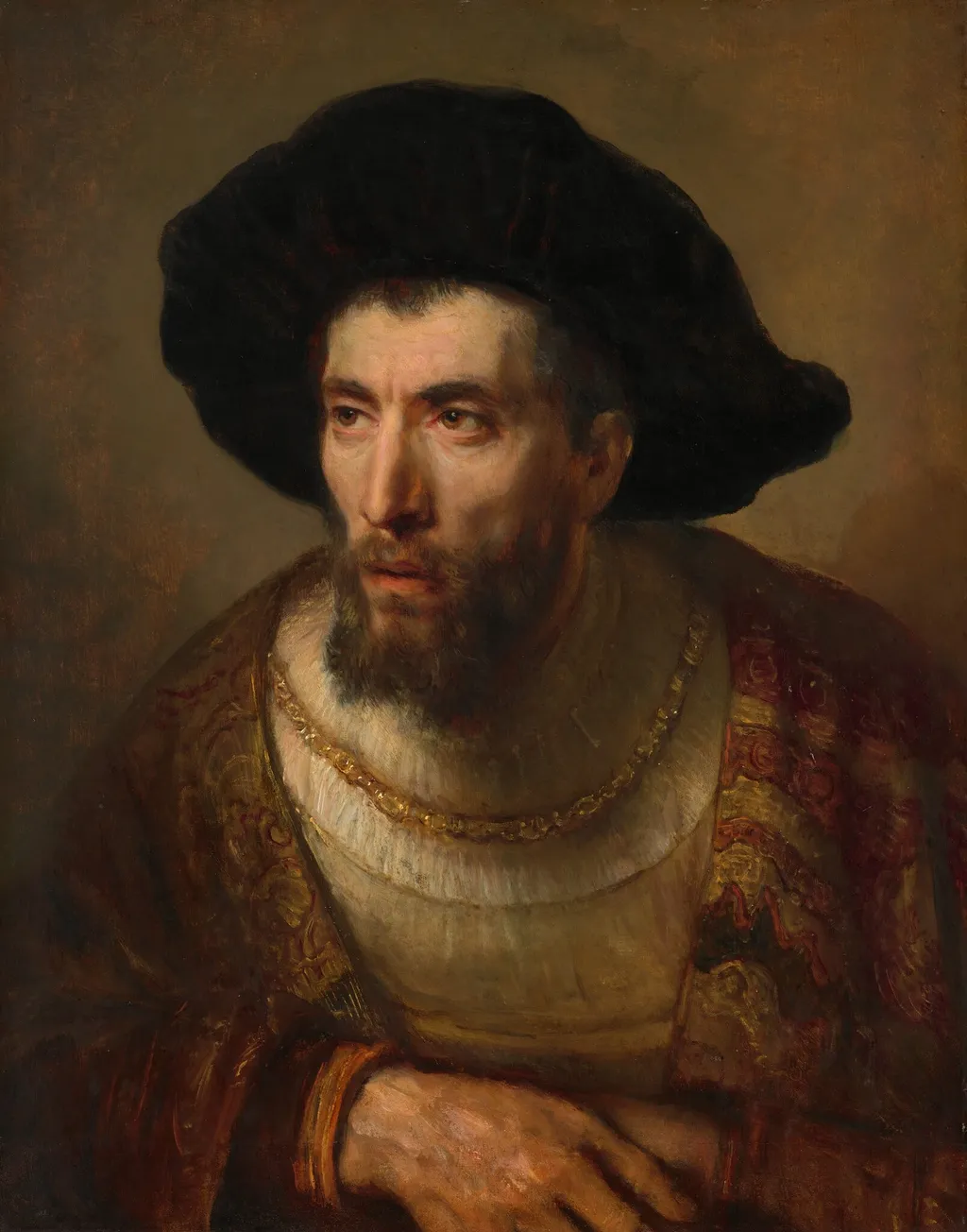
The Philosopher is an oil painting. It is held in the collection of the National Gallery of Art.
About this work
Subject & Meaning
The work is classified as a tronie, a Dutch 17th-century genre focusing on character studies rather than specific portraits.
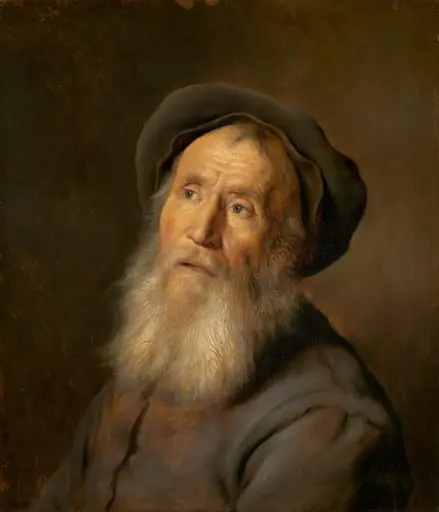
The work is classified as a tronie, a Dutch 17th-century genre focusing on character studies rather than specific portraits. It depicts a man wearing a hat, with a prominent hand gesture that suggests deep contemplation or study. While the figure is labeled "The Philosopher," the painting does not represent a specific historical individual but rather embodies the archetype of a thinker engaged in intellectual pursuit.
The subject's attire and pose are typical of the era's exploration of human expression and internal states. The inclusion of the hand and hat as key visual elements reinforces the theme of scholarly reflection, aligning with the broader Baroque interest in the depiction of learned figures and the human condition.
Technique & Style
The painting is executed in oil on a wooden panel support, measuring 61.5 cm in height and 49.5 cm in width, consistent with Dutch 17th-century studio practices. The handling reveals a restrained yet textured application of paint, particularly in the rendering of the subject's craggy features and the voluminous drapery of the hat, suggesting a technique aligned with Rembrandt's circle. The composition focuses on the head and hands, employing a subdued palette dominated by earthy browns and ochres, heightened by subtle glazes to model form and convey depth.
The figure's contemplative expression and the tactile treatment of the hands contribute to the portrait's psychological intensity, typical of tronie studies of the period.
History & Provenance
Dated to 1653, this oil-on-panel work was offered for sale by the Parisian dealer Charles Sedelmeyer in 1905. By 1906 the painting was associated with the Paris collection of Maurice Kann before returning to Sedelmeyer's inventory. On December 20, 1906, Sedelmeyer sold the piece to Peter A. B. Widener for his estate, Lynnewood Hall, in Elkins Park, Pennsylvania.
Following Widener's death, the work passed by inheritance and a power of appointment exercised by his son, Joseph E. Widener. In 1942, Joseph E. Widener gave the painting to the National Gallery of Art in Washington, D.C., where it remains. The work measures 61.5 by 49.5 cm and has been attributed variously to Rembrandt van Rijn and to his pupil Willem Drost.
Context
Attribution of The Philosopher has shifted significantly within scholarly discourse, reflecting broader debates on Rembrandt's workshop practices. While early 20th-century authorities like Wilhelm von Bode included the 1653 panel in the master's complete works, contemporary scholarship often classifies the piece as a tronie by Rembrandt's pupil, Willem Drost, or as an anonymous Dutch 17th-century work. This re-evaluation situates the painting within the studio culture of Amsterdam, where the master's style was frequently emulated by students.
The work's provenance, tracing from the Sedelmeyer Gallery to the collection of Maurice Kann and eventually to the National Gallery of Art, underscores its long-standing recognition as a significant example of Dutch Golden Age portraiture, even as its specific authorship remains a subject of critical refinement.
Legacy
The Philosopher, painted in 1653 by a Dutch artist later identified as Willem Drost, entered the Sedelmeyer collection and was sold to Peter A. B. Widener in 1906 before entering the National Gallery of Art in 1942. Late nineteenth- and early twentieth-century scholarship, notably by Wilhelm von Bode and Cornelis Hofstede de Groot, recorded its ownership changes and discussed its significance as a late-Rembrandt-circle tronie, shaping scholarly views of Rembrandt's circle. Its inclusion in the National Gallery's catalogue has kept the work visible in modern research, where it is cited as an example of seventeenth-century Dutch portraiture that blends realism with symbolic gesture.
Overview
This oil painting on a wooden panel, titled "The Philosopher," portrays a solitary male figure. He is depicted seated, wearing a hat and modest attire, with one hand raised thoughtfully towards his face. The subject's composed demeanor and pensive gaze contribute to the artwork's quiet, introspective mood, inviting viewers into a moment of contemplation.
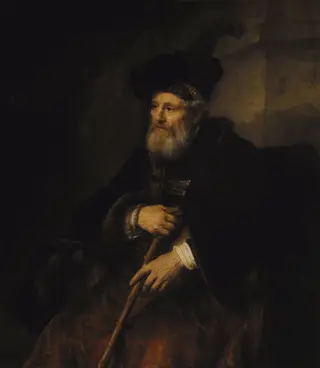
Artist & collection

- Seated old man with a cane in fanciful costume
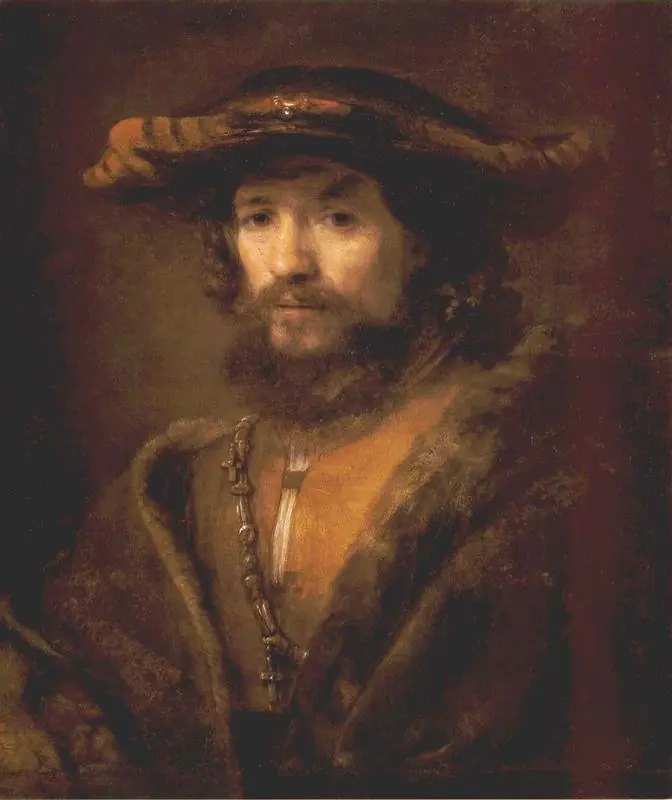 Bust of man wearing a large-brimmed hat
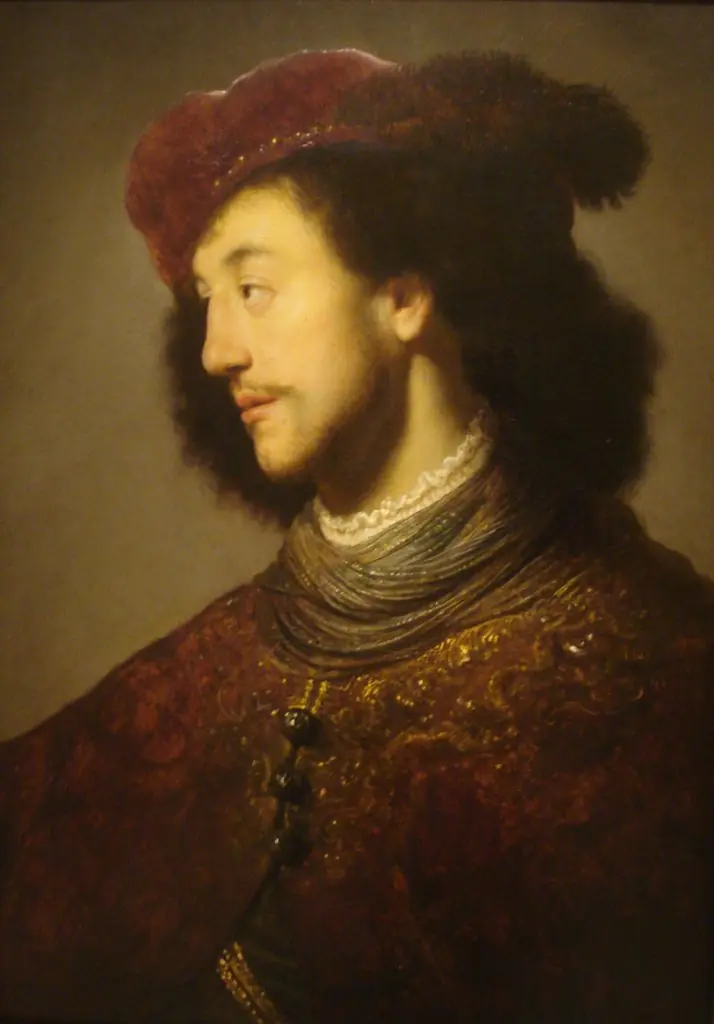 Young Man with Red Beret
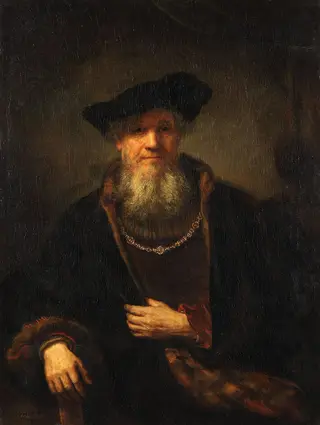 Old Man with Fur Coat
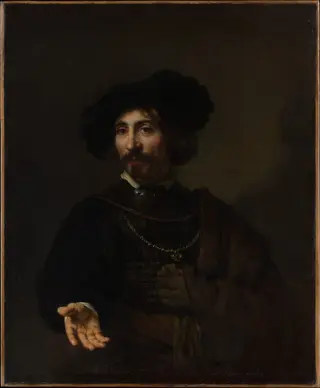 Man with a Steel Gorget
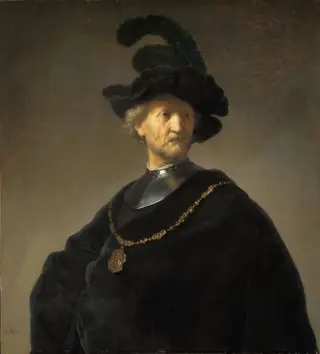 Old Man with a Gold Chain
 Old Man with a Gold Chain
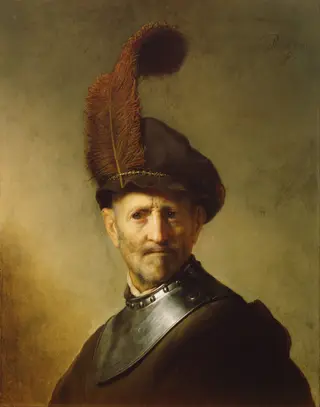 An Old Man in Military Costume
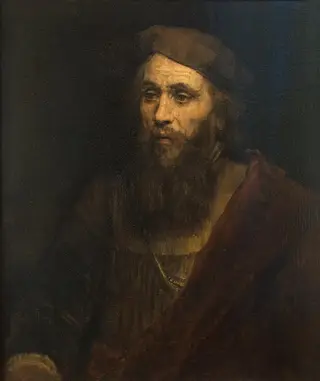 Half-length figure of a man with beard and beret
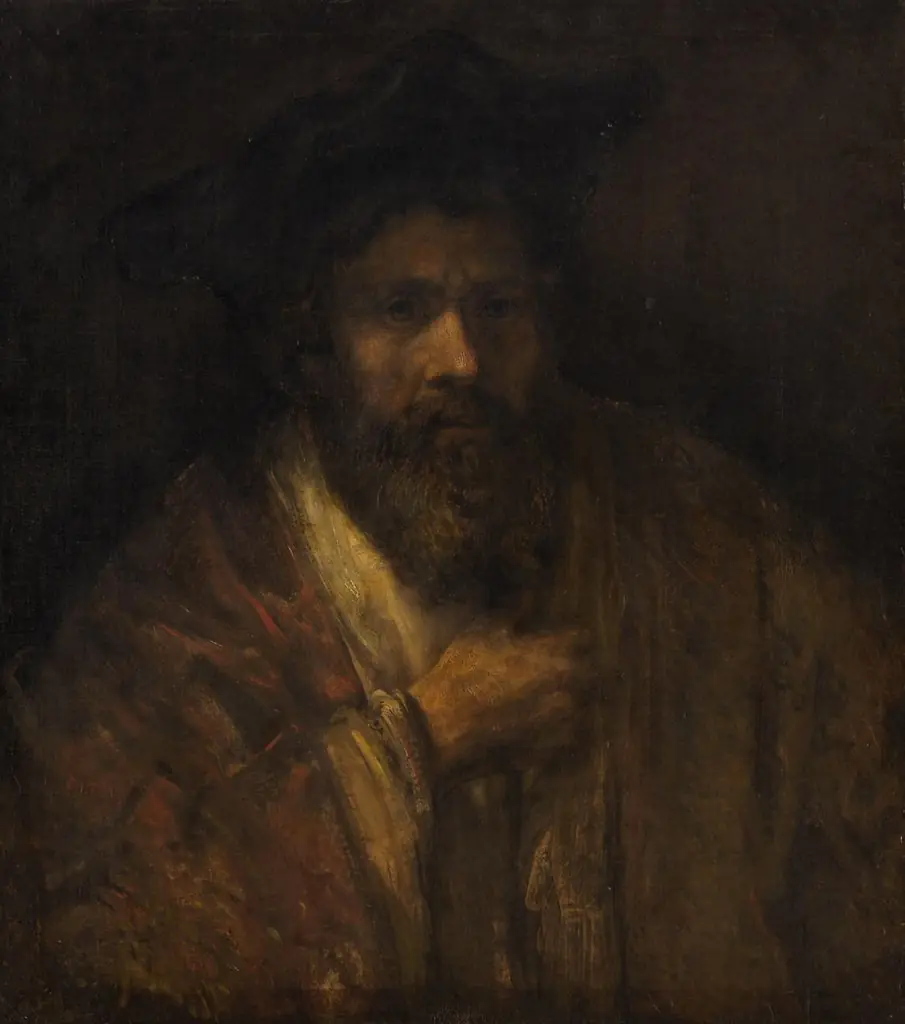 Portrait of a Bearded Man
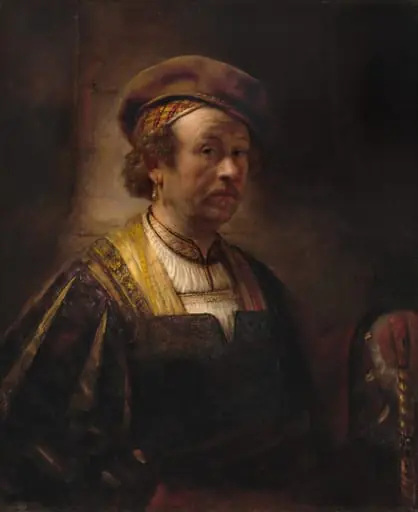 Portrait of Rembrandt
 Bearded Man with a Beret