Artwork
Mary Cassatt at the Louvre: The Paintings Gallery
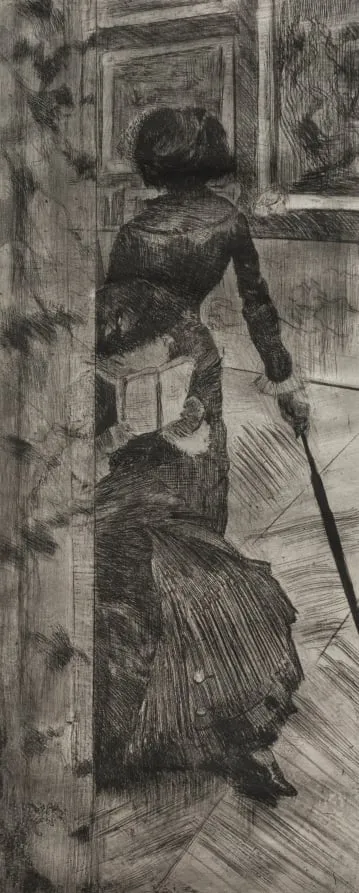
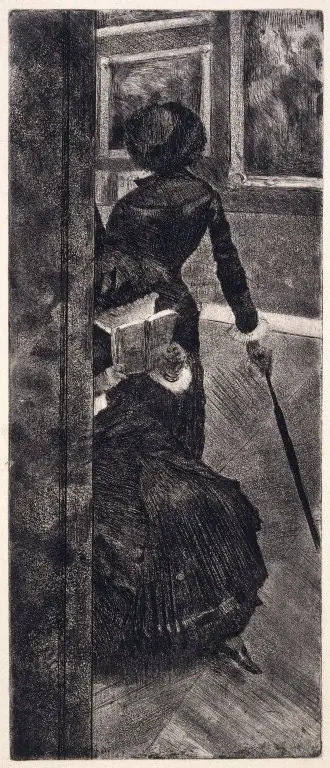
Mary Cassatt at the Louvre: The Paintings Gallery is a print by the Impressionist artist Edgar Degas. It dates from 1880 and is held in the collection of the Cleveland Museum of Art.
- Accession no.
- 1947.459
- Credit line
- Gift of Leonard C. Hanna Jr.
About this work
You see a woman in a black dress standing alone in a grand museum gallery, studying paintings on the wall.
You see a woman in a black dress standing alone in a grand museum gallery, studying paintings on the wall.
This is Mary Cassatt, a fellow artist and close friend of Degas. He sketched her here in 1879 while they planned a short-lived art journal together. The empty room feels quiet, like a private moment caught on paper. Degas often worked in monochrome, black, white, and gray, to focus on light and shadow, not color.
Look up chiaroscuro to see how other artists used this same play of light and dark.
Overview
Mary Cassatt at the Louvre: The Paintings Gallery is a print depicting a solitary figure in a grand gallery. The work showcases the artist's experimentation with printmaking techniques to achieve nuanced tonal effects.
Subject & Meaning
The print features Mary Cassatt, an artist and friend of the creator, standing alone in a museum gallery, lost in contemplation of the artwork on display. The scene captures a private moment, conveying a sense of quiet introspection.
Technique & Style
The print is characterized by its use of monochrome, with a focus on chiaroscuro – the interplay of light and dark – to evoke a sense of atmosphere and depth. The artist's use of varying textures and tonalities adds complexity to the work.
History & Provenance
The print was created in 1879, a time when the artist was collaborating with Cassatt and others on a short-lived art journal, Le Jour et la nuit. The artist's ambivalence about the finality of a print is reflected in their practice of reworking and retouching plates.
Artist & collection
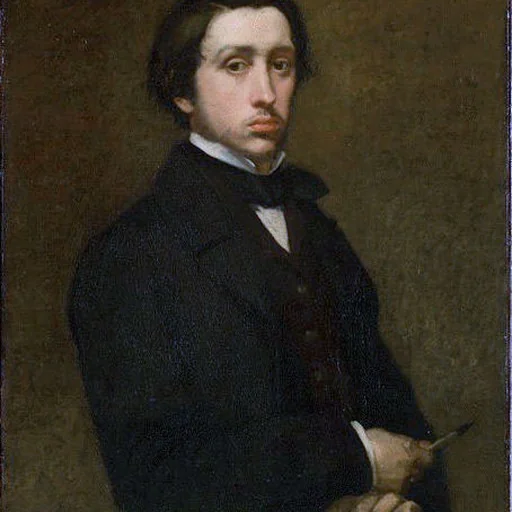
Artist
Born Hilaire-Germain-Edgar De Gas on 19 July 1834 in Paris, Edgar Degas came from an affluent banking family with aristocratic roots and spent his childhood among the cultivated circles of the French capital.

- Little Velvet Dress
 Mary Cassatt at the Louvre: The Paintings Gallery
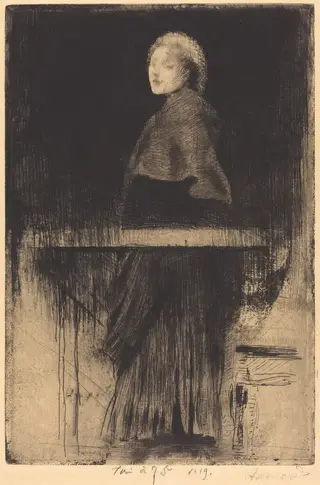 Woman in a Cape (La Femme à la Pelerine)
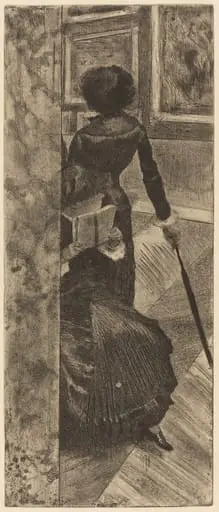 Mary Cassatt at the Louvre: The Paintings Gallery
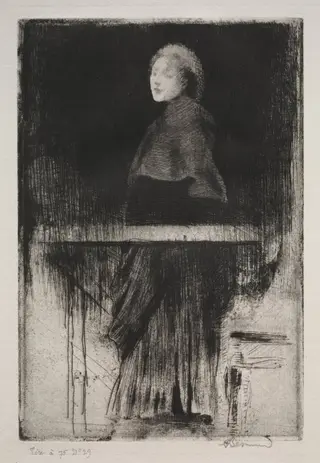 Woman with a Cape
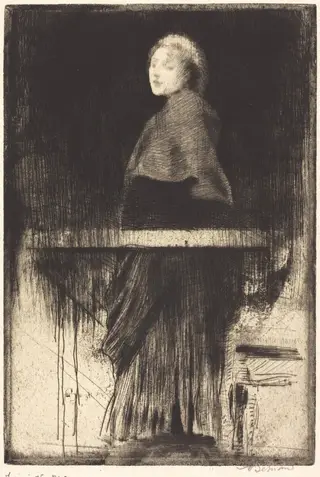 Woman in a Cape (La femme à la pèlerine)
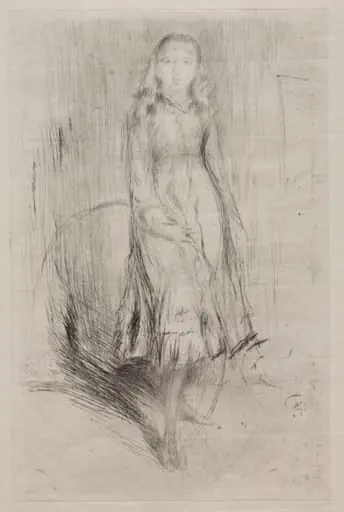 Florence Leyland
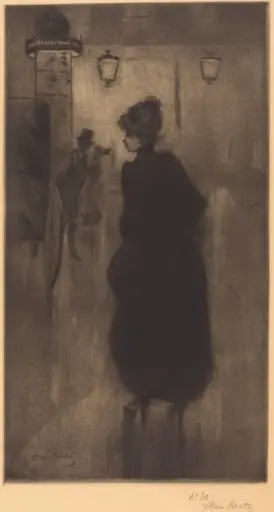 Parisian Woman (The Effect of the Night)
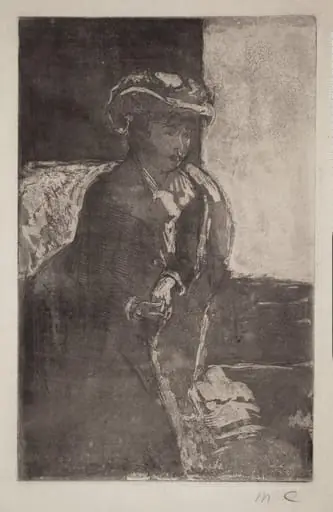 The Corner of the Sofa (No. 3)
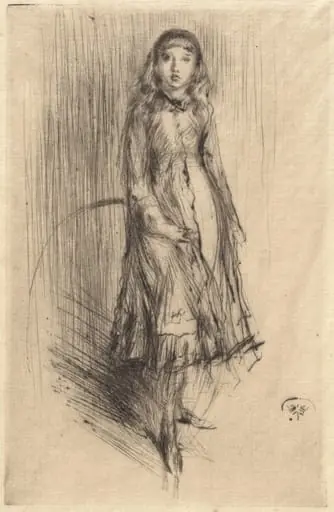 Florence Leyland
 Study
Study Finette