Artwork
Christ Healing the Blind
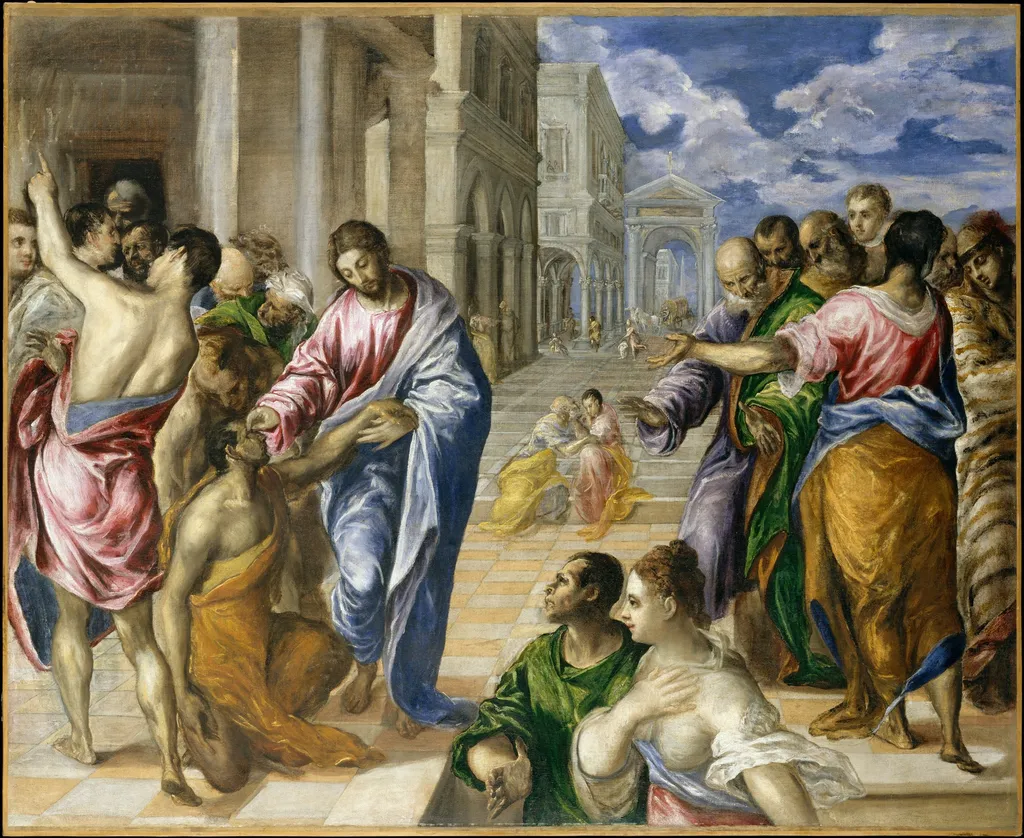
Christ Healing the Blind is an oil painting by the Mannerist artist El Greco. It dates from 1570 and is held in the collection of the Metropolitan Museum of Art.
About this work
Subject & Meaning
The composition shows one blind man in the process of being healed by Christ, while a second, already cured, raises his arm in joyful thanksgiving.
El Greco's painting depicts the biblical miracle of Christ Healing the Blind, a religious subject drawn from the New Testament. The scene most closely corresponds to the Gospel of Matthew (9:27-30), which recounts the restoration of sight to two blind men, though parallels also exist in the Gospels of Mark (8:22-25) and John (9:1-6). The composition shows one blind man in the process of being healed by Christ, while a second, already cured, raises his arm in joyful thanksgiving.
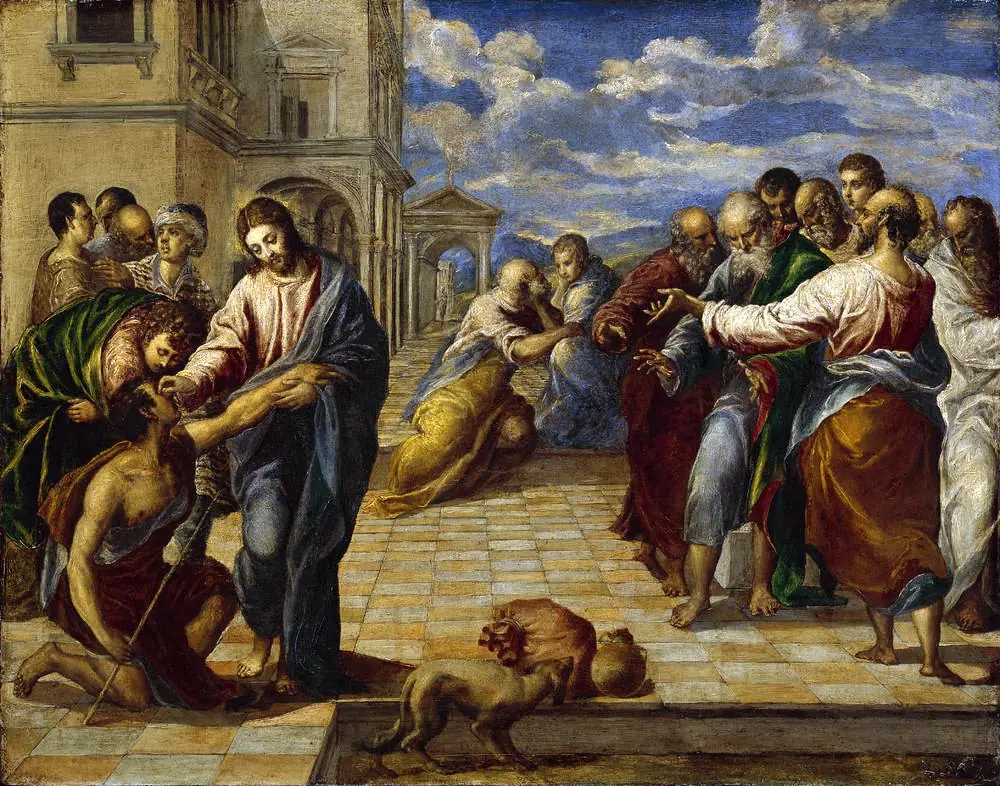
The work is classified as religious art within the Mannerist movement and depicts Christ alongside male and female figures. El Greco treated the same subject in two further versions, held in Dresden and Parma, indicating the theme's significance in his early production.
Technique & Style
The work is executed in oil paint on a canvas support, a technique typical of El Greco’s mature period and confirmed by the Met’s cataloging. The surface bears a deep ultramarine sky that extends into the blue of Christ’s robe and the lining of the standing figure, while the floor is rendered in pale pink‑tan tiles laid in a receding perspective. El Greco builds the composition with a central group of two blind figures, one in the process of healing and the other gesturing joyfully, and frames the scene with an architectural arch reminiscent of his earlier Dresden version. A small statue crowns the pediment, echoing Renaissance stage designs.
History & Provenance
El Greco's Christ Healing the Blind was painted around 1570–1577, either shortly before his departure from Italy or shortly after his arrival in Spain, and is catalogued as no. 63 in Harold Wethey's raisonné. The painting's early attribution history is uncertain: it was once given to Tintoretto while in the possession of William Rennie in London. It subsequently passed to George Smith-Bosanquet of Fryerning, Essex, and was sold at Christie's in May 1958 for 36,000 guineas.
The work then entered the collection of Charles B. Wrightsman, who donated it to the Metropolitan Museum of Art in New York in 1978, where it remains today (accession number 1978.416).
Context
Scholars position this canvas as a pivotal transition in El Greco's career, executed either shortly before his departure from Italy or immediately upon arriving in Spain around 1577. Harold Wethey, the definitive cataloguer of the artist's oeuvre, lists the work as number 63, dating it to circa 1577–1578, whereas the Metropolitan Museum suggests an earlier date near 1570. Art historical analysis identifies the narrative source as the Gospel of Matthew, distinguishing it from similar versions in Dresden and Parma through specific iconographic details, such as a second blind figure raising an arm in joy.
Technical examination reveals the artist's adoption of Sebastiano Serlio's theatrical architecture, evidenced by a triumphal arch and a small statue on the pediment. The painting's attribution history reflects its complex reception; it was previously ascribed to Tintoretto before entering the collection of Charles Wrightsman and subsequently the Metropolitan Museum in 1978.
Legacy
The painting has been central to the scholarly understanding of El Greco’s late output, being listed as work no. 63 in Harold Wethey’s authoritative catalogue raisonné. Its inclusion in the Metropolitan Museum of Art’s collection and frequent citation in art‑historical studies have reinforced the artist’s reputation as a key figure of Mannerist religious painting. Contemporary accounts note that El Greco produced two additional versions of the subject, underscoring the work’s impact on subsequent depictions of the healing of the blind.
Since its acquisition in 1978, the canvas has been exhibited and studied, contributing to sustained public and academic interest. French scholarship highlights its composition as a visual embodiment of Counter‑Reformation themes, and its provenance from a 1958 Christie’s sale to donation by Charles Wrightsman illustrates growing mid‑20th‑century appreciation.
Overview
El Greco's painting, Christ Healing the Blind, completed around 1570, depicts a pivotal moment from the New Testament. This oil on canvas work showcases the artist's early engagement with religious themes and his distinctive visual language. Currently housed at The Metropolitan Museum of Art, it offers insight into the stylistic currents of the late Renaissance and the developing Mannerist aesthetic.
Own this work as a print
Artist & collection
Artist
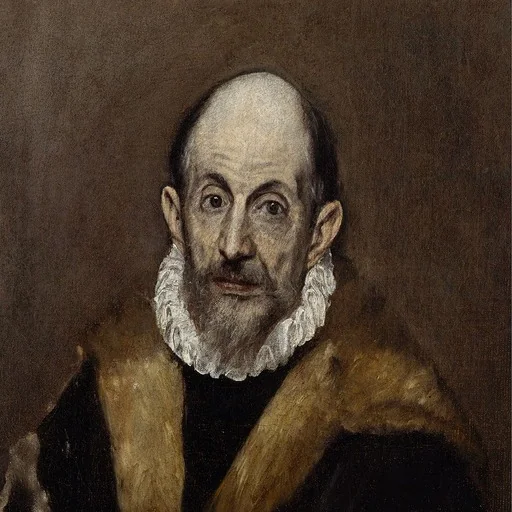
Doménikos Theotokópoulos was born in 1541 in Candia (modern Heraklion), the capital of Venetian-ruled Crete, where he was trained in the post-Byzantine tradition of icon painting.

 Christ healing the lame at the pool of Bethesda
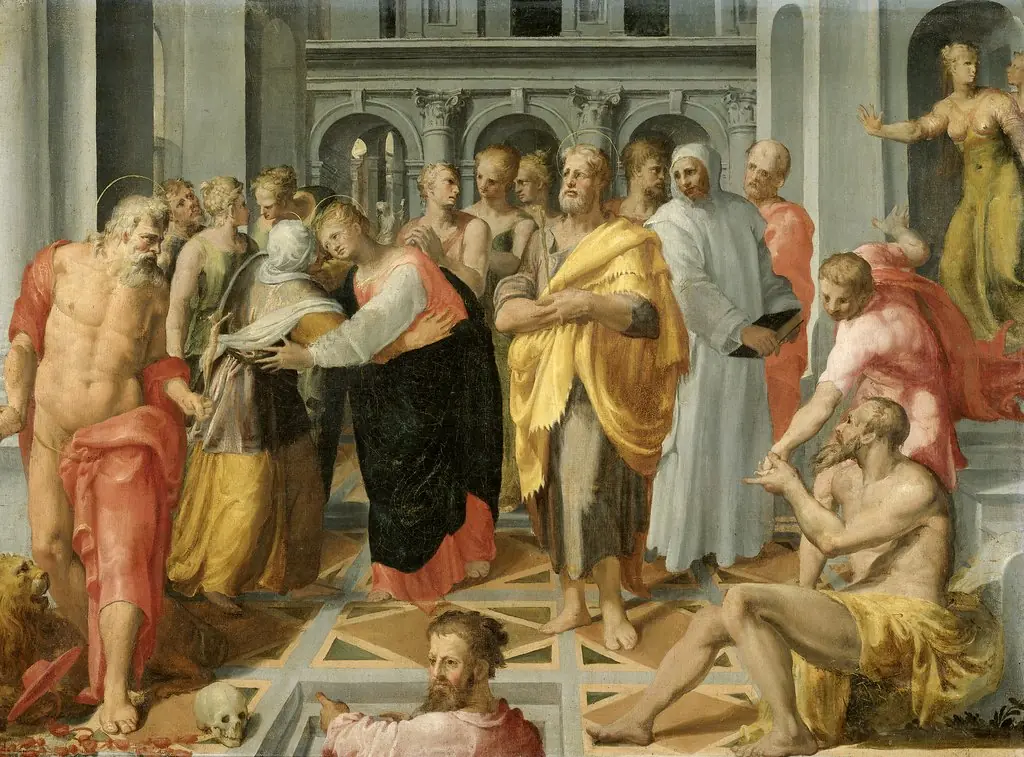 Visitation (Meeting of Mary and Elizabeth in the Presence of Saints Joseph and Jerome)
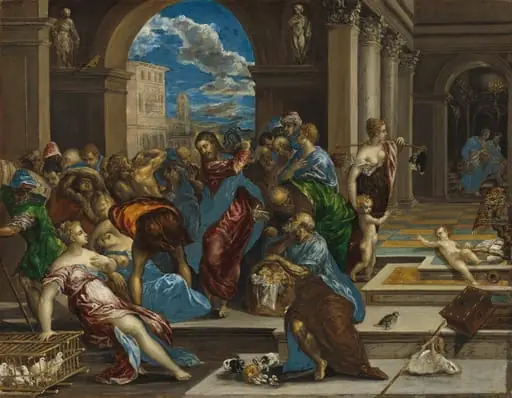 Christ Cleansing the Temple
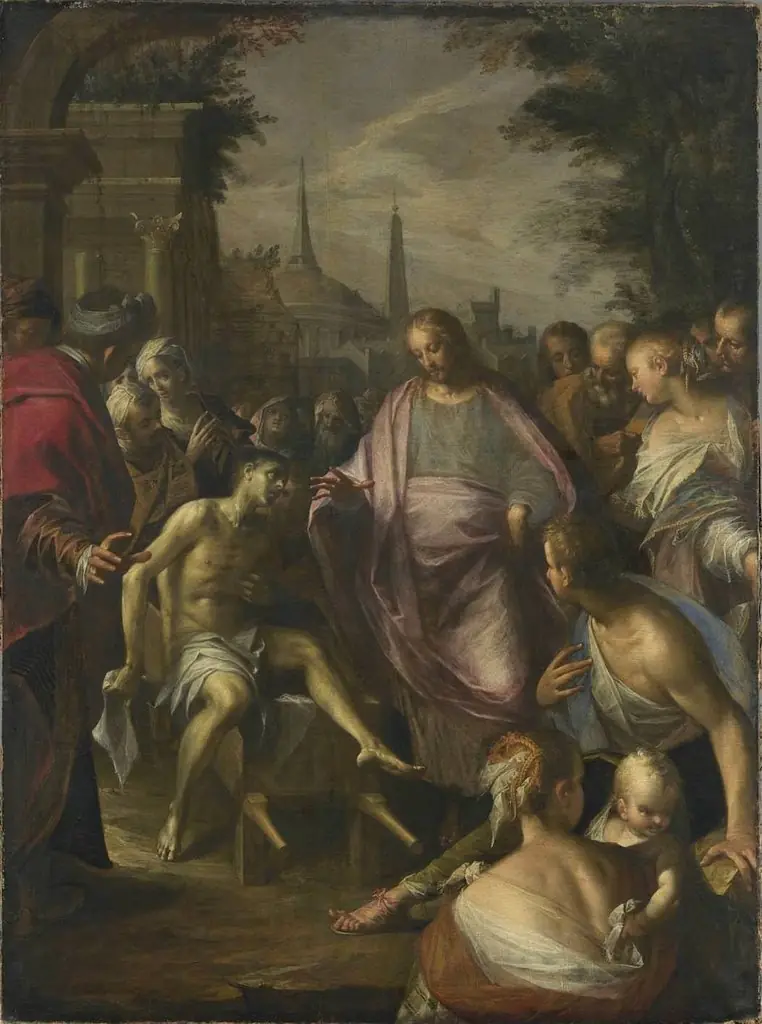 Die Auferweckung des Jünglings von Naim
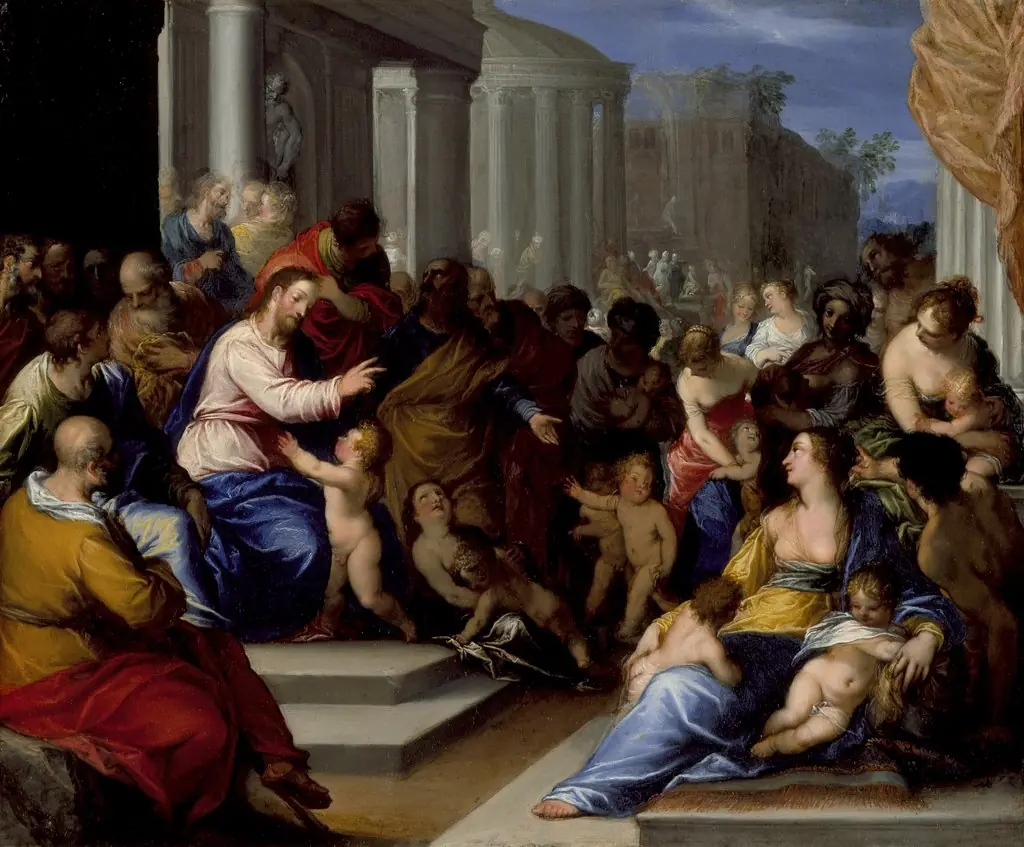 Suffer Little Children to Come Unto Me
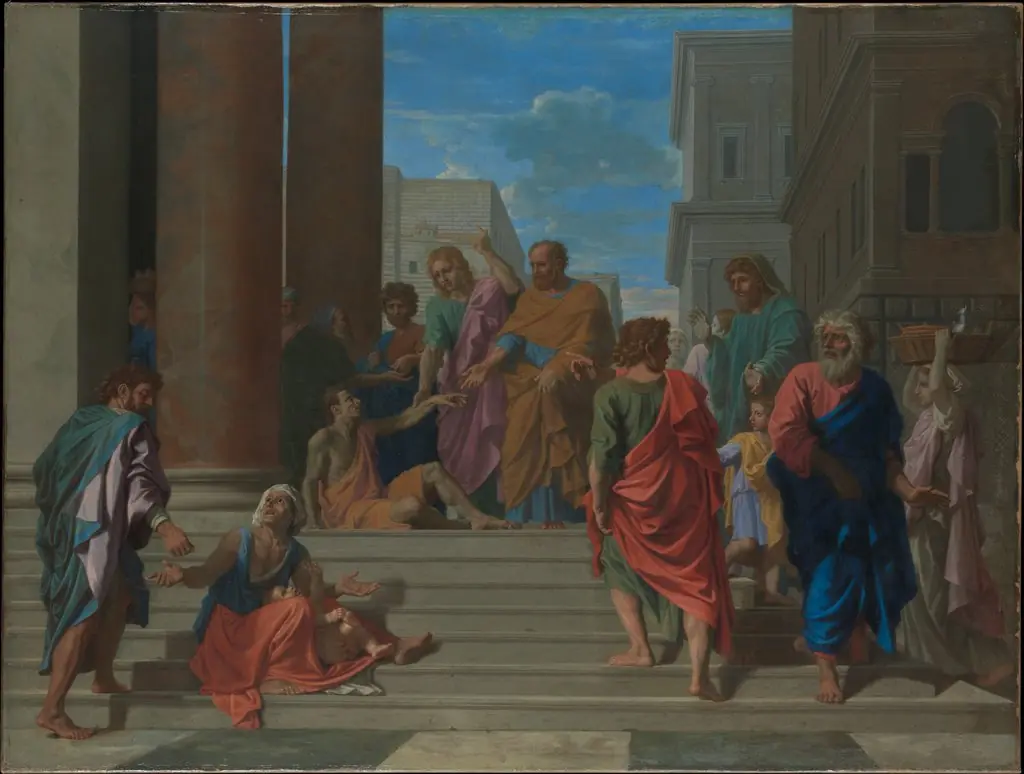 Saints Peter and John Healing the Lame Man
 Visitation (Meeting of Mary and Elizabeth in the Presence of Saints Joseph and Jerome)
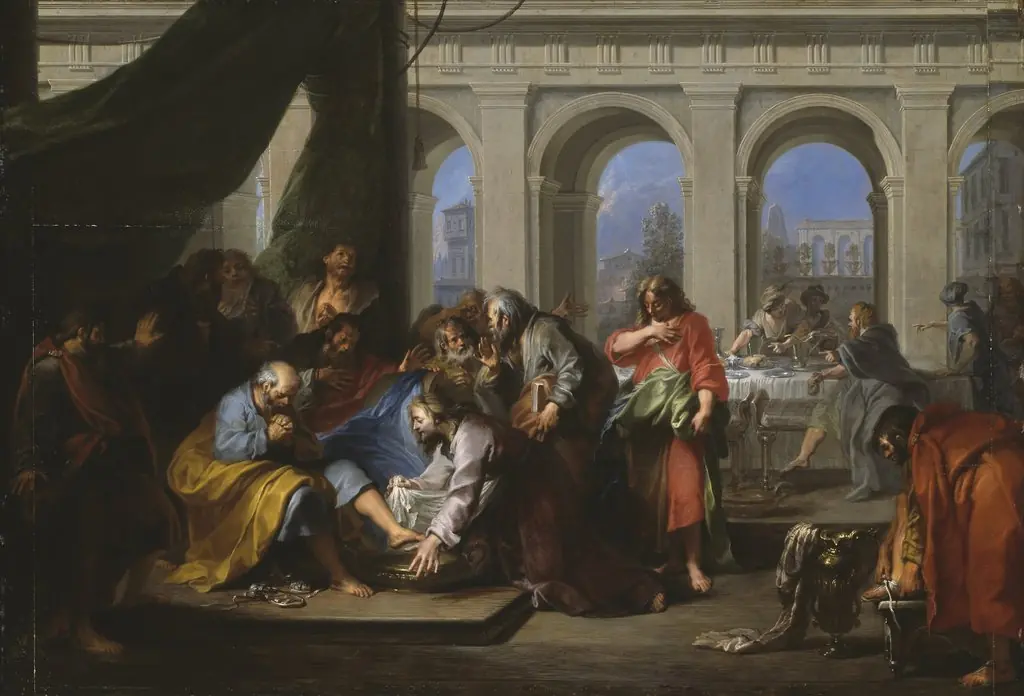 Christ Washing the Feet of His Disciples
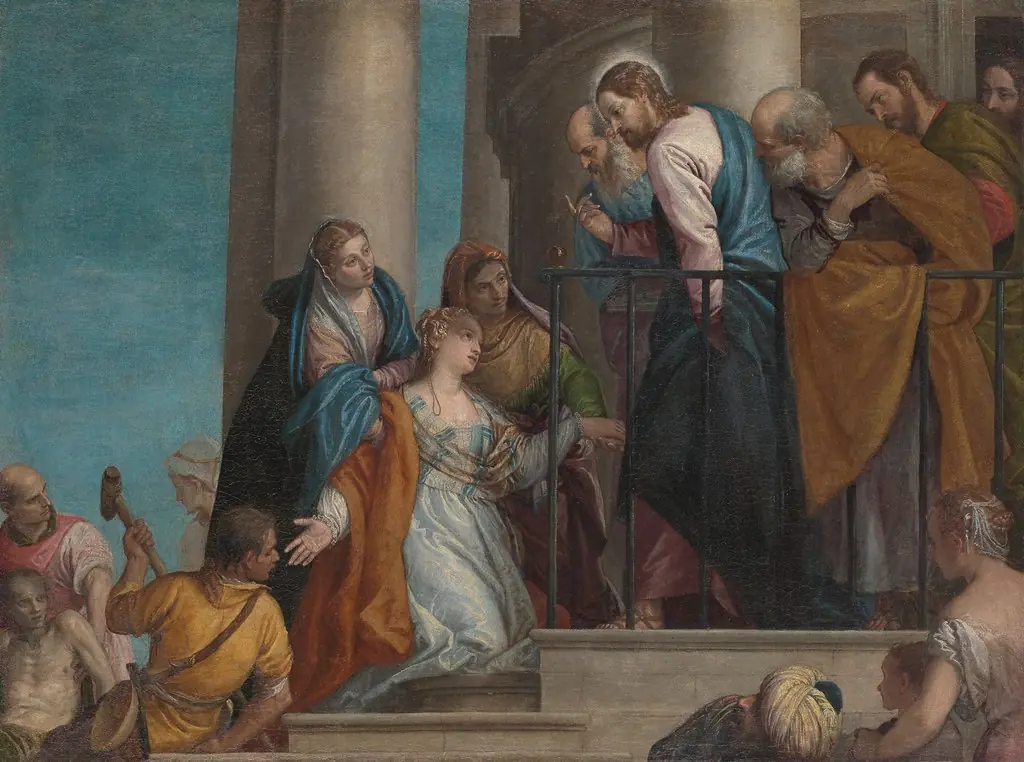 Raising the Young Man of Nain