Artwork
The Coronation of the Virgin
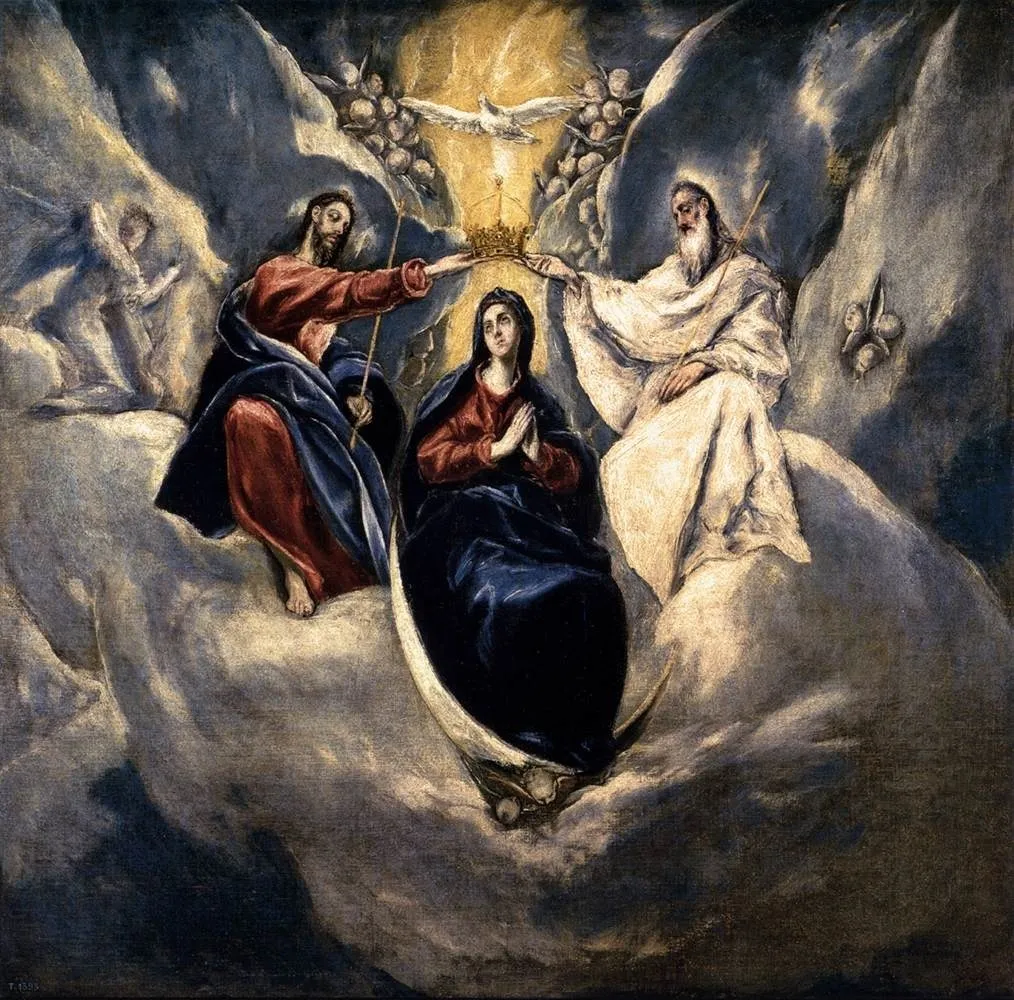
The Coronation of the Virgin is an oil painting by the Mannerist artist El Greco. It dates from 1596 and is held in the collection of the Museo del Prado.
About this work
Subject & Meaning
Christ, positioned above, places a crown upon her head, flanked by celestial light and angelic witnesses that underscore her exalted status.
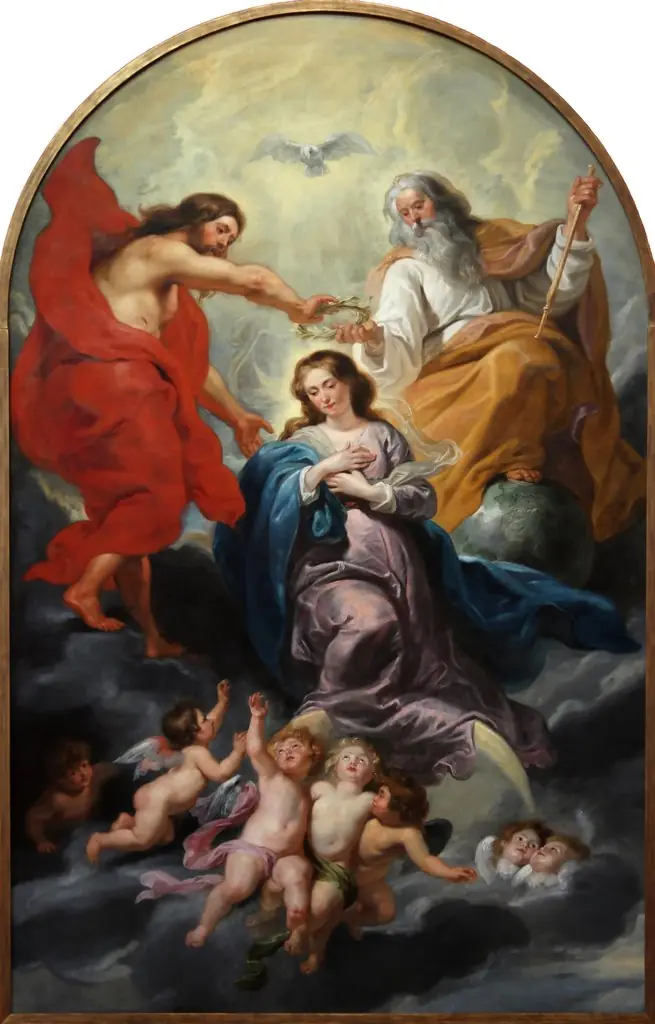
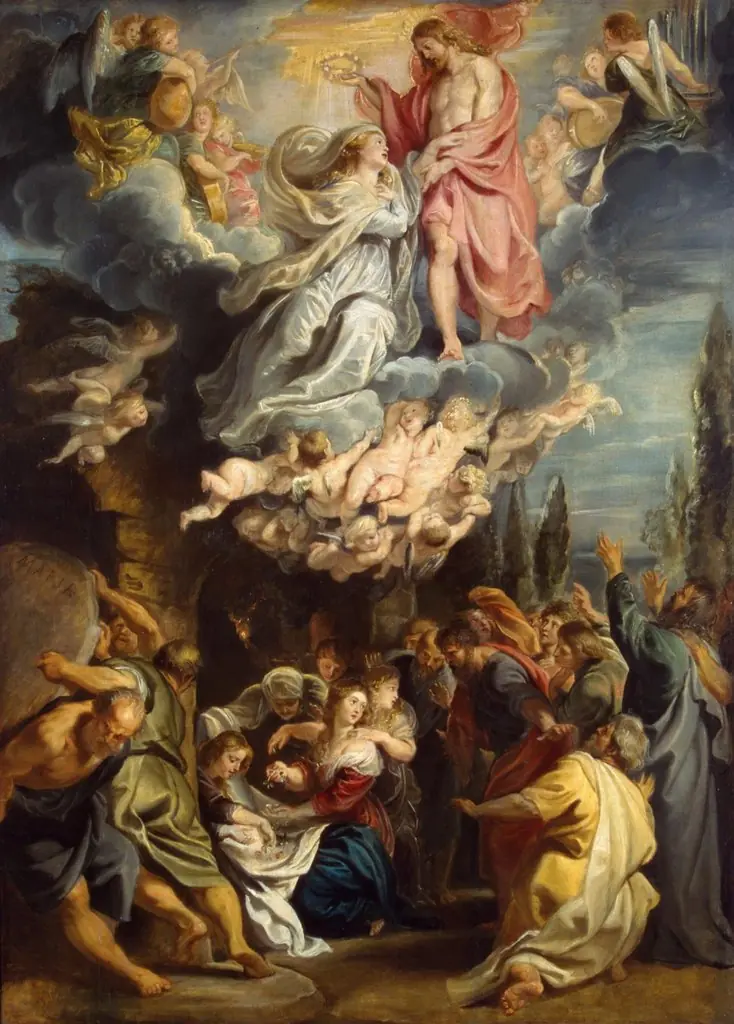
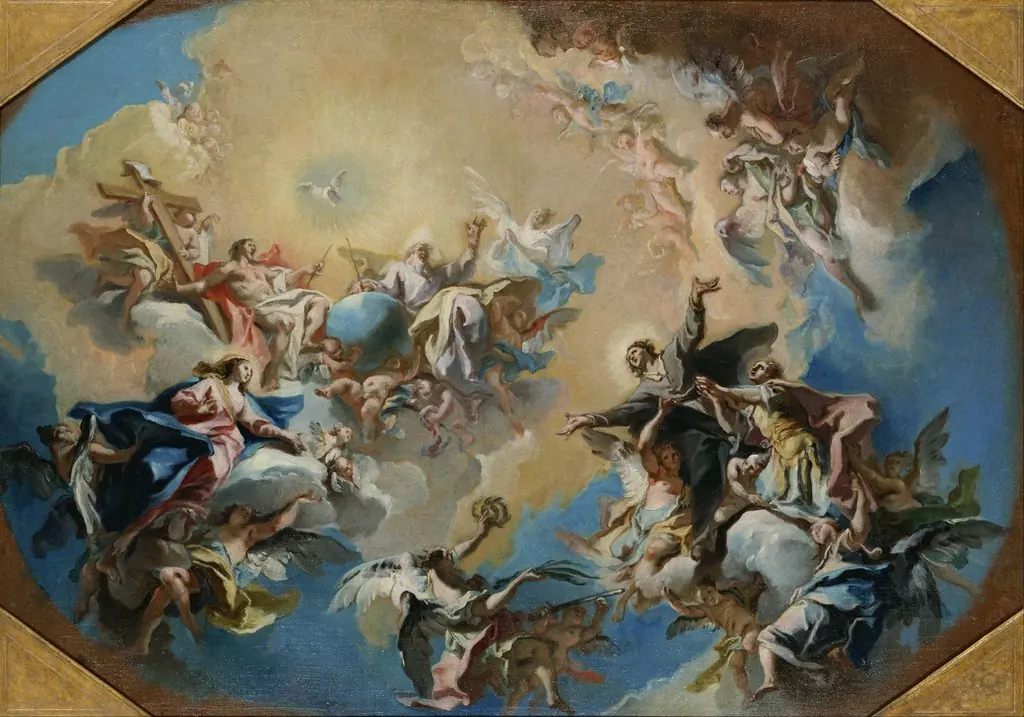
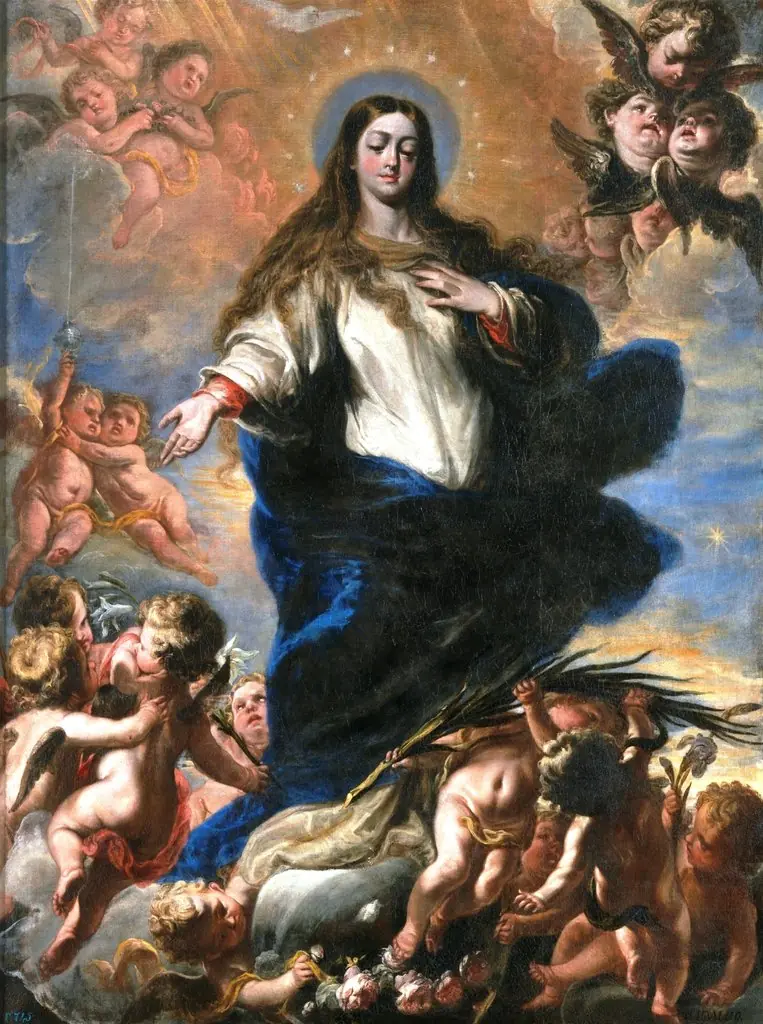
The Coronation of the Virgin depicts the moment when the Virgin Mary is crowned by Christ as Queen of Heaven, a subject rooted in medieval liturgical drama and theological tradition. El Greco’s composition centers the Virgin kneeling or ascending on a crescent moon, a visual formula identifying her as the Immaculate Conception, a dogma formally defined in 1854 but long anticipated in Marian iconography. Christ, positioned above, places a crown upon her head, flanked by celestial light and angelic witnesses that underscore her exalted status.
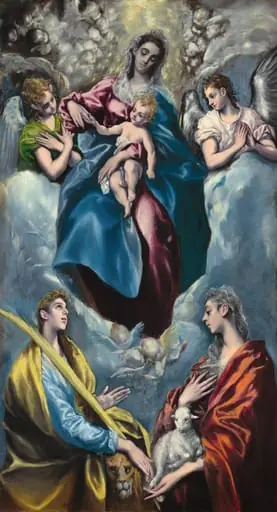
The reduced palette of carmine, blue, white, and yellow, handled with tonal refinement, heightens the scene’s spiritual luminosity, while the symmetrical grouping of saints in related versions expands the narrative to include earthly witnesses.
Variants of this iconographic model recur across five signed versions by El Greco, with only minor deviations in the lower register; the essential celestial coronation remains consistent.
Technique & Style
The Coronation of the Virgin is painted in oil on canvas. The handling is characterized by a refined, calligraphic touch and a restricted palette dominated by carmine, blue, white, and yellow, deployed with subtle tonal gradations and delicate luminosity. The composition centers on the Virgin Mary enthroned on a broad crescent moon, aligning the scene with an Immaculate Conception iconography.
The upper register preserves a consistent model across El Greco’s signed versions, while the lower zone typically remains unpopulated by attendant saints in this iteration.
The Prado’s canvas measures 99 cm in height and 101 cm in width. Its provenance before the nineteenth century is undocumented, though it has been linked to an 1810 inventory of the Royal Palace of Madrid and to a figure associated with the Castilian Council, don Agustín de Hierro, who owned several works by the artist.
History & Provenance
El Greco executed The Coronation of the Virgin in 1591. While the work's earliest history remains uncertain, scholars suggest it may have originally belonged to Agustín de Hierro, a member of the Council of Castile who owned several pieces by the artist. Alternatively, the painting has been linked to a work of the same subject recorded in an 1810 inventory of the Royal Palace of Madrid.
Following the artist's death, his son, Jorge Manuel Theotocópuli, listed multiple versions of this theme in his inventories, though none can be definitively identified with the extant canvas. The painting was later owned by Pablo Bosch y Barrau before entering the collection of the Museo del Prado.
The Coronation of the Virgin is held in the Museo del Prado in Madrid, where it is recorded under the inventory number P00968. The work entered the museum's collection through the bequest of Pablo Bosch y Barrau, a donor whose name appears in the museum's acquisition records. It was first exhibited publicly as part of the Prado's permanent display of Spanish Renaissance paintings shortly after its accession, and it has been included in major retrospectives of El Greco's oeuvre, such as the 1982 exhibition "El Greco y su escuela" at the same institution.
Context
La crítica contemporánea ha destacado la importancia de la obra como una de las cinco versiones firmadas del tema que El Greco desarrolló repetidamente, según señala Harold Wethey. El análisis iconográfico revela una variación mínima en el modelo compositivo entre las diferentes versiones, aunque en algunas composiciones del retablo de San José y del Retablo de Talavera la Vieja aparecen seis santos dispuestos simétricamente en la parte inferior, mientras que la estructura superior se mantiene constante. El Greco emplea una cuidada caligrafía pictórica con una paleta restringida de carmín, azul, blanco y amarillo, logrando una gran profundidad tonal y una delicada luminosidad.
La procedencia exacta resulta incierta; podría haber pertenecido a don Agustín de Hierro, miembro del Consejo de Castilla, o estar vinculada a una obra citada en el inventario de 1810 del Palacio Real de Madrid.
Overview
El Greco’s oil on canvas, dated 1596, portrays the coronation of the Virgin Mary. The composition is centered on a solemn ceremony in which a crown is being placed upon the Virgin’s head, surrounded by celestial elements and a luminous atmosphere. The work is part of the collection of the Museo del Prado in Madrid.
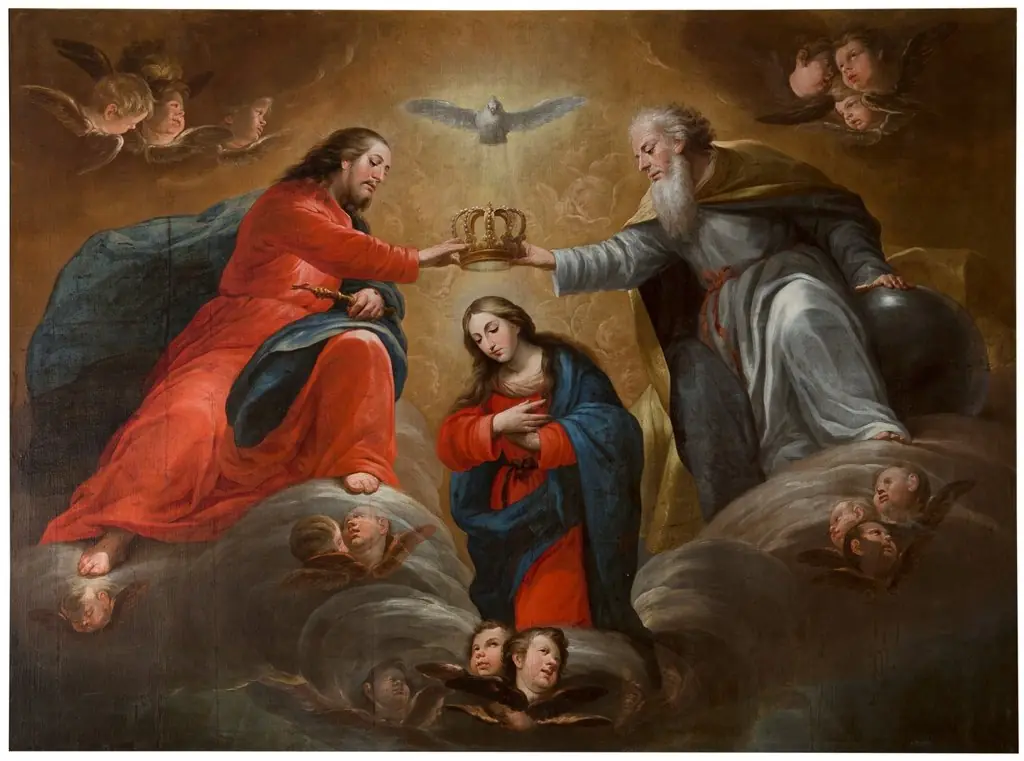
Artist & collection
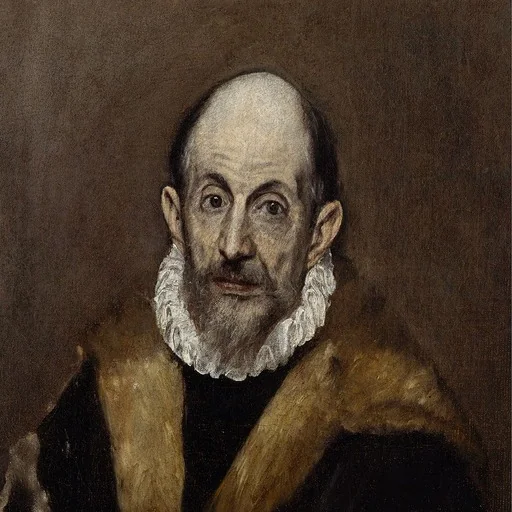
Artist
Doménikos Theotokópoulos was born in 1541 in Candia (modern Heraklion), the capital of Venetian-ruled Crete, where he was trained in the post-Byzantine tradition of icon painting.