Artwork
The Annunciation
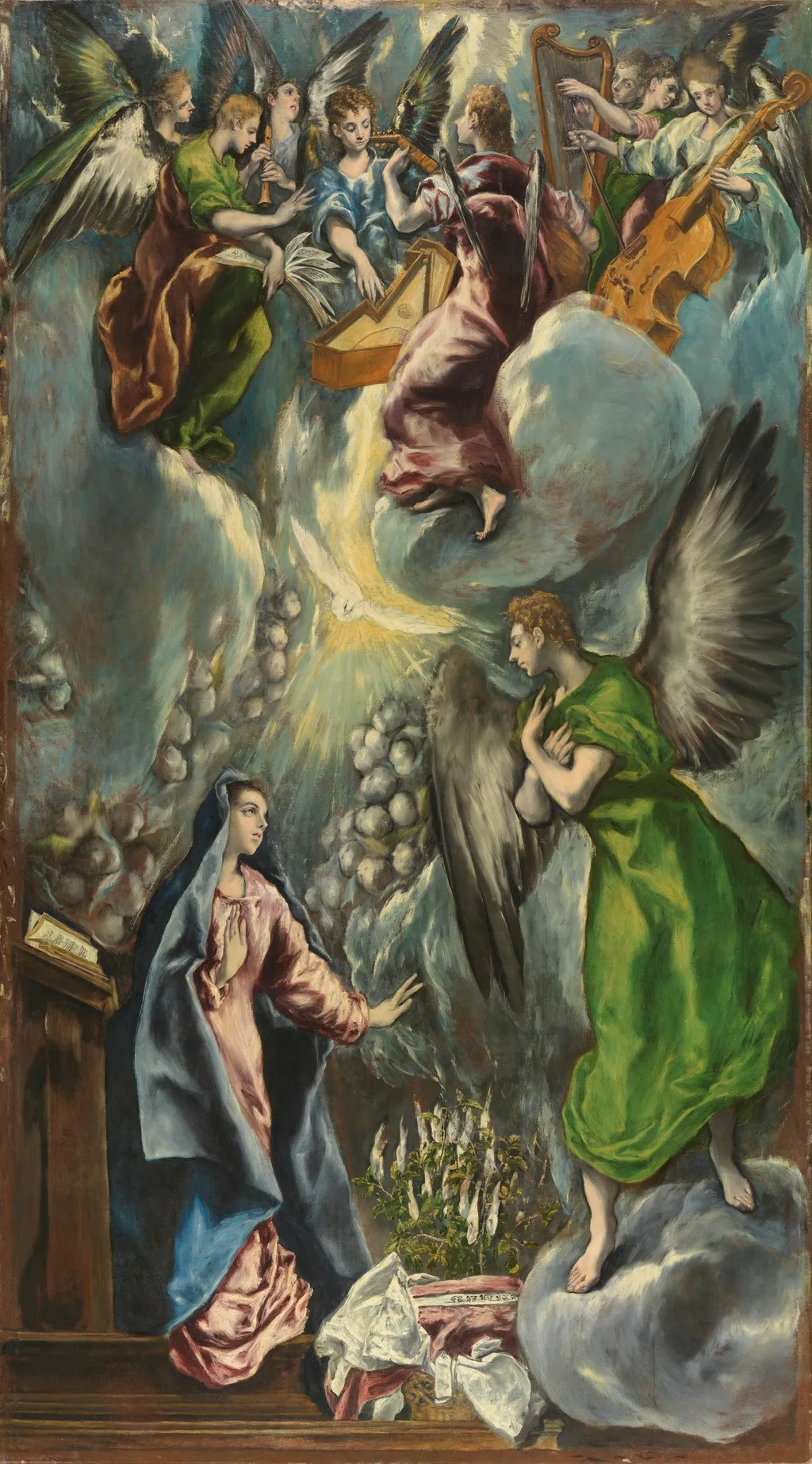
The Annunciation is an oil painting by the Mannerist artist El Greco. It dates from 1599 and is held in the collection of the Museo del Prado.
About this work
Subject & Meaning
The painting depicts the Annunciation, the moment at which the Archangel Gabriel announces to the Virgin Mary that she will conceive Christ.
The painting depicts the Annunciation, the moment at which the Archangel Gabriel announces to the Virgin Mary that she will conceive Christ. Gabriel crosses his arms over his chest in adoration, while Mary kneels toward him with arms extended in acceptance of the divine will, marking the precise instant of the Incarnation. The Holy Spirit descends as a dove amid seraphim, rendered as translucent, almost incorporeal forms in continuous motion, and an angelic choir above plays the flute, psaltery, harp, and viola da gamba.
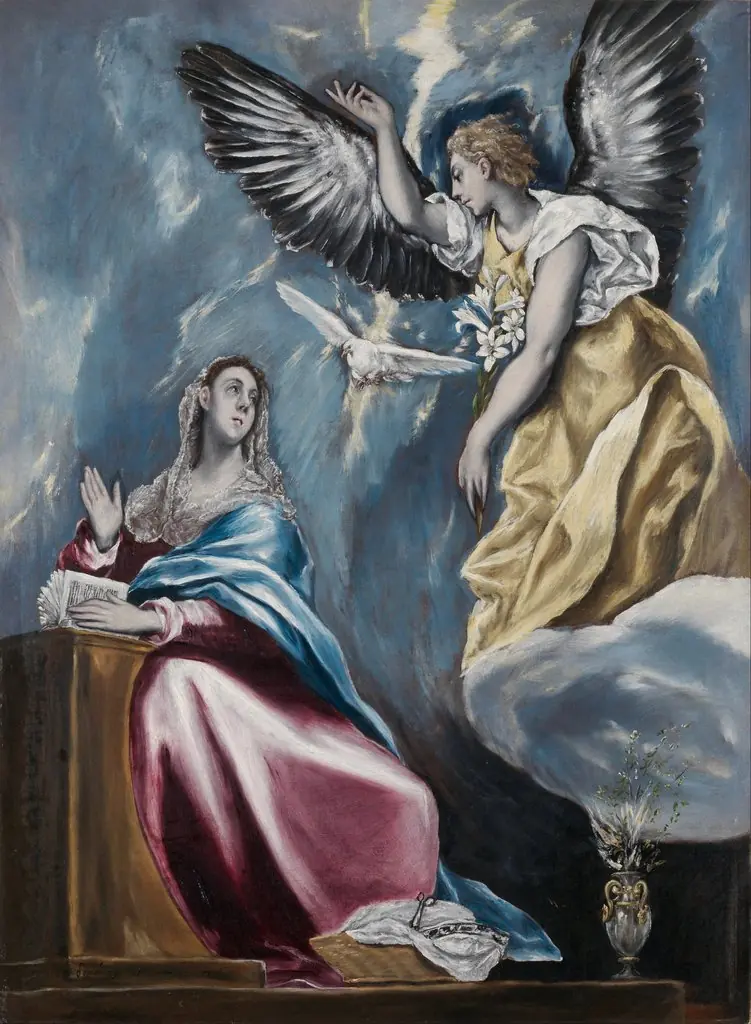
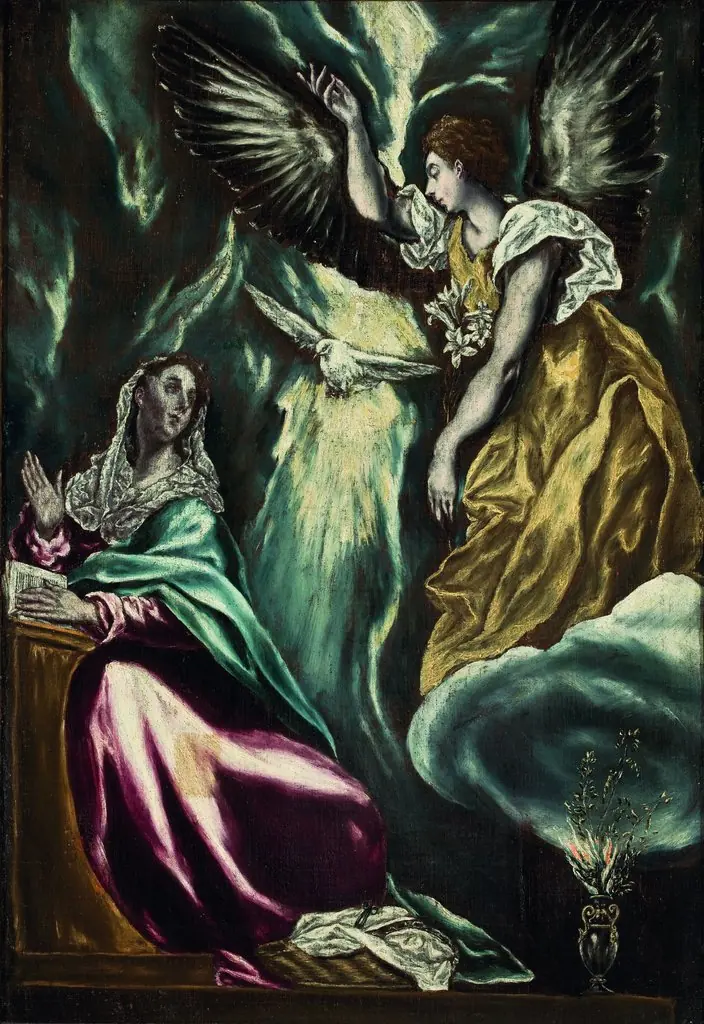
The work's symbolic elements are tightly integrated into the narrative. The burning bush evokes Mary's purity while prefiguring Christ, and a basket alludes to the veil of the Temple of Jerusalem. El Greco omits any architectural setting, focusing instead on the intrusion of the celestial realm, with vivid draperies, gray-winged Gabriel, and a rose tunic for the Virgin set against gray and blue clouds.
Every figure, gesture, object, and shaft of light carries specific meaning necessary for understanding the episode, unified through spiraling, helical rhythms of color and form.
Technique & Style
El Greco executed The Annunciation in oil on canvas, measuring 315 × 174 cm. The painting is signed in cursive Greek letters on the step below the basket. According to Wethey, no other work by El Greco matches the brilliance and richness of color of this canvas. The vivid garments of the Archangel Gabriel contrast with his grey wings, while the Virgin's pink tunic, studded with white flashes, and dark blue mantle stand out against grey and blue clouds animated by grey cherub heads.
The green bush burns with white flames above the pink and white basket, and the dove of the Holy Spirit hovers in shimmering yellowish light.
Stylistically, El Greco abandons representing an interior space, focusing instead on the intrusion of the celestial world. The figures, gestures, objects, and light carry specific meaning without detracting from formal beauty. The composition develops through helicoidal rhythms that unify all elements, creating a painting "ignited" by feeling, color, and seemingly endless forms.
The seraphs are rendered as almost incorporeal, translucent forms in continuous movement, following Pseudo-Dionysius the Areopagite's descriptions. The angelic concert features flutes, psalteries, harps, and viola da gamba, with varied garments in greens, oranges, browns, whites, and pale blues contributing to the work's colorful beauty.
History & Provenance
This oil on canvas was created by El Greco between 1596 and 1600 as a central component of the high altarpiece for the Colegio de Doña María de Aragón in Madrid. The artist signed the work in Greek cursive on the step beneath a basket. Following its original ecclesiastical setting, the painting entered the collection of the Museo de la Trinidad, where it was cataloged as number 120.
It currently resides in the Museo del Prado, holding the inventory number P003888. Scholars Harold Wethey and Tiziana Frati have respectively assigned it catalogue number 13 and reference 107-b within their comprehensive studies of the artist's oeuvre.
The painting is held in the collection of the Museo del Prado in Madrid. It bears the catalog number P003888. Originally, the work formed part of the high altarpiece for the College of Doña María de Aragón in Madrid.
Following this initial location, it entered the holdings of the Museo de la Trinidad, where it was registered under number 120, before becoming part of the Prado's permanent collection.
Context
The Annunciation belongs to the Retablo of Doña María de Aragón, a major commission that situates the work within El Greco's mature Toledan output. Catalogued by Harold Wethey as no. 13 and by Tiziana Frati as 107-b, the painting is dated 1596–1600 (with the Museo del Prado giving 1597–1600) and is signed in cursive Greek on the step beneath the basket. Wethey judged that no other Grecan canvas matches its chromatic brilliance and richness, singling out the dazzling contrast between Gabriel's vivid garments and grey wings, Mary's rose tunic flecked with white highlights, and the harmonious, varied palette of the angelic choir.
The composition is read as the precise moment of the Incarnation: Mary kneels toward Gabriel with arms crossed in acceptance, while Gabriel mirrors the gesture in adoration, and the burning bush and basket carry Marian and Temple symbolism. The work is associated with Mannerism in catalogue classifications.
Legacy
The Annunciation has become emblematic of El Greco's mature synthesis of Mannerist spirituality and vivid coloration, shaping later interpretations of Counter-Reformation sacred art. Scholars note its innovative spatial ambiguity and the way its animated angelic choir influenced Baroque depictions of celestial gatherings. The painting's provenance in the Retablo de doña María de Aragón and its continued presence in the Museo del Prado have cemented its status as a reference point for studies of devotional imagery in Spanish Renaissance art.
Art historians cite its daring compositional choices, such as the absence of a defined interior and the emphasis on symbolic gestures, as a catalyst for later artists exploring the emotional intensity of divine encounters. Its technical brilliance, particularly the contrast between the archangel's richly embroidered garments and the muted tones of his wings, has been repeatedly referenced in discussions of color theory in the Spanish Golden Age.
Overview
El Greco’s 1599 oil on canvas entitled The Annunciation presents a nocturnal interior where a kneeling woman in a pink garment holds a book, while a luminous angel in green hovers above her. The scene is populated by additional angels playing lutes and recorders, and a shaft of light pierces the ceiling, illuminating the figures against a darkened backdrop.
Artist & collection
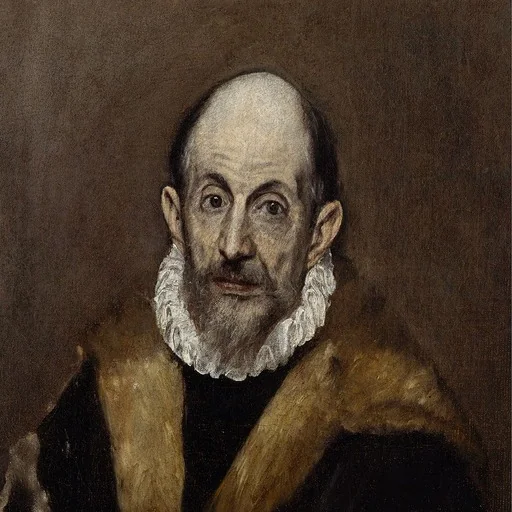
Artist
Doménikos Theotokópoulos was born in 1541 in Candia (modern Heraklion), the capital of Venetian-ruled Crete, where he was trained in the post-Byzantine tradition of icon painting.