Artwork
Cypress and Poppies
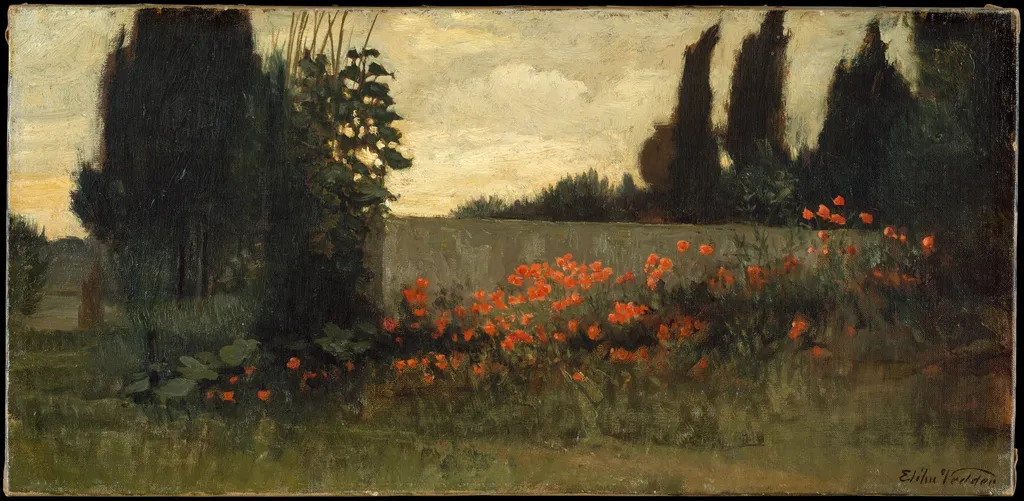
Cypress and Poppies is an oil painting by the American Impressionist artist Elihu Vedder. It dates from 1890 and is held in the collection of the Metropolitan Museum of Art.
About this work
Subject & Meaning
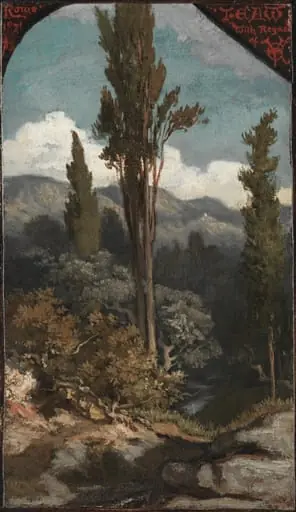
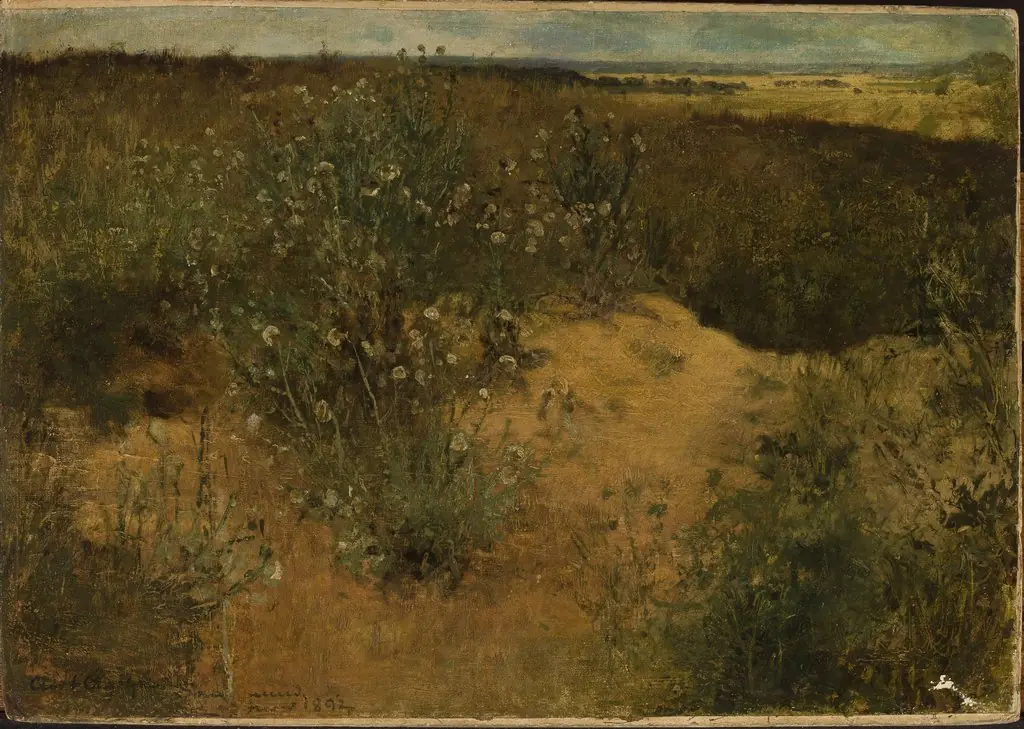
Cypress and Poppies is a landscape painting that depicts a natural scene built around two principal botanical elements: the dark vertical form of a cypress tree and the bright blooms of poppies. The pairing places an evergreen Mediterranean cypress, traditionally associated with mourning and endurance, against poppies, flowers long linked to sleep, remembrance, and the fragility of life. Set within a broader landscape, the composition uses this contrast of somber verticality and vivid color to evoke the tension between permanence and transience, a recurring theme in Elihu Vedder's work of this period.
Technique & Style
Cypress and Poppies is executed in oil paint on canvas, a standard support for late nineteenth-century easel painting.
Cypress and Poppies is executed in oil paint on canvas, a standard support for late nineteenth-century easel painting. The horizontal format, measuring 24.8 by 50.8 centimeters, establishes a panoramic landscape composition. Stylistically, the work belongs to the landscape genre, with the artist rendering the slender verticality of cypress trees against a horizontal sweep of ground populated by poppies.
The horizontal orientation and the pairing of dark, upright cypresses with the low, scattered poppies create a characteristic tonal and structural contrast typical of Vedder's landscape approach.
History & Provenance
Elihu Vedder created the oil painting Cypress and Poppies in 1880. Executed on canvas, the work measures 24.8 by 50.8 centimeters and depicts a landscape featuring cypress trees and poppies. The provided records confirm the artwork's inception date and its current residence within the collection of the Metropolitan Museum of Art.
No specific details regarding the original commission, prior ownership history, or the chain of custody leading to the museum are contained in the available sources.
Cypress and Poppies is held by the Metropolitan Museum of Art, which is identified as both its collection and its location. The painting, executed in oil on canvas in 1880 by Elihu Vedder, measures 24.8 by 50.8 centimeters. No accession number or specific exhibition history is documented in the available sources.
Context
Elihu Vedder’s 1880 oil on canvas, Cypress and Poppies, is documented in both its catalogue entry and scholarly reference works as a mature example of his landscape practice, situating the piece within the broader trajectory of American Symbolist painting. The Metropolitan Museum of Art’s collection record notes the work’s dimensions and its depiction of a cypress tree alongside poppies, while art historians have cited it to illustrate Vedder’s synthesis of naturalistic detail with a contemplative, almost mystical atmosphere that anticipates later modernist treatments of landscape. Critical commentary has highlighted the painting’s subtle tonal contrasts and its role in reflecting the artist’s shift toward more personal symbolism in the 1880s.
Overview
Elihu Vedder, an American painter, illustrator, and poet, completed Cypress and Poppies in 1890. This oil painting presents a landscape scene, characteristic of the period's American Impressionist tendencies. The work is part of The Metropolitan Museum of Art's collection, showcasing Vedder's approach to natural forms and light. It features prominent cypress trees and a field of vibrant poppies, rendered with notable contrasts.
Artist & collection
Artist
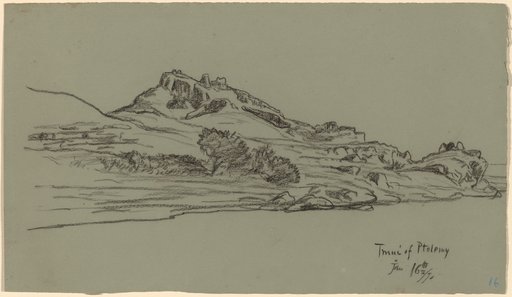
Elihu Vedder (26 February 1836 – 29 January 1923) was an American symbolist painter, book illustrator and poet from New York City.

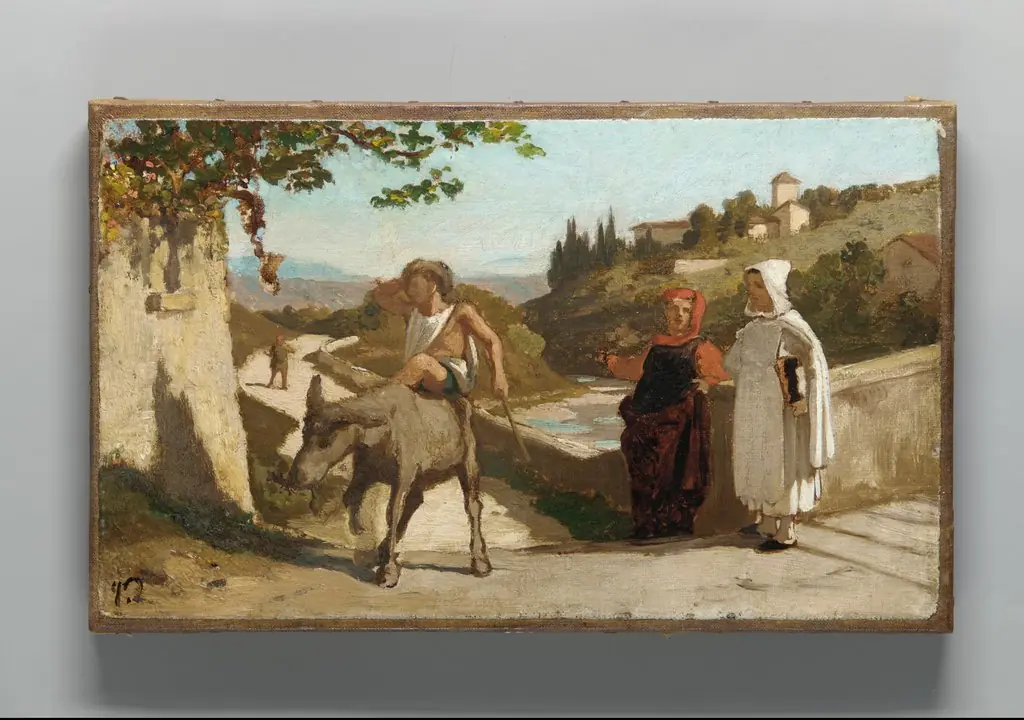 The Fable of the Miller, His Son, and the Donkey
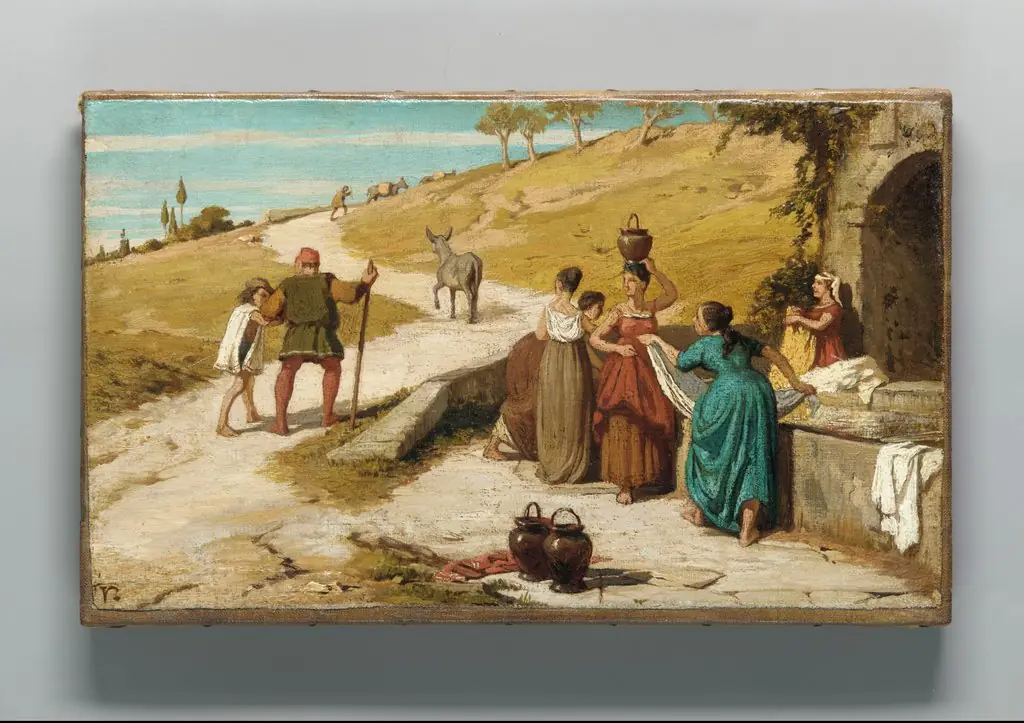 The Fable of the Miller, His Son, and the Donkey
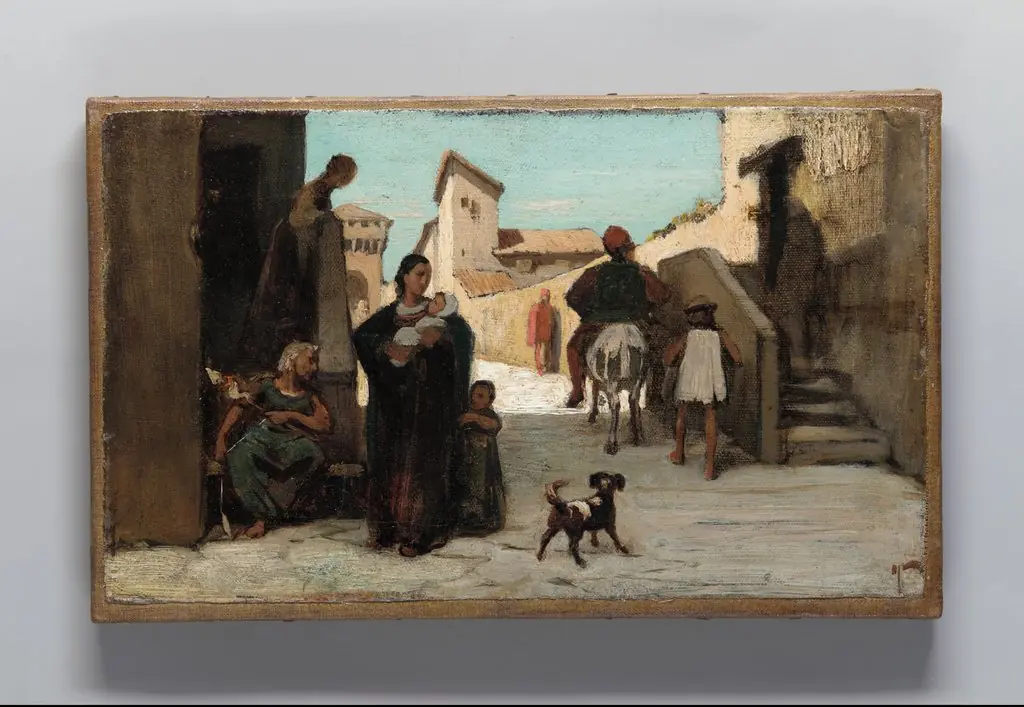 The Fable of the Miller, His Son, and the Donkey
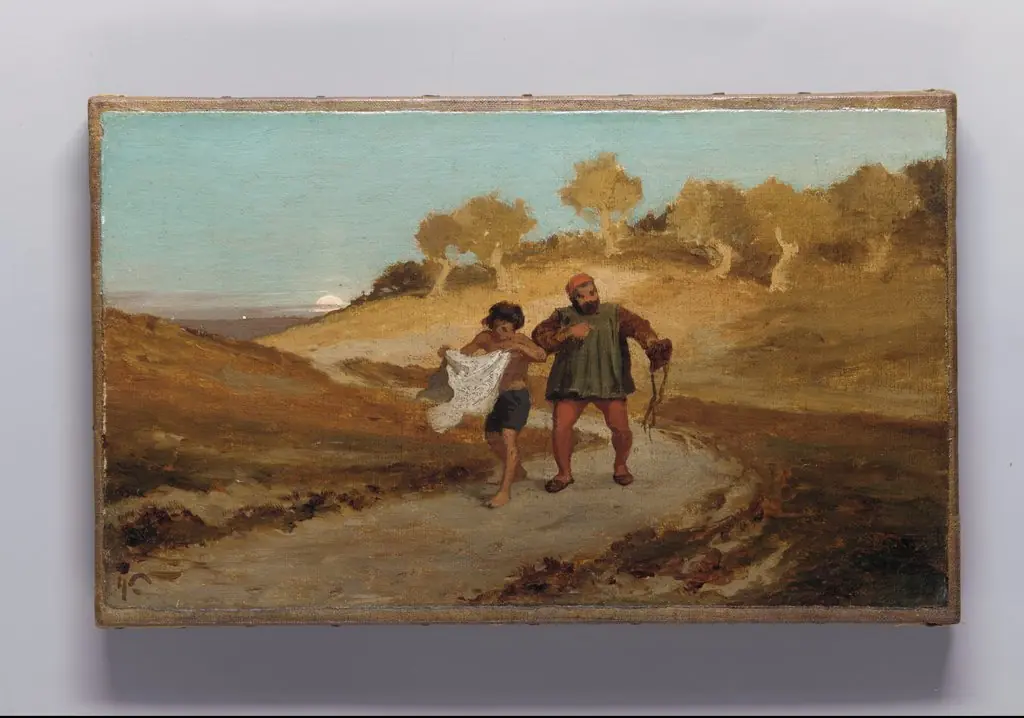 The Fable of the Miller, His Son, and the Donkey
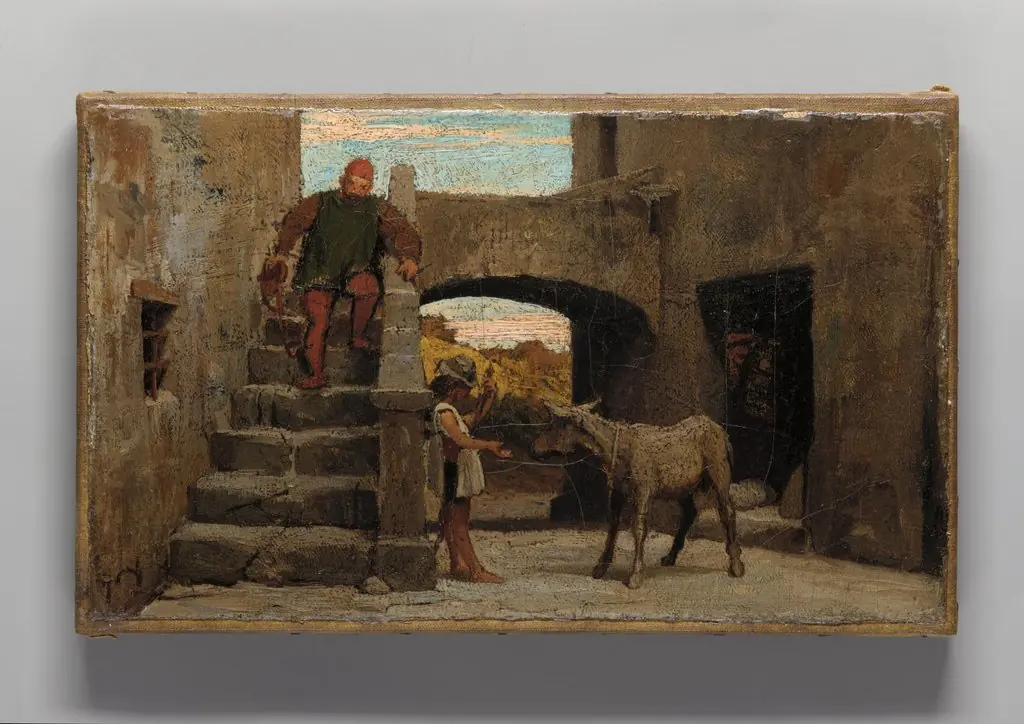 The Fable of the Miller, His Son, and the Donkey
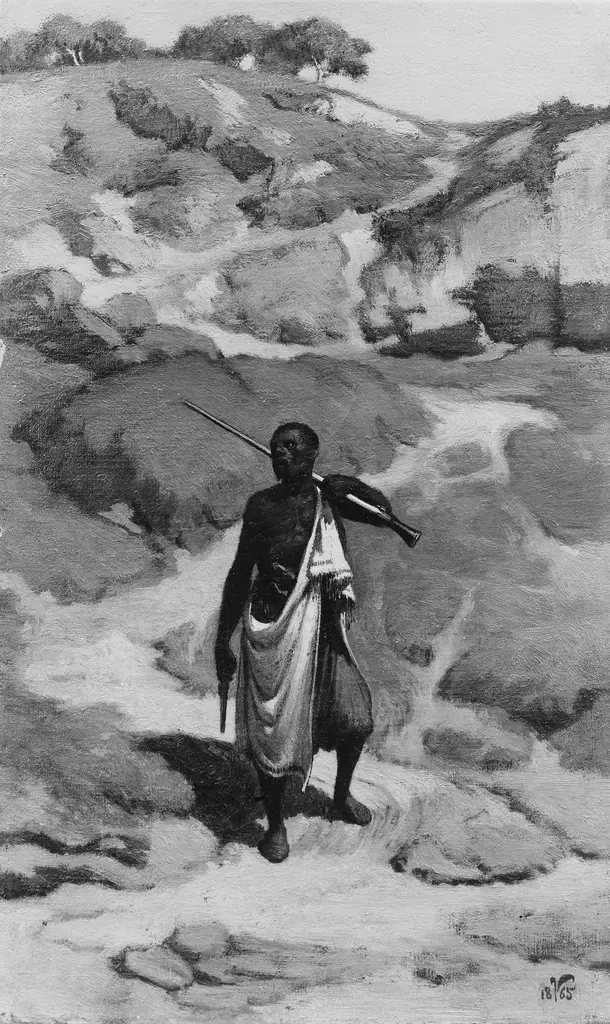 The African Sentinel
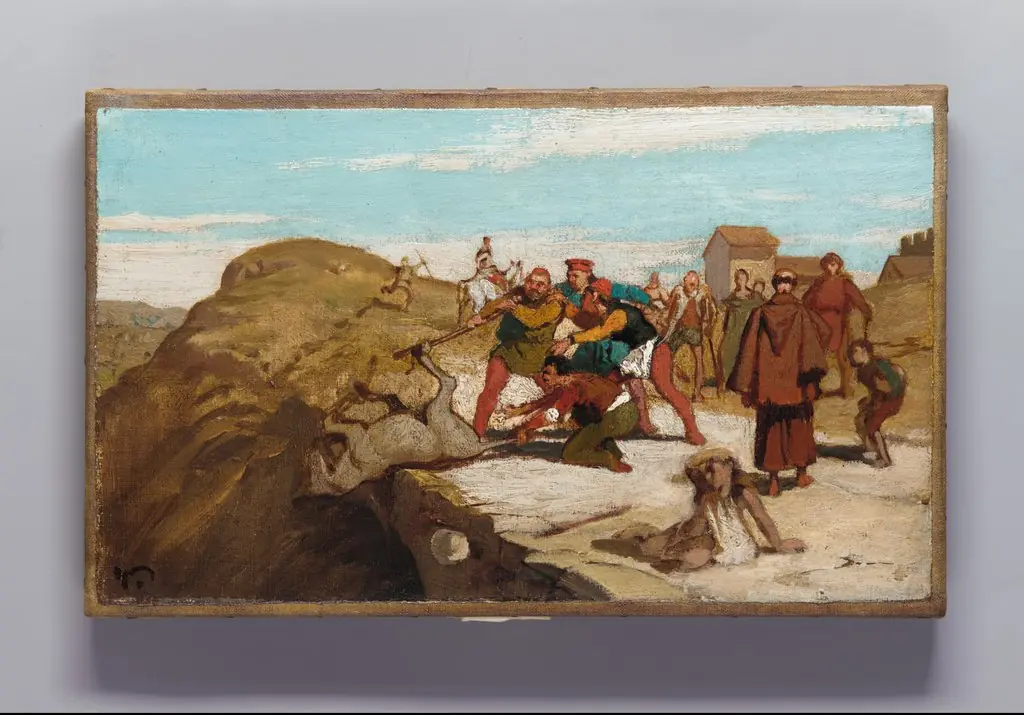 The Fable of the Miller, His Son, and the Donkey
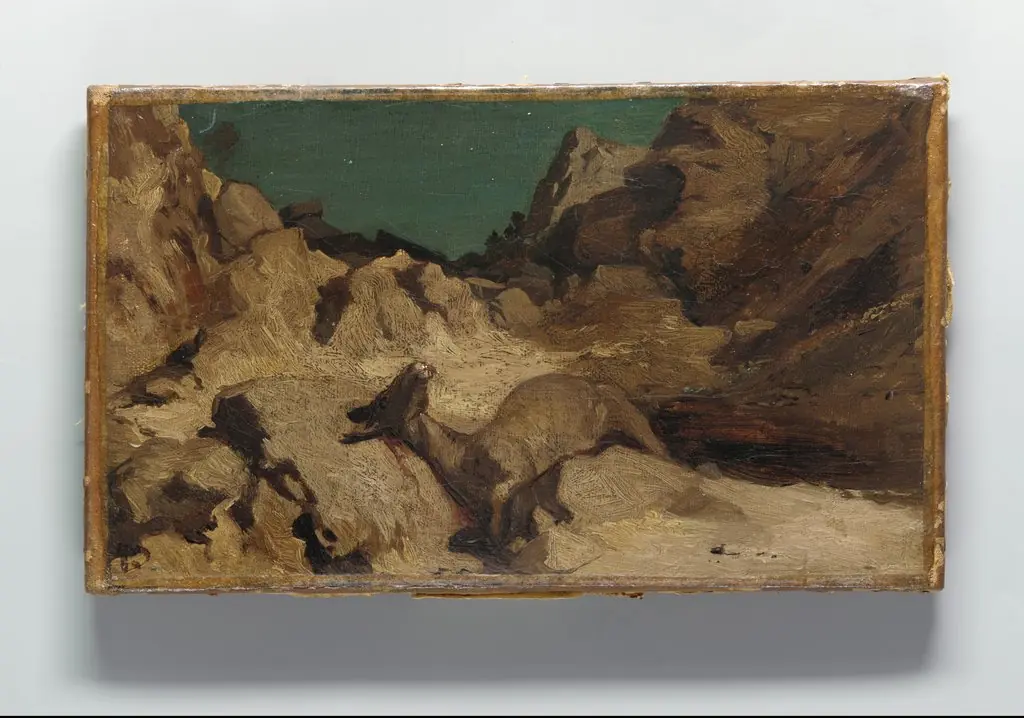 The Fable of the Miller, His Son, and the Donkey