Artwork
The Fable of the Miller, His Son, and the Donkey
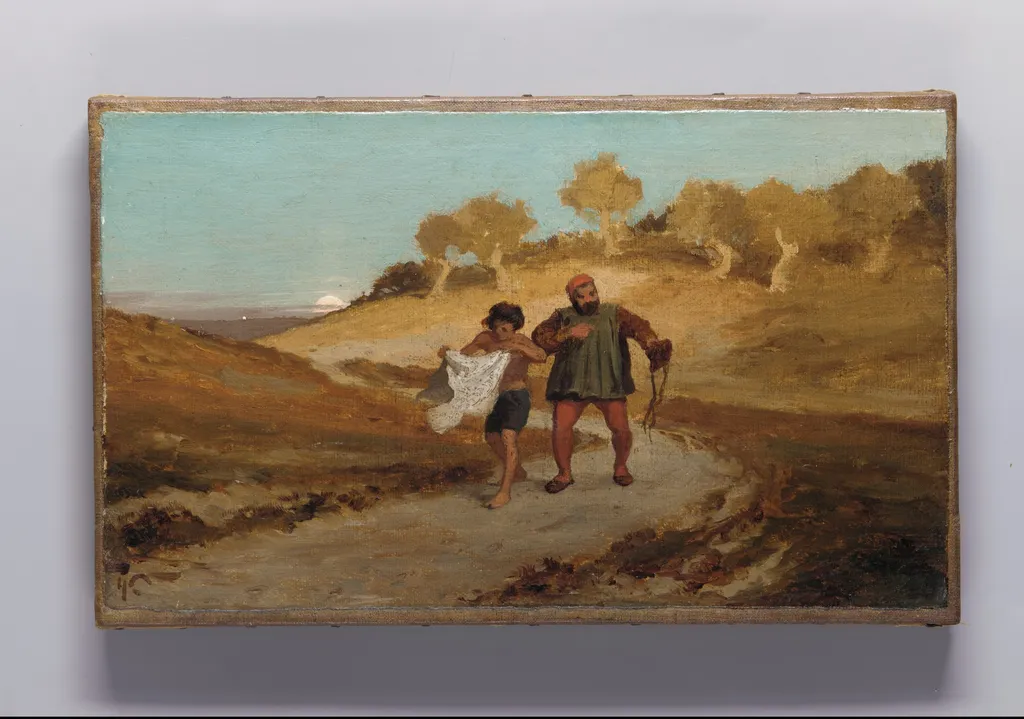
The Fable of the Miller, His Son, and the Donkey is an oil painting by the Realist artist Elihu Vedder. It dates from 1867 and is held in the collection of the Metropolitan Museum of Art.
About this work
Technique & Style
Vedder’s handling is precise yet fluid, with smooth glazes used to model the figures and landscape, while delicate brushwork defines foliage and textures [].
Elihu Vedder’s The Fable of the Miller, His Son, and the Donkey (1867) is executed in oil paint on canvas, a standard medium for nineteenth-century academic and landscape painting [,]. The support measures 16.5 by 27.3 inches, a modest scale that allowed for fine detail in the figures and landscape []. Vedder’s handling is precise yet fluid, with smooth glazes used to model the figures and landscape, while delicate brushwork defines foliage and textures [].
Stylistically, the work aligns with the luminous, meticulously rendered landscapes of the American Pre-Raphaelite circle, emphasizing naturalistic detail and a harmonious, almost narrative-driven composition []. Condition reports are not detailed in the sources, but the Metropolitan Museum of Art’s holdings suggest professional preservation [].
History & Provenance
The painting The Fable of the Miller, His Son, and the Donkey was created by Elihu Vedder in 1867, as confirmed by both internal records and Wikidata documentation (1, 2). Executed in oil on canvas, the work measures 16.5 by 27.3 inches (2). There is no documented evidence of a specific commission for this piece, and its early ownership history remains unrecorded.
Since at least 1992, the painting has been part of the collection of the Metropolitan Museum of Art in New York, where it is cataloged under accession number 1992.205.8 (2).
The work is held by the Metropolitan Museum of Art, New York, where it is accessioned as 1992.205.8. It has not been exhibited outside the museum’s collection since its acquisition in 1992, remaining in storage or study contexts as part of the museum’s holdings.
Overview
American artist Elihu Vedder completed The Fable of the Miller, His Son, and the Donkey in 1867. This oil painting depicts a narrative scene featuring a man and a boy within a landscape. The work is part of the collection at The Metropolitan Museum of Art.
Vedder, known for his contributions as both a painter and illustrator, created this piece during a period of active artistic production.
Subject & Meaning
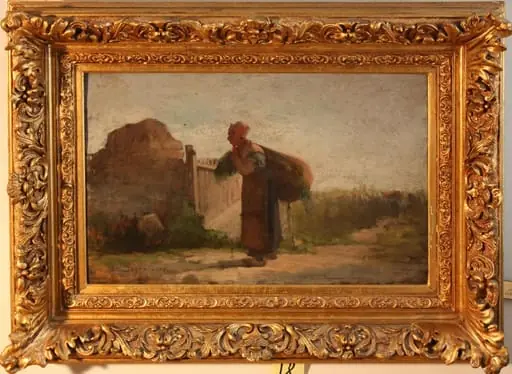
The painting illustrates a scene from a well-known fable, showing two figures, a man and a boy, traversing a dirt path. The man wears a green tunic and red pants, while the barefoot boy is dressed in black shorts and holds a white cloth. They are set against a calm backdrop of trees and a blue sky, conveying an atmosphere of simplicity and quiet contemplation. The title itself suggests a moral lesson embedded within the depicted interaction.
Context
Elihu Vedder, an American artist recognized for his symbolist tendencies and illustrative work, created this painting in the mid-19th century. While The Fable of the Miller, His Son, and the Donkey aligns with realism, Vedder is perhaps most widely celebrated for his distinctive illustrations for Edward FitzGerald’s translation of The Rubaiyat of Omar Khayyam. This earlier work showcases his versatility across different artistic styles and narrative forms.
Own this work as a print
Artist & collection
Artist
Elihu Vedder (26 February 1836 – 29 January 1923) was an American symbolist painter, book illustrator and poet from New York City.

- The Fable of the Miller, His Son, and the Donkey
 The Fable of the Miller, His Son, and the Donkey
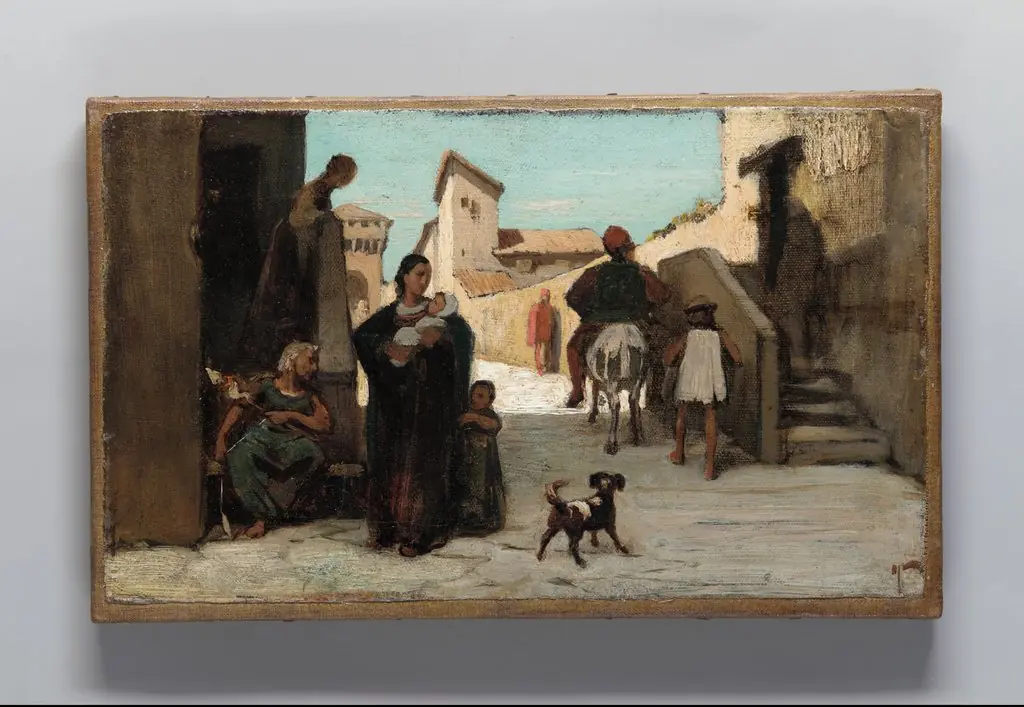 The Fable of the Miller, His Son, and the Donkey
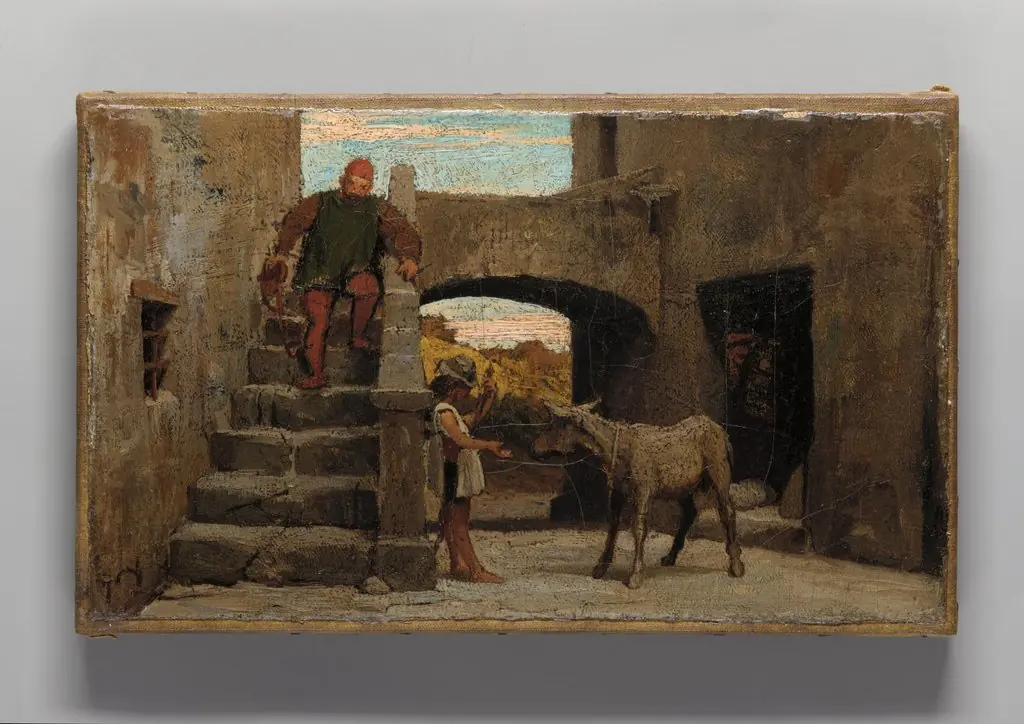 The Fable of the Miller, His Son, and the Donkey
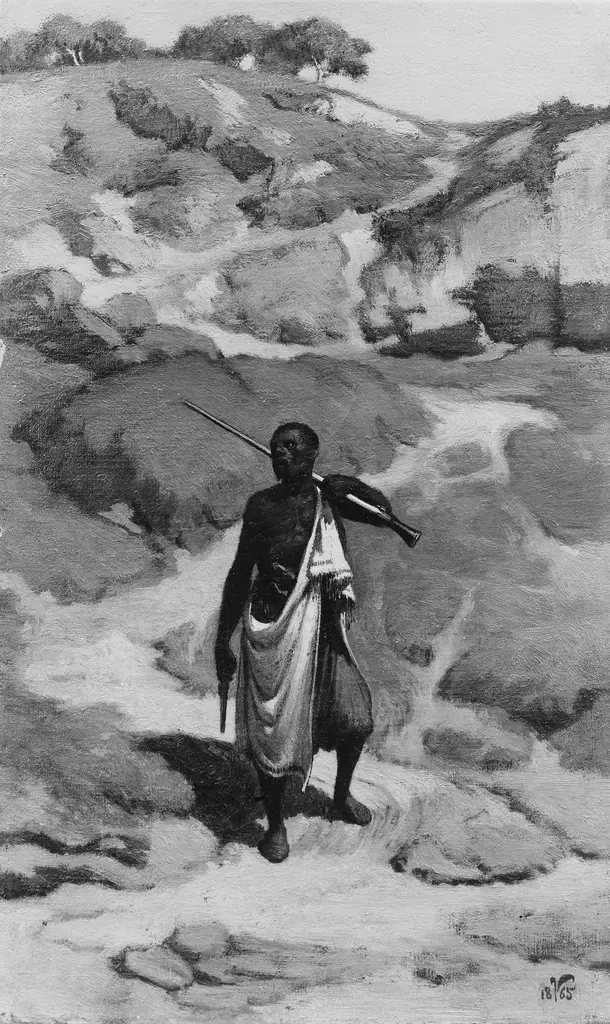 The African Sentinel
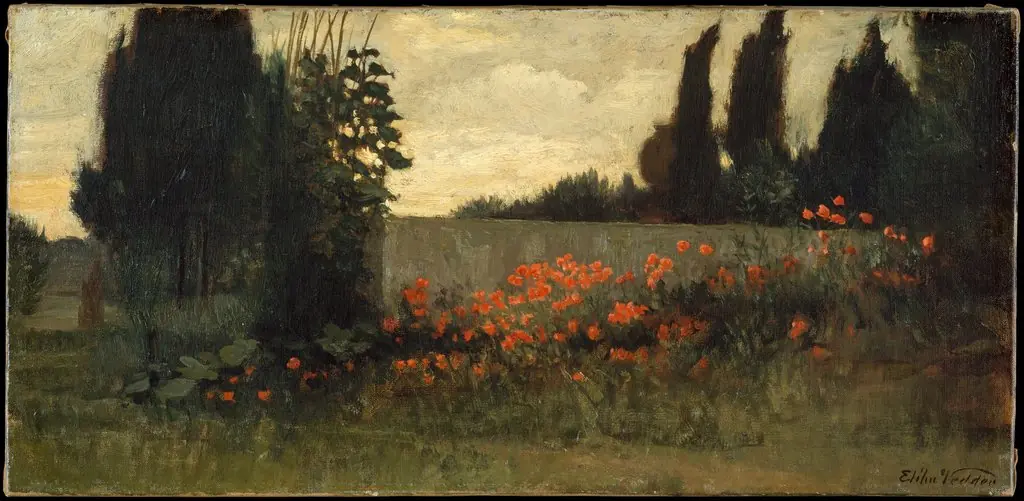 Cypress and Poppies
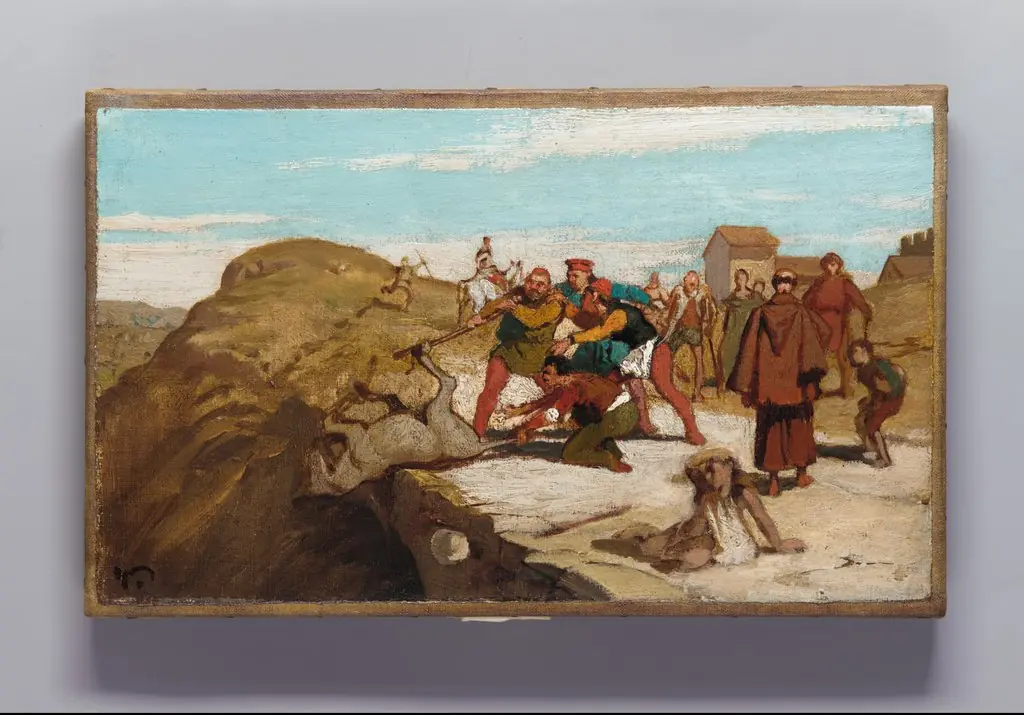 The Fable of the Miller, His Son, and the Donkey
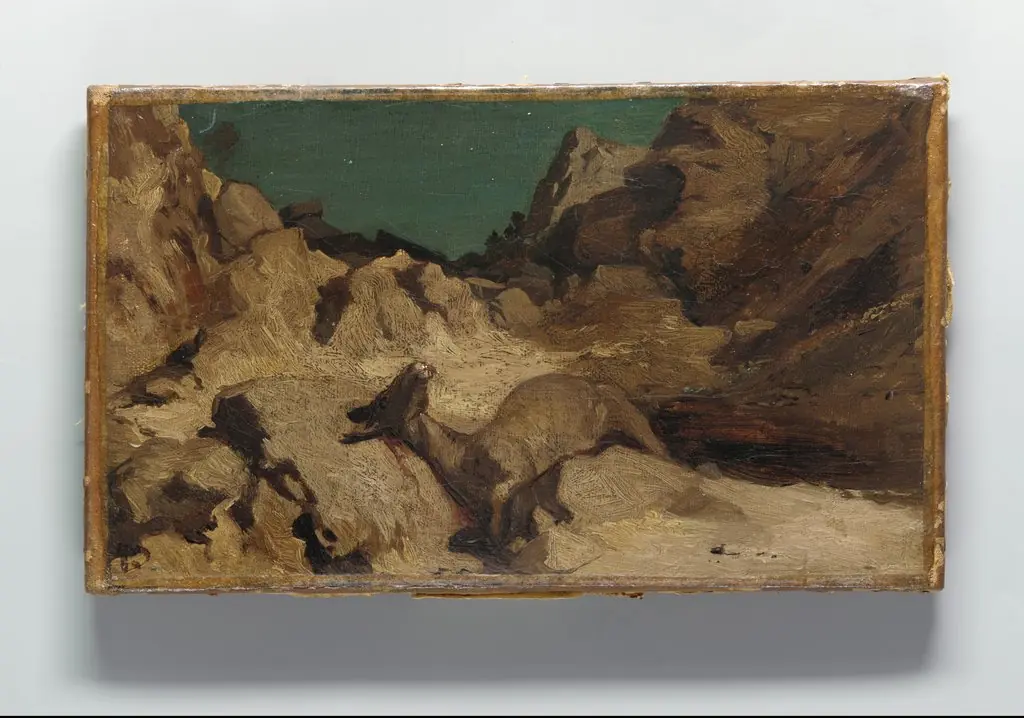 The Fable of the Miller, His Son, and the Donkey