Artwork
The Fable of the Miller, His Son, and the Donkey
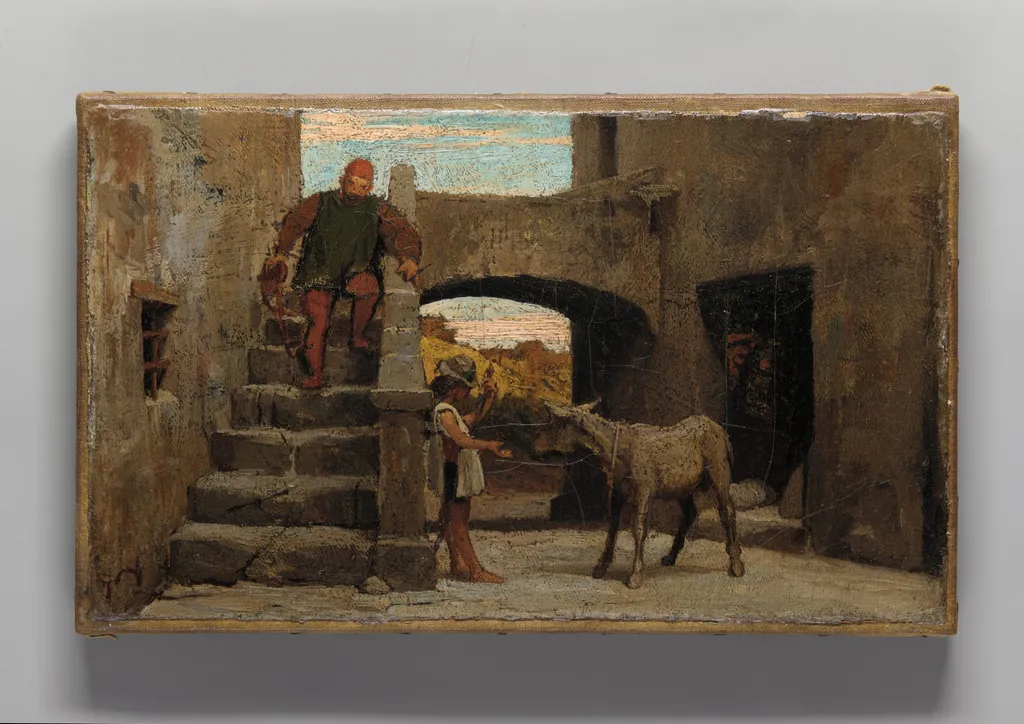
The Fable of the Miller, His Son, and the Donkey is an oil painting by the Realist artist Elihu Vedder. It dates from 1867 and is held in the collection of the Metropolitan Museum of Art.
About this work
Subject & Meaning
No specific symbolic attributes are identified in the source descriptions; the work is noted for its narrative depiction of the story’s characters and setting.
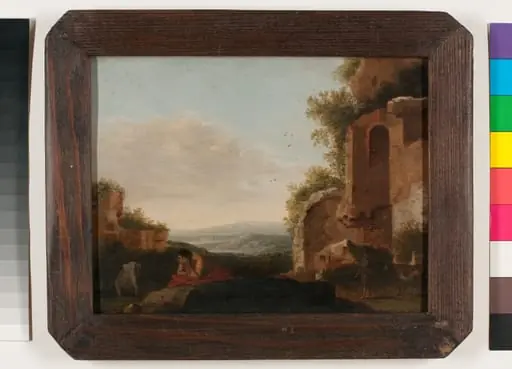
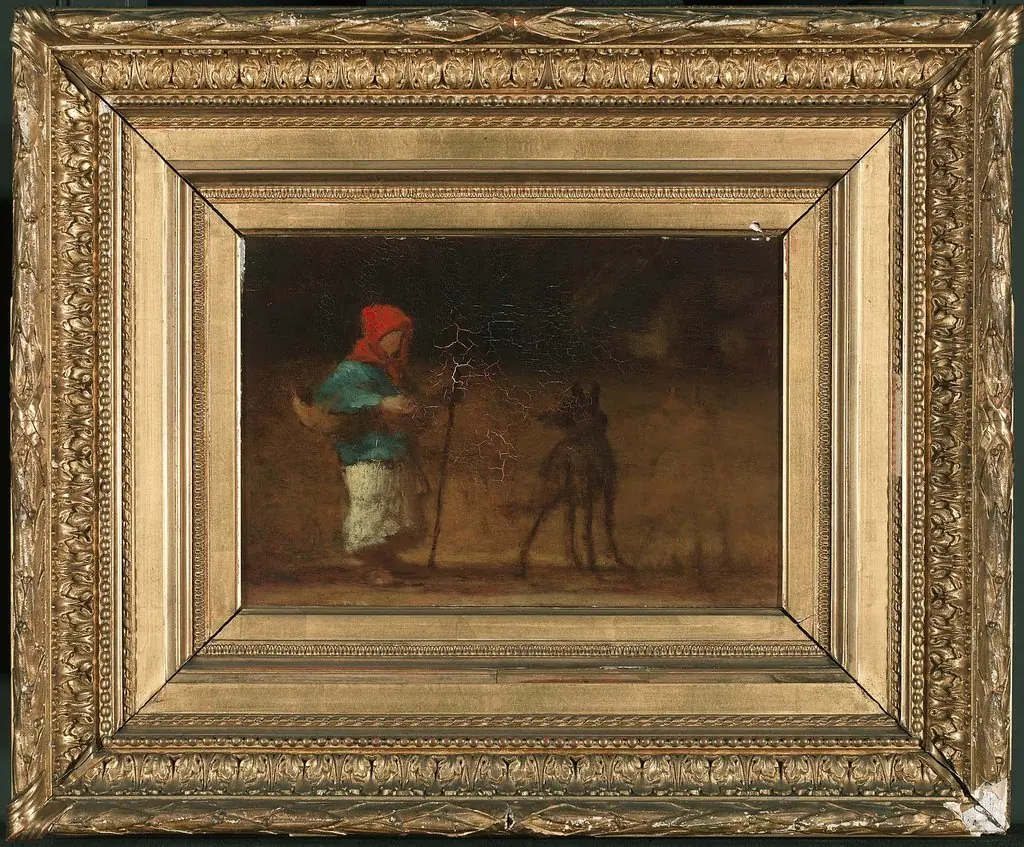
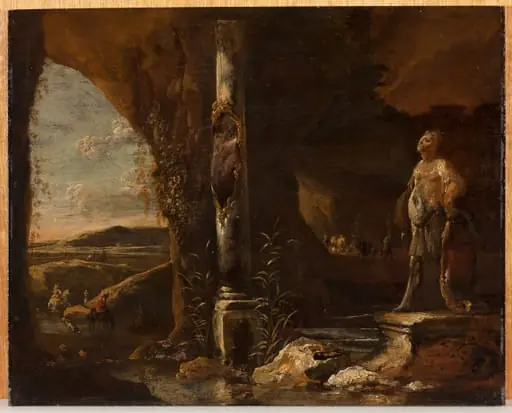
The painting illustrates the fable of the Miller, his son, and the donkey, portraying a man, a boy, and a donkey on a staircase. The composition includes a miller, his son, and a donkey ascending steps, a visual reference to the Aesop tale in which the figures attempt to please all by altering their behavior. No specific symbolic attributes are identified in the source descriptions; the work is noted for its narrative depiction of the story’s characters and setting. Executed in oil on canvas in 1867, the piece is housed in the Metropolitan Museum of Art.
Technique & Style
Executed in 1867, this work by Elihu Vedder is an oil painting on canvas. The piece belongs to the classification of painting and utilizes oil paint as its primary medium applied to a fabric support. While specific details regarding the artist's brushwork, surface condition, or distinct stylistic handling are not explicitly detailed in the available records, the material composition is firmly established as oil on canvas.
The formal subject matter depicted within this medium includes figures of a man and a boy alongside a donkey, situated near stairs, reflecting the narrative content of the fable through these painted forms.
History & Provenance
The Fable of the Miller, His Son, and the Donkey is an oil painting on canvas created by Elihu Vedder in 1867. The work depicts a man, a boy, and a donkey positioned near stairs. Currently, the piece is held in the collection of the Metropolitan Museum of Art in New York, where it is cataloged under the accession number 1992.205.1.
The museum acquired the painting in 1992, adding it to its permanent holdings of American art. No specific details regarding the original commission, the identity of the first owner, or the precise circumstances of its initial creation beyond the 1867 date are provided in the available records. The work remains a significant example of Vedder's mid-19th-century output, characterized by its narrative illustration style and oil medium.
The painting is held in the collection of the Metropolitan Museum of Art in New York. It is cataloged under the accession number 1992.205.1. The work, created by Elihu Vedder in 1867, is identified within the museum's holdings as an oil painting on canvas.
While the sources confirm its current location and inventory details, they do not provide specific records regarding past exhibitions or a detailed provenance history prior to its accession in 1992.
Overview
Elihu Vedder, an American artist, completed The Fable of the Miller, His Son, and the Donkey in 1867. This oil painting portrays a narrative scene, featuring a man, a boy, and a donkey engaged in a task near a stone structure. The work exemplifies Vedder's engagement with narrative subjects, rendered with a distinctive visual approach that evokes a sense of everyday life. It is currently part of The Metropolitan Museum of Art's collection.
Context
Elihu Vedder, originally from New York City, was an artist known for his contributions to both painting and illustration. While The Fable of the Miller, His Son, and the Donkey reflects realist tendencies, Vedder is also recognized for his symbolist leanings, notably through his celebrated illustrations for Edward FitzGerald’s translation of The Rubaiyat of Omar Khayyam. This dual focus highlights the breadth of his artistic interests.
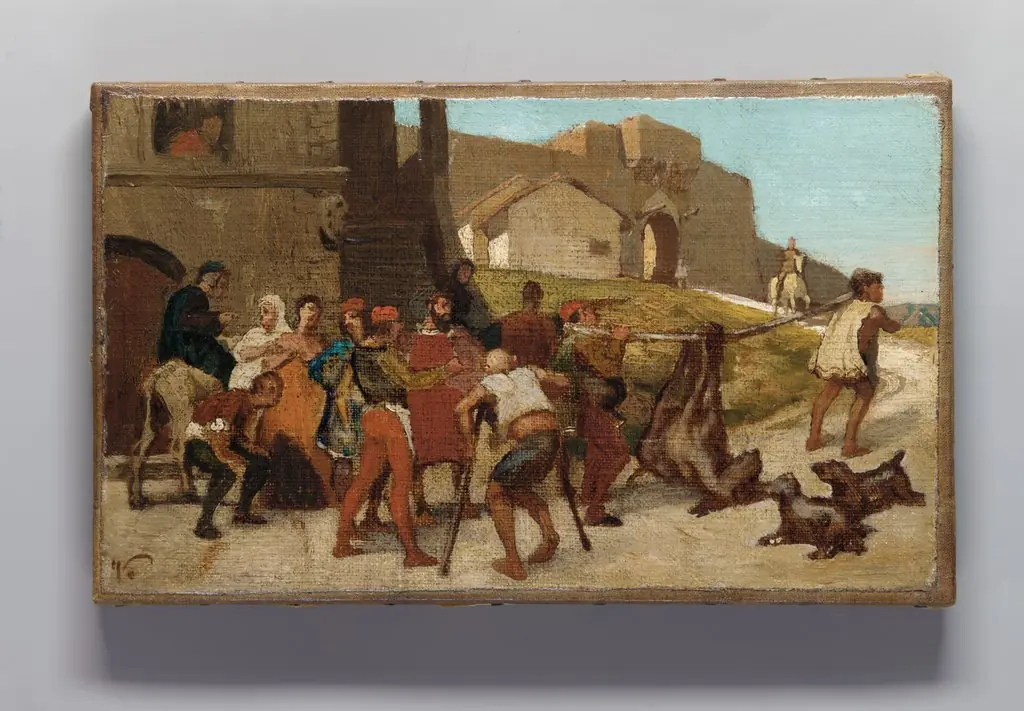
Own this work as a print
Artist & collection
Artist
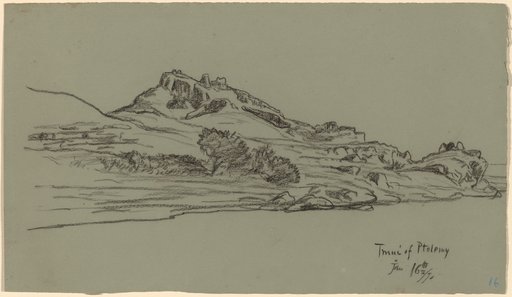
Elihu Vedder (26 February 1836 – 29 January 1923) was an American symbolist painter, book illustrator and poet from New York City.

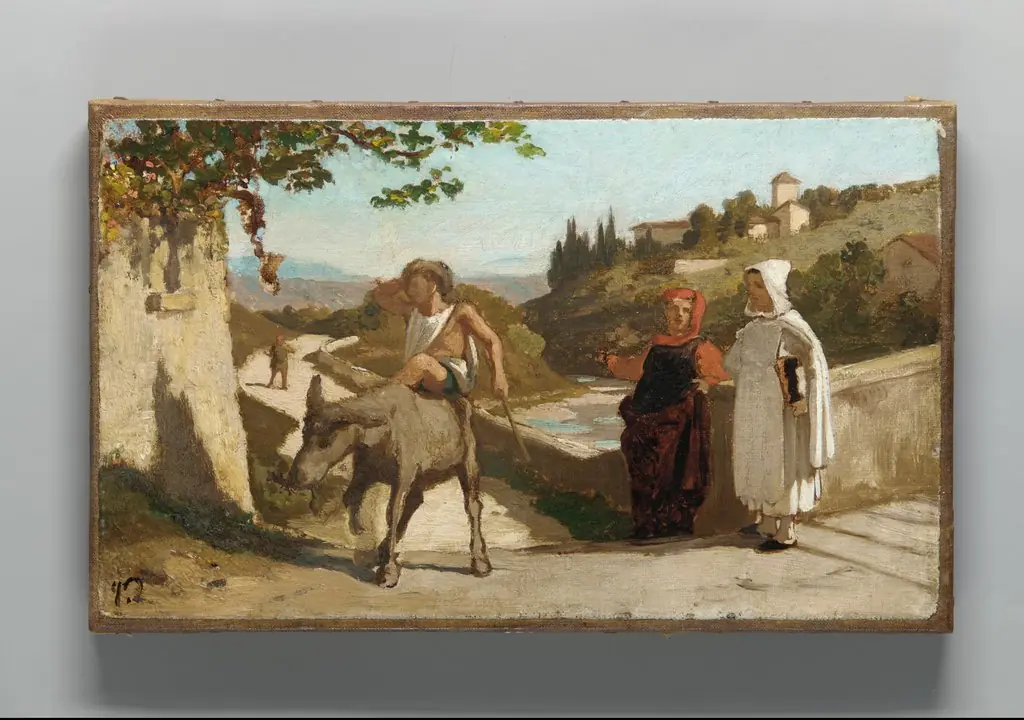 The Fable of the Miller, His Son, and the Donkey
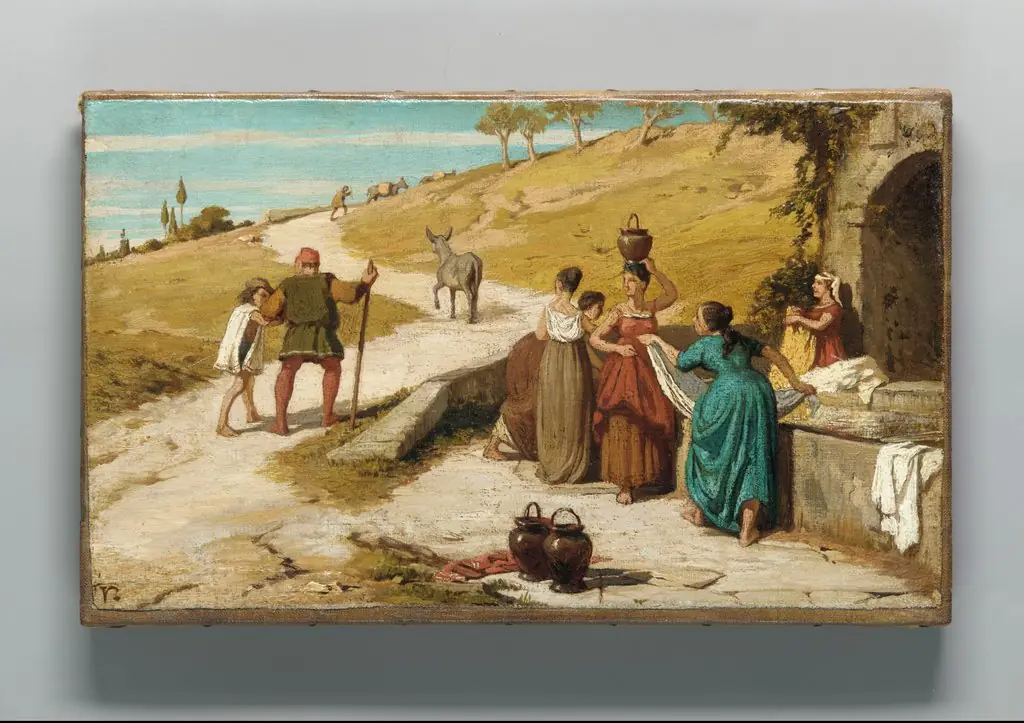 The Fable of the Miller, His Son, and the Donkey
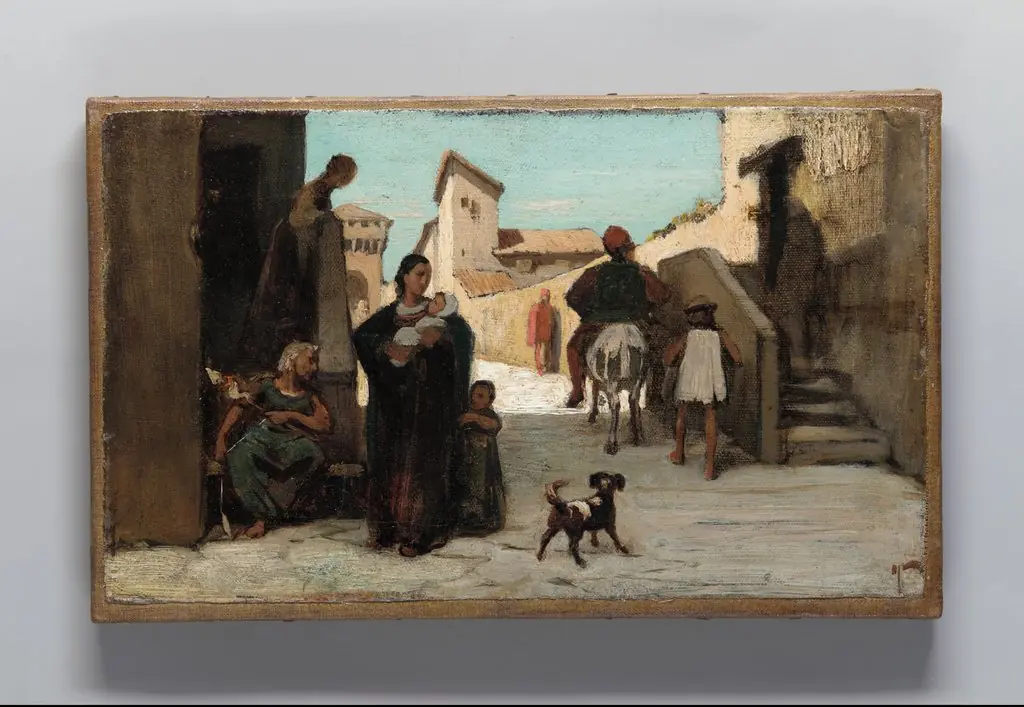 The Fable of the Miller, His Son, and the Donkey
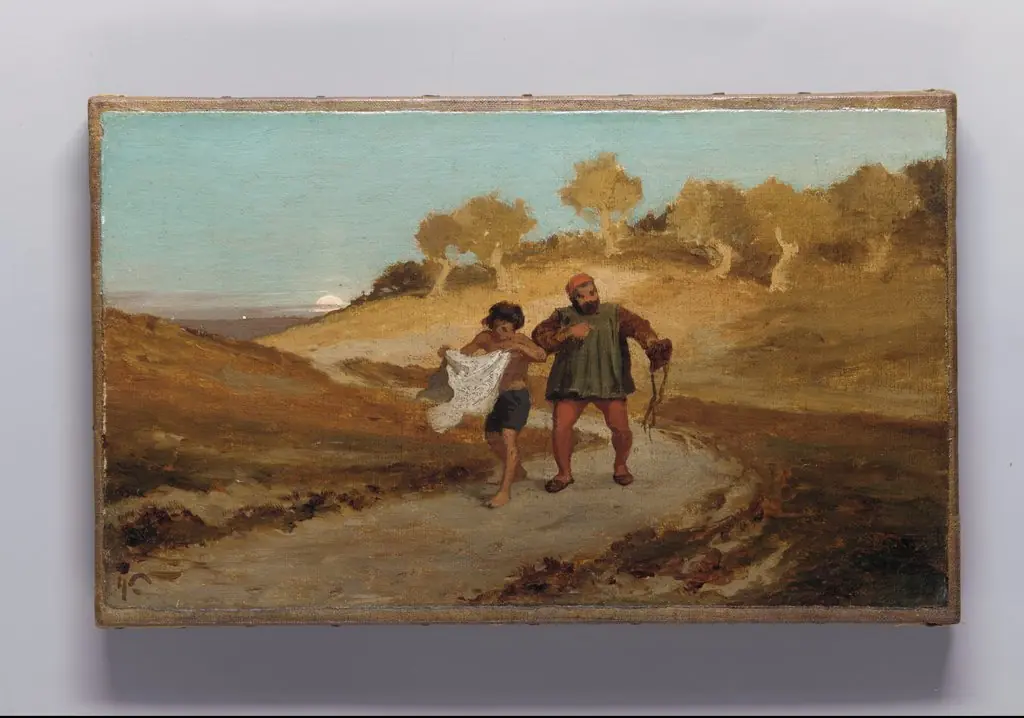 The Fable of the Miller, His Son, and the Donkey
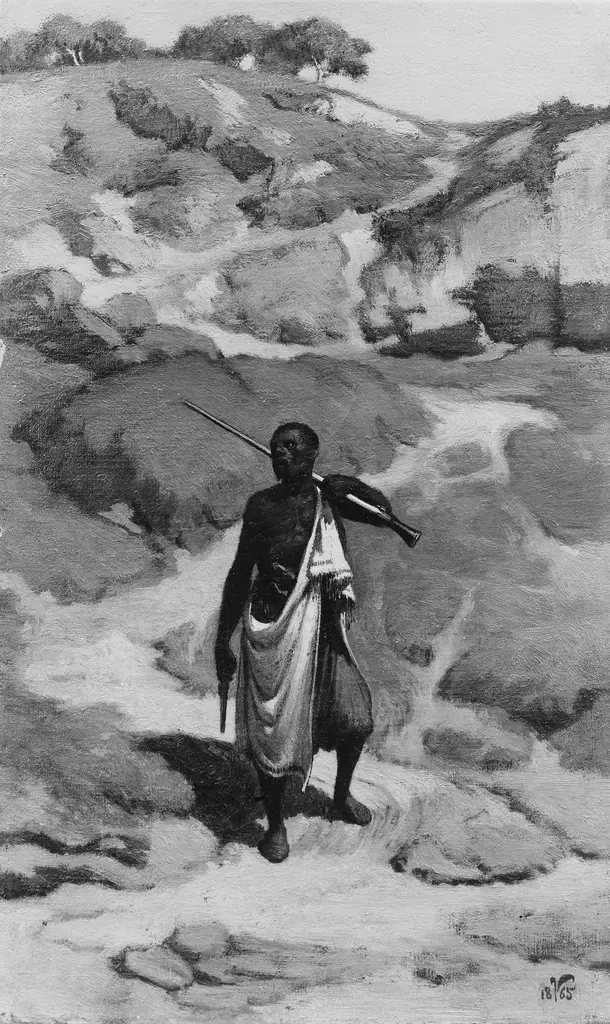 The African Sentinel
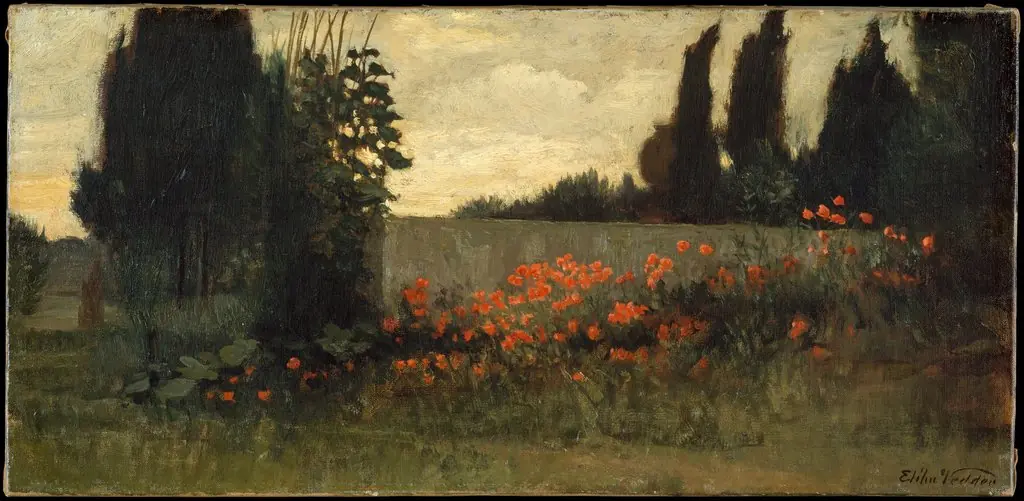 Cypress and Poppies
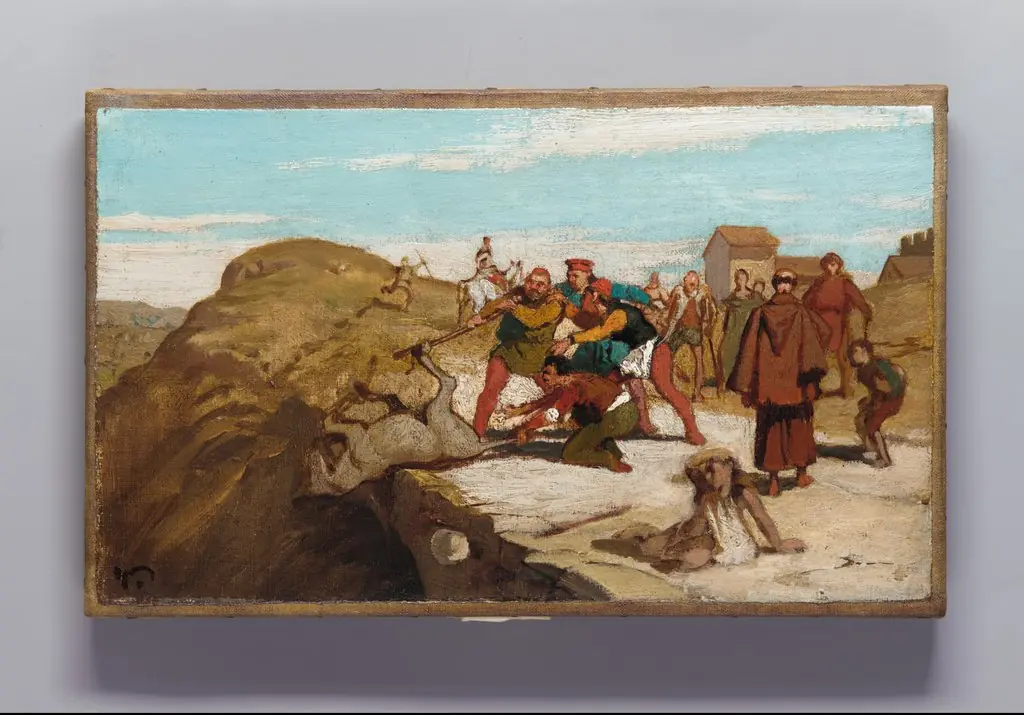 The Fable of the Miller, His Son, and the Donkey
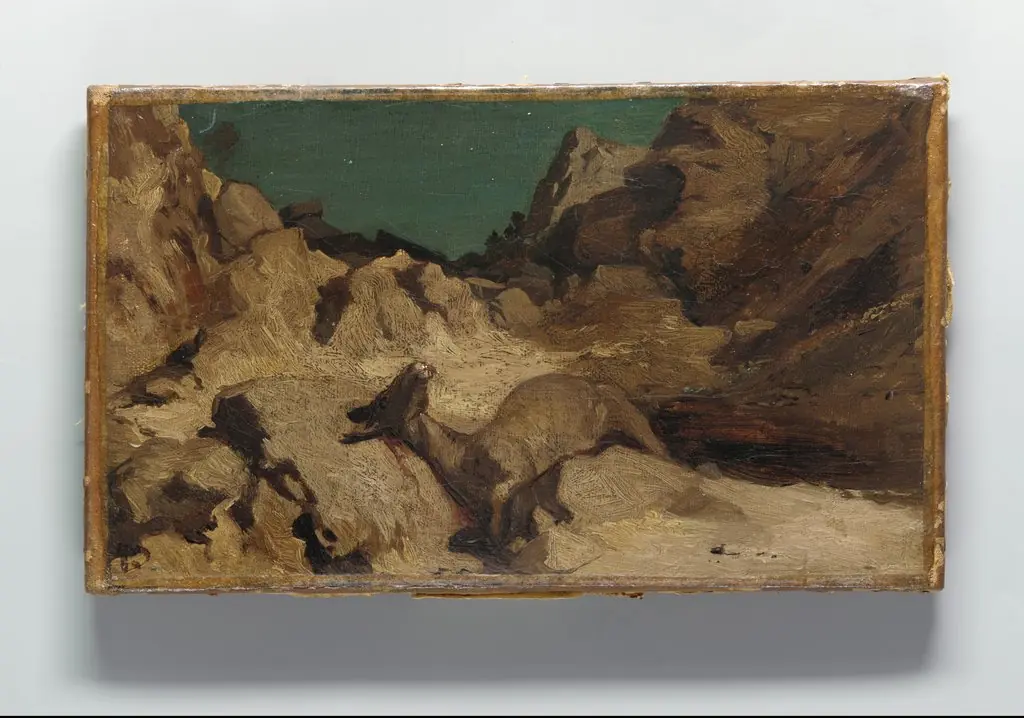 The Fable of the Miller, His Son, and the Donkey