Artwork
The Fable of the Miller, His Son, and the Donkey
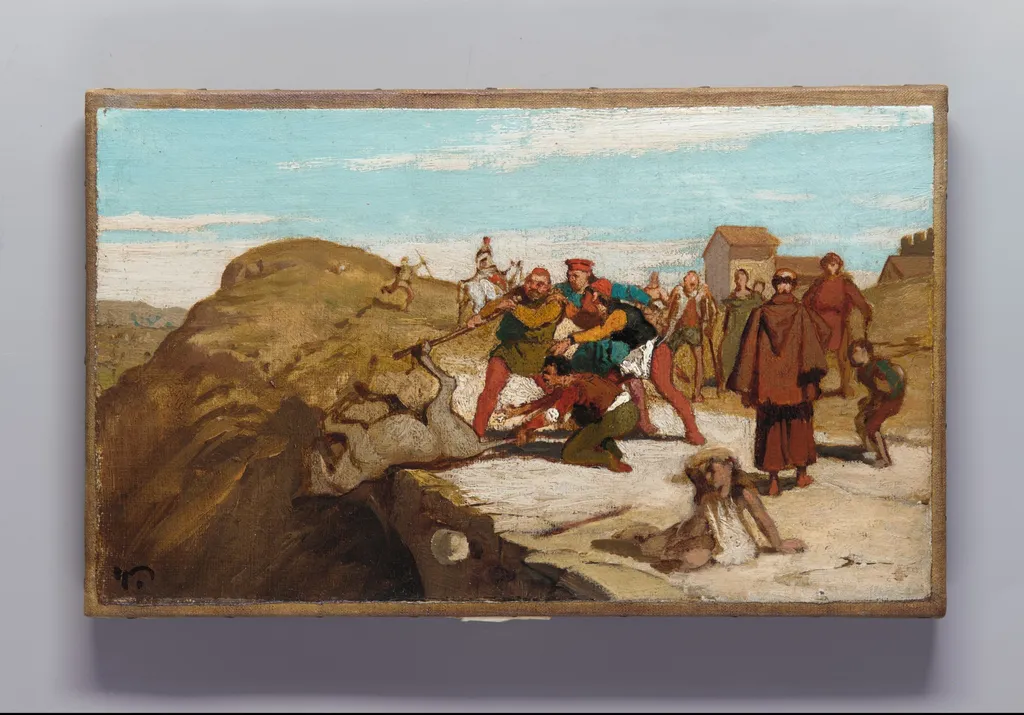
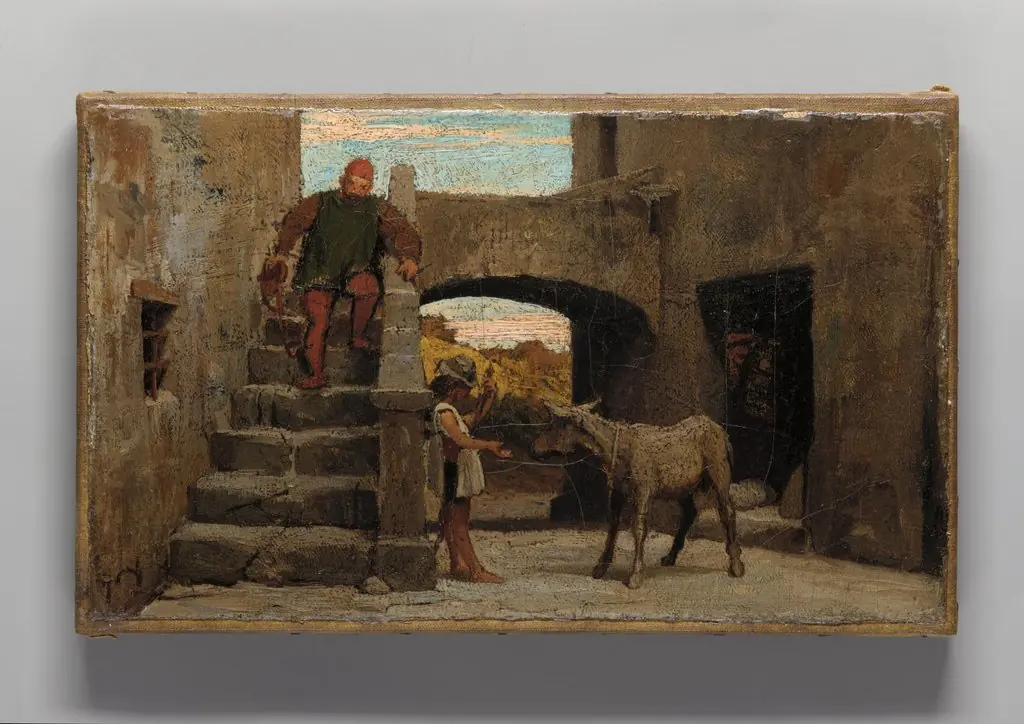
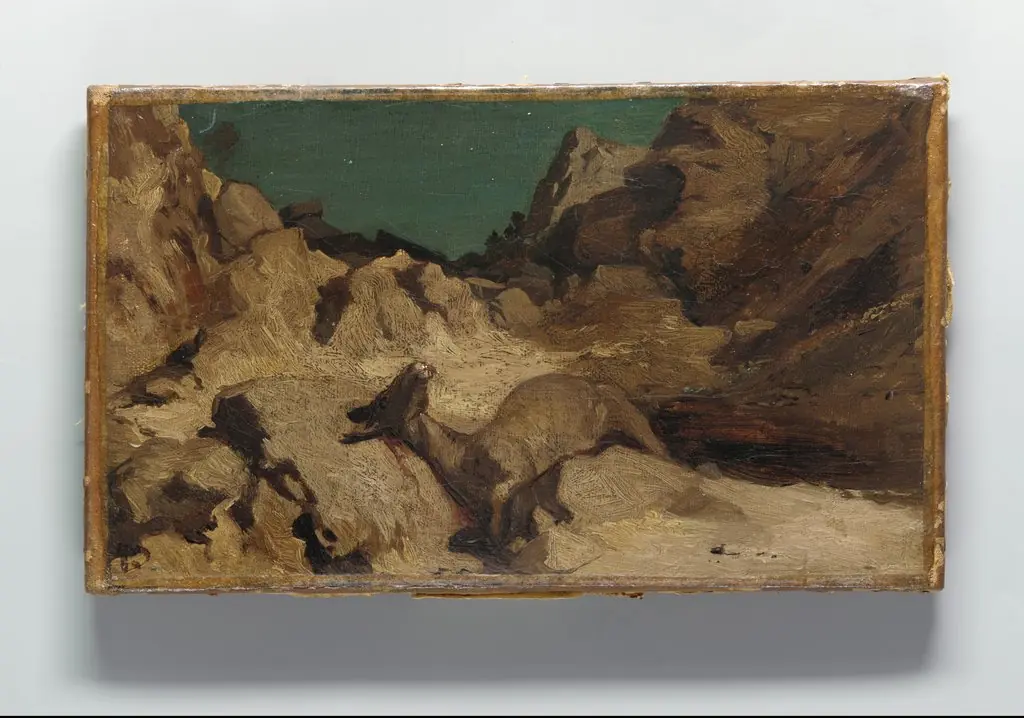
The Fable of the Miller, His Son, and the Donkey is an oil painting by the Realist artist Elihu Vedder. It dates from 1867 and is held in the collection of the Metropolitan Museum of Art.
About this work
Subject & Meaning
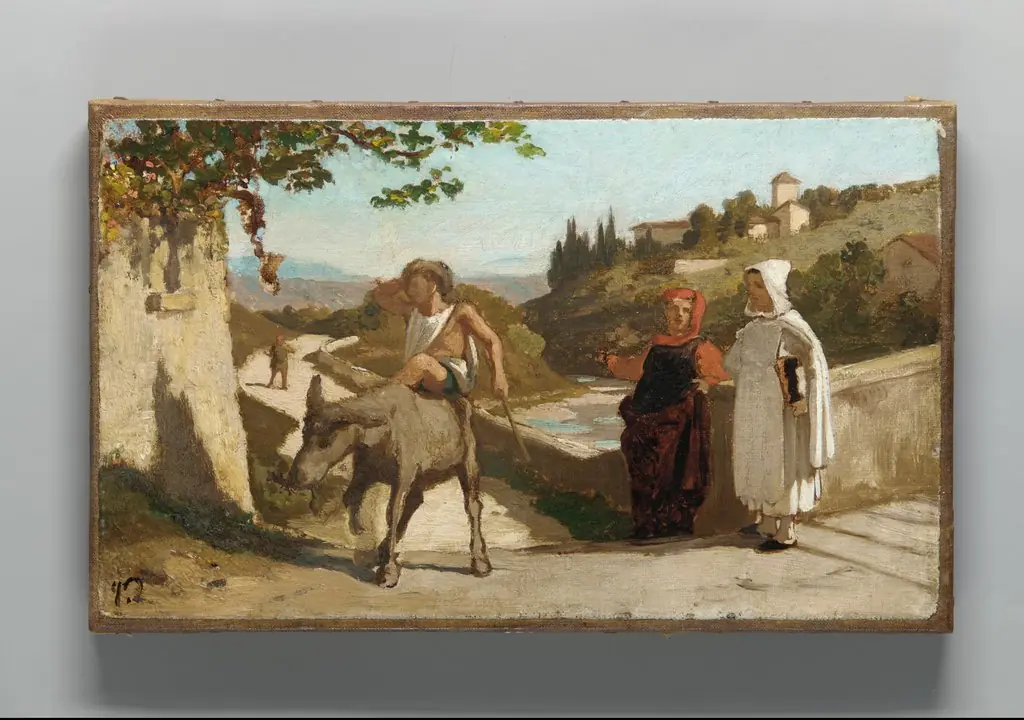
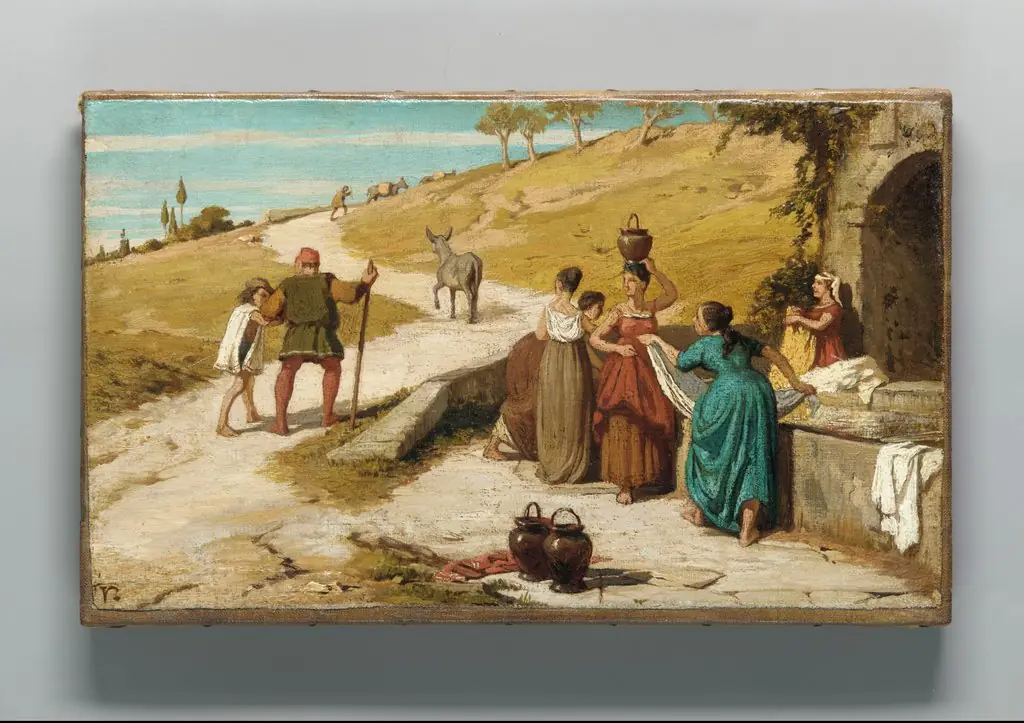
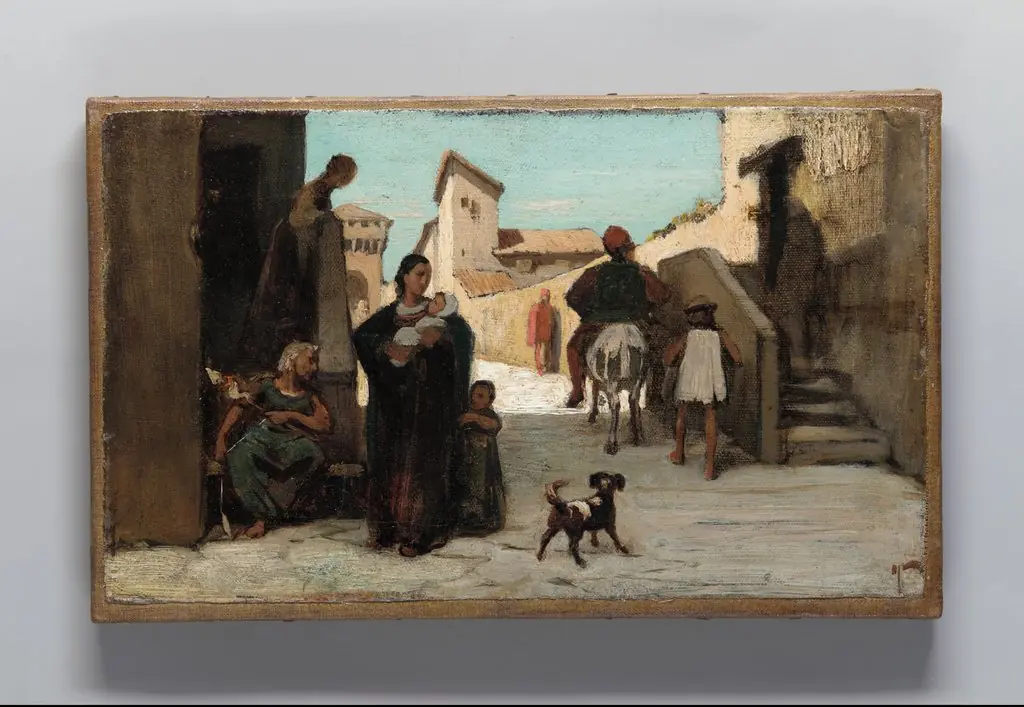
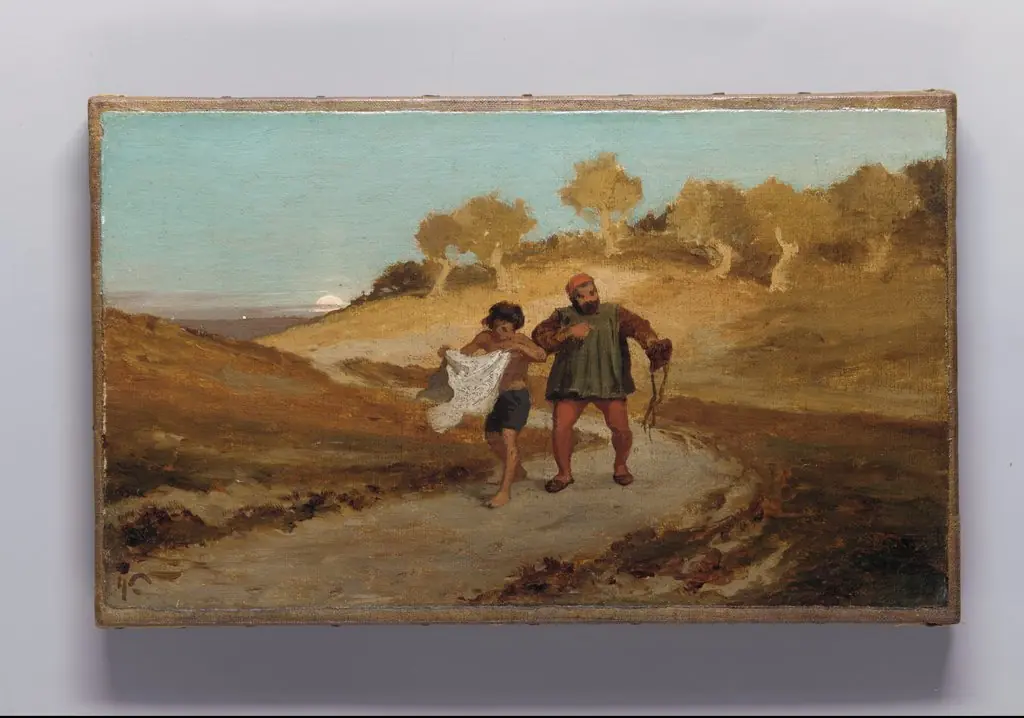
The composition features these three figures as the central subjects, capturing a specific moment from the story where the characters interact with the animal.
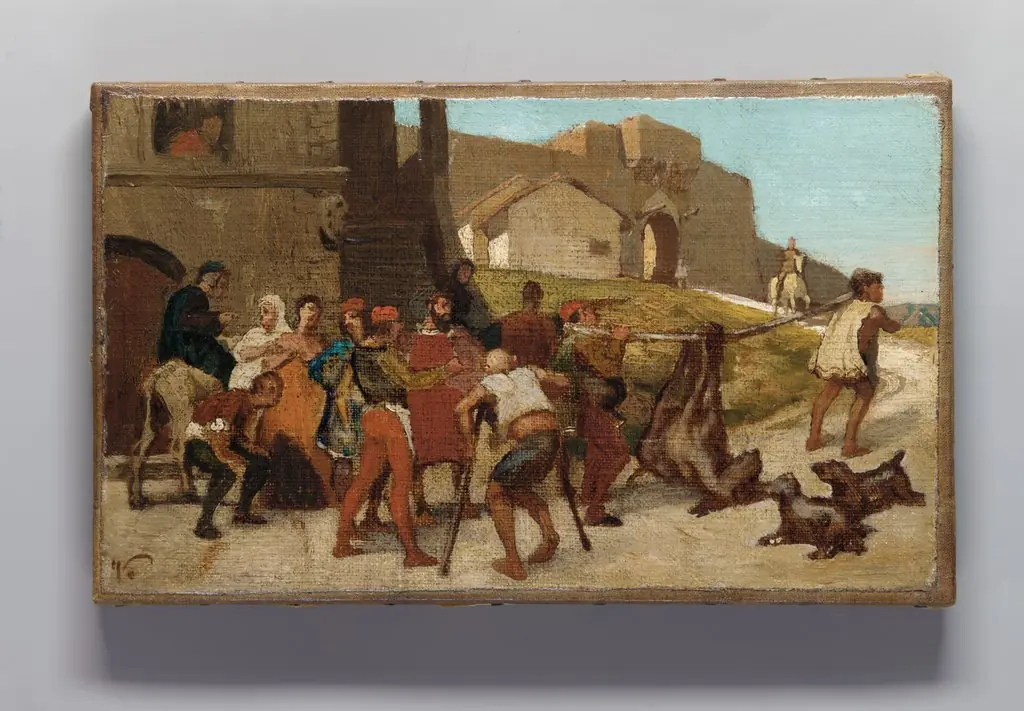
Elihu Vedder's 1867 oil painting depicts the narrative scene of a man, a boy, and a donkey, directly illustrating the classic fable of the Miller, his son, and the donkey. The composition features these three figures as the central subjects, capturing a specific moment from the story where the characters interact with the animal. While the work visually represents the literal characters of the tale, the inclusion of the man, boy, and donkey serves as the primary iconographic element defining the piece.
The Metropolitan Museum of Art identifies the depiction simply through these figures, grounding the artwork's meaning in the visual storytelling of the fable itself rather than additional allegorical symbols explicitly detailed in the available records.
History & Provenance
The Fable of the Miller, His Son, and the Donkey was painted by Elihu Vedder in 1867. Executed in oil on canvas and measuring 16.5 by 27.3 centimeters, the small work depicts a scene from Aesop's fable in which a miller and his son transport a donkey, reflecting the artist's engagement with literary and moral themes during the mid-1860s. The painting entered the collection of the Metropolitan Museum of Art in New York in 1992, where it is accessioned as 1992.205.7.
While the source confirms its current location and acquisition details, no specific exhibition history is provided in the available documentation.
Overview
Elihu Vedder, an American artist, completed The Fable of the Miller, His Son, and the Donkey in 1867. This oil painting is part of the collection at The Metropolitan Museum of Art. It presents a narrative scene featuring human figures and an animal, rendered with a focus on a specific moment of action. The work reflects Vedder's engagement with storytelling through visual art.
Technique & Style
Executed in oil paint, the artwork is associated with the Realism movement, emphasizing a direct and unembellished portrayal of its subject. Vedder employs an earthy palette, punctuated by areas of brighter red and green, against a pale blue sky. The composition captures a dynamic, almost visceral struggle, conveying the physical effort and tension of the figures and the animal within the landscape.
Context
Elihu Vedder, a New York City native, was a versatile artist known for his work as a Symbolist painter, poet, and book illustrator. While The Fable of the Miller, His Son, and the Donkey predates his most celebrated achievement, it reflects his narrative interests. Vedder later gained significant recognition for his evocative illustrations for Edward FitzGerald’s translation of The Rubaiyat of Omar Khayyam.
Own this work as a print
Artist & collection
Artist
Elihu Vedder (26 February 1836 – 29 January 1923) was an American symbolist painter, book illustrator and poet from New York City.

 The Fable of the Miller, His Son, and the Donkey
 The Fable of the Miller, His Son, and the Donkey
 The Fable of the Miller, His Son, and the Donkey
 The Fable of the Miller, His Son, and the Donkey
 The Fable of the Miller, His Son, and the Donkey
 The African Sentinel
 Cypress and Poppies
 The Fable of the Miller, His Son, and the Donkey