Artwork
The Fable of the Miller, His Son, and the Donkey
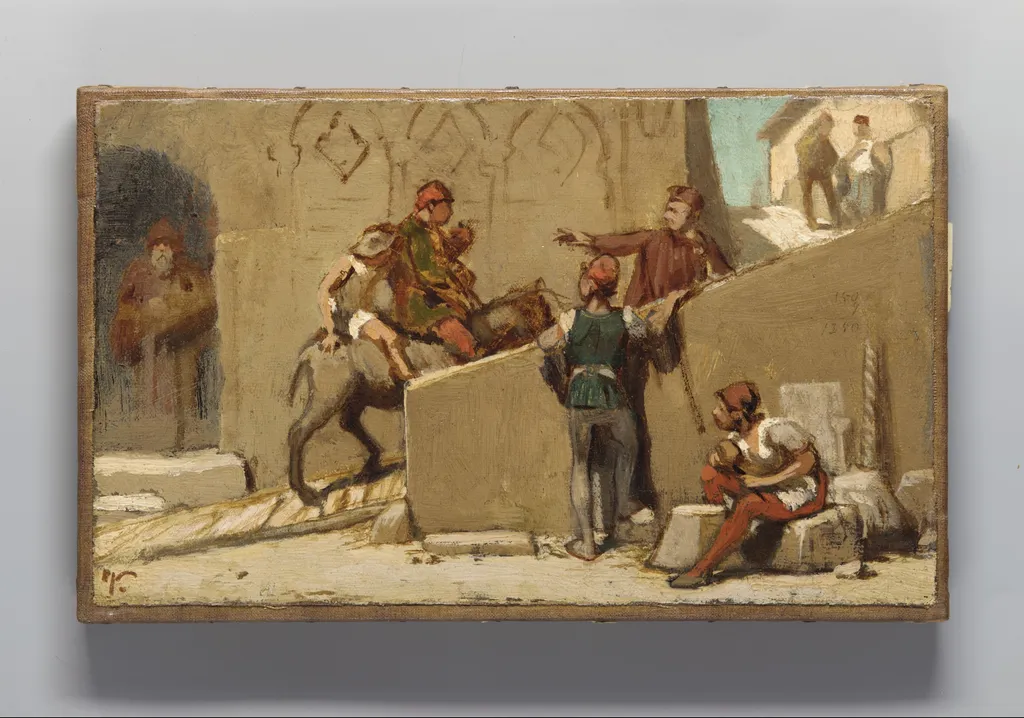
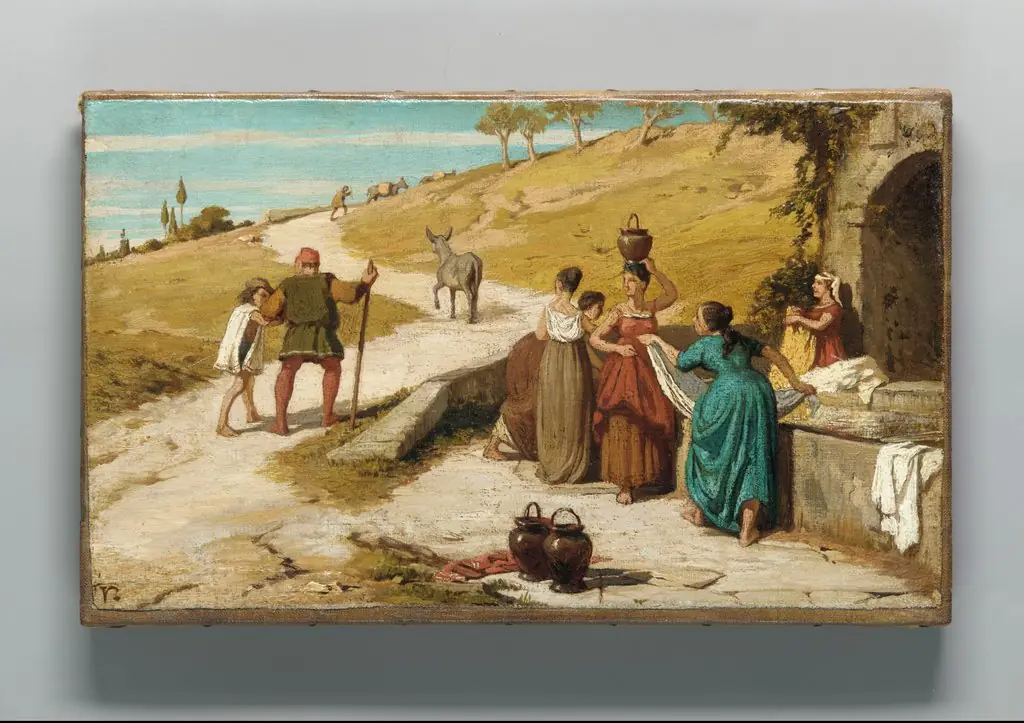
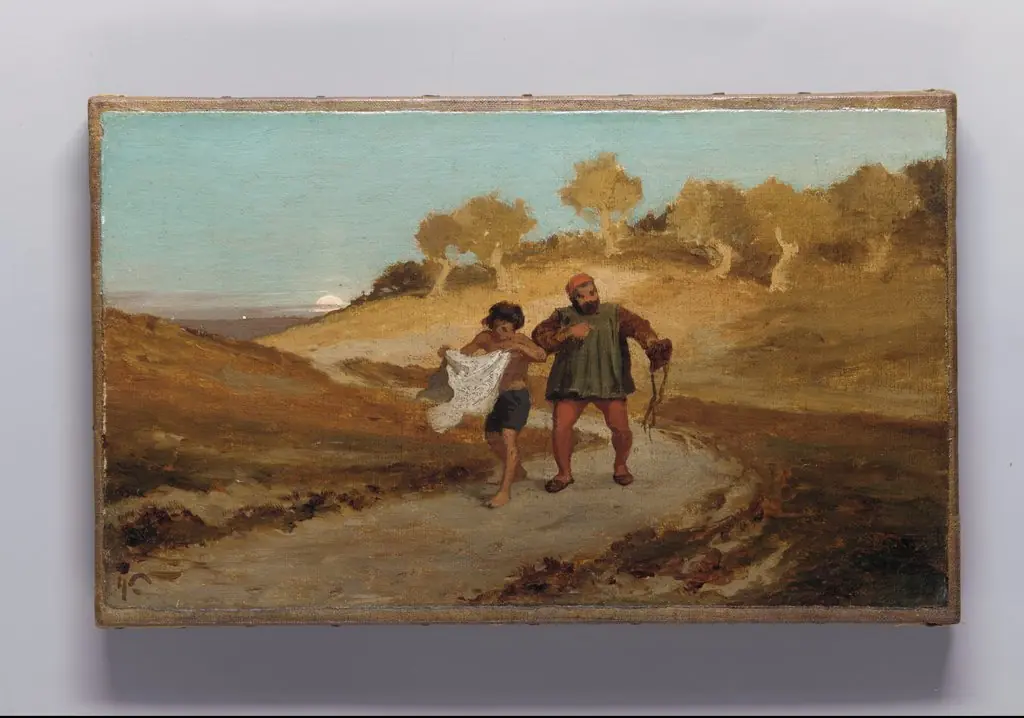
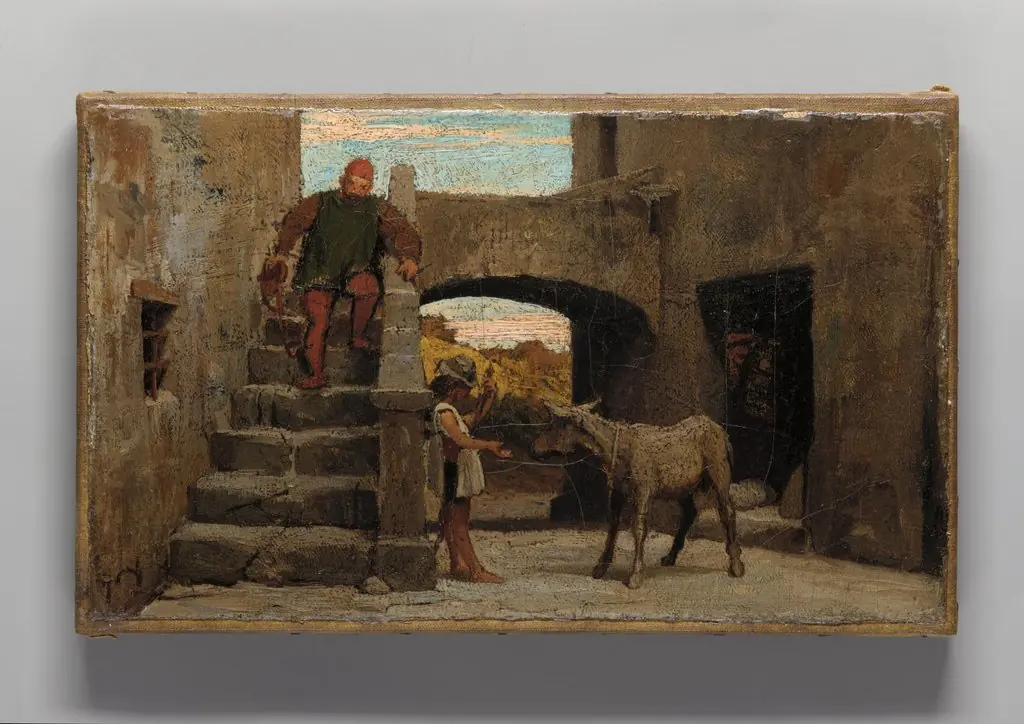
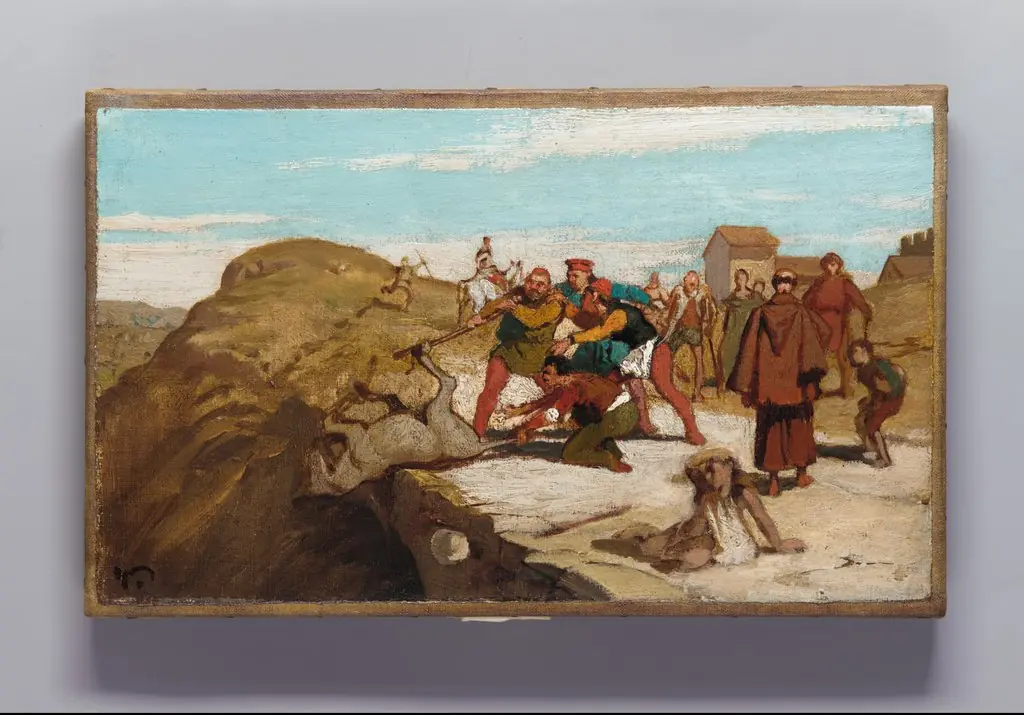
The Fable of the Miller, His Son, and the Donkey is an oil painting by the Realist artist Elihu Vedder. It dates from 1867 and is held in the collection of the Metropolitan Museum of Art.
About this work
Subject & Meaning
The Met's cataloguing identifies the figures depicted as a man and a donkey, anchoring the scene to the fable's central characters and their beast of burden.
Elihu Vedder's painting illustrates the well-known Aesopic fable in which a miller and his son attempt to lead a donkey to market, only to be mocked by onlookers no matter how they arrange their journey. The Met's cataloguing identifies the figures depicted as a man and a donkey, anchoring the scene to the fable's central characters and their beast of burden. By choosing this narrative, Vedder engaged with a centuries-old moral tale warning against the futility of trying to please everyone, a theme that resonated with nineteenth-century interest in literary and parable subjects.
The small horizontal format, with its width exceeding its height, suits the sequential, journey-like quality of the fable, allowing the figures and the donkey to be arranged across a shared ground as the story unfolds.
Technique & Style
Executed in oil paint on canvas, the work measures 16.5 cm in height and 27.3 cm in width. Vedder's handling emphasizes fluid, descriptive contours and carefully modulated tonal transitions that articulate the figures and landscape without dense impasto. The composition is organized along a gentle diagonal from lower left to upper right, guiding the viewer's eye from the seated man and donkey toward the distant horizon.
Stylistic qualities include a restrained palette of earth tones heightened by subtle glazes, and a quiet, anecdotal mood that aligns with mid-19th-century narrative illustration.
History & Provenance
The Fable of the Miller, His Son, and the Donkey is an oil painting on canvas created by Elihu Vedder in 1867. The work measures 16.5 cm in height and 27.3 cm in width. It depicts a man and a donkey, illustrating the titular fable. The painting is currently held in the collection of the Metropolitan Museum of Art.
Overview
Elihu Vedder, an American painter and illustrator, completed The Fable of the Miller, His Son, and the Donkey in 1867. This oil painting, now part of The Metropolitan Museum of Art's collection, presents a narrative scene featuring a donkey and several human figures. The work reflects Vedder's engagement with storytelling through visual art, a characteristic evident throughout his career.
Context
Elihu Vedder, a New York City-born artist, was recognized for his diverse talents as a painter, illustrator, and poet. While The Fable of the Miller, His Son, and the Donkey showcases his painting skill, Vedder gained significant renown for his extensive series of fifty-five illustrations for Edward FitzGerald’s translation of The Rubaiyat of Omar Khayyam. This body of work solidified his reputation as a prominent figure in American Symbolism.
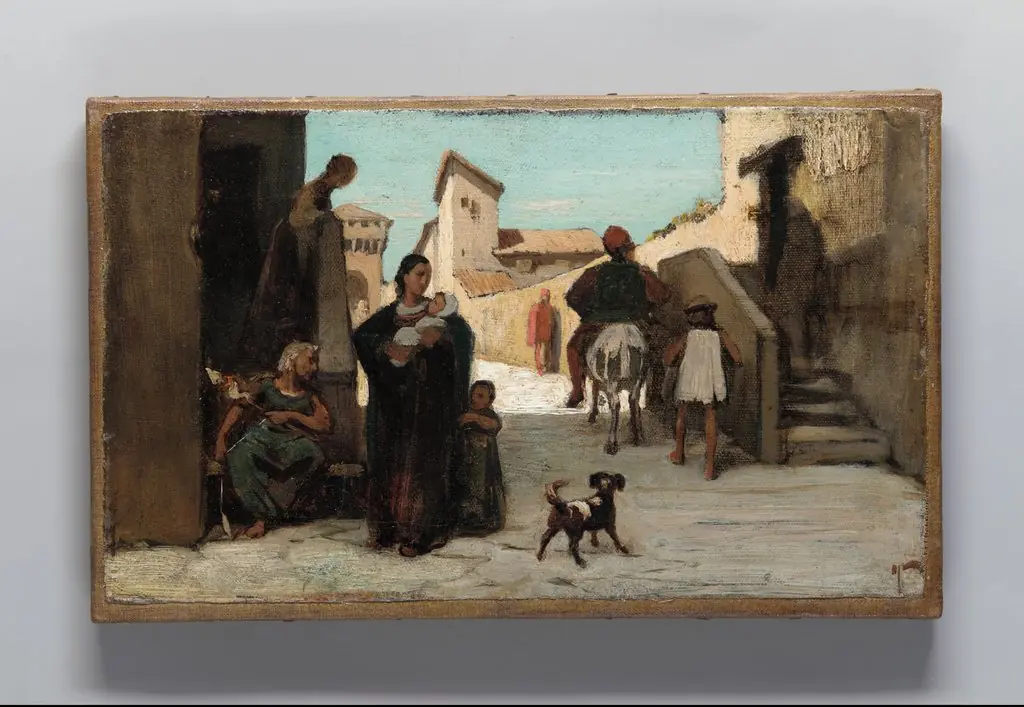
Own this work as a print
Artist & collection
Artist
Elihu Vedder (26 February 1836 – 29 January 1923) was an American symbolist painter, book illustrator and poet from New York City.

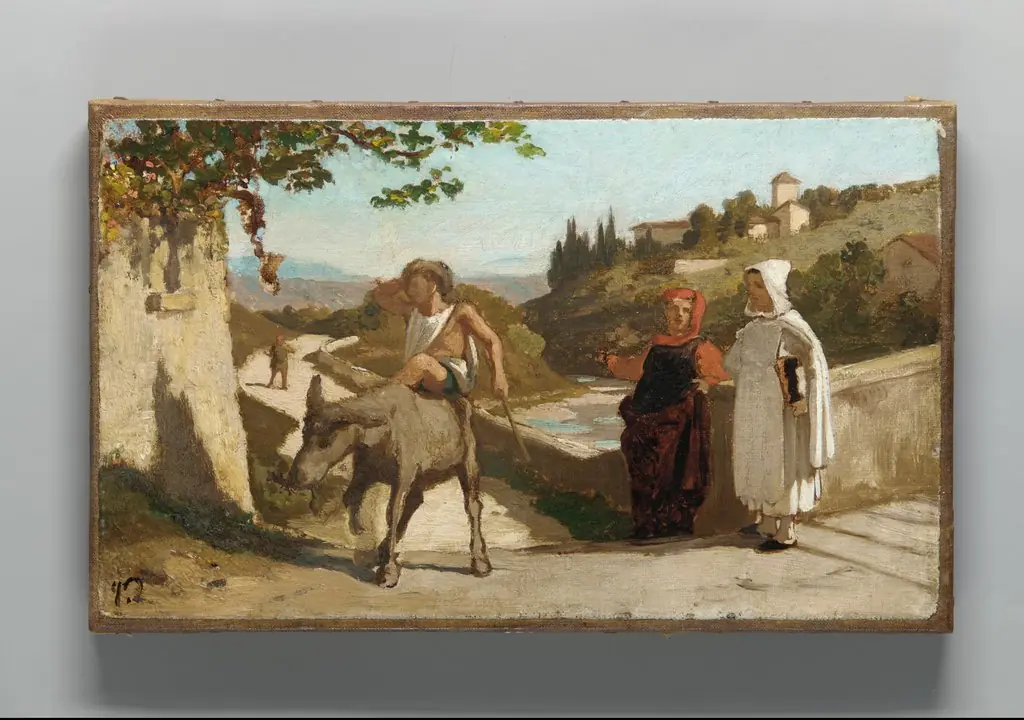 The Fable of the Miller, His Son, and the Donkey
 The Fable of the Miller, His Son, and the Donkey
- The Fable of the Miller, His Son, and the Donkey
 The Fable of the Miller, His Son, and the Donkey
 The Fable of the Miller, His Son, and the Donkey
 The African Sentinel
 Cypress and Poppies
 The Fable of the Miller, His Son, and the Donkey