Artwork
The Combat of the Giaour and Hassan
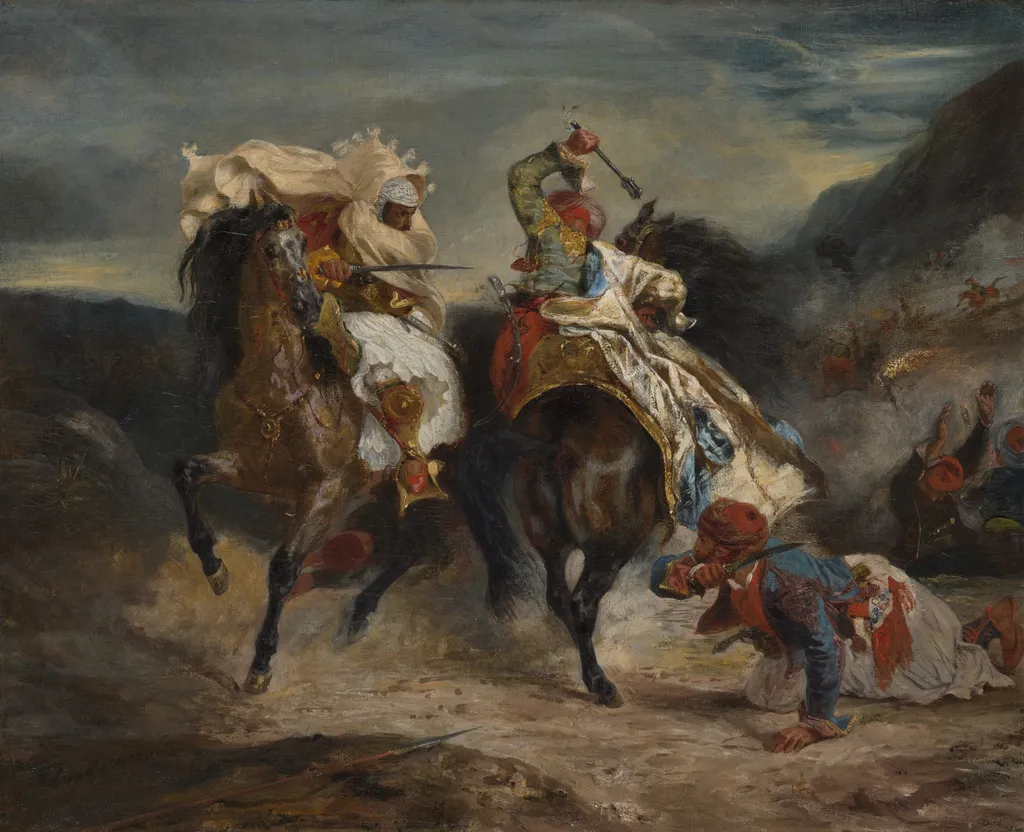
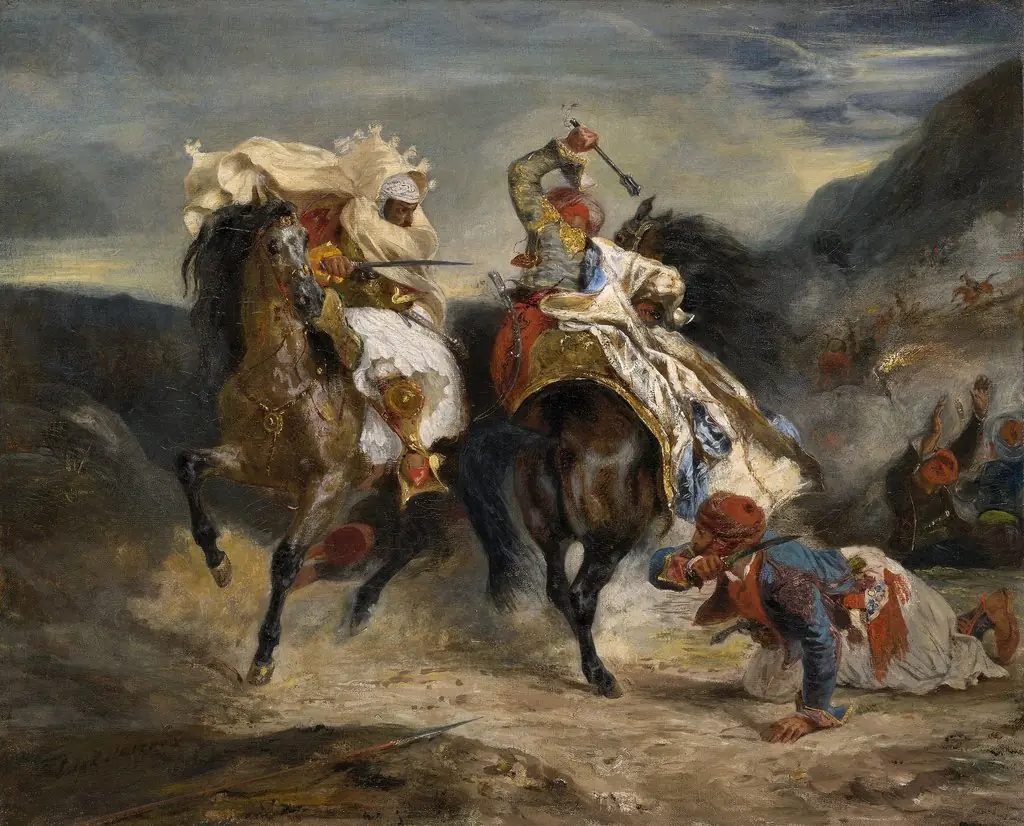
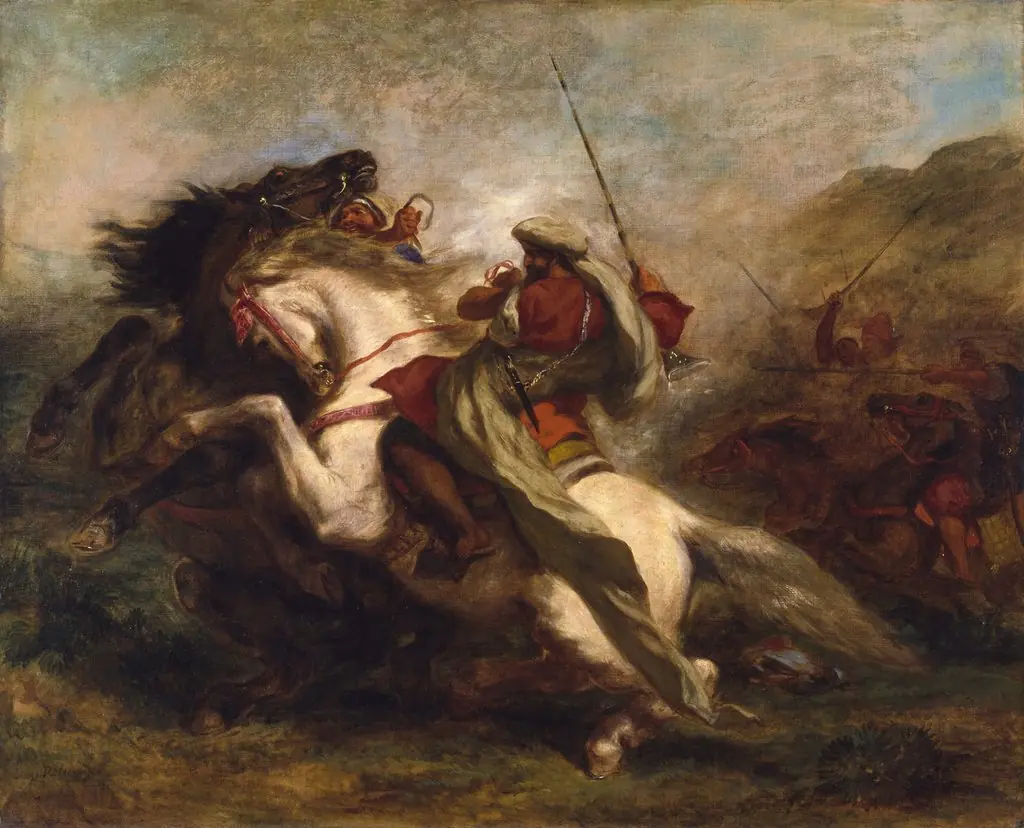
The Combat of the Giaour and Hassan is an oil painting by the French Romanticist artist Eugène Delacroix. It dates from 1826 and is held in the collection of the Art Institute of Chicago.
- Accession no.
- 110663
- Credit line
- Gift of Bertha Palmer Thorne, Rose Movius Palmer, Mr. and Mrs. Arthur M. Wood, and Mr. and Mrs. Gordon Palmer
About this work
Overview
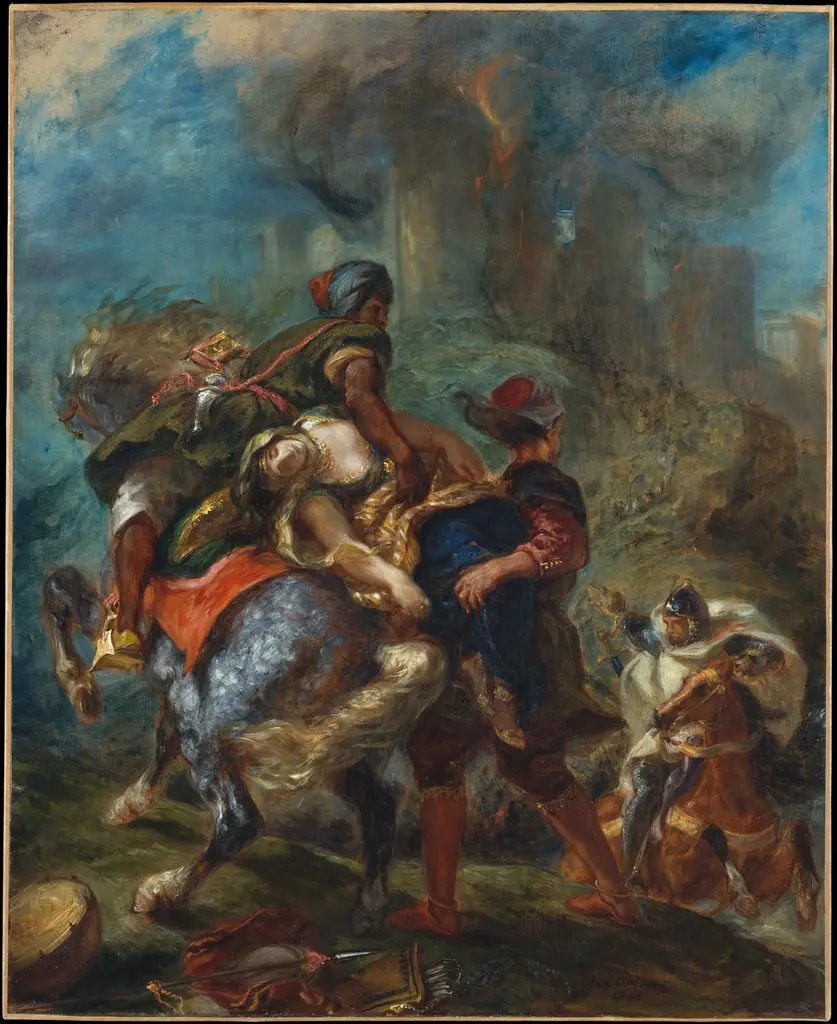
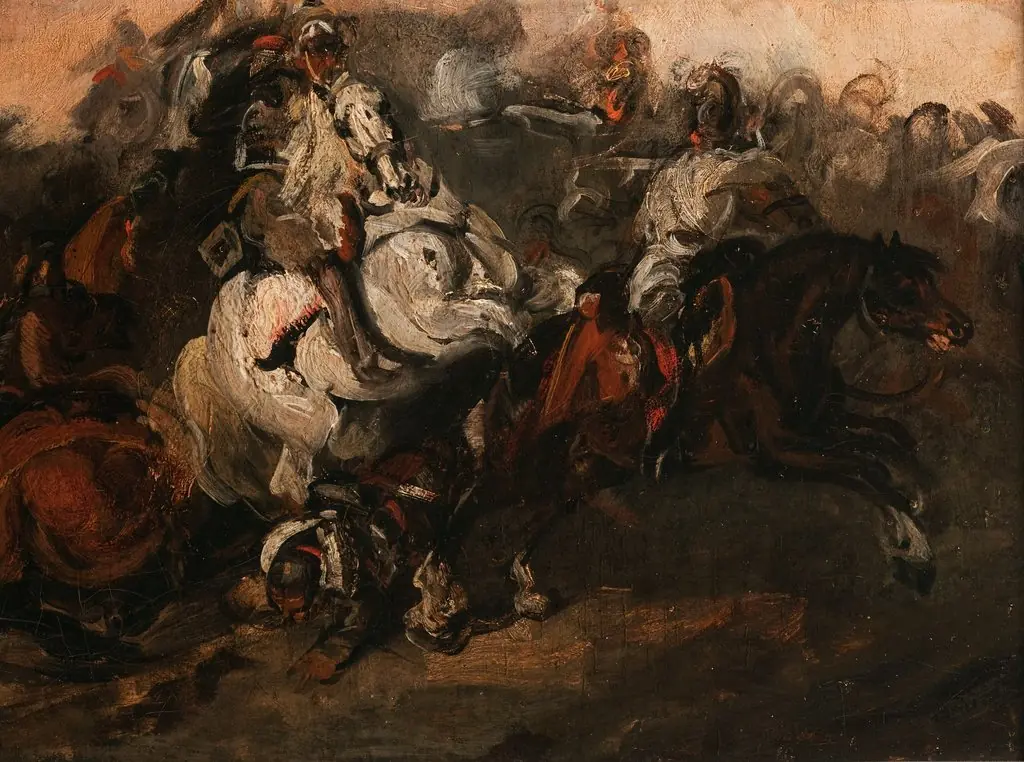
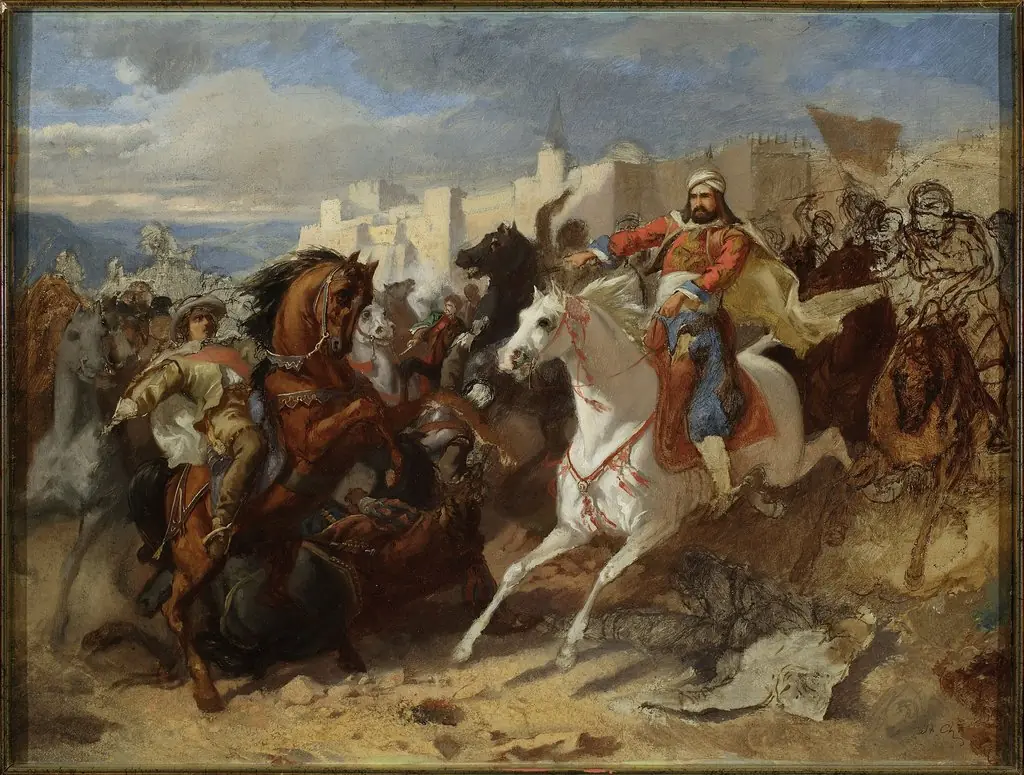
The Combat of the Giaour and Hassan is an oil on canvas painting depicting a violent confrontation between two horsemen.
Subject & Meaning
Inspired by Lord Byron's poem 'The Giaour', the painting shows a Christian warrior avenging his lover's death at the hands of a Turk named Hassan, reflecting themes of revenge and conflict.
Technique & Style
Delacroix's use of shimmering primary hues and loose brushwork creates a dynamic scene, with thick, textured paint contributing to the sense of energy and movement.
Context
The painting is an example of Orientalism, a 19th-century artistic movement representing non-European cultures, often with fantastical or violent depictions, which sometimes reinforced colonial attitudes.
History & Provenance
Delacroix painted this work before his 1832 trip to Morocco, which would later influence his engagement with Orientalist themes.
Own this work as a print
Artist & collection
Artist
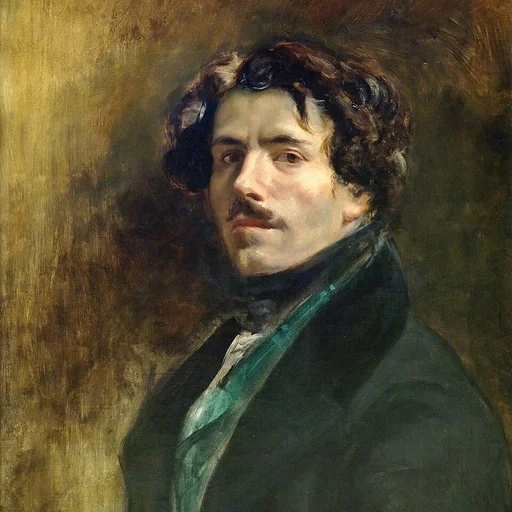
Ferdinand Victor Eugène Delacroix ( DEL-ə-krwah, -KRWAH; French:; 26 April 1798 – 13 August 1863) was a French Romantic artist who was regarded as the leader of the French Romantic school.