Artwork
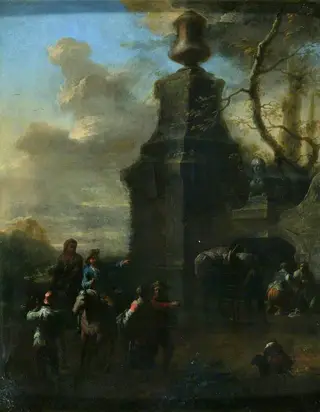
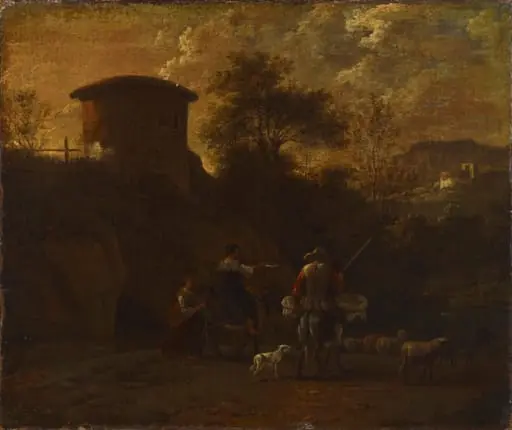
Figures near a mausoleum
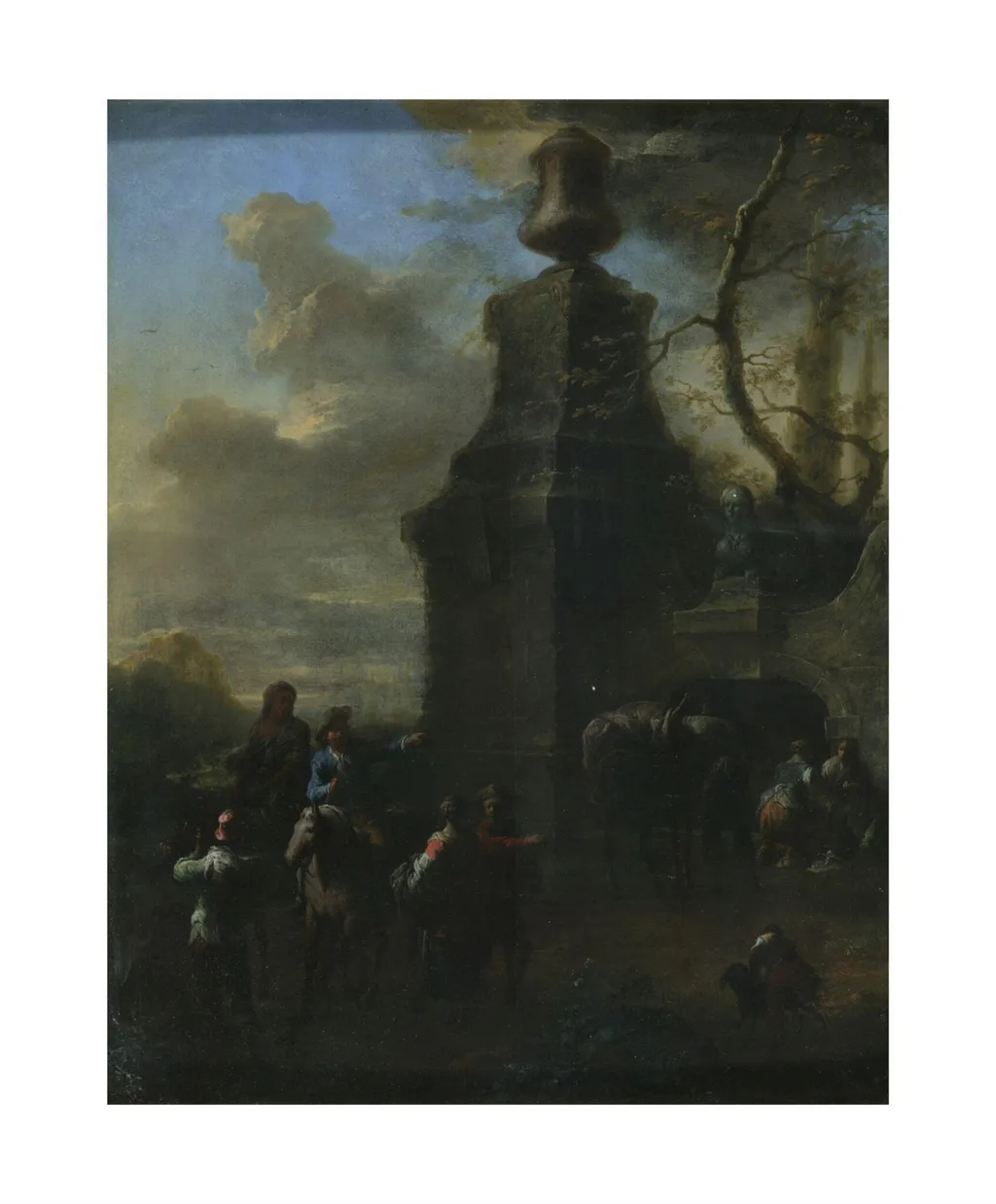
Figures near a mausoleum is an oil painting by the Baroque artist Franz de Paula Ferg. It dates from 1733 and is held in the collection of the Victoria and Albert Museum.
About this work
Overview
Figures near a mausoleum is an oil painting by Franz de Paula Ferg, created around 1724, shortly after his relocation to London. The work exemplifies his capricci series, blending elements of Dutch, Flemish, and Italian artistic traditions.
Subject & Meaning
The painting depicts a serene, idealised landscape with a group of travellers near ancient ruins, featuring a urn-shaped vase and a sphinx. The scene combines real and imagined elements, evoking a sense of dreamy, mystical atmosphere.
Technique & Style
Executed in a relatively dark palette, the painting showcases Ferg's skill in capturing muted, misty environments. Figures are subtly rendered, often as blurred silhouettes, contrasting with the detailed, fanciful ruins and tomb settings.
History & Provenance
Created circa 1724 in London, following Ferg's migration from Austria via Franconia, Bamberg, Leipzig, and Lower Saxony. The artist's later life in London ended in poverty in 1740.
Context
Part of a broader 18th-century artistic trend, Ferg's capricci reflected the era's fascination with classical antiquity and imaginative landscapes. Similar works can be found in collections like the Victoria and Albert Museum.
Legacy
While Ferg's life ended in obscurity, his London-period capricci, including Figures near a mausoleum, contribute to the understanding of European artistic exchange and the evolution of landscape painting in the early 18th century.
Own this work as a print
Artist & collection
Artist
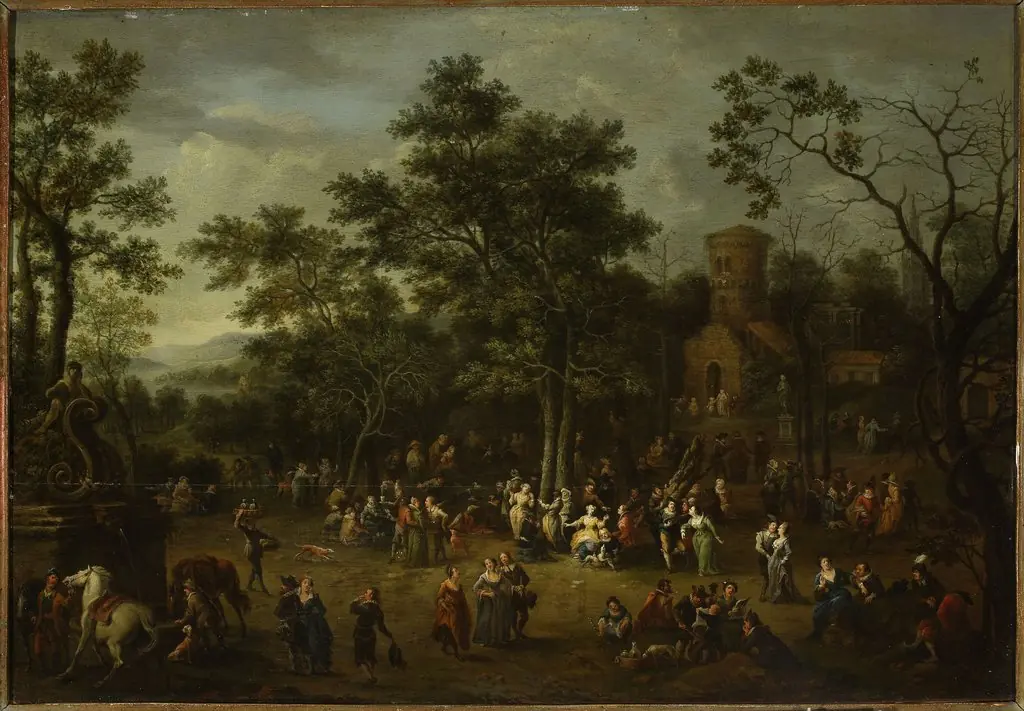
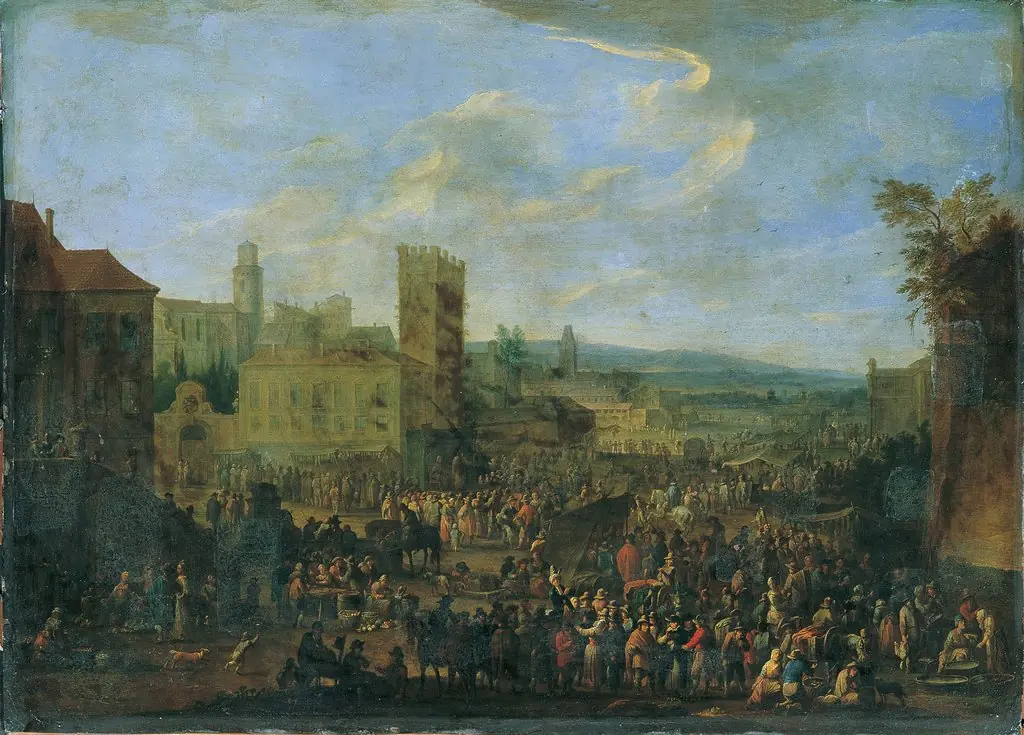
Franz de Paula Ferg (2 May 1689 – 1740), also known as Francis Paul Ferg, was an Austrian painter, draughtsman, and printmaker. He painted primarily scenes of daily life, such as people interacting in markets and villages.

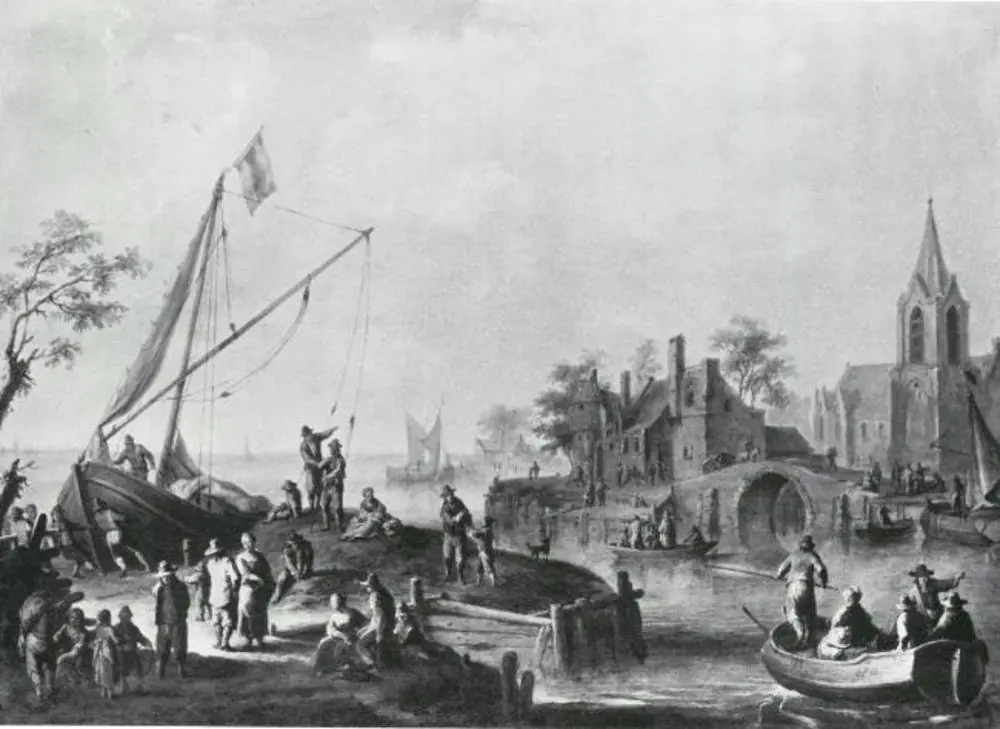
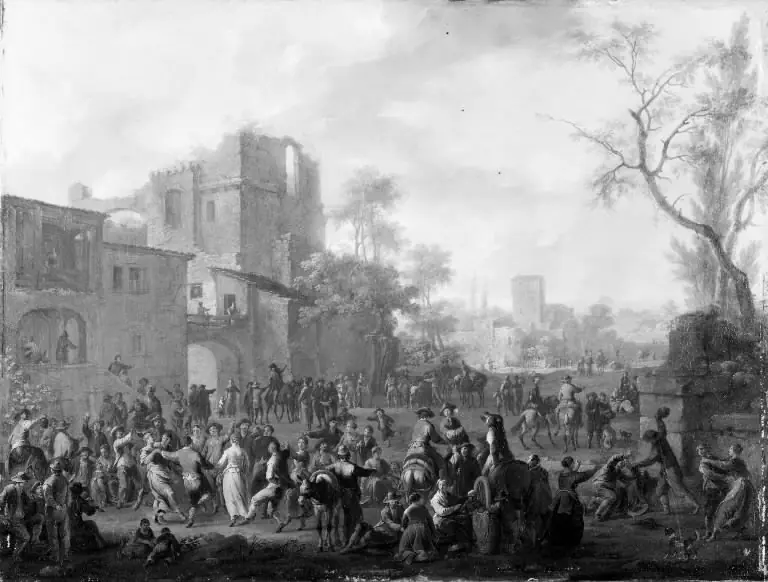
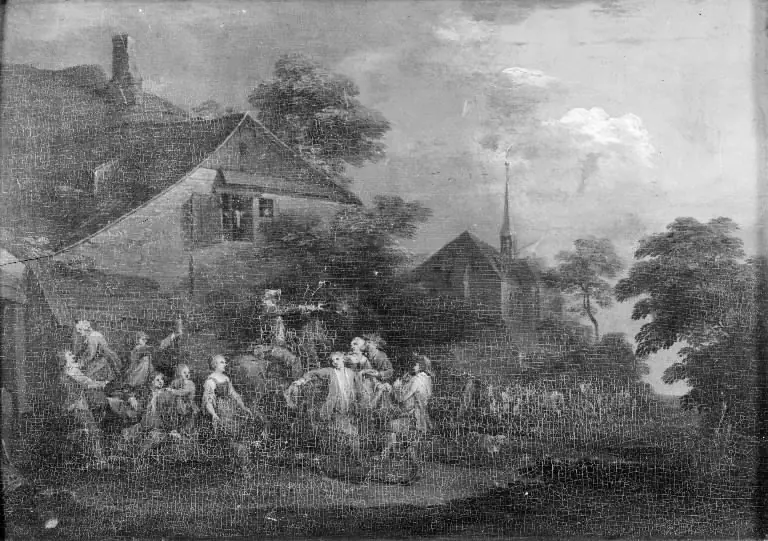
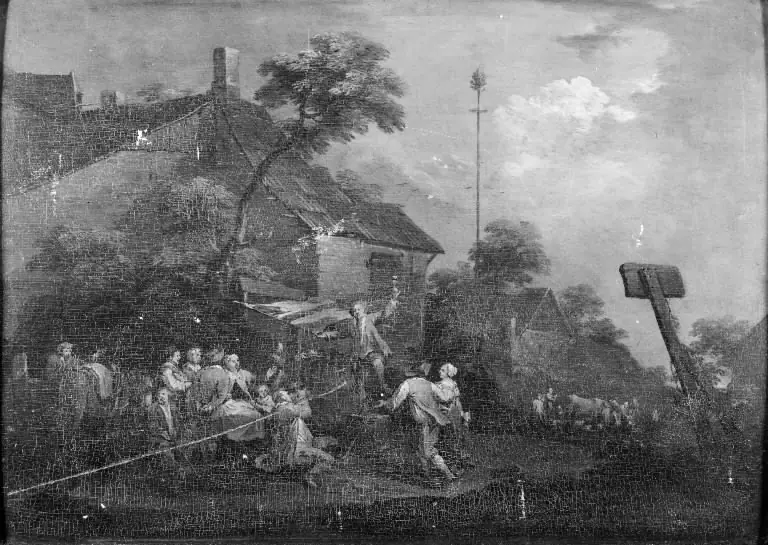
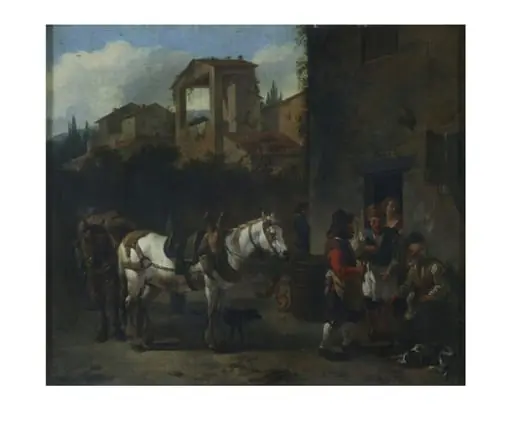 Landscape with wagon and horses at inn door
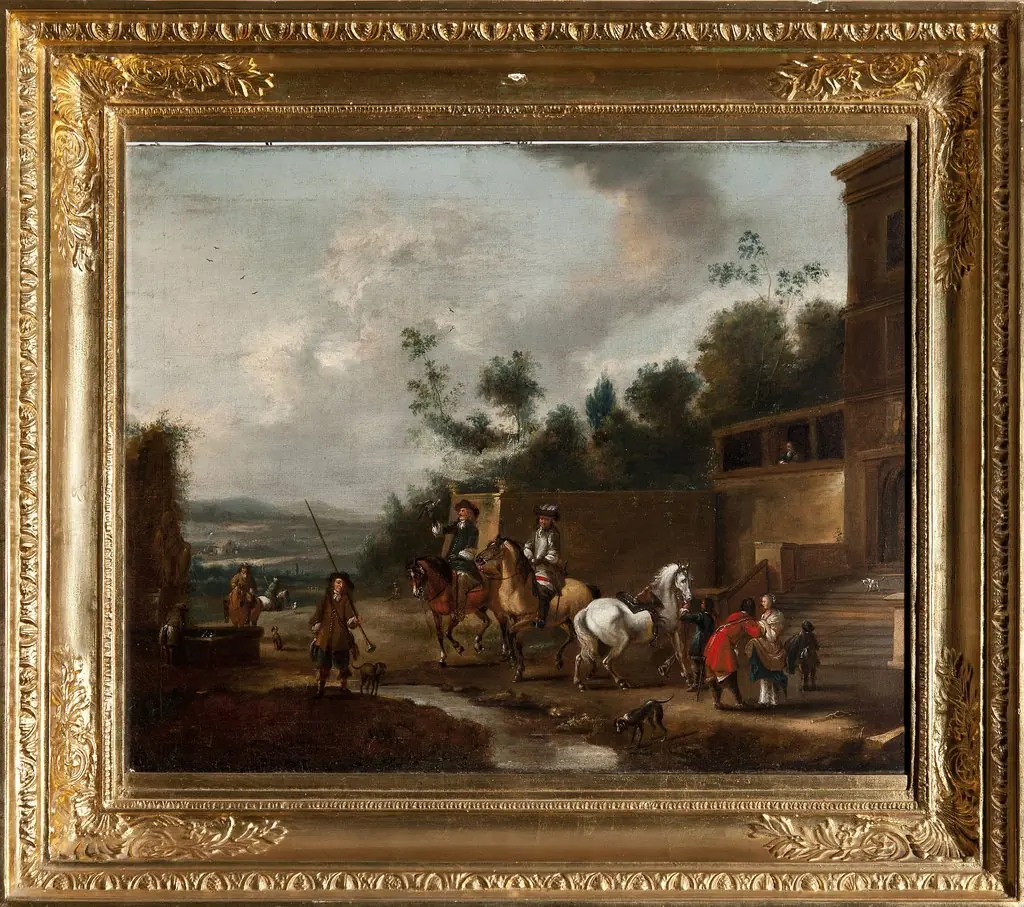 Departure for hunting
 Figures near a Mausoleum
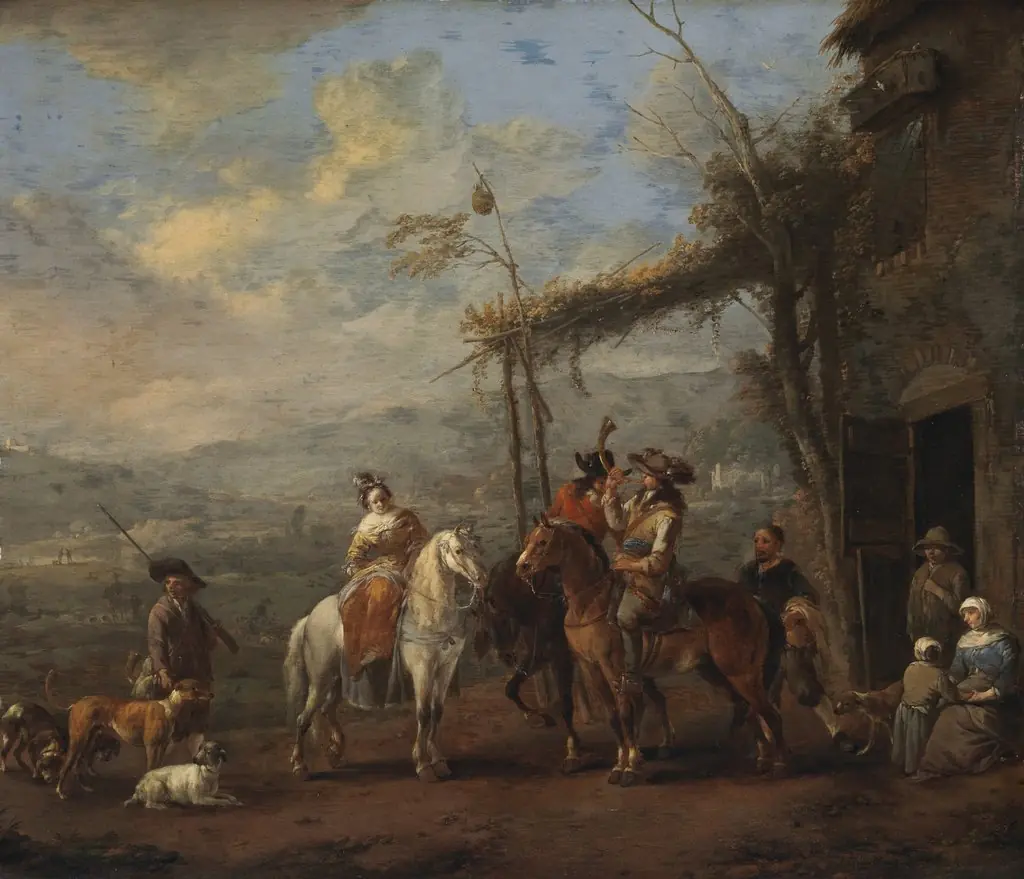 A Hunting Party
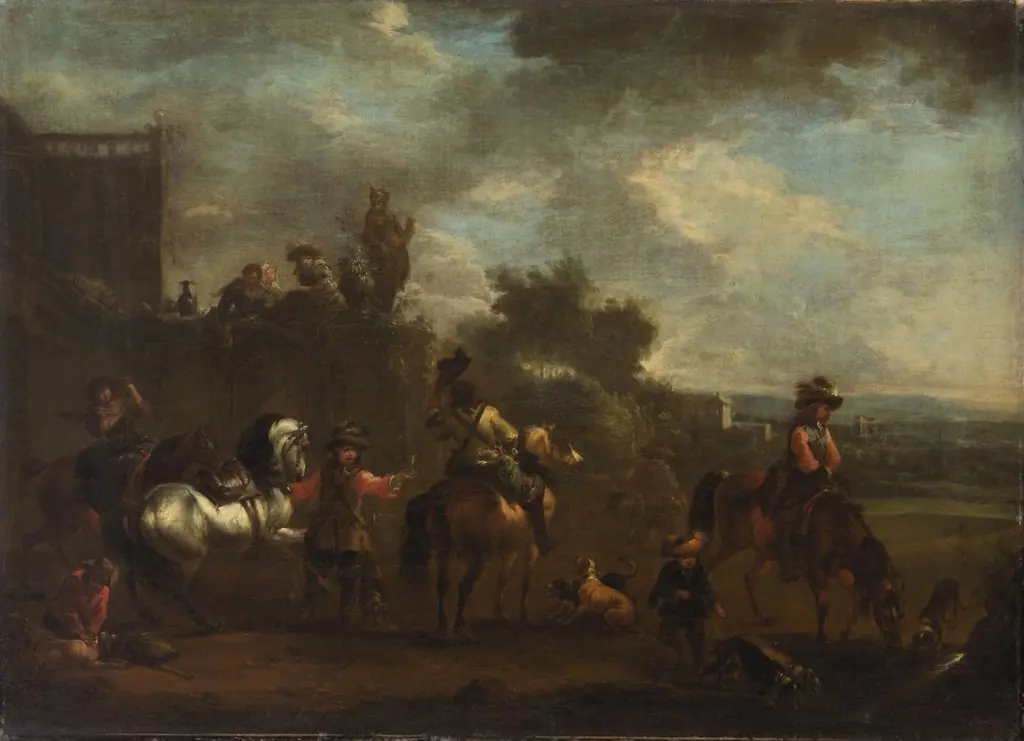 Ausritt zur Jagd
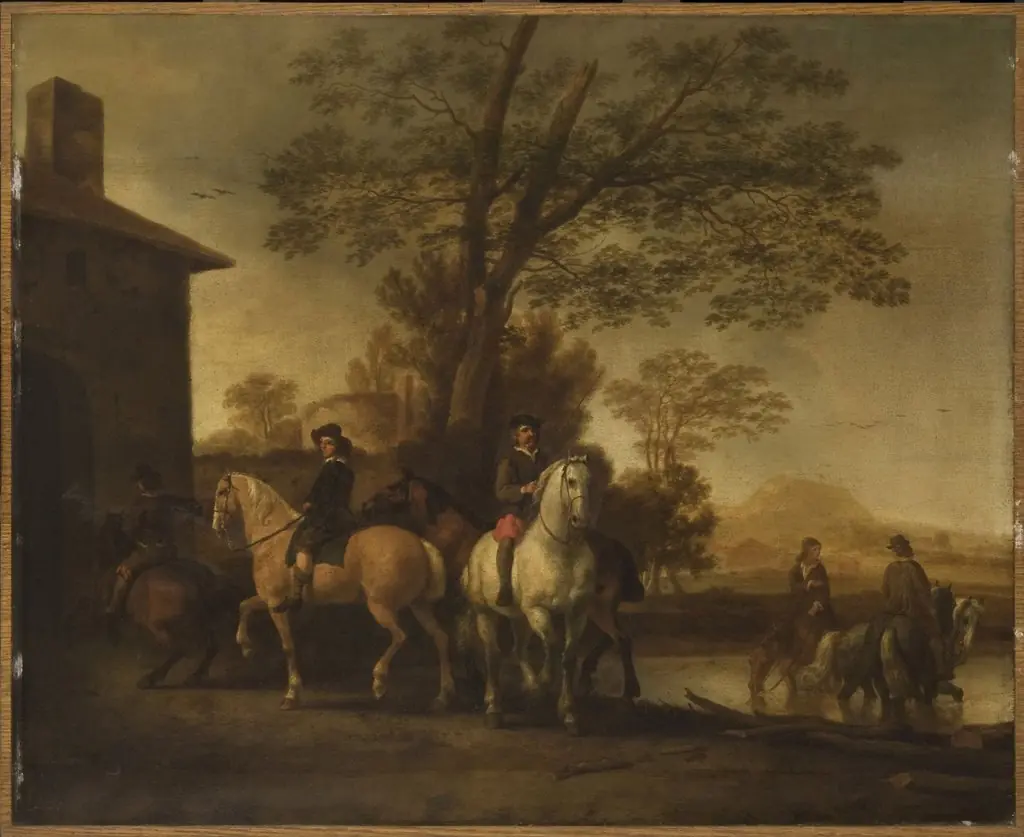 Horsemen Watering Their Horses
 Rauniomaisema ja karjaa paimentava perhe
 Meeting in Front of the Tavern
 Peasants outside an Inn
 Landscape with Riders
 Departure from the Inn
- A Riding Lesson