Artwork
Crucifixion of Christ
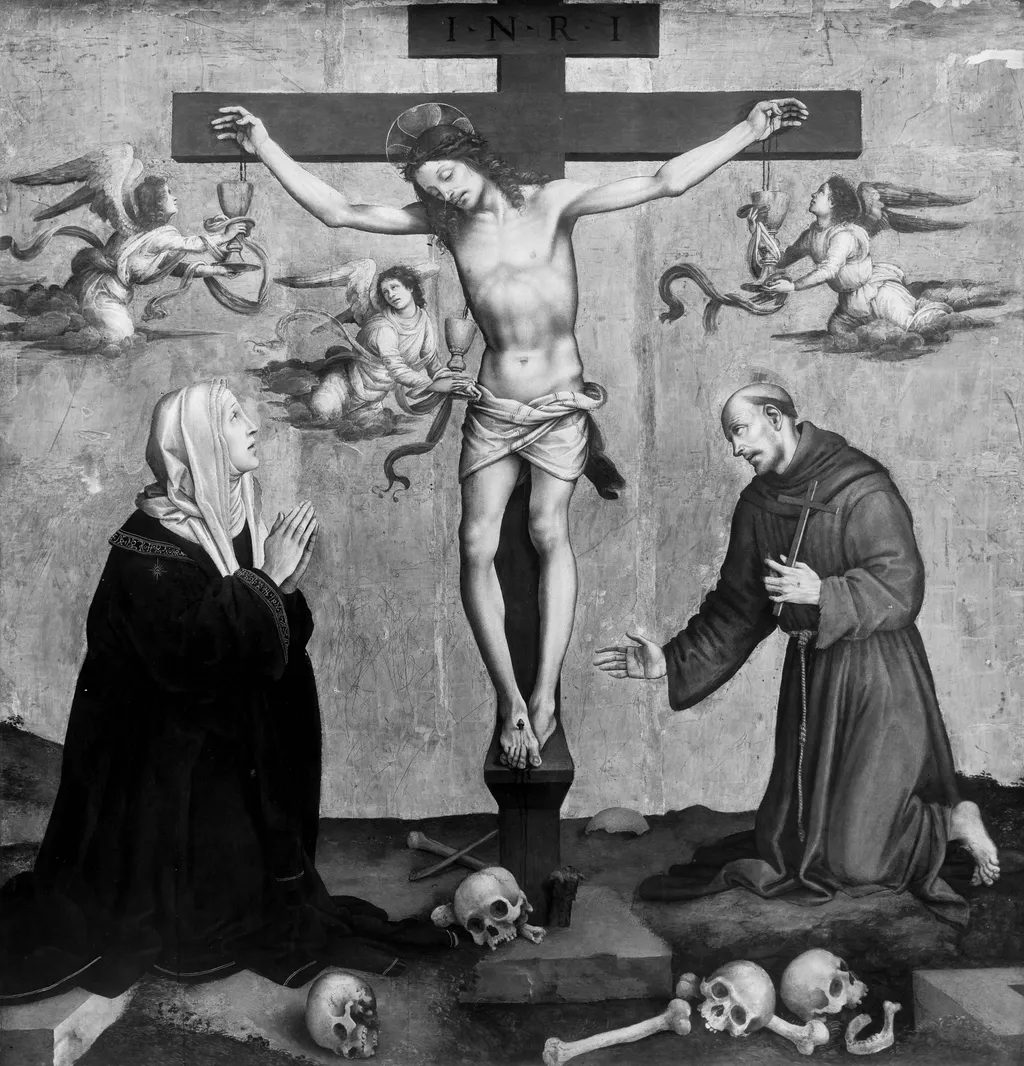
Crucifixion of Christ is a paint painting by the Early Renaissance artist Filippino Lippi. It dates from 1496 and is held in the collection of the Gemäldegalerie Berlin.
About this work
Subject & Meaning
The arched gold background likely responded to the patron's devotion to Savonarola, while scattered skulls and bones convey a contemplative, ascetic tone.
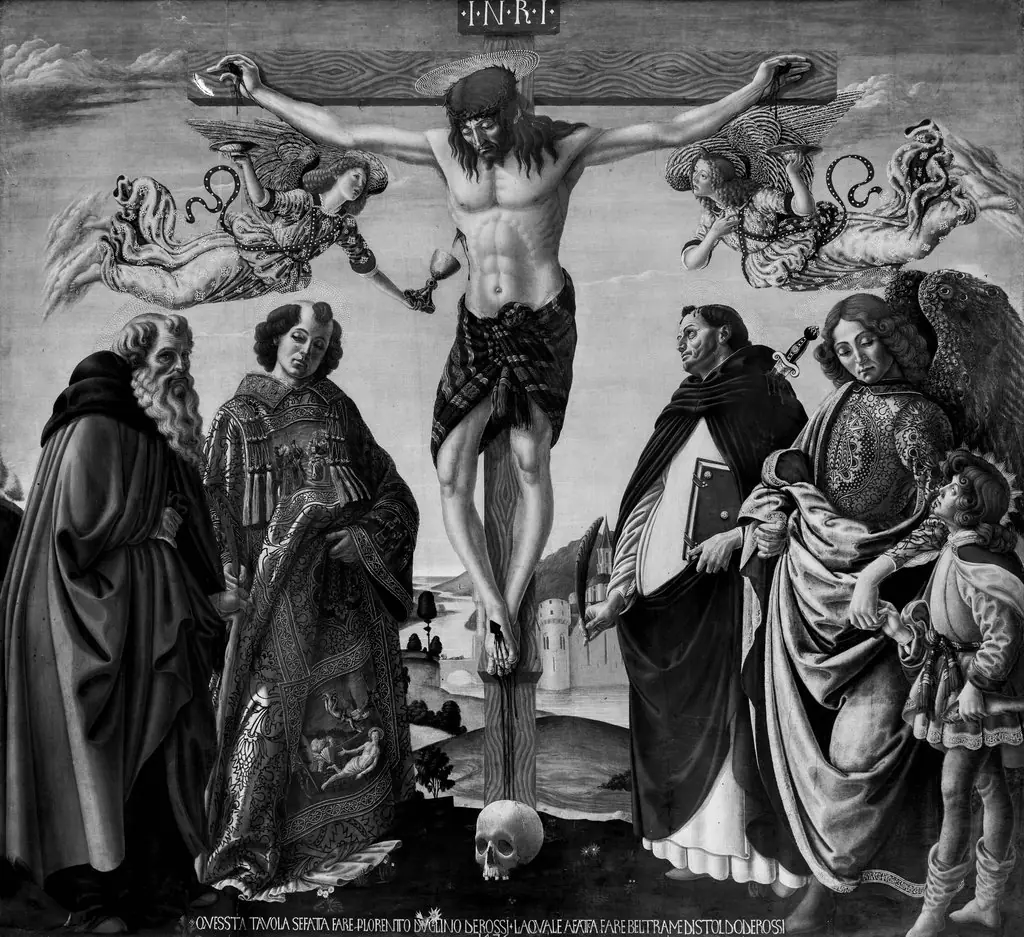
The Crucifixion of Christ depicts the central moment of Jesus' crucifixion flanked by the Virgin Mary in prayer and Saint Francis bearing the stigmata, a composition rooted in medieval iconography where angels collect Christ's blood. The arched gold background likely responded to the patron's devotion to Savonarola, while scattered skulls and bones convey a contemplative, ascetic tone. Jesus is rendered in a pathetically curved pose drawn from a smaller crucifix in Prato, and the fluttering ribbons on the angels' hands are a hallmark of Filippino Lippi's mature style.
The work formed part of a triptych documented in San Ruffillo and later recorded in San Procolo, Berlin, before being dispersed in the 18th century and acquired by the Kaiser Friedrich Museum in 1821; it was destroyed during World War II bombing of the Flakturm Friedrichshain depot.
Scholars link its iconography to contemporary Dominican circles and suggest the patron was a Savonarola supporter, evidenced by the austere saintly figures and symbolic objects.
The painting is discussed in Giulia Cosmo's 2001 monograph and cited in multiple language Wikipedia entries and Lostart.de documentation.
Technique & Style
The Crucifixion of Christ was painted on a poplar panel using tempera, measuring 186 cm in height and 179 cm in width, and was created around 1500. It formed part of a triptych that included Saint John the Baptist and Saint Mary Magdalene, originally housed in the Gemäldegalerie Berlin. The work was later dispersed, with its central panel moving through the Solly collection before entering the Kaiser Friedrich Museum in Berlin in 1821.
During World War II, the painting was destroyed in the fire at the Flakturm Friedrichshain depot in 1945. The composition features an archaic gold background associated with a Savonarola-devout patron, with depictions of Mary and Saint Francis flanking the crucified Christ, angels collecting Christ’s blood, and characteristic flowing ribbons in the figures, reflecting Filippino Lippi’s mature style.
History & Provenance
Likely executed around 1500, this panel painting by Filippino Lippi originally functioned as the central component of a triptych. While early accounts linked the work to the church of San Ruffillo, later sixteenth-century descriptions more accurately place it on the Valori altar in the church of San Procolo, accompanied by side panels and an overhead fresco. During the eighteenth century, the altarpiece was dismantled; the central section was moved to a sacristy before entering the commercial market.
It subsequently became part of the Solly Collection in London. In 1821, the Prussian state acquired the entire Solly assemblage, transferring the painting to the Kaiser Friedrich Museum in Berlin. The work remained in Berlin's state museums until 1945, when it was destroyed during the fire at the Friedrichshain flak tower depot in the final stages of World War II.
The painting was held in the Solly Collection in London before entering the Kaiser Friedrich Museum (now the Gemäldegalerie) in Berlin in 1821, following the museum's acquisition of the entire collection. Measuring 186 by 179 cm, the work remained in the Staatliche Museen until the end of the Second World War. It was destroyed in 1945 during the fire at the Friedrichshain flak tower, a storage facility for large-format artworks that suffered catastrophic damage during the conflict.
The loss of this panel, which likely formed the central section of a triptych, occurred alongside the destruction of many other significant works housed in the same depot.
Context
The Crucifixion of Christ, attributed to Filippino Lippi and likely created around 1490, was a large-scale religious painting (186 cm × 179 cm) executed on poplar panel, originally part of a triptych possibly linked to the church of San Ruffillo in Florence. It was documented by Vasari in connection with the destroyed church of San Ruffillo but later clarified by Raffaello Borghini in 1584 as belonging to the altar of San Procolo, with side panels and an overlying fresco of Saint Francis receiving the stigmata. By the 18th century, the work was dismantled, with the central panel moving through the Solly Collection in London before entering the Kaiser Friedrich Museum in Berlin in 1821.
The painting was destroyed during World War II in 1945, likely in the fire at the Flakturm Friedrichshain, where numerous large-format artworks were stored. Its composition features a centrally arched Christ, flanked by the Virgin Mary and Saint Francis, with angels collecting Christ’s blood, set against a gold background reflecting Savonarola-inspired patronage, and characterized by Filippino’s mature style, including fluttering ribbons and ascetic saintly figures.
Overview
Filippino Lippi’s Crucifixion of Christ (1496) is an oil painting that presents the biblical scene of the crucifixion. Executed during the early Renaissance, the work is part of the collection of the Gemäldegalerie in Berlin. It reflects Lippi’s focus on religious narratives, a dominant theme throughout his Florentine career.
Own this work as a print
Artist & collection

Artist
Filippino Lippi (probably 1457 – 18 April 1504) was an Italian Renaissance painter mostly working in Florence, Italy during the later years of the Early Renaissance and first few years of the High Renaissance.

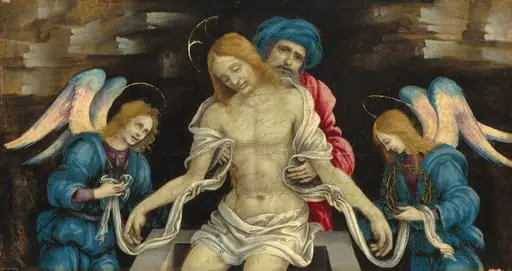 Pietà (The Dead Christ Mourned by Nicodemus and Two Angels)
 Tobias and the Angel
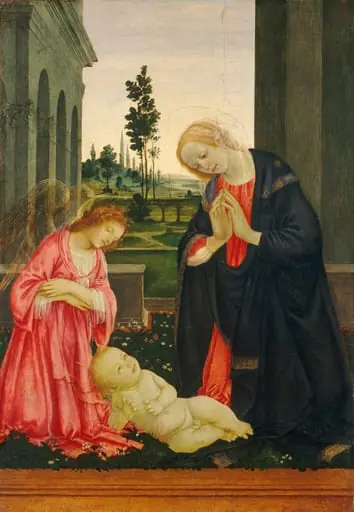 The Adoration of the Child
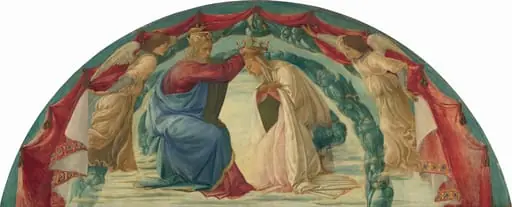 The Coronation of the Virgin
 Portrait of a Youth
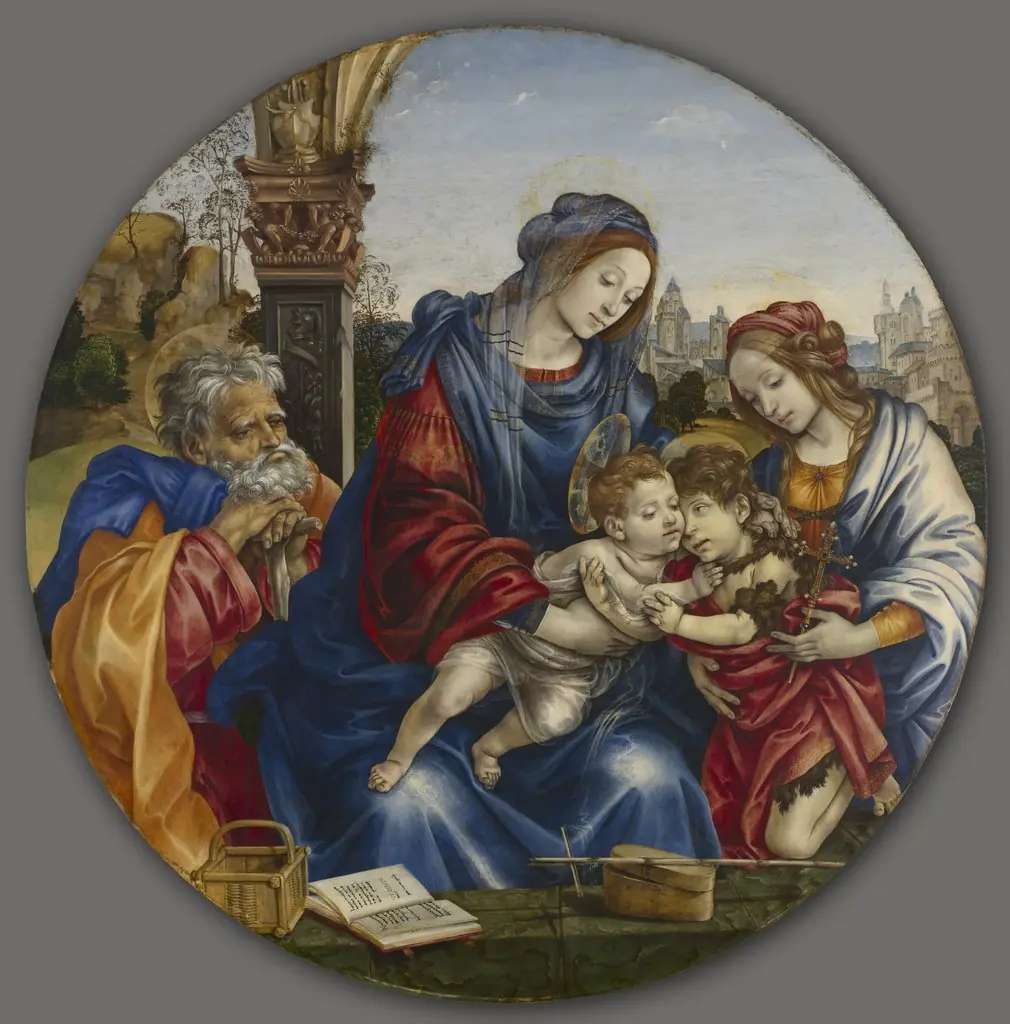 The Holy Family with Saint John the Baptist and Saint Margaret
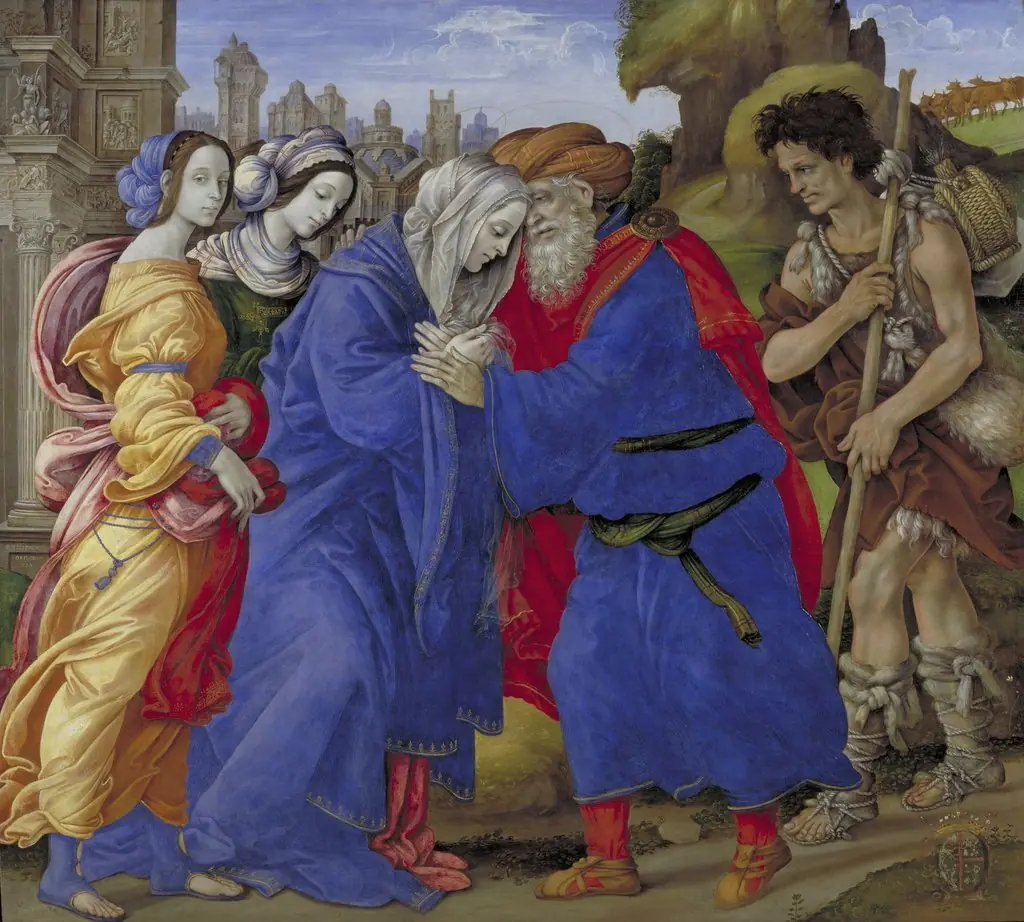 The Meeting of Joachim and Anne outside the Golden Gate of Jerusalem
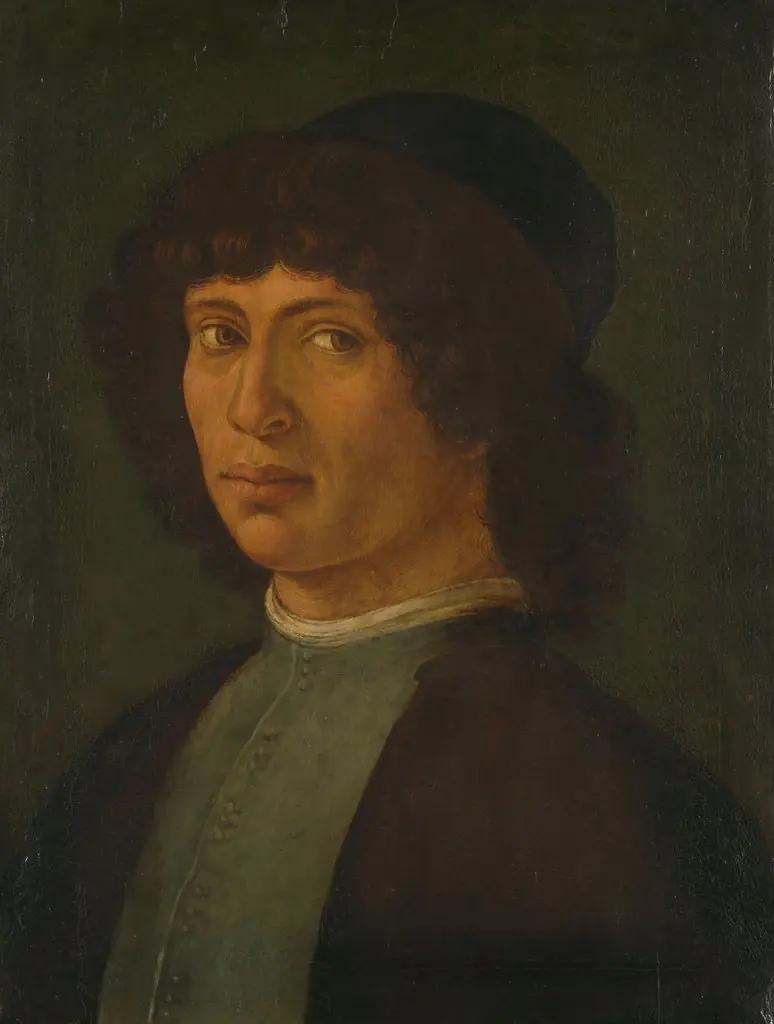 Portrait of a young man