Artwork
Portrait of a Youth
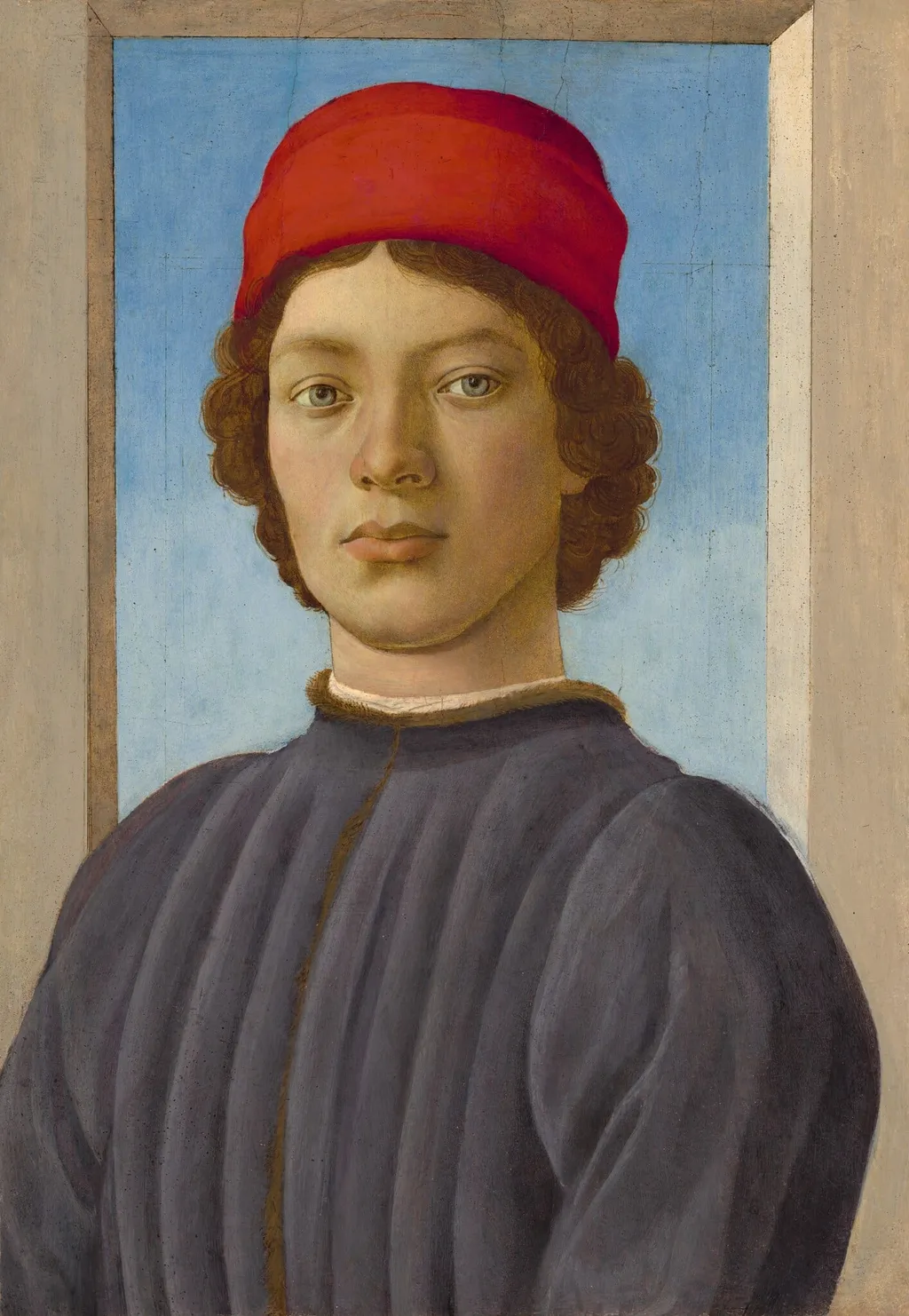
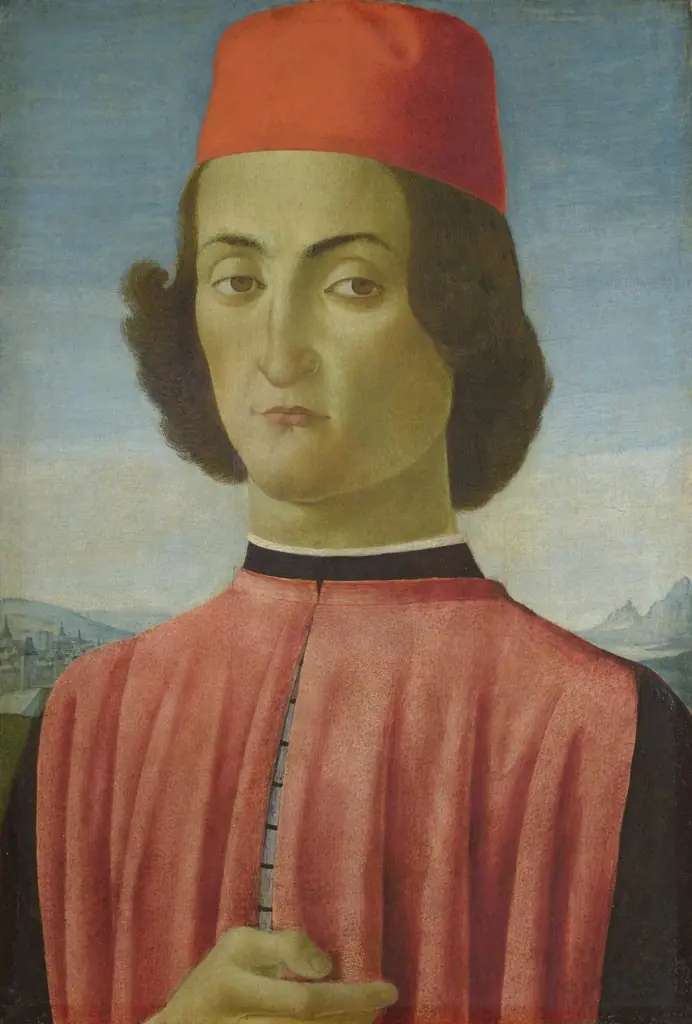
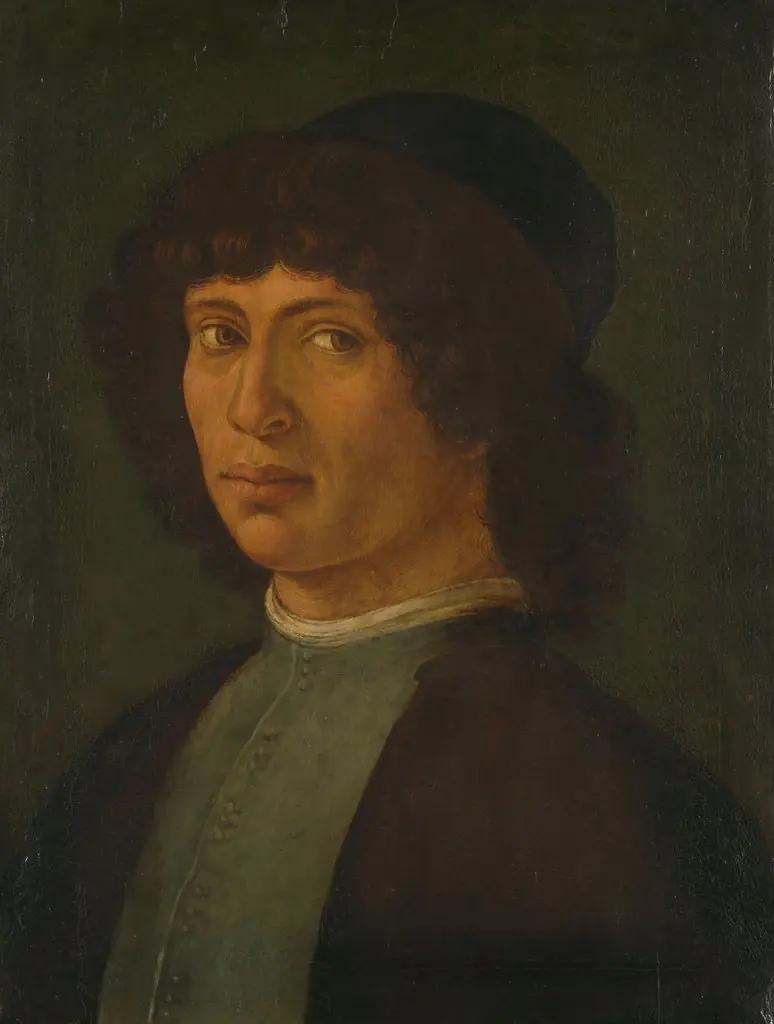
Portrait of a Youth is an oil painting by the Early Renaissance artist Filippino Lippi. It dates from 1485 and is held in the collection of the National Gallery of Art.
About this work
Technique & Style
The portrait is painted in oil mixed with tempera on a poplar panel, a medium Filippino Lippi favored in the 1480s for its luminous, layered effects.
The portrait is painted in oil mixed with tempera on a poplar panel, a medium Filippino Lippi favored in the 1480s for its luminous, layered effects. The modeling is achieved through successive glazes rather than heavy impasto, with the face rendered in delicate, translucent layers to capture subtle shifts of light. The patterned brocade of the doublet is articulated through fine hatching.
The panel's modest dimensions (52.1 × 36.5 cm) and the restrained palette, dominated by earth tones and pearly whites, emphasize the sitter's poised yet introspective demeanor.
History & Provenance
Attributed to Filippino Lippi and dated to 1485, the work is executed in oil and tempera on panel. Its documented ownership begins in the later 1880s with the Florentine dealer Stefano Bardini. In 1890, Prince Johann II von Liechtenstein of Vienna purchased the painting, which subsequently passed by descent to Prince Franz I von Liechtenstein.
Around 1920, the work entered the New York and London market through M. Knoedler & Co. before reaching Chicago collectors Mr. and Mrs. Frank D. Stout by 1924. Mrs. Stout consigned the piece back to Knoedler in November 1930, where it was sold to Andrew W. Mellon. Mellon deeded the painting to The A.W. Mellon Educational and Charitable Trust on March 30, 1932, and it was ultimately gifted to the National Gallery of Art in 1937, where it resides in Gallery 06 as part of the Andrew W. Mellon collection. The work was exhibited in the show Florence and its Painters: From Giotto to Leonardo da Vinci.
Overview
Filippino Lippi, an Italian Renaissance artist, created this Portrait of a Youth around 1485. Executed in oil and tempera on panel, the painting exemplifies the portrait genre during a pivotal moment in art history. Lippi, known for his religious commissions, also engaged with secular subjects like this depiction of an unidentified young man.
Subject & Meaning
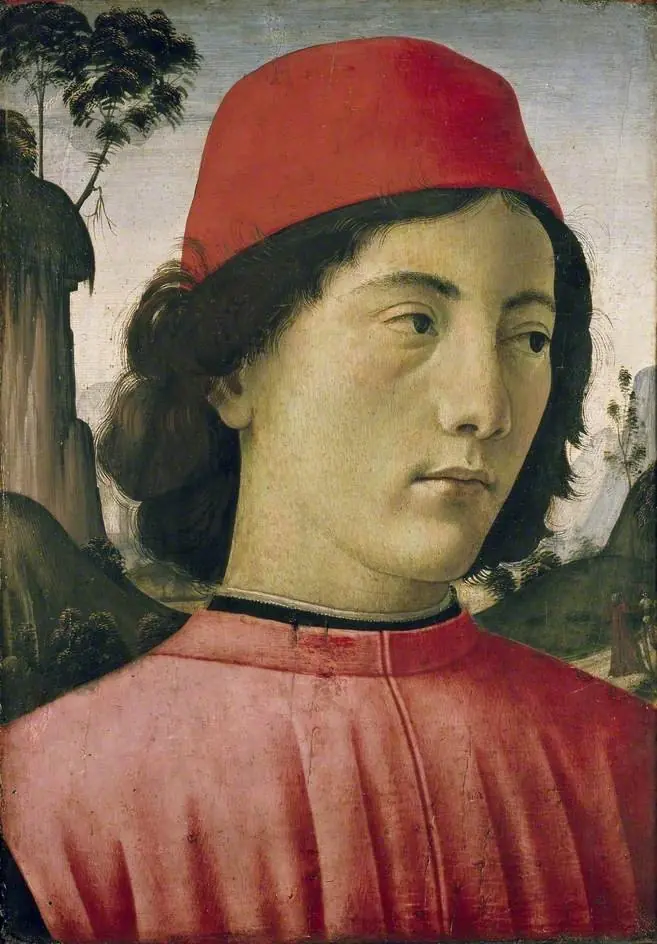
The painting features a young man with a composed expression, his dark, short curls framing a serious face. He wears a striking bright red cap and a dark, folded garment, from which a white collar emerges. The figure is set against an unadorned blue background, which serves to emphasize his presence and direct the viewer's attention solely to his features.
Context
Filippino Lippi was a prominent painter of the Italian Renaissance, active across major artistic centers including Florence and Rome. While his oeuvre largely comprised religious narratives, he also explored portraiture and secular allegories. This work dates to approximately 1485, placing it within the transitional period that bridged the stylistic innovations of the Early Renaissance with the developing grandeur of the High Renaissance.
Own this work as a print
Artist & collection

Artist
Filippino Lippi (probably 1457 – 18 April 1504) was an Italian Renaissance painter mostly working in Florence, Italy during the later years of the Early Renaissance and first few years of the High Renaissance.

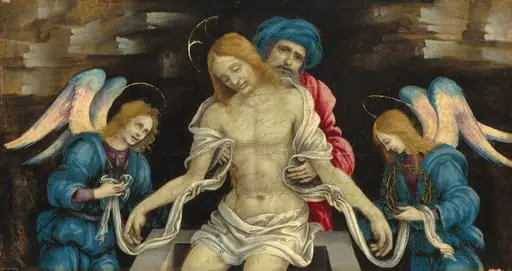 Pietà (The Dead Christ Mourned by Nicodemus and Two Angels)
 Tobias and the Angel
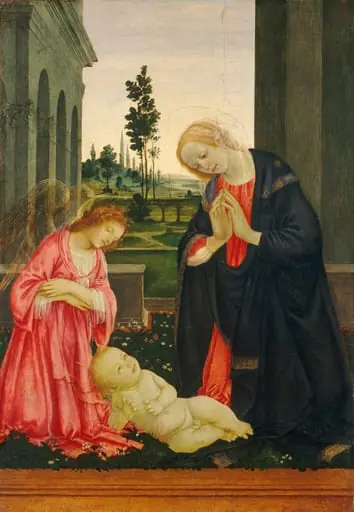 The Adoration of the Child
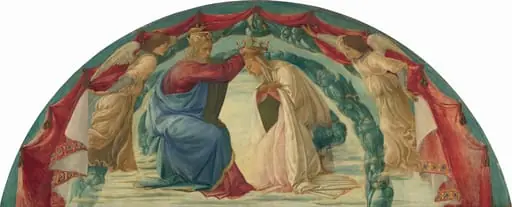 The Coronation of the Virgin
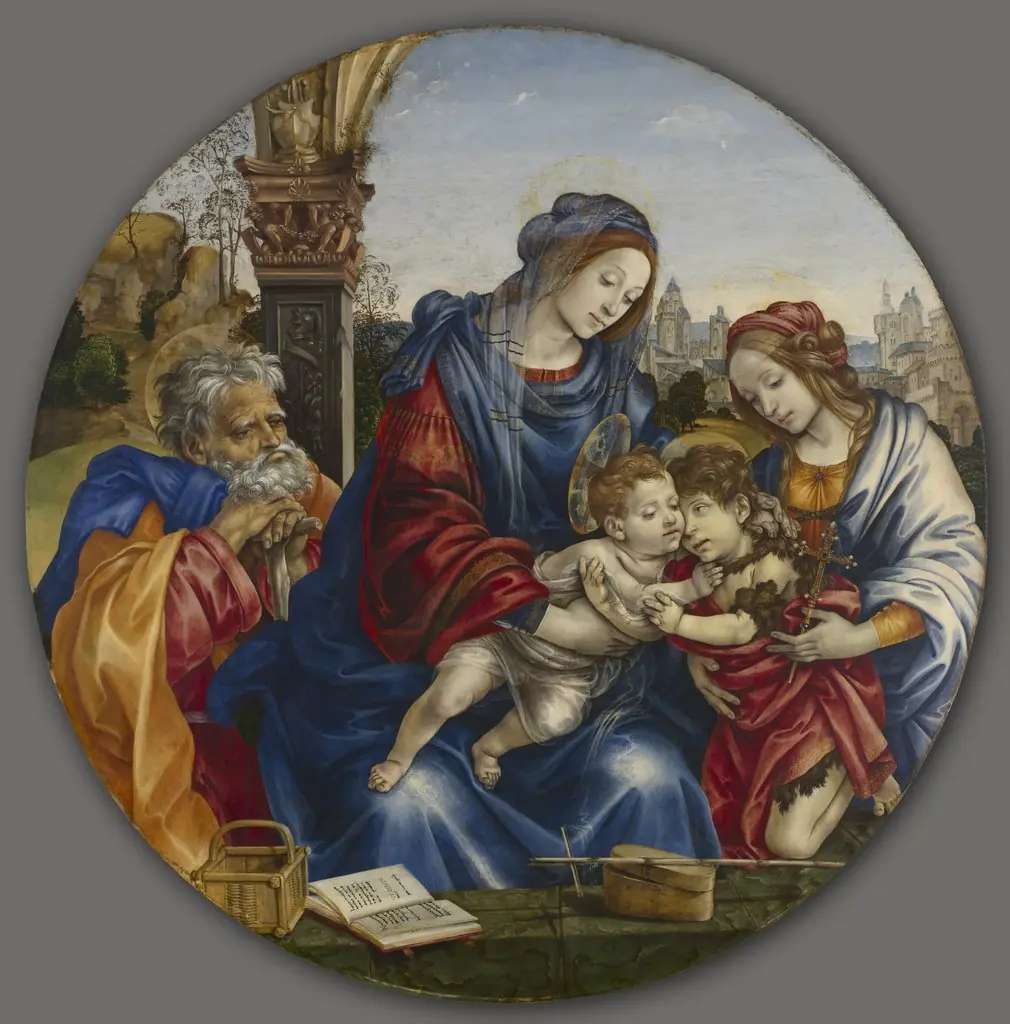 The Holy Family with Saint John the Baptist and Saint Margaret
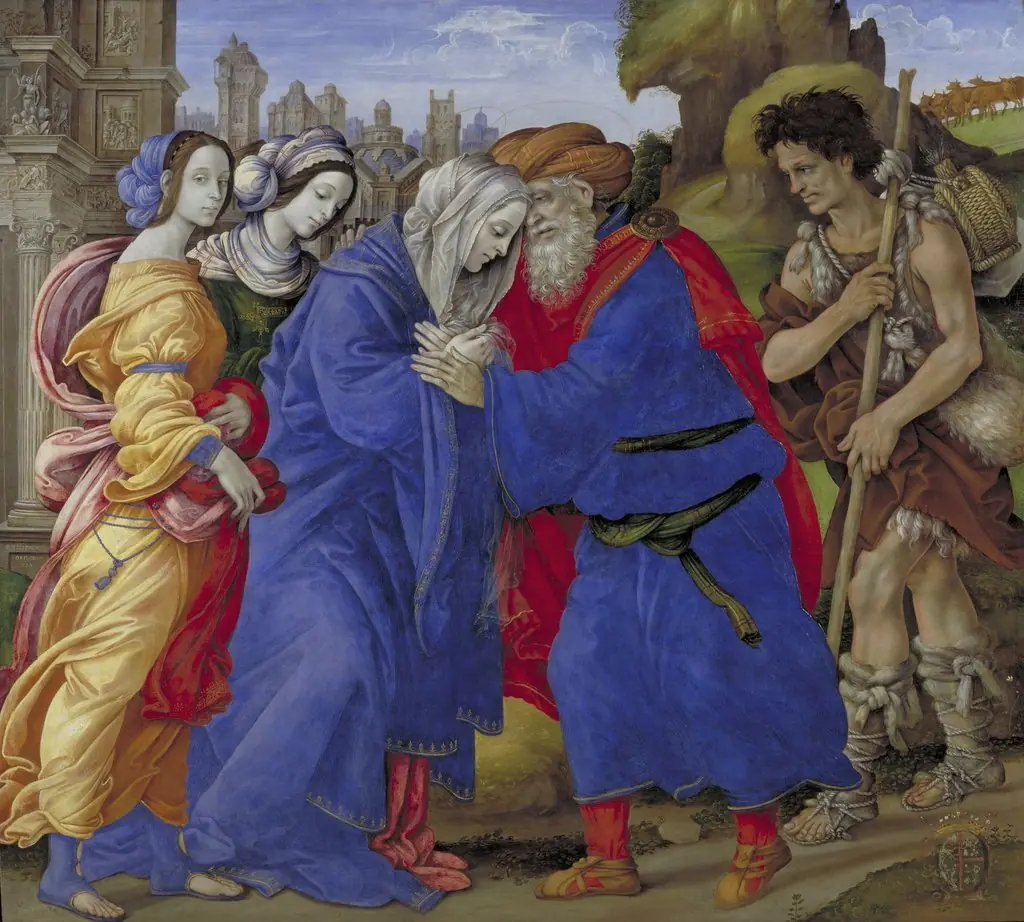 The Meeting of Joachim and Anne outside the Golden Gate of Jerusalem
 Portrait of a young man
 Crucifixion of Christ