Artwork
The Nymph of the Spring
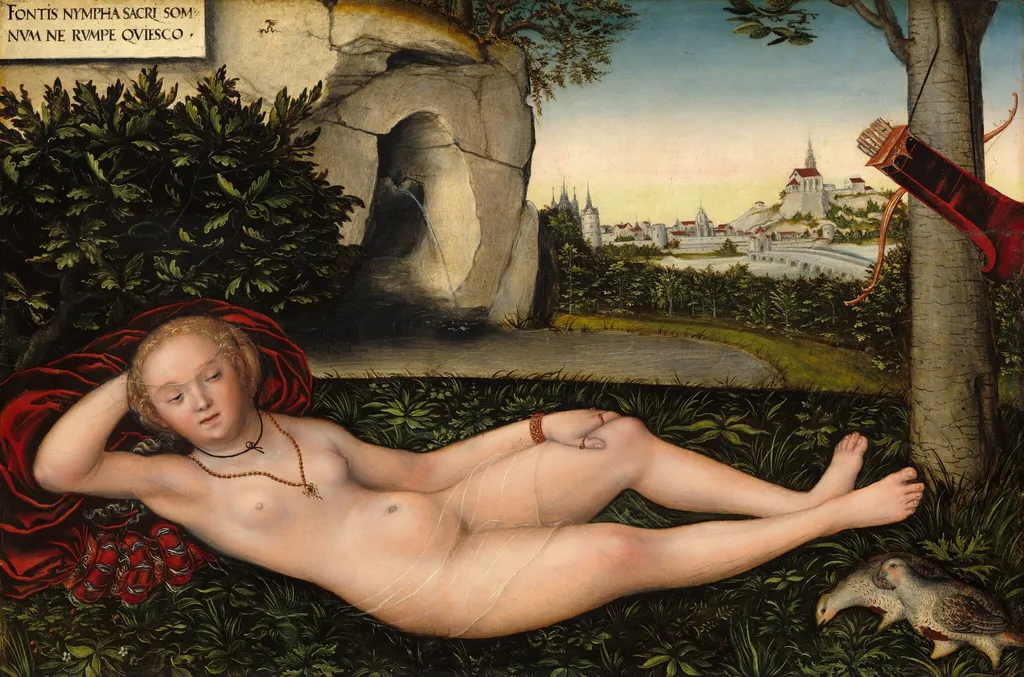
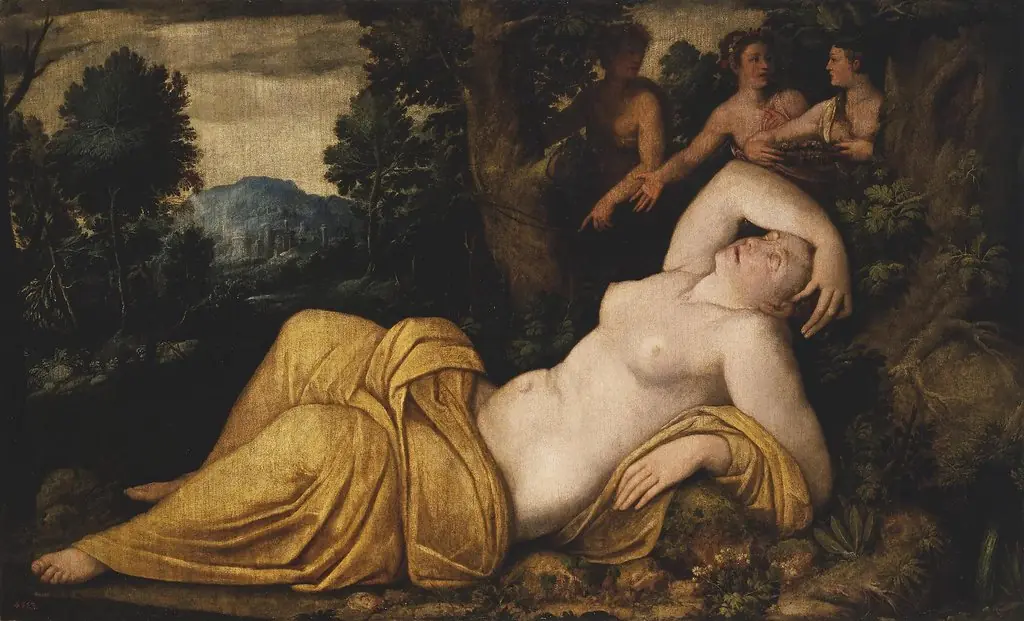
The Nymph of the Spring is an oil painting by the Mannerist artist Lucas Cranach the Elder. It dates from 1537 and is held in the collection of the National Gallery of Art.
- Inscription
- Inscribed:upper left: FONTIS NYMPHA SACRI SOM: / NVM NE RVMPE QVIESCO (I am the Nymph of the Sacred Spring. Do not disturb my sleep. I am resting.); to the right of the inscription, the artist's device, a serpent with folded wings holding a ring in its mouth, facing left
About this work
Subject & Meaning
The work functions as an allegorical representation of nature's vitality and the serene beauty associated with aquatic deities in Renaissance humanism.
Created in 1537, this mythological painting by Lucas Cranach the Elder depicts a naiad, a type of water nymph from classical lore. As the main subject, the figure embodies the spirit of a fresh water source, specifically a spring. The work functions as an allegorical representation of nature's vitality and the serene beauty associated with aquatic deities in Renaissance humanism.
By focusing on a single mythological entity rather than a complex narrative scene, the artwork emphasizes the iconic status of the nymph herself. The classification of the piece as a mythological genre painting underscores its intent to visualize ancient stories and symbolic figures for a contemporary audience, celebrating the intersection of the natural world and classical imagination.
Technique & Style
Executed in 1537, this mythological work depicting a naiad is rendered in oil paint on a wooden panel support. The composition measures 48.4 cm in height by 72.8 cm in width. As a product of Lucas Cranach the Elder, the painting exemplifies the artist's approach to mythological subjects during the mid-sixteenth century.
While specific details regarding surface condition, handling history, or distinct stylistic maneuvers such as brushwork texture are not explicitly detailed in the available records, the work is formally classified as a painting within the genre of mythology. The piece currently resides in the collection of the National Gallery of Art in Washington, D.C., having entered as a gift to the institution completed in 1958.
History & Provenance
Lucas Cranach the Elder painted The Nymph of the Spring in 1537 as an oil on panel. The earliest documented owner is probably Baron von Schenck of Flechtingen Castle near Magdeburg, though this attribution is unverified. Between 1931 and 1933 the work passed through the dealers Böhler and Steinmeyer in Lucerne and New York; stock records indicate it may have been consigned from Sarasota, possibly linked to John Ringling, and may have moved to the dealer Paul Cassirer, neither of which can be confirmed.
Clarence Y. Palitz of New York held the painting by 1939, when it appeared in the exhibition Classics of the Nude. Palitz, who died in 1958, made a partial gift and promised gift to the National Gallery of Art in 1957, with the gift completed in 1958.
Context
The Nymph of the Spring (1537) is an oil on panel mythological painting by Lucas Cranach the Elder that depicts a naiad, exemplifying the Renaissance interest in mythological nudes. It entered the National Gallery of Art collection through a partial and promised gift finalized in 1958, having previously belonged to the von Schenck family and passed through the dealers Böhler & Steinmeyer; its presence is recorded in the 1939 exhibition catalogue Classics of the Nude (no. 54). Scholarly attention includes Friedländer and Rosenberg's 1932 catalogue of Cranach's work, and later studies have emphasized its role in the artist's development of mythological subjects within the German Renaissance.
Overview
Lucas Cranach the Elder's 1537 oil on panel painting, The Nymph of the Spring, depicts a mythological naiad. This work exemplifies the artist's engagement with the human form within a natural landscape, characteristic of the German Renaissance. Cranach's skill in rendering the figure and integrating it into the sylvan setting is a notable aspect of the composition, reflecting the period's artistic concerns.
Own this work as a print
Artist & collection
Artist
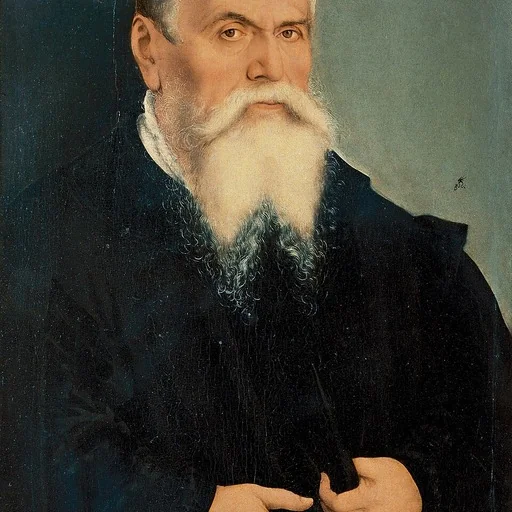
Lucas Cranach the Elder was a German Renaissance painter and printmaker in woodcut and engraving.