Artwork
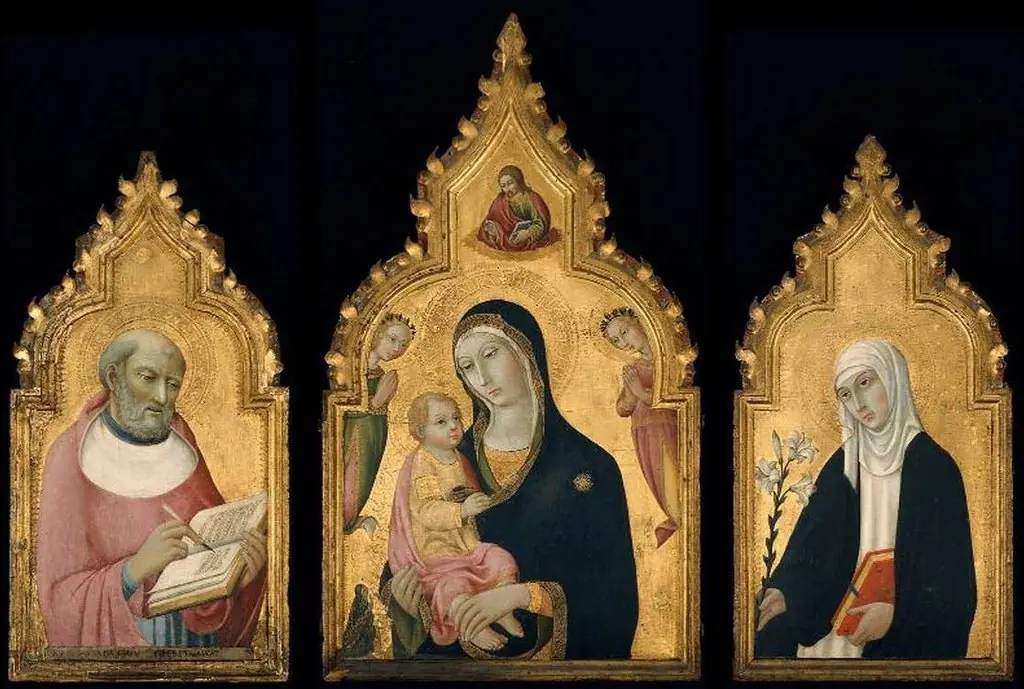
Madonna and Child with Angels and Saints
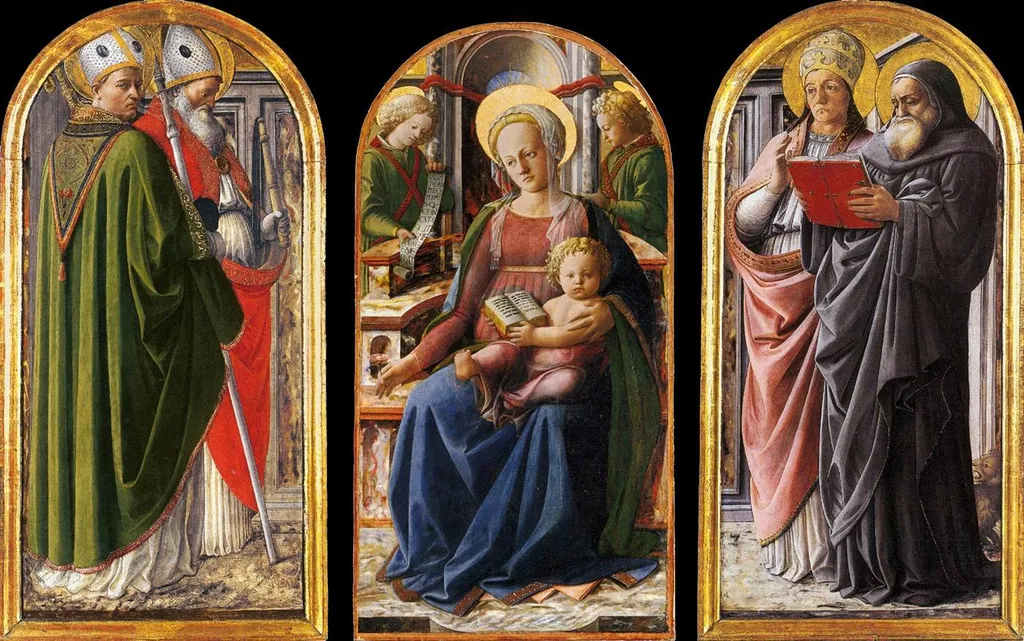
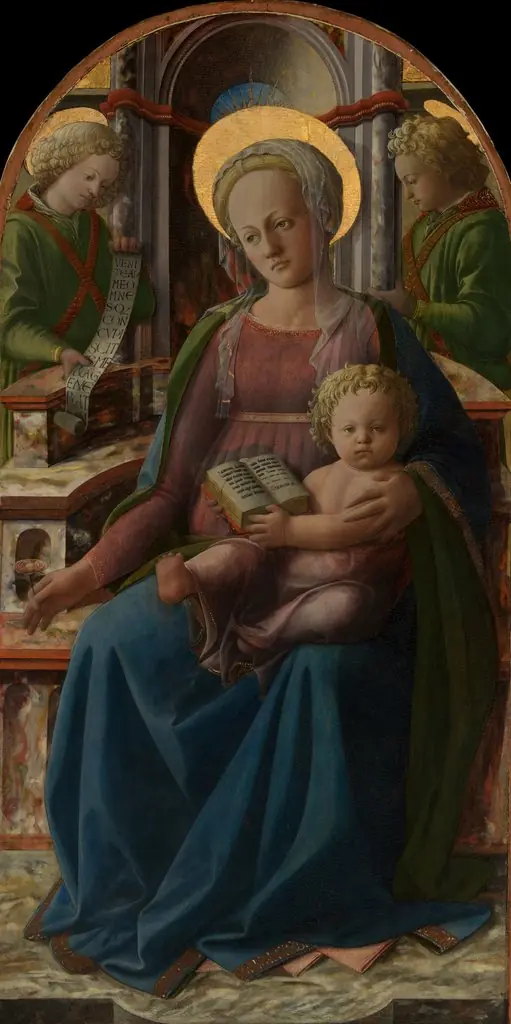
Madonna and Child with Angels and Saints is a tempera painting by the Early Renaissance artist Filippo Lippi. It dates from 1440 and is held in the collection of the Metropolitan Museum of Art.
About this work
The artist used a medium called tempera, which is a technique where pigments are mixed with a binding agent, to create the work.
This painting is called Madonna and Child with Angels and Saints. It was made by Filippo Lippi around 1440. The artist used a medium called tempera, which is a technique where pigments are mixed with a binding agent, to create the work.
The painting is a triptych, meaning it has three panels. This format was often used in medieval art to tell stories or show important scenes.
You can learn more about this type of art by looking up the technique: tempera.
Technique & Style
The work is executed in tempera on a wooden panel, with traces of gold leaf on decorative elements, characteristic of early Renaissance devotional painting. The composition features the Virgin enthroned with the Christ Child surrounded by angels and saints, arranged in a balanced, hieratic structure that emphasizes spiritual gravity over naturalism. Figures are rendered with delicate modeling and linear precision.
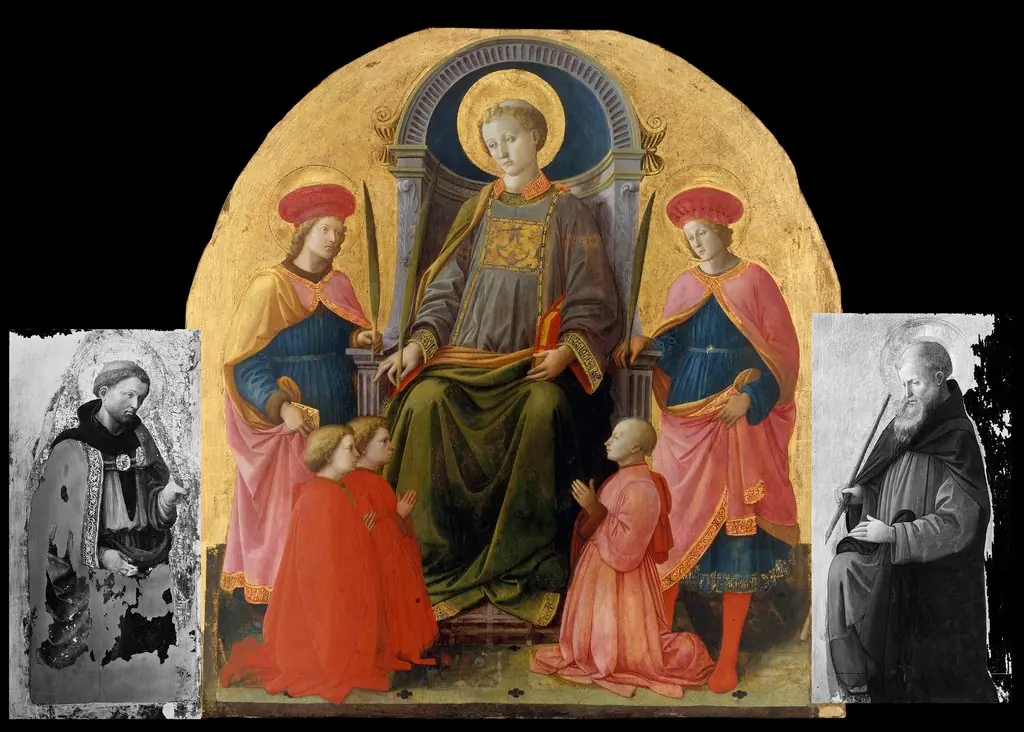
The original format was a triptych, later divided, with the central and side panels now held in separate institutions; the panels were reassembled for exhibitions in 1935 and 2004. Formal qualities include a restrained palette, careful spatial layering, and a focus on sacred narrative conveyed through symbolic gestures and attributes.
History & Provenance
Attributed to Filippo Lippi on stylistic grounds and dated to around 1440, the work was originally a triptych whose central panel depicts the Madonna and Child with angels and saints, with the outer panels showing Saints Augustine and Ambrose and Saints Gregory and Jerome. It was executed in tempera and gold leaf on a wood panel. The triptych was later dispersed: the central panel entered the Metropolitan Museum of Art in New York in 1949, while the side panels passed to the Pinacoteca della Accademia Albertina di Belle Arti in Turin through the 1828 donation of Archbishop Vincenzo Maria Mossi.
The panels were reunited for the exhibition "Exposition de l'art italien de Cimabue à Tiepolo" in Paris in 1935 and again for "Filippo Lippi. Un trittico ricongiunto" at the Accademia Albertina in October 2004.
Context
Filippo Lippi's Madonna and Child with Angels and Saints, executed around 1440, occupies a notable place in the study of mid-Quattrocento Florentine painting. Originally conceived as a unified triptych, the work was dispersed by the late eighteenth century, with the central panel eventually entering the Metropolitan Museum of Art in 1949 and the two side panels, depicting Saints Augustine and Ambrose and Saints Gregory and Jerome, passing into the Pinacoteca della Accademia Albertina di Belle Arti in Turin through the 1828 donation of Archbishop Vincenzo Maria Mossi.
The triptych's reunification history has shaped its modern scholarship. The panels were brought together at the 1935 "Exposition de l'art italien de Cimabue à Tiepolo" in Paris and again at the 2004 Accademia exhibition "Filippo Lippi. Un trittico ricongiunto," allowing sustained comparative study of Lippi's handling of tempera and gold leaf on panel across the three components.
Overview
Filippo Lippi’s Madonna and Child with Angels and Saints is a tempera triptych dating from around 1440. The central image portrays the Virgin and infant Christ surrounded by celestial figures, while the flanking wings depict groups of saints. The work exemplifies mid‑Quattrocento devotional painting, combining intimate religious narrative with a formal three‑panel structure.
Subject & Meaning
At the heart of the composition the Madonna holds the Child, a motif symbolizing divine motherhood and humanity’s salvation. Angelic attendants underscore the heavenly realm, and the saints, Augustine, Ambrose, Gregory, and Jerome, represent the theological pillars of the Western Church, linking the sacred scene to the intellectual tradition of the Church Fathers.
Artist & collection
Artist
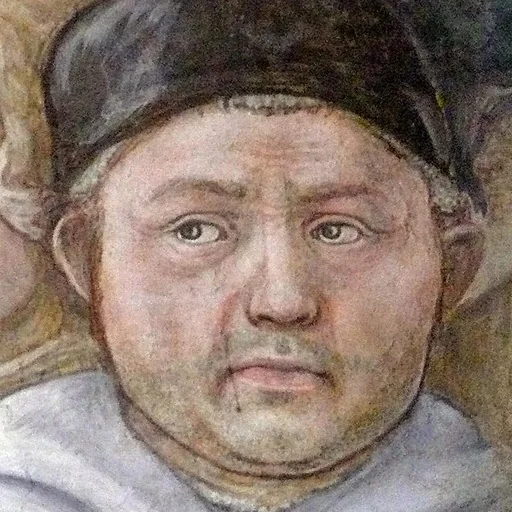
Filippo Lippi (c. 1406 – 8 October 1469), also known as Lippo Lippi, was an Italian Renaissance painter of the Quattrocento (fifteenth century) and a Carmelite priest. He was an early Renaissance master of a painting…

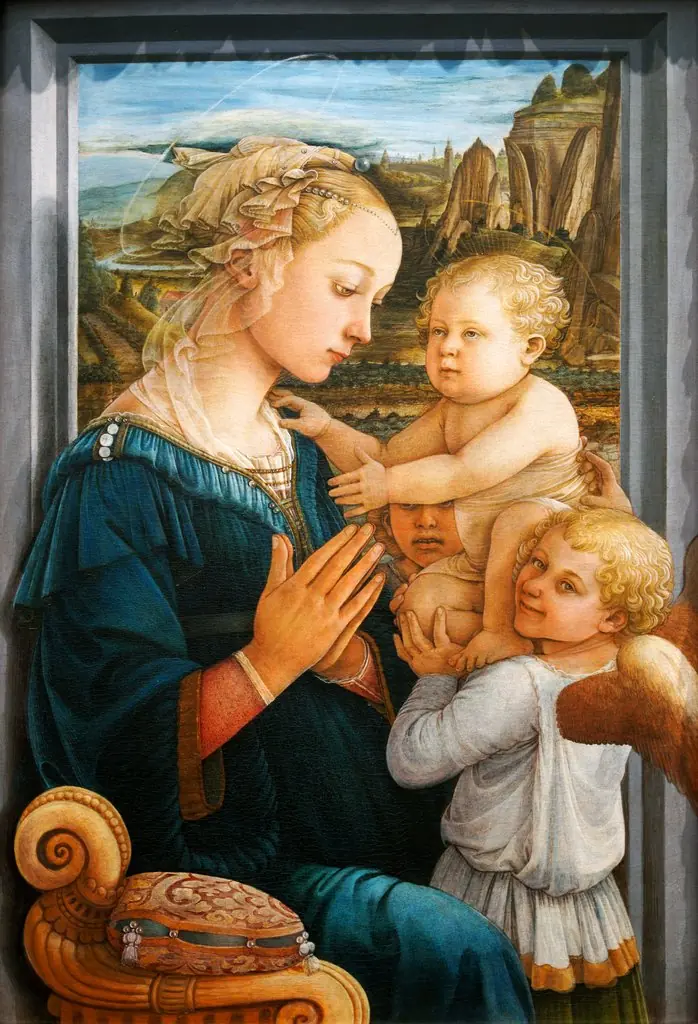
 Triptych: The Virgin and Child with the Blessing Christ, Two Angels and a Donor
![Madonna and Child with the Blessing Christ, and Saints Peter, James Major, Anthony Abbott, and a Deacon Saint [entire triptych], by Martino di Bartolomeo](https://artifactworldgallery.com/img/martino-di-bartolomeo--madonna-and-child-with-the-blessing-christ-and-saints-peter--2c53e26d577a363b-w320.webp) Madonna and Child with the Blessing Christ, and Saints Peter, James Major, Anthony Abbott, and a Deacon Saint [entire triptych]
Madonna and Child with the Blessing Christ, and Saints Peter, James Major, Anthony Abbott, and a Deacon Saint [entire triptych]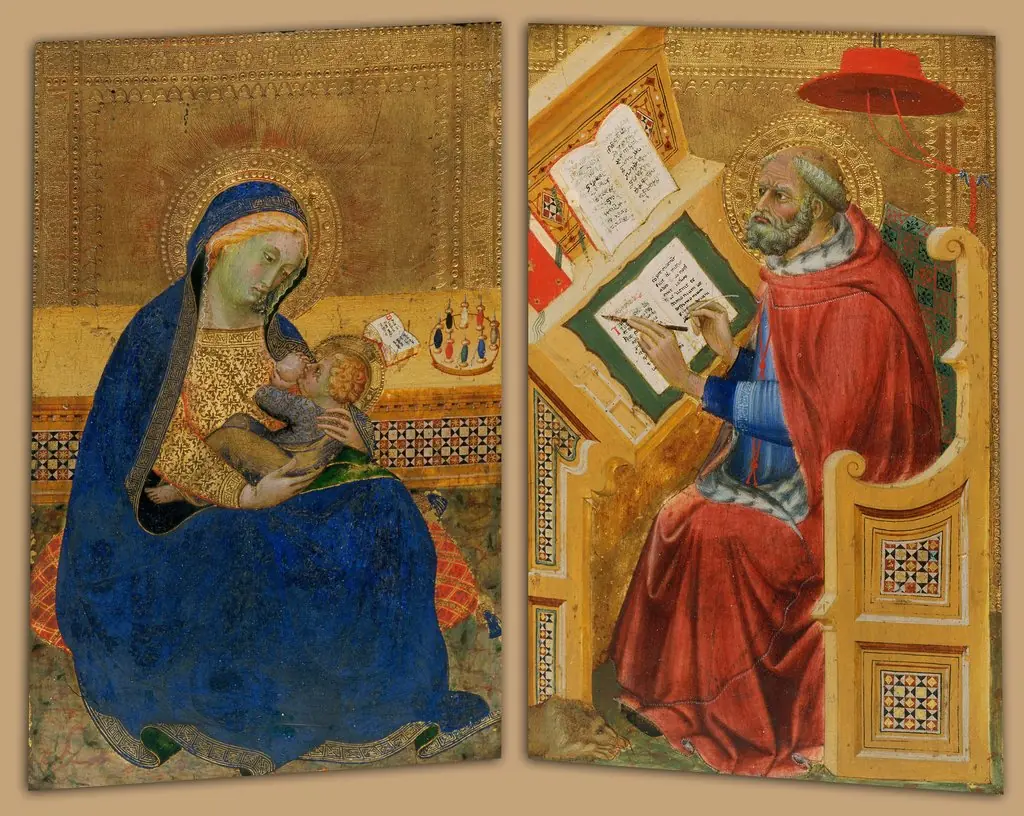 Virgin of Humility (left) and Saint Jerome Translating the Gospel of John (right)
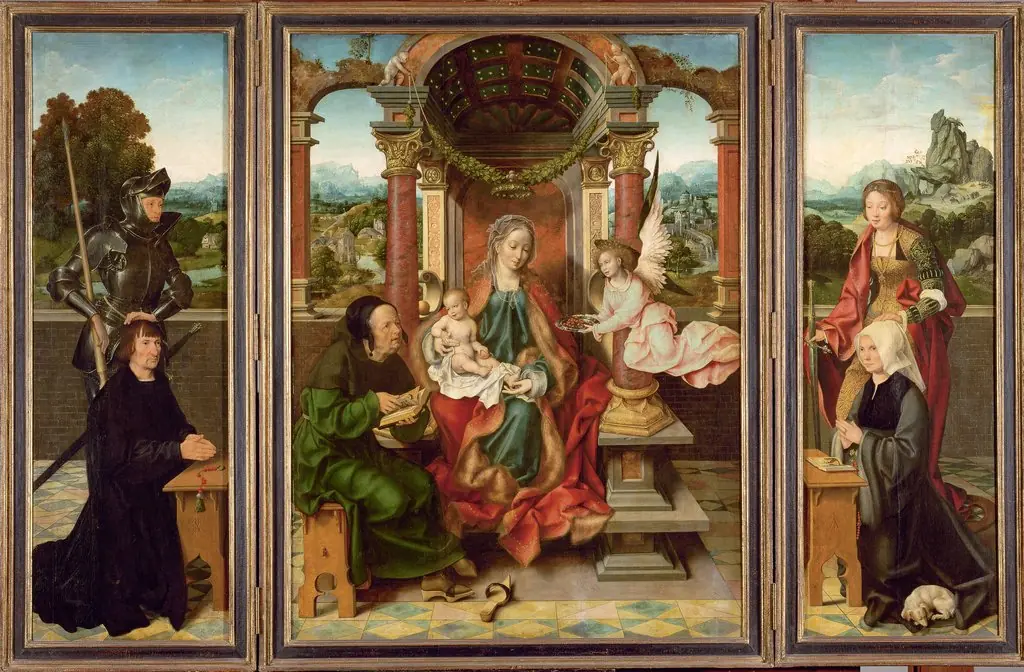 Winged Altar
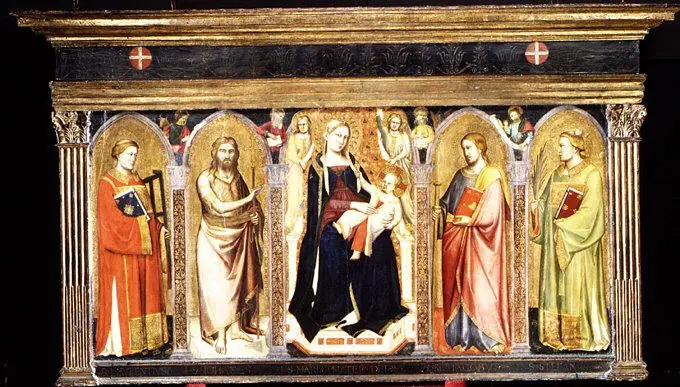 Madonna and Child Enthroned with Saints
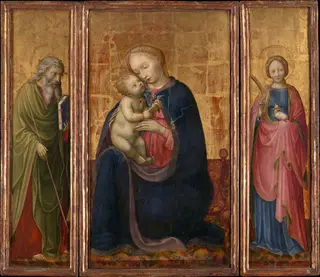 Madonna and Child with Saints Philip and Agnes
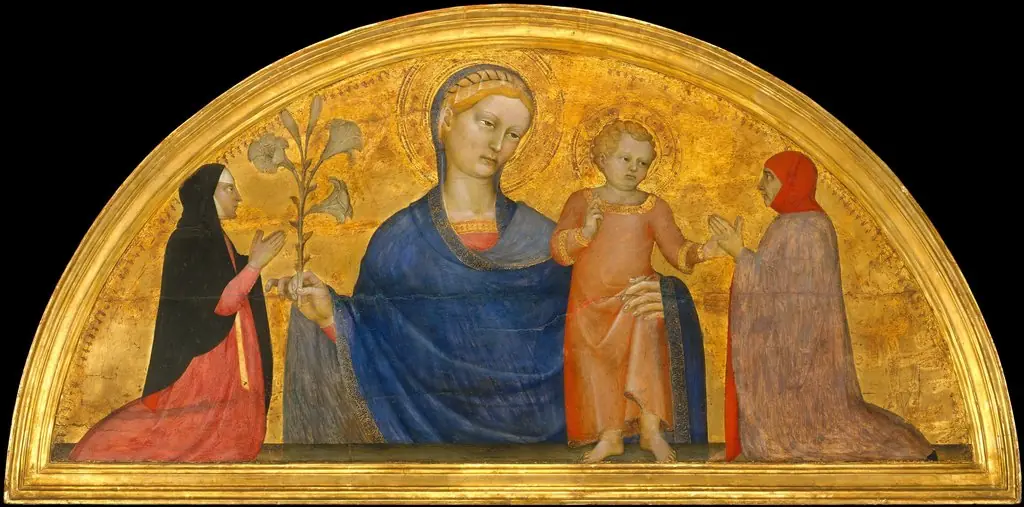 Madonna and Child with Donors