Artwork
Adoration in the Forest
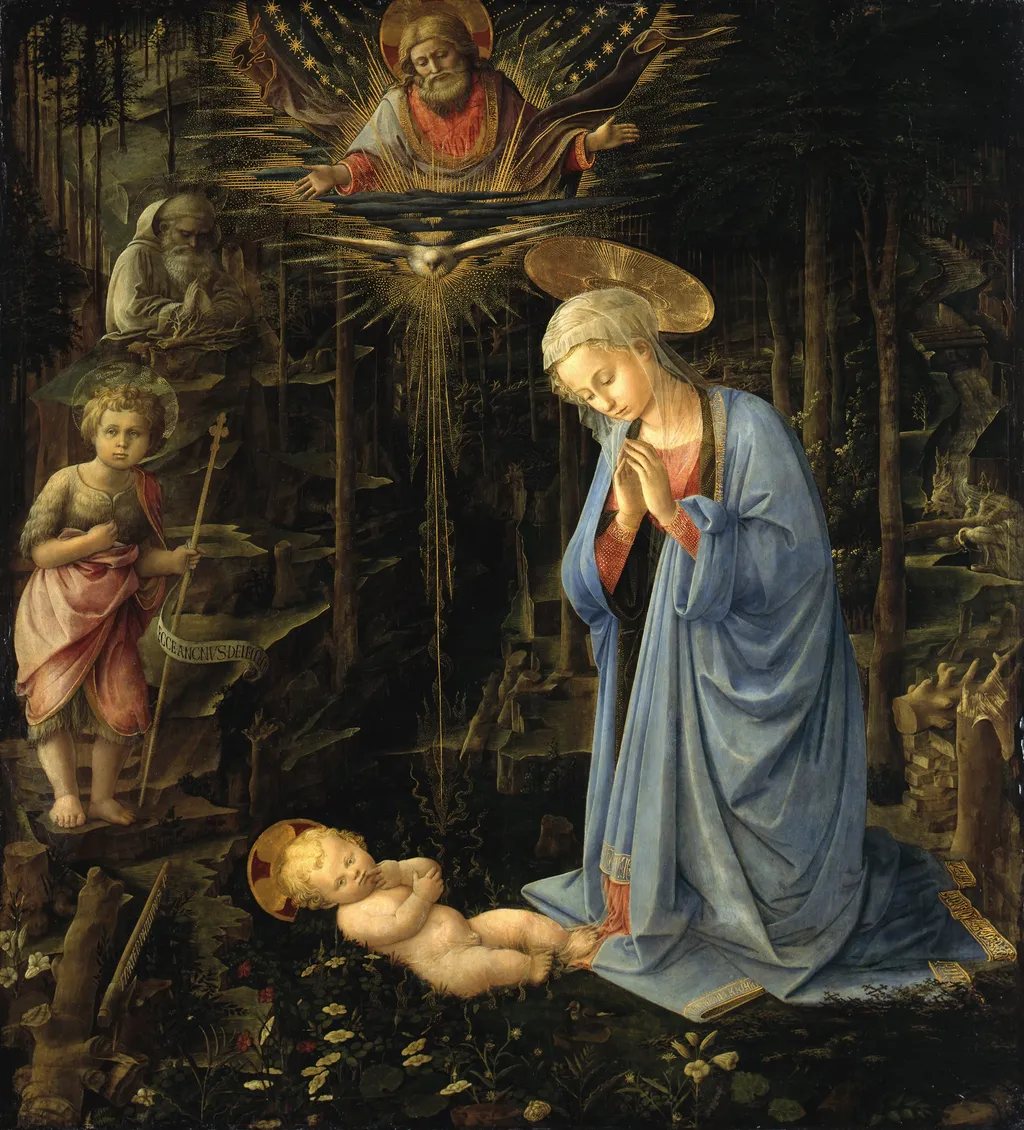
Adoration in the Forest is an oil painting by the Early Renaissance artist Filippo Lippi. It dates from 1459 and is held in the collection of the Gemäldegalerie Berlin.
About this work
The scene shows the Nativity but not in a stable, instead it’s set in a forest with cut logs and stumps.
Fra Filippo Lippi painted Adoration in the Forest around 1459. It’s an oil painting, now at the Gemäldegalerie in Berlin. The scene shows the Nativity but not in a stable, instead it’s set in a forest with cut logs and stumps.
This is a rare take on a familiar story. Lippi swapped the usual stable for a wooded hillside. The usual figures and animals seem replaced by others entirely.
Look up the artist Filippo Lippi next.
Subject & Meaning
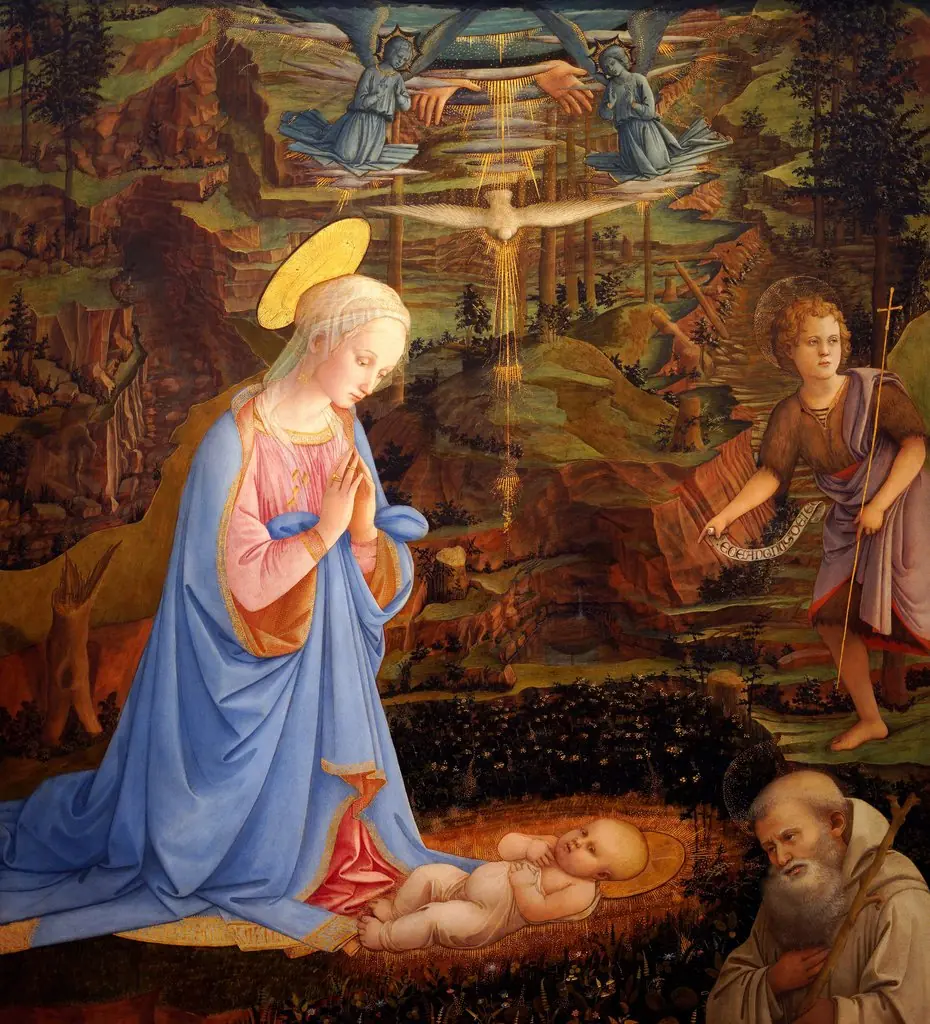
The painting depicts the Nativity as a mystical vision rather than the traditional Bethlehem stable scene, drawing on the Revelations of Saint Bridget of Sweden. Mary kneels in adoration before the Christ Child, who lies naked on the ground under a transparent cloth, a motif derived from Bridget’s description of the Virgin’s ecstatic response to childbirth. The composition excludes Joseph, angels, and animals, replacing them with Saint John the Baptist as a youthful figure holding a staff with a banderole inscribed Ecce Agnus Dei, prophesying Christ’s Passion. Above, the Holy Trinity appears: God the Father and the Holy Spirit as a dove.
The forest setting, filled with cut stumps and timber debris, evokes the Camaldolese monastic context patronized by the Medici, linking the scene to the order’s pine forests in the Apennines. John’s attribute of an axe recalls his Gospel warning of the trees that bear no fruit and connects to the Camaldolese practice of forestry. A goldfinch alights near the Christ Child, a conventional symbol of the Passion, reinforcing the painting’s contemplative focus on Christ’s future sacrifice.
Technique & Style
The work is executed in oil on a single poplar panel, measuring 129.5 × 118.5 cm with a painted surface of 127 × 116 cm.
Stylistically, the composition abandons traditional Nativity motifs: there is no cave, stable, Joseph, ox, or ass, and the setting is a steep, dark pine forest rather than Bethlehem. Figures are arranged in an irregular circle around the Christ Child, who lies naked on the ground under a transparent cloth. The foreground includes a stump with Lippi’s inscribed axe, a small stream with a plank bridge, and symbolic animals, a goldfinch and a crane or heron, while a small hut appears beyond the stream.
The palette is muted, with dense foliage and uneven lighting that heighten the scene’s visionary quality and distance it from naturalistic conventions.
History & Provenance
Commissioned by Piero de' Medici and his wife Lucrezia Tornabuoni, this altarpiece was created for the private Magi Chapel in the Palazzo Medici, Florence. Executed between 1458 and 1460, the work is signed by Fra Filippo Lippi on the handle of an axe depicted in the lower left corner. The painting served as the focal point of the chapel's decorative cycle until it was recorded in the 1492 inventory following Lorenzo de' Medici's death.
In 1814, during the Napoleonic Wars, the English timber merchant Edward Solly acquired the panel in Berlin. Seven years later, in 1821, the artwork entered the Prussian state collection along with the rest of Solly's holdings. It currently resides in the Gemäldegalerie, Berlin, while a later copy by a follower of Pier Francesco Fiorentino occupies its original altar position.
Adoration in the Forest is held in the Gemäldegalerie Berlin, where it has been part of the collection since 1821, having been acquired from the English dealer Edward Solly during the Napoleonic upheavals. Its inventory number is not specified in the sources, but it was originally created for the Medici family's private chapel in the Palazzo Medici Riccardi in Florence between 1458 and 1460. The work was documented in the Medici household inventory following Lorenzo the Magnificent's death in 1492, and it remained in the family's possession until its sale to the Prussian state in 1821.
The painting was exhibited in the Palazzo Medici Riccardi during its original installation, and later traveled to Berlin as part of the Solly collection, where it has been displayed in the Gemäldegalerie since acquisition.
Context
Scholars have emphasized the painting’s departure from canonical Nativity iconography, noting the absence of the stable, Joseph, angels, and animals in favor of a dense pine forest and woodcutting debris that situate the scene in the Camaldolese monastic landscape around Florence.
The inclusion of Saint Romuald, founder of the Camaldolese order patronized by the Medici, situates the work within the family’s devotional politics and their ties to the order’s Apennine forests. Lucrezia Tornabuoni Medici’s documented devotion to John the Baptist, whose attributes of the axe and cross anchor the composition, further links the panel to Medici piety and to Santa Brigida di Svezia’s Revelations, a text that shaped its mystical tone.
The painting’s original placement as an altarpiece in the Medici’s private chapel underscores its role within a rarified Florentine context, where only nine families held papal permission for such devotional spaces. Its later acquisition by the Gemäldegalerie in 1821, via the Solly collection, reflects its migration from private ritual to public museum display.
Legacy
Adoration in the Forest entered the modern canon as a singular departure from Nativity conventions, its dense pine forest and absent stable influencing later artists to privilege original iconographic invention over textual literalism.
The painting’s later reputation rested on its integration into the Medici’s self-fashioning through art. By the sixteenth century, its unusual setting was complemented by Benozzo Gozzoli’s Procession of the Magi in the same chapel, anchoring the work within a Medici-centric narrative of Florentine devotion and political identity.
Its legacy persists in scholarly debates over Lippi’s authorship of unconventional religious scenes, where the work is repeatedly cited as evidence of his engagement with visionary texts such as the Revelations of Saint Bridget of Sweden.
Overview
Fra Filippo Lippi’s Adoration in the Forest, executed around 1459, presents the birth of Christ in an unconventional woodland setting. Rendered in oil on panel, the work replaces the traditional Bethlehem stable with a forested slope strewn with felled trunks and stumps, creating a distinctive backdrop for the holy family.
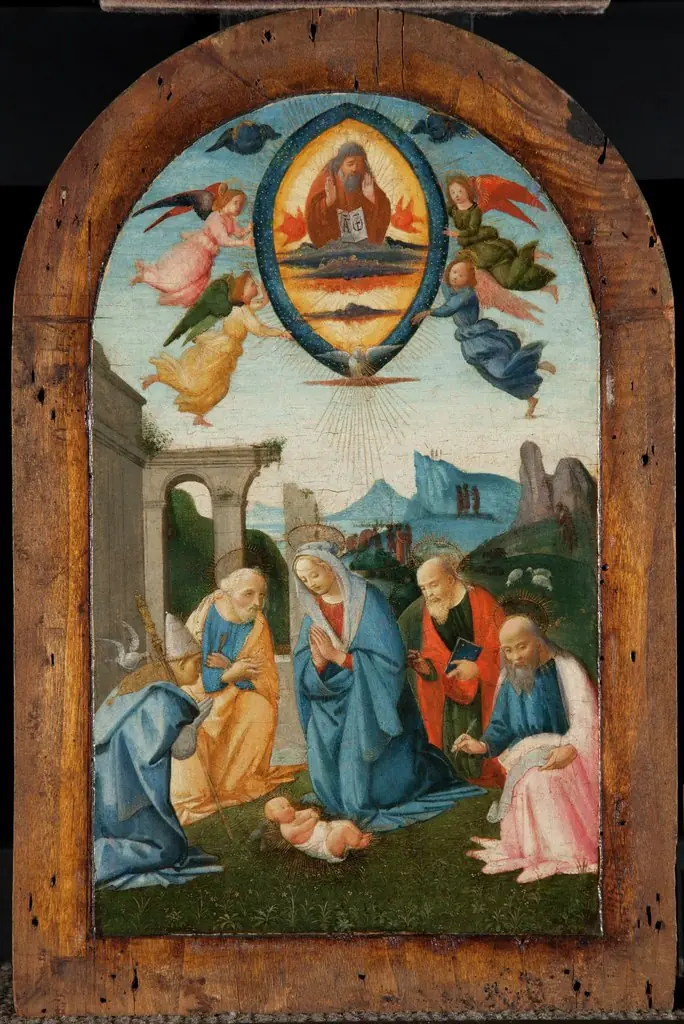
Own this work as a print
Artist & collection

Artist
Filippo Lippi (c. 1406 – 8 October 1469), also known as Lippo Lippi, was an Italian Renaissance painter of the Quattrocento (fifteenth century) and a Carmelite priest. He was an early Renaissance master of a painting…


- The Madonna and Four Saints Adoring the Infant Jesus
 Adoration of Camaldoli
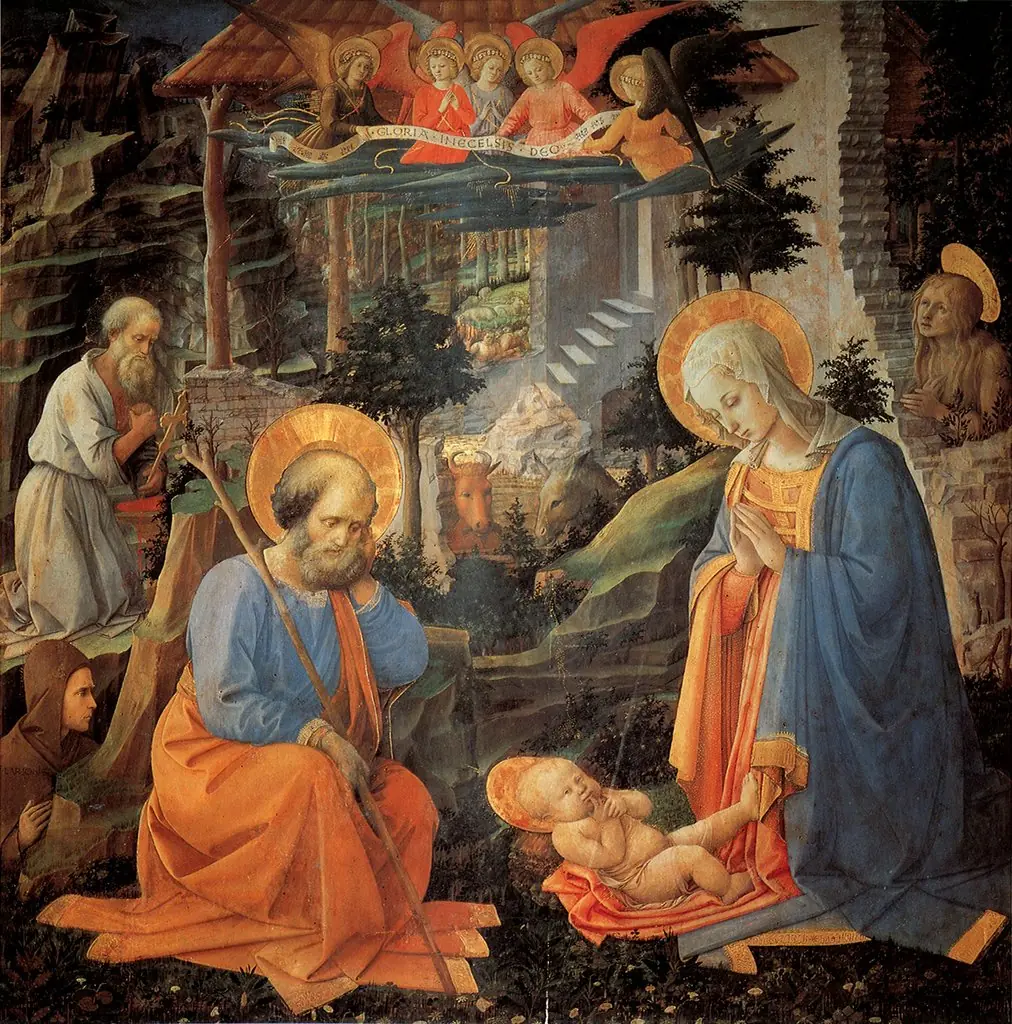 Adoration of the Child with SS. Joseph, Jerome, Hilarion, Magdalena and angels
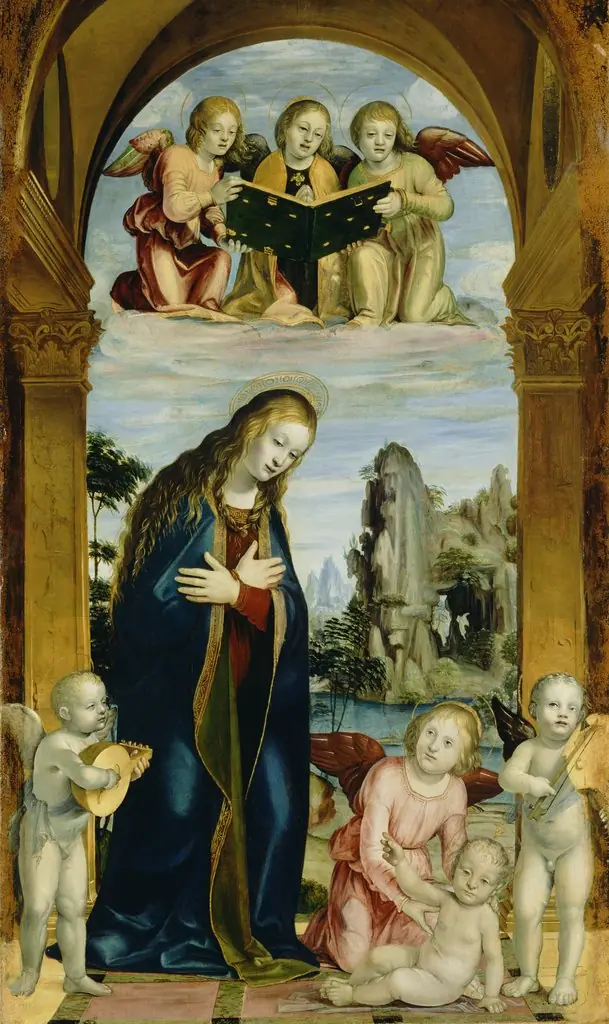 Madonna Adoring the Child with Musical Angels
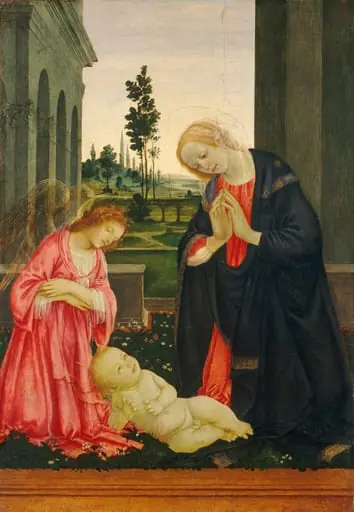 The Adoration of the Child
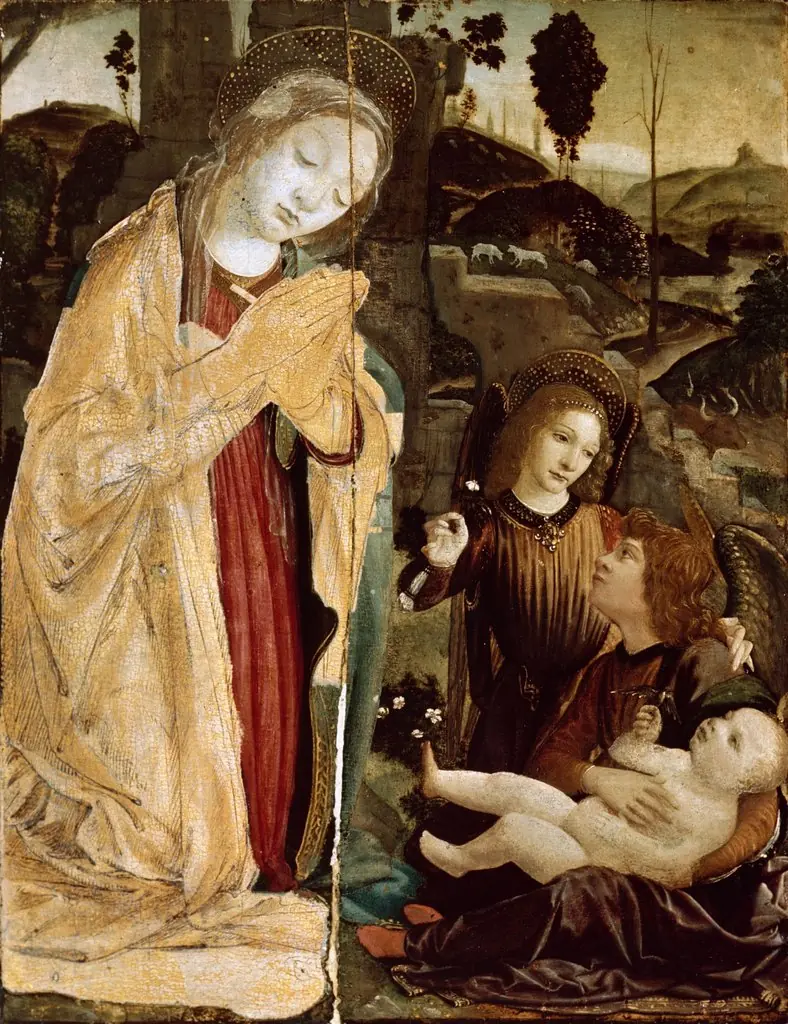 Madonna with two Angels Adoring the Christ Child in a landscape
 The Virgin Adoring the Child
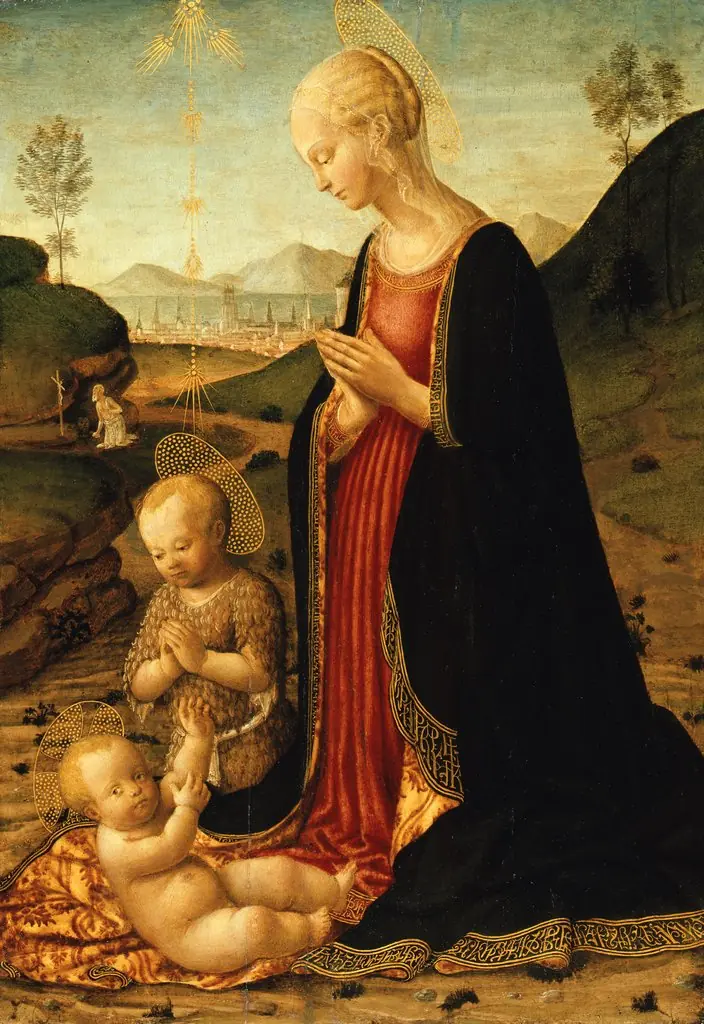 Mary and John Adoring the Child
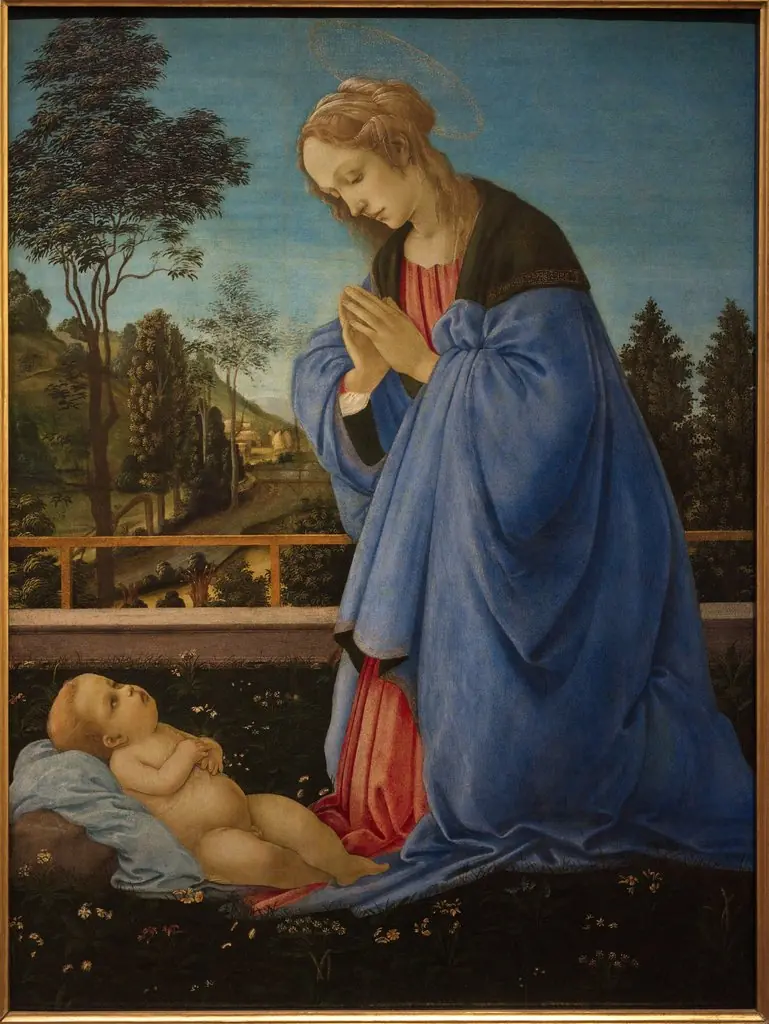 Adoration of the Child
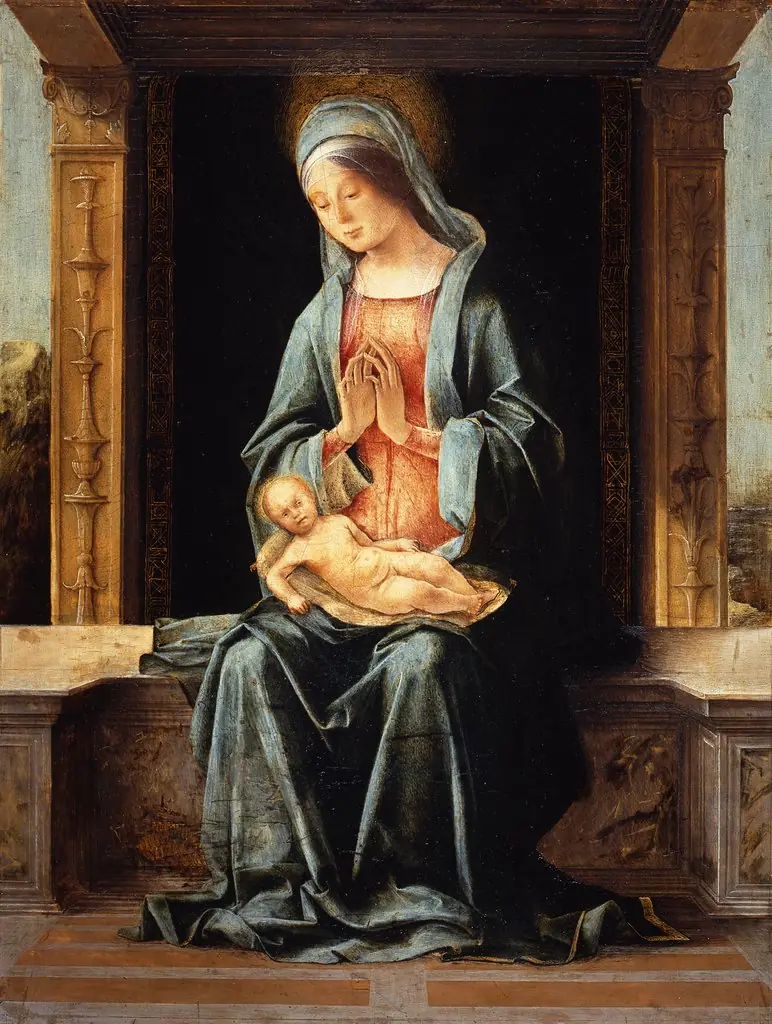 The Virgin and Child
 The Nativity
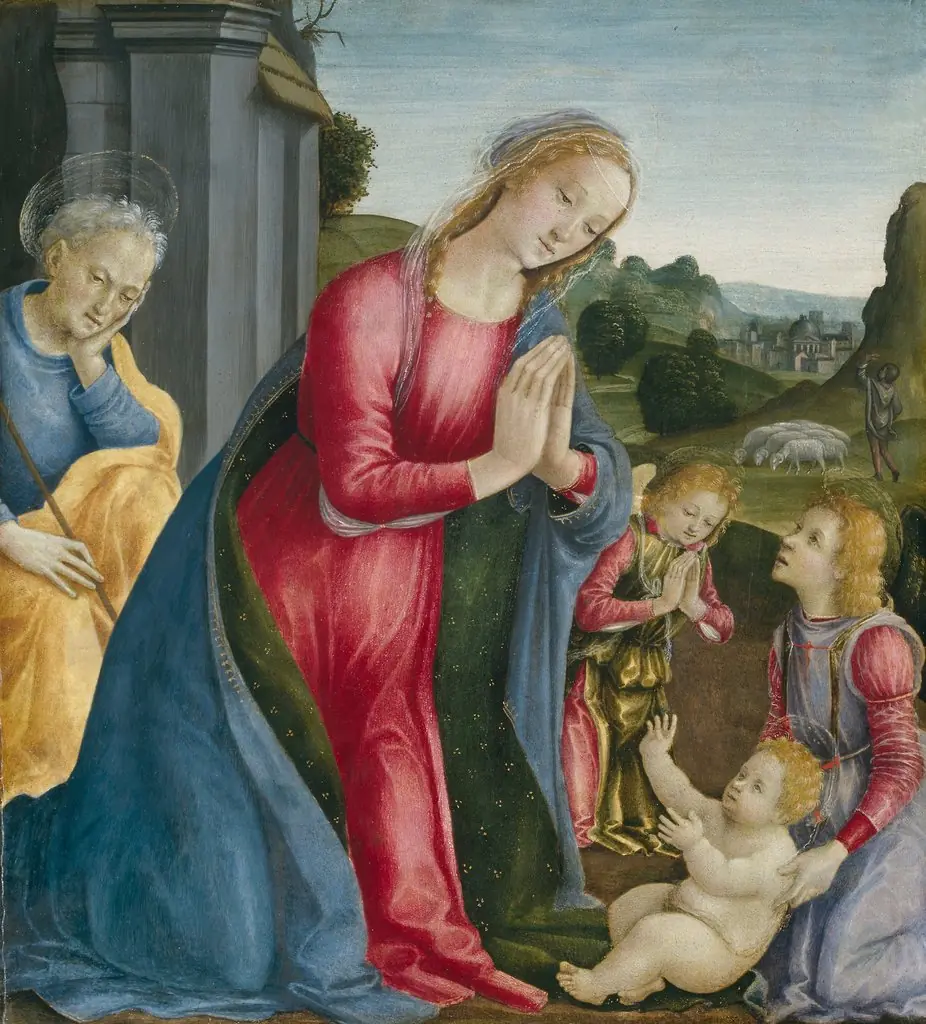 The Adoration of the Christ Child