Artwork
Saints Augustine and Francis, a Bishop Saint, and Saint Benedict
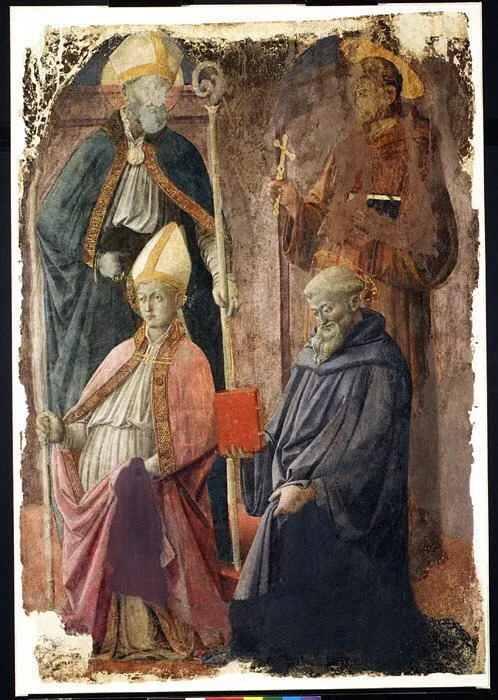
Saints Augustine and Francis, a Bishop Saint, and Saint Benedict is an unspecified painting by the Early Renaissance artist Filippo Lippi. It dates from 1452 and is held in the collection of the Metropolitan Museum of Art.
About this work
Subject & Meaning
The unidentified bishop saint adds a layer of local or institutional specificity, though his precise identity remains unconfirmed in available records.
The painting depicts four holy figures: Saints Augustine of Hippo, Francis of Assisi, and Benedict, alongside an unidentified bishop saint. As a work of religious art, the composition centers on these specific ecclesiastical personages, presenting them in a devotional context typical of mid-15th-century Italian painting. The inclusion of Augustine and Francis suggests a thematic focus on foundational Western monastic and theological traditions, while the presence of Benedict reinforces the monastic element.
The unidentified bishop saint adds a layer of local or institutional specificity, though his precise identity remains unconfirmed in available records. The arrangement of these kneeling or standing figures serves to honor their spiritual authority and intercessory power, reflecting the devotional needs of the original patron or altar setting. The work functions as a visual meditation on sanctity, uniting distinct strands of Christian history and practice within a single devotional image.
History & Provenance
Attributed to the Italian painter Filippo Lippi, the work is variously dated to 1452 or the broader range of 1452–1464. The painting's creation history is complicated by a lack of documentary evidence, leading to scholarly debate regarding whether Lippi executed the entire piece or only provided the design while assistants handled the painting. Some critics identify the artist's hand specifically in the heads of the kneeling saints.
The work likely originated as the right wing of an altarpiece, potentially contemporary with Lippi's frescoes in Prato. It has been held in the collection of the Metropolitan Museum of Art in New York since 1917. The attribution to Lippi or his workshop remains controversial due to the painting's poor conservation conditions.
Saints Augustine and Francis, a Bishop Saint, and Saint Benedict, a tempera on paper mounted on canvas measuring 142.2 by 100.3 cm, has been held at the Metropolitan Museum of Art in New York since 1917. The work is catalogued within the museum's collection as a religious painting by Filippo Lippi, dated 1452. No specific inventory or accession number is recorded in the available sources.
No exhibition history beyond its long-term residence at the Metropolitan Museum of Art is documented in the consulted references.
Context
Scholarship on Saints Augustine and Francis, a Bishop Saint, and Saint Benedict centers on its disputed authorship and function within Filippo Lippi's oeuvre. Osvald Sirén originally identified the panel as the right wing of an altarpiece, contemporaneous with Lippi's Prato frescoes and thematically linked to the Vision of Saint Augustine and the Stories of Saint Nicholas predella. However, the attribution remains contested due to the lack of documentary evidence and the work's poor conservation state.
Critics are divided between those who assign the overall design to Lippi with execution delegated to assistants, and those who detect the master's hand specifically in the painted heads of the kneeling saints. This ambiguity reflects broader challenges in distinguishing Lippi's personal output from his workshop's production during the mid-15th century, complicating the painting's precise placement within his artistic development.
Overview
Filippo Lippi, a Carmelite priest and prominent Italian Renaissance painter, completed Saints Augustine and Francis, a Bishop Saint, and Saint Benedict in 1452. This early Renaissance panel depicts four revered religious figures, characteristic of the devotional art prevalent during the mid-fifteenth century. The work is currently housed in The Metropolitan Museum of Art, representing a significant example of Lippi's output.
Technique & Style
Lippi's approach to form in this work is typical of the Early Renaissance, emphasizing clear outlines and defined shapes. The drapery of the saints' robes is rendered with stiff, angular folds rather than soft, volumetric shadows, contributing to a somewhat planar quality. The palette consists of earthy tones, reds, browns, and muted blues, set against a background of aged stone and subtle gold accents, reflecting the painting's considerable age.
Legacy
Filippo Lippi maintained a highly active workshop during his career, which became a formative training ground for the next generation of Florentine painters. Among his most celebrated pupils were Sandro Botticelli, who would become one of the most renowned artists of the High Renaissance, and Lippi's own son, Filippino Lippi. This painting exemplifies the foundational style that emerged from such influential artistic environments.
Artist & collection
Artist
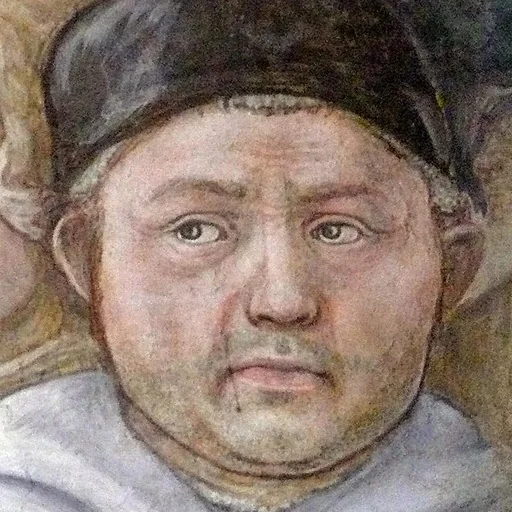
Filippo Lippi (c. 1406 – 8 October 1469), also known as Lippo Lippi, was an Italian Renaissance painter of the Quattrocento (fifteenth century) and a Carmelite priest. He was an early Renaissance master of a painting…

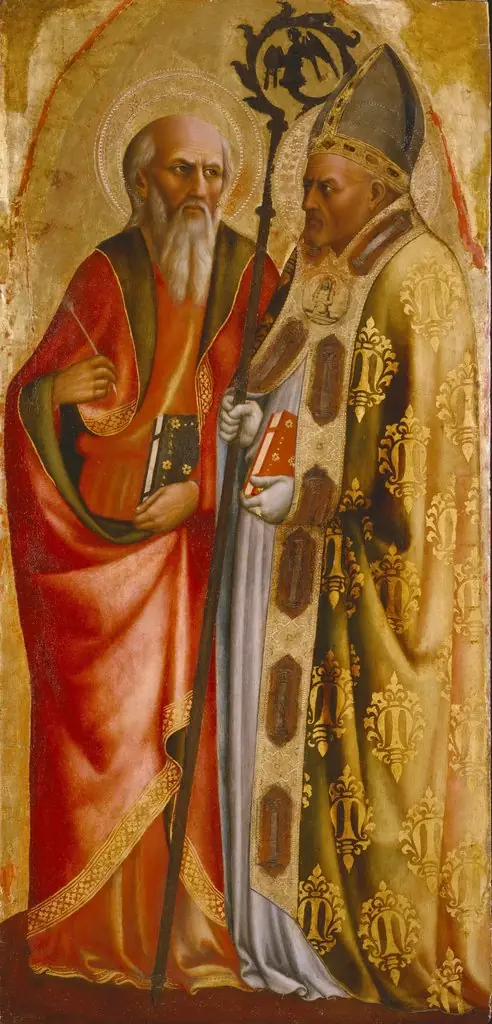 Saints John the Evangelist(?) and Martin of Tours
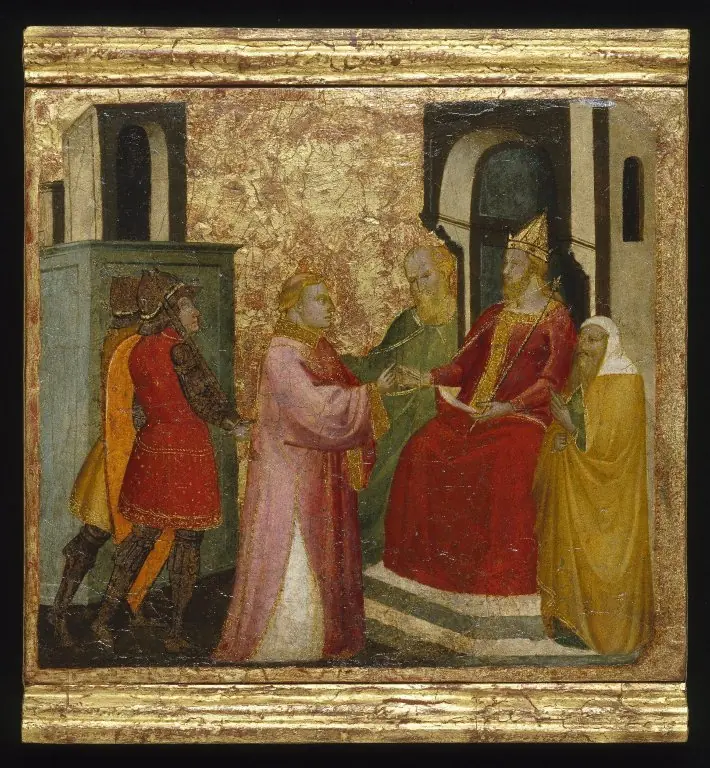 Saint Lawrence Arraigned Before the Prefect Valerianus
 Madonna and Child with Four Doctors of the Church
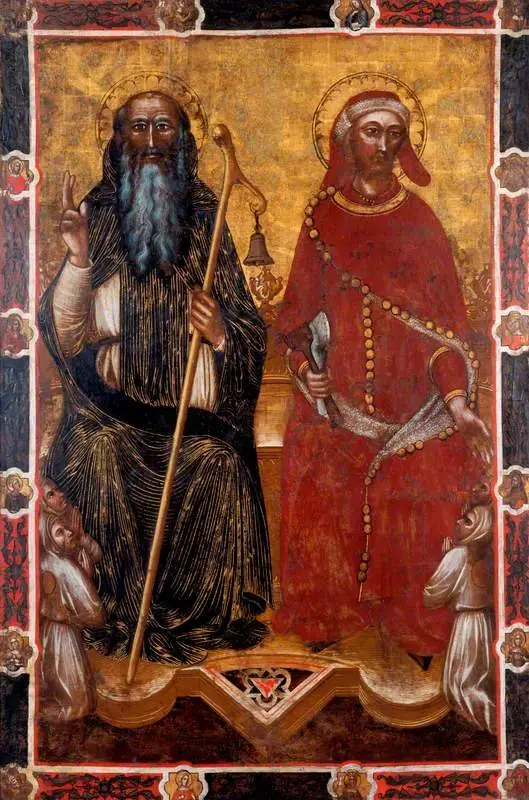 Saint Anthony Abbot and Saint Eligius with Two Pairs of Kneeling Worshippers (one side of a processional banner) (formerly attributed to Barnaba da Modena)
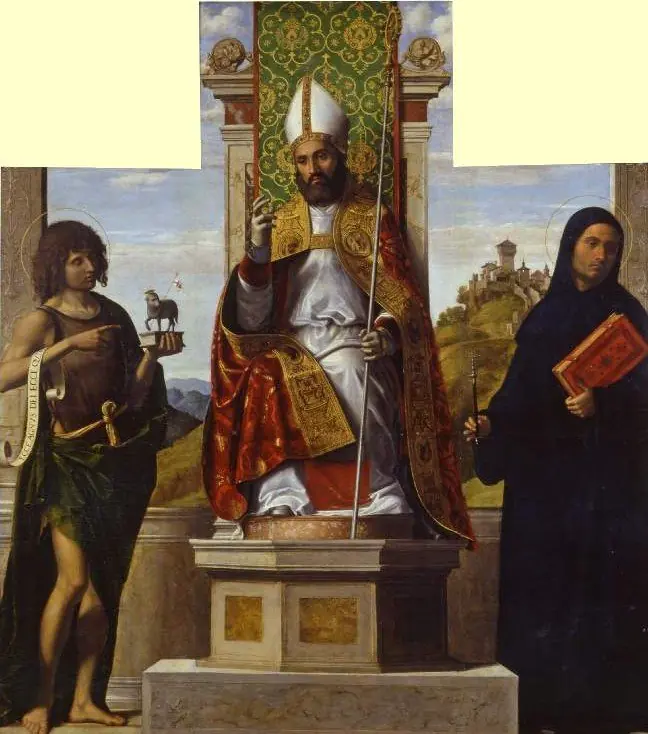 Saint Lanfranc Enthroned Between Saints John the Baptist and Liberius
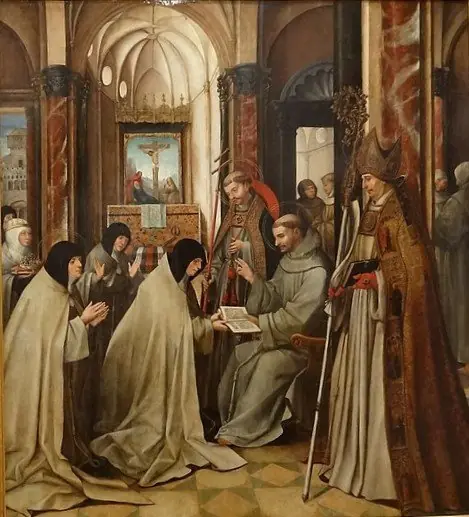 S. Francisco delivering the Statutes of the Order to Santa Clara
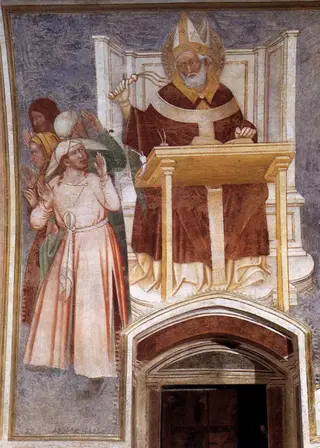 St Ambrose Enthroned Flagellating Two Heretics
 Madonna and Child with Saints
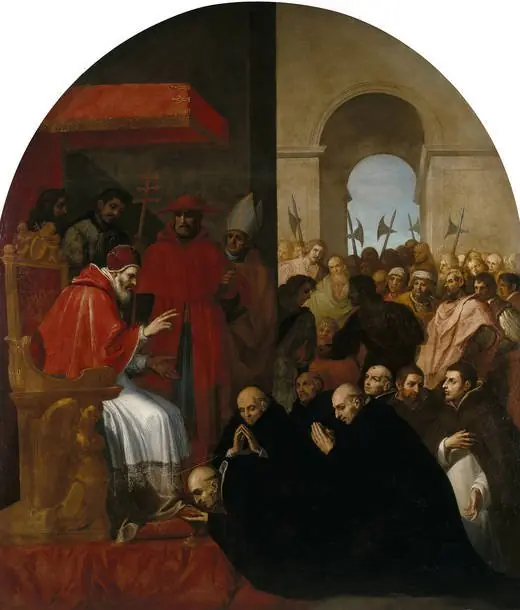 Saint Bruno and his Companions before Urban II
 Hieronymusaltar von Santo Stefano in Venedig: Der heilige Markus