Artwork
Madonna and Child Enthroned with Two Angels
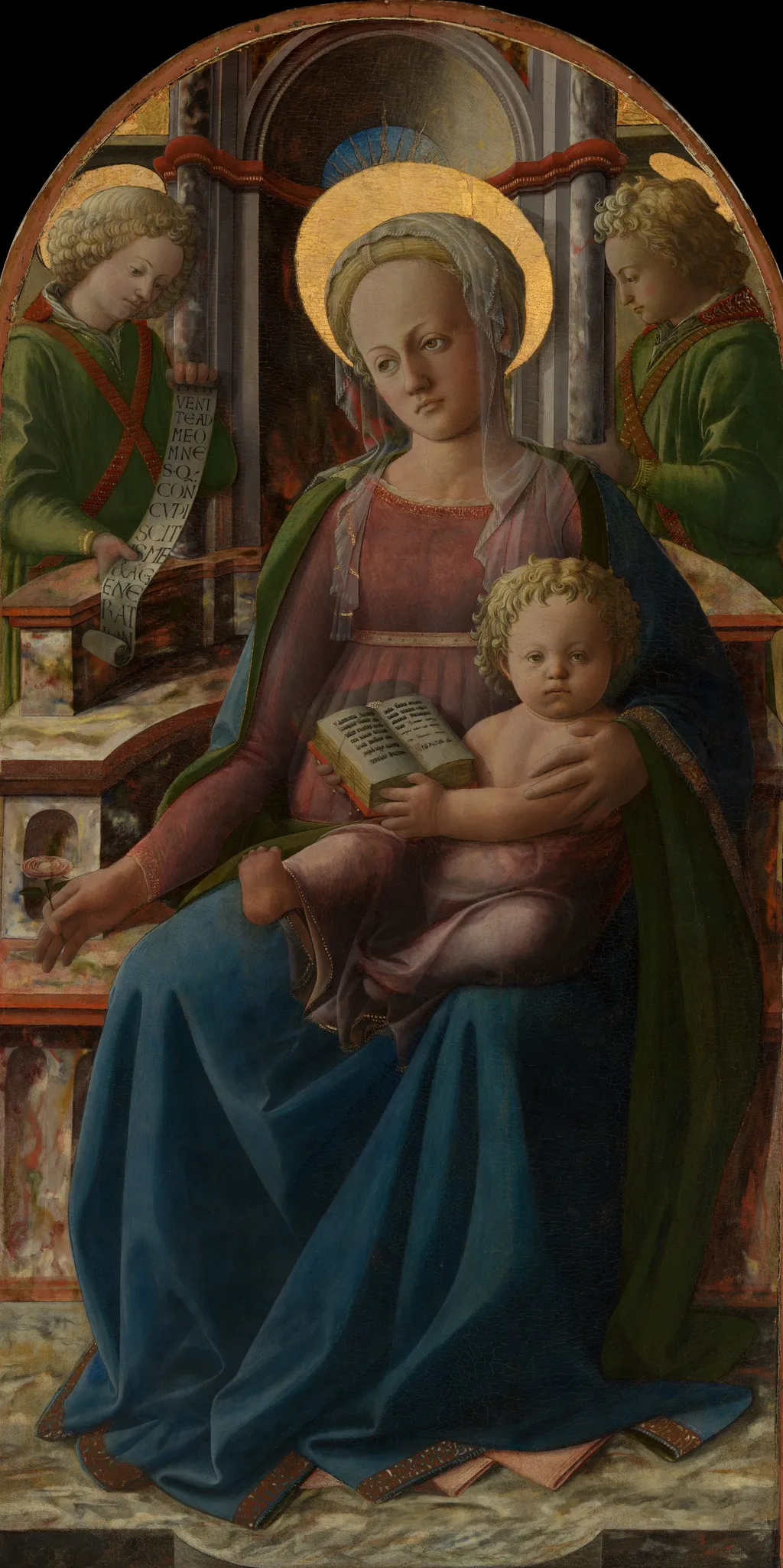
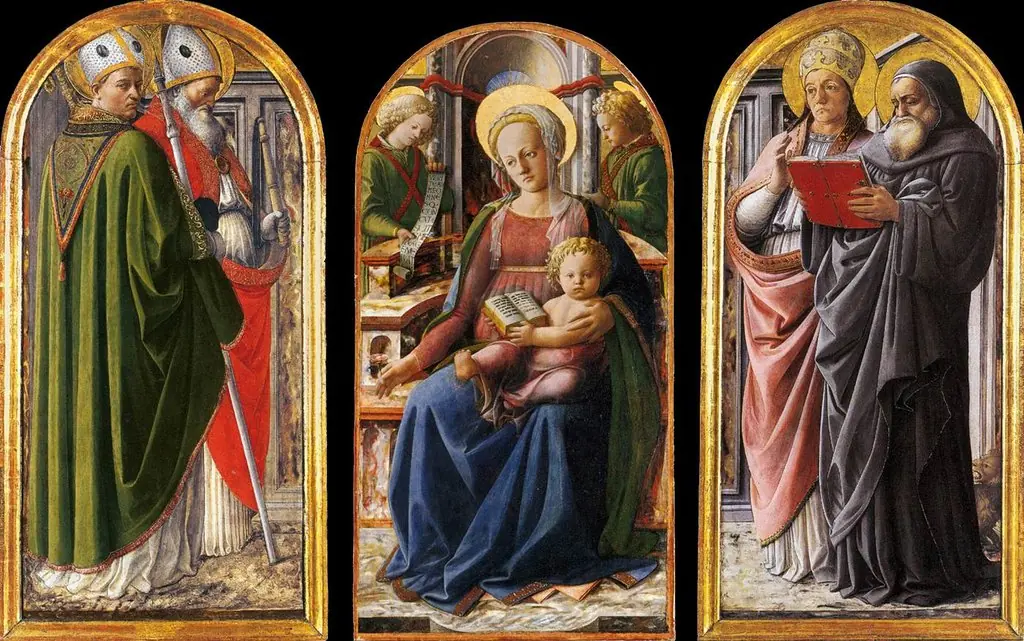
Madonna and Child Enthroned with Two Angels is a tempera painting by the Early Renaissance artist Filippo Lippi. It dates from 1440 and is held in the collection of the Metropolitan Museum of Art.
About this work
Subject & Meaning
The panel depicts the Virgin Mary enthroned with the Christ Child, flanked by two angels, following the Maestà tradition known as Sedes Sapientiae.
The panel depicts the Virgin Mary enthroned with the Christ Child, flanked by two angels, following the Maestà tradition known as Sedes Sapientiae. Mary’s throne and the surrounding architecture emphasize her role as the Seat of Wisdom, a theological concept reinforced by the Latin cartiglio held by the left angel, quoting Sirach 24:19–21, an exhortation to seek divine wisdom. The rose she holds symbolizes her mystical espousal with Christ, aligning with the flanking panels’ depiction of the Four Doctors of the Church, underscoring the harmony between sacred scripture and doctrinal authority.
The iconography synthesizes Florentine Quattrocento conventions with Flemish spatial devices, using truncated framing and naturalistic light to evoke a transcendent yet palpable sacred space.
Technique & Style
Executed circa 1440, this work is a tempera painting enhanced with gold leaf. Originally created on a wooden panel, the support underwent a controversial transfer to canvas in the 1920s by the dealer Duveen, which caused significant degradation before the image was subsequently re-transferred to a panel support following its 1949 acquisition by the Metropolitan Museum of Art. The composition features the Virgin and Child enthroned on a marble structure, flanked by two angels, with the central figure holding a rose symbolizing mystical marriage.
Stylistically, the piece demonstrates Lippi's synthesis of Masaccio's solid, rounded volumetry with Flemish-inspired spatial devices; the framing deliberately crops the throne and an angel's arm to imply an extended exterior space. Light is rendered not as a celestial emanation but as a natural, physical force that models the drapery through continuous chiaroscuro transitions and highlights the soft facial expressions.
History & Provenance
The central panel of a once-united triptych, Madonna and Child Enthroned with Two Angels was painted by Filippo Lippi around 1440 and later became part of the Mossi di Morano collection in the sixteenth century. After the ensemble was donated to the Accademia Albertina in Turin in 1828, the triptych was dismantled, leaving the central panel absent from the gift. By the early nineteenth century the panel had entered the market and was transferred to canvas in the 1920s.
Acquired by Jules Bache in 1928, it was donated to The Metropolitan Museum of Art in 1949, where it was restored and re-transferred to panel. The work’s original destination may have been an Augustinian convent in Florence, but documentary evidence is lacking.
The painting is held by the Metropolitan Museum of Art, New York, where it entered the collection in 1949 as part of the Jules Bache bequest (MMA accession 49.7.9). It was originally the central panel of a dismantled triptych and had been transferred to canvas in the 1920s before conservation restored it to its original panel support. The work has been exhibited twice as a reunited triptych: in Paris at the “Exposition de l’art italien de Cimabue à Tiepolo” (1935) and again in Turin at “Filippo Lippi. Un trittico ricongiunto” (2004).
Context
Scholarship identifies this panel as the central component of a dismembered triptych, originally likely intended for an Augustinian convent in Florence. Critical recognition of the work's unity with its lateral panels depicting Church Doctors emerged following their 1935 reunion in Paris, though experts like Marchini noted compositional discrepancies regarding background consistency and figure positioning until a full restoration and recomposition in 2004. Art historically, the painting exemplifies Lippi's stylistic evolution, synthesizing Masaccio's volumetric solidity with Flemish-inspired spatial framing that suggests an extended environment beyond the visible plane.
Critics such as Argan distinguish Lippi's approach from contemporaries like Fra Angelico by emphasizing his treatment of light as a natural, physical phenomenon rather than a celestial emanation. This naturalistic illumination enhances the emotional resonance of the figures while adhering to the traditional sedes sapientiae iconography.
Legacy
The central panel of the altarpiece played a pivotal role in re‑establishing the compositional unity of Filippo Lippi’s work, a point highlighted by the 1935 Paris exhibition and later confirmed during the 2004 reconstruction at the Accademia Albertina. Its dispersal, sale, and eventual donation to the Metropolitan Museum of Art illustrate the 19th‑century collecting practices that fragmented the original triptych, a narrative documented in the collection history. Scholars such as Argan and Marchini have emphasized the painting’s impact on the interpretation of Lippian light and its place within the sedes sapientiae iconography, securing its reputation as a key example of early Renaissance devotional art.
Overview
Filippo Lippi's 'Madonna and Child Enthroned with Two Angels,' executed in tempera on panel around 1440, represents a pivotal moment in the artist's early career where he began to infuse traditional religious iconography with a new sense of human warmth and spatial realism. The composition centers on the Virgin Mary, seated upon an ornate throne, dressed in a blue tunic and red mantle, holding the Christ Child who gazes directly at the viewer while clutching a book. Flanking the throne are two youthful angels in green robes; their presence is not merely decorative but serves to frame the sacred figures and guide the viewer's eye.
Unlike the rigid, hieratic figures of the preceding Gothic tradition, Lippi's figures possess a soft, fleshy volume and gentle expressions that suggest a tangible physical presence. The background features a gold arch, a conventional element symbolizing the divine realm, yet the treatment of light and the subtle modeling of the faces reflect the emerging Florentine interest in naturalism. This work exemplifies Lippi's unique ability to bridge the gap between the spiritual and the earthly, establishing a visual language that would influence subsequent generations of Renaissance painters.
Artist & collection

Artist
Filippo Lippi (c. 1406 – 8 October 1469), also known as Lippo Lippi, was an Italian Renaissance painter of the Quattrocento (fifteenth century) and a Carmelite priest. He was an early Renaissance master of a painting…


 Madonna and Child
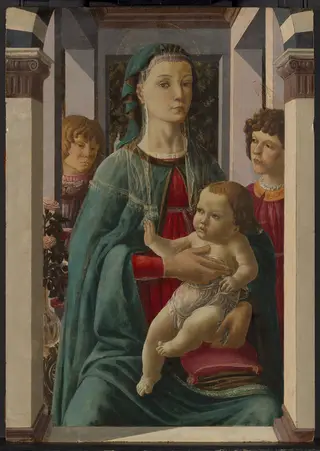 Virgin and Child with Two Angels
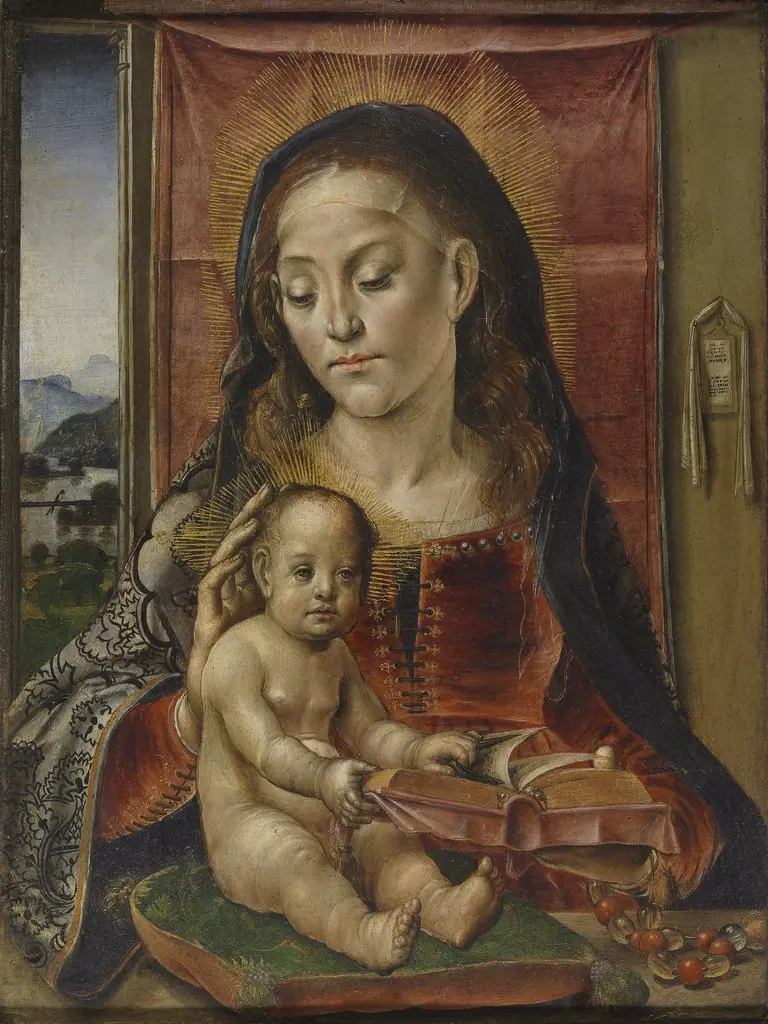 The Virgin and Child
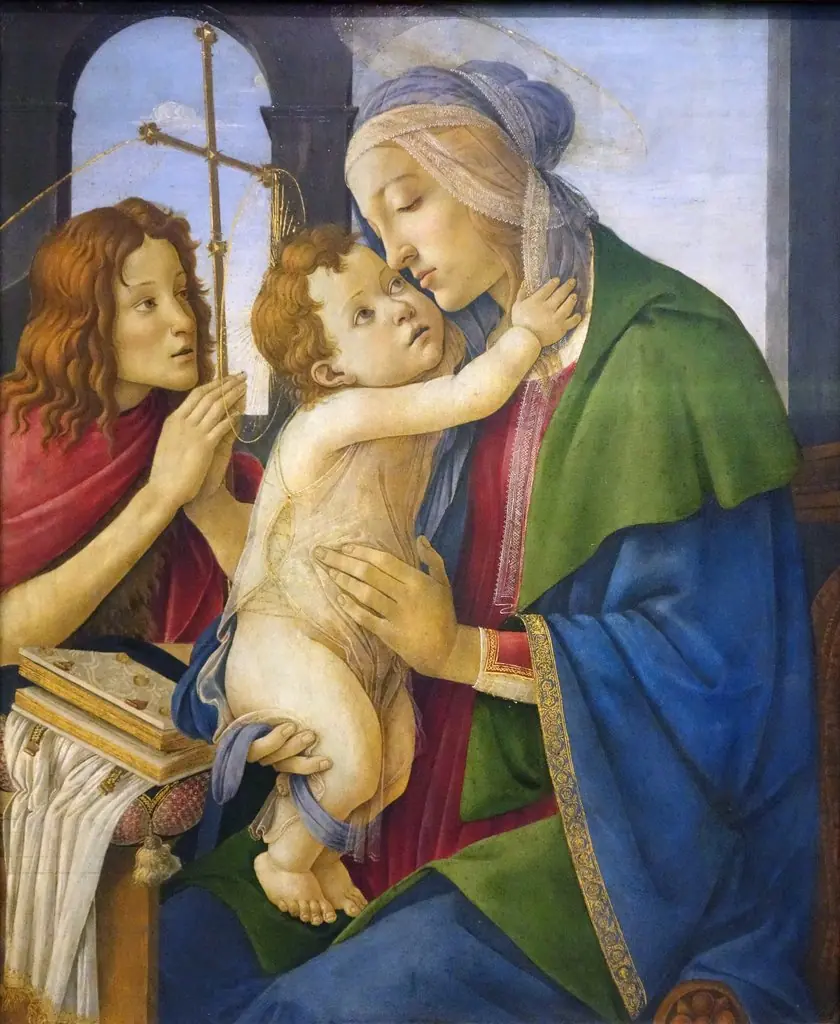 The Virgin and Child with the Young Saint John the Baptist
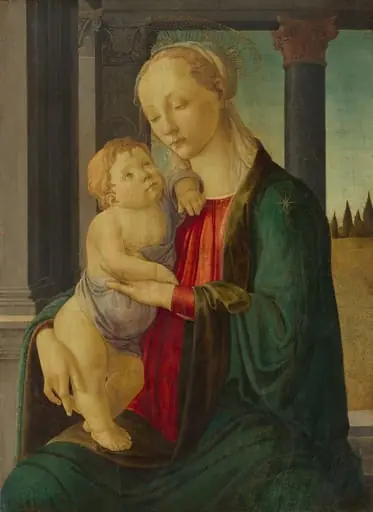 Madonna and Child
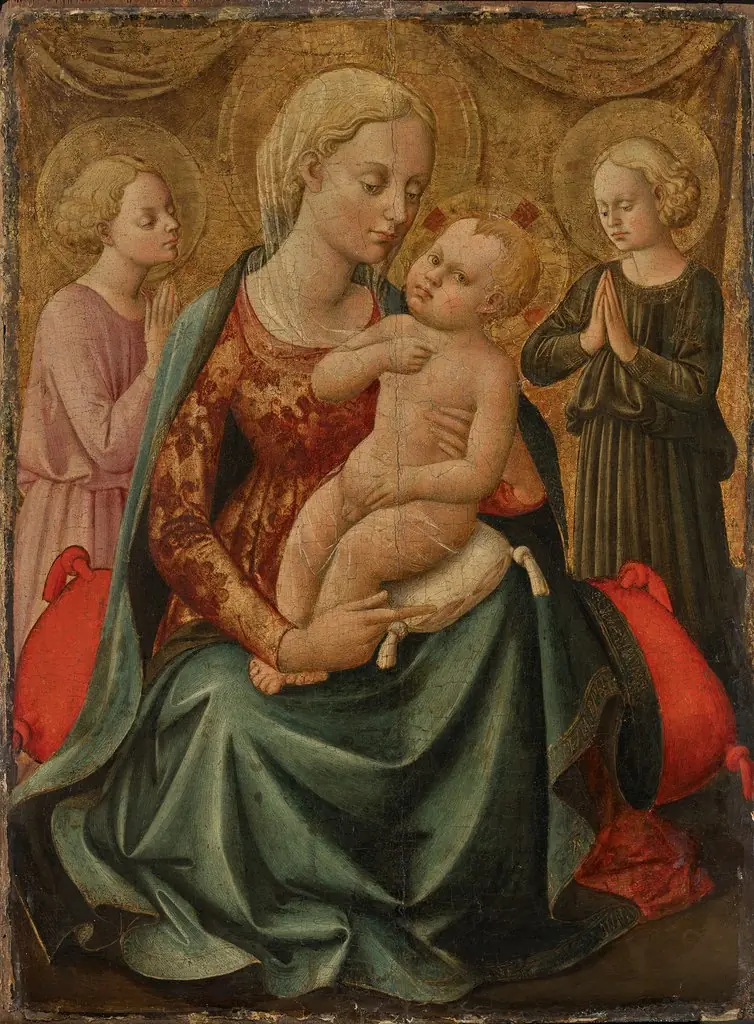 Madonna and Child
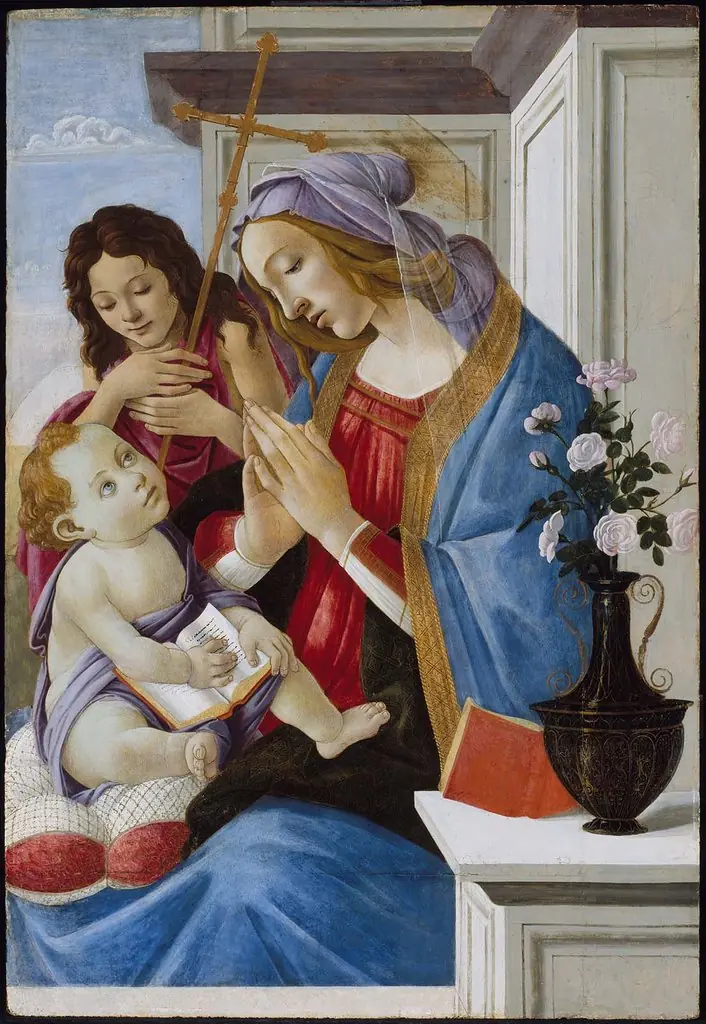 Virgin and Child with Saint John the Baptist
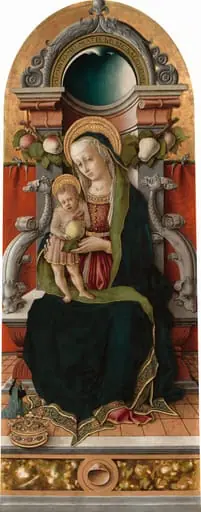 Madonna and Child Enthroned with Donor
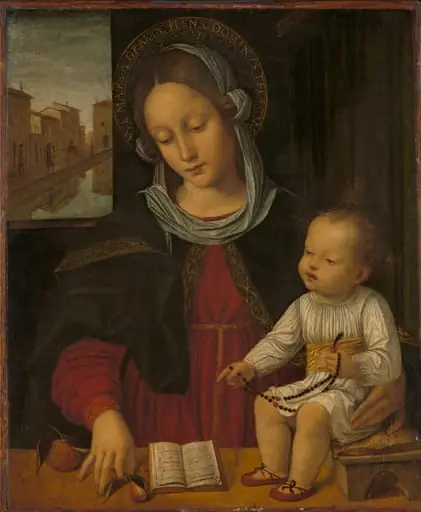 Madonna and Child
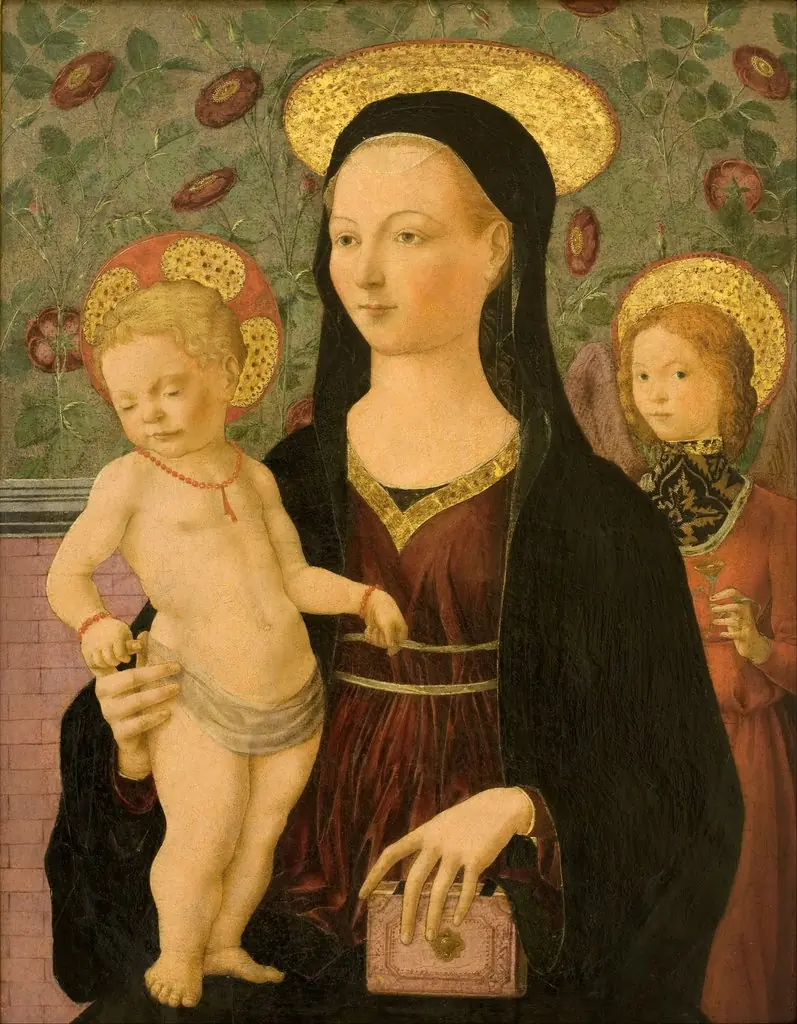 Virgin and Child with an Angel
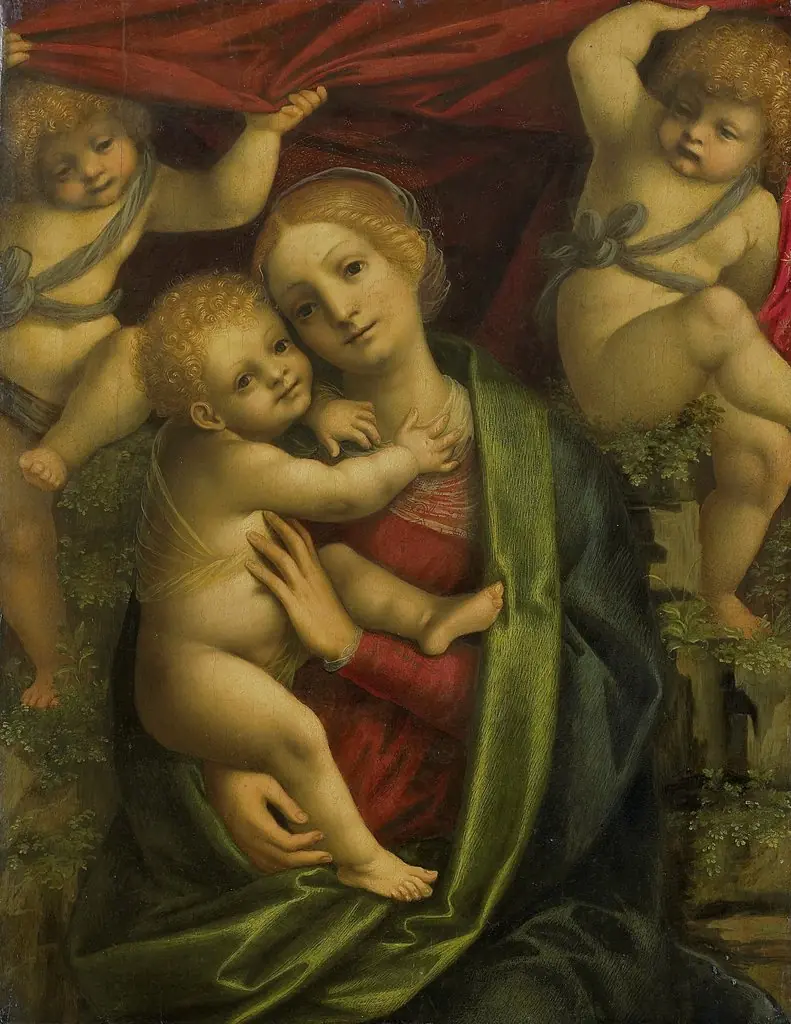 Virgin and Child
- Madonna and Child with Angels