Artwork
The Swing
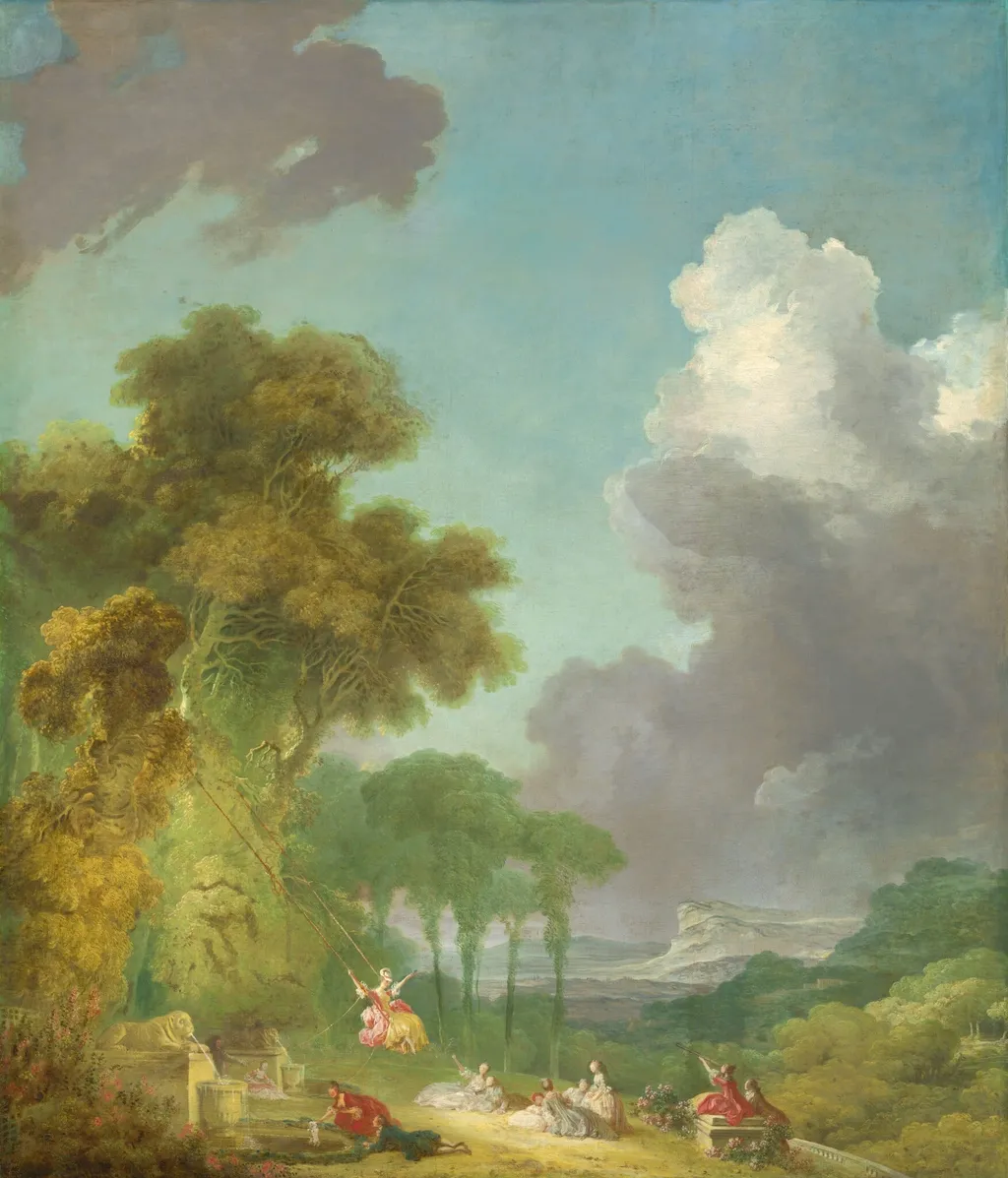
The Swing is an oil painting by the Rococo painting artist Jean Honoré Fragonard. It dates from 1778 and is held in the collection of the National Gallery of Art. Jean‑Honoré Fragonard’s oil on canvas, dated around 1778, depicts a vibrant garden tableau.
About this work
Subject & Meaning
The Swing depicts a young woman in a swing, propelled by a hidden male admirer, while a cherub observes and a statue of Cupid looms nearby.
The Swing depicts a young woman in a swing, propelled by a hidden male admirer, while a cherub observes and a statue of Cupid looms nearby. The scene illustrates flirtation and erotic secrecy, with the woman's exposed ankle and the concealed lover signifying clandestine desire. Symbolic elements such as the swing, the blindfolded cherub, and the Cupid statue convey themes of fleeting pleasure and the transitory nature of seduction, reflecting Enlightenment-era explorations of desire and social decorum.
The painting’s iconography merges playful movement with underlying sensual tension, positioning the work as both a decorative Rococo composition and a nuanced commentary on romantic pursuit.
Technique & Style
The Swing is an oil painting executed on canvas, measuring 215.9 cm by 185.5 cm. The work depicts a young woman in a flowing dress being pushed on a swing by a hidden suitor, while another figure watches from the left. Light filters through the foliage, creating dappled highlights on the subject's skin and garments. The brushwork combines delicate modeling of flesh with looser, impressionistic strokes in the foliage and background, producing a sense of movement and erotic playfulness.
Subtle glazes enhance the luminous quality of the colors, while the composition balances diagonal and curvilinear forms to guide the viewer's eye across the scene. These formal qualities exemplify the Rococo style's emphasis on sensuality, decorative detail, and dynamic spatial arrangement.
History & Provenance
The painting was created in 1775 as an oil on canvas work by Jean-Honoré Fragonard. Its earliest confirmed ownership was by Casimir Perrin, marquis de Cypierre, who sold it in Paris in March 1845.[1] It later passed through the possible ownership of the marquise de Montesquiou-Fezensac before entering the collection of Camille Groult by 1889, with further clarification of this chain provided through correspondence.[3] The work was sold by Wildenstein & Co. in February 1954 to the Samuel H. Kress Foundation and gifted to the National Gallery of Art in 1961.[4]
The Swing is held by the National Gallery of Art in Washington, D.C., where it has been part of the Samuel H. Kress Collection since 1961. It was acquired by the Samuel H. Kress Foundation in February 1954 and subsequently gifted to the National Gallery of Art in 1961. Its provenance traces back to Casimir Perrin, marquis de Cypierre, who owned it by 1783 and sold it in March 1845; it later passed through several owners including possibly the marquise de Montesquiou-Fezensac and Camille Groult before its 1897 sale at Hôtel Drouot.
The painting measures 215.9 cm in height and 185.5 cm in width, and remains on display at the National Gallery of Art.
Legacy
The Swing established a lasting model for depicting leisure and erotic suggestion in French art, inspiring 19th-century painters who sought to capture fleeting moments of bourgeois life. Its composition and playful sensuality influenced artists such as Manet and later Impressionists, who admired its loose brushwork and vibrant color palette. The work's provenance through prominent collectors, including the Kress Foundation, cemented its status in American museum collections, where it remains on view at the National Gallery of Art.
Overview
Jean‑Honoré Fragonard’s oil on canvas, dated around 1778, depicts a vibrant garden tableau. A young woman in a pink gown occupies the centre, suspended on a rope swing while her skirt billows upward. The composition is framed by verdant foliage and a bright sky dotted with fluffy clouds, creating a light‑hearted, sunlit atmosphere.
Own this work as a print
Artist & collection

Artist
Jean-Honoré Fragonard was born on 5 April 1732 in Grasse, the son of a glover, and moved with his family to Paris in 1738.

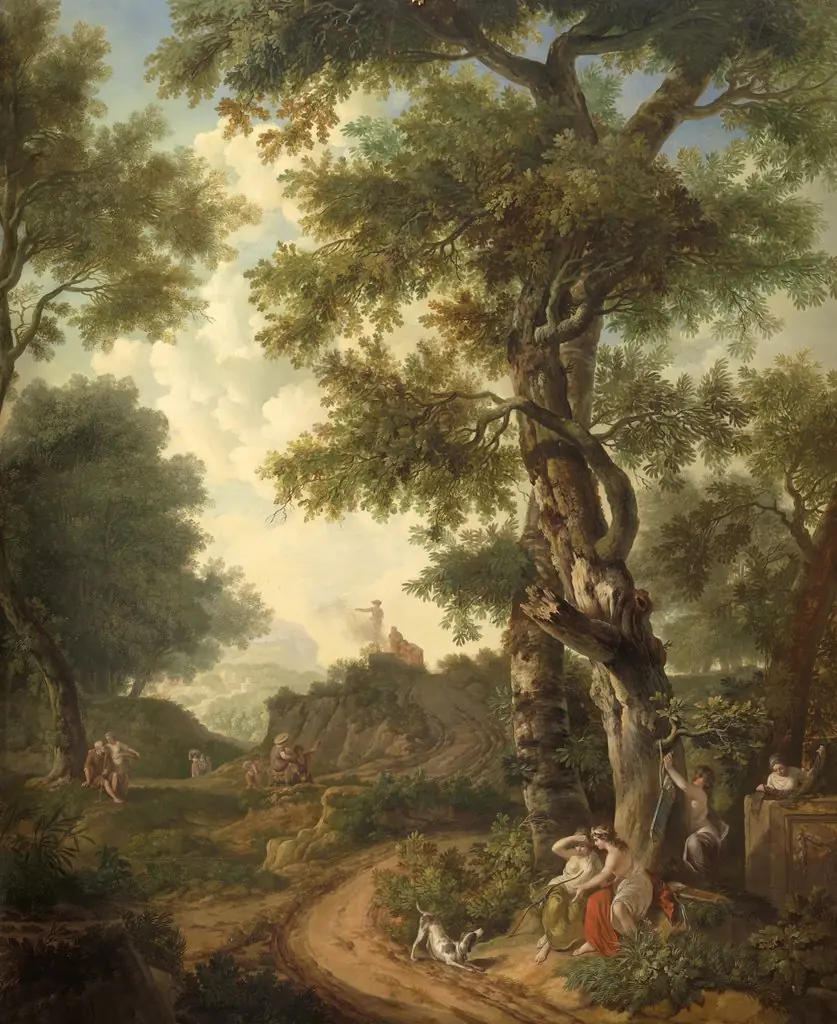 Arcadisch landschap met reizigers
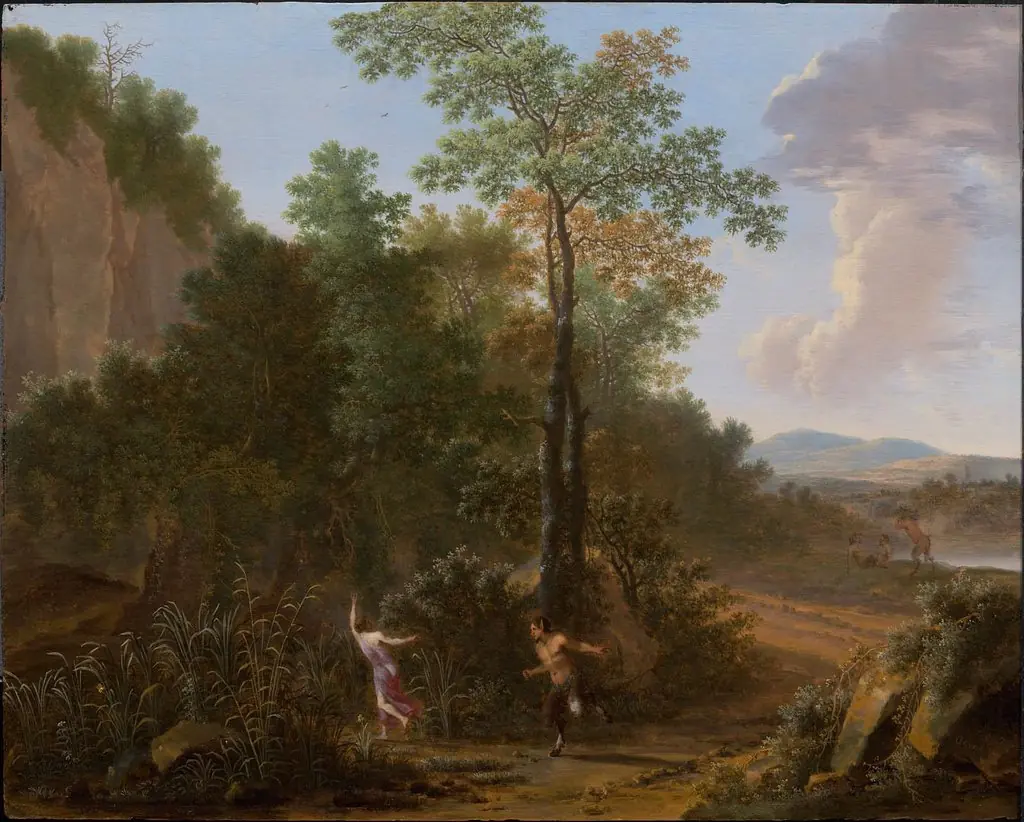 Pan and Syrinx
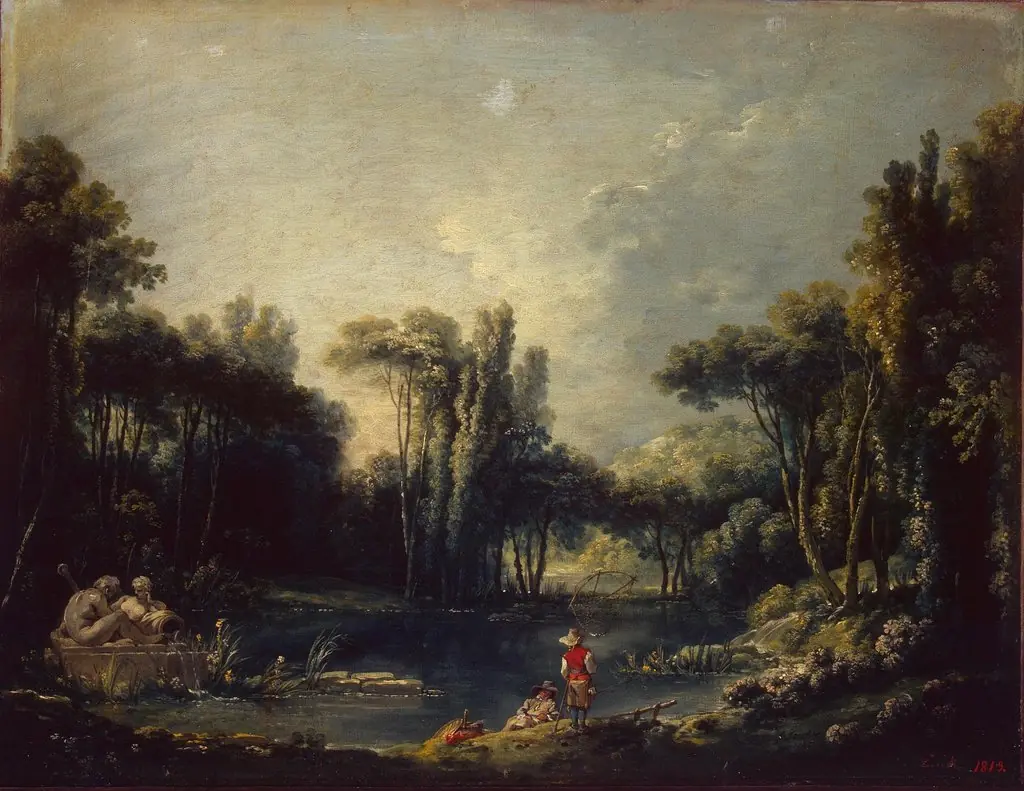 Landscape with a Pond
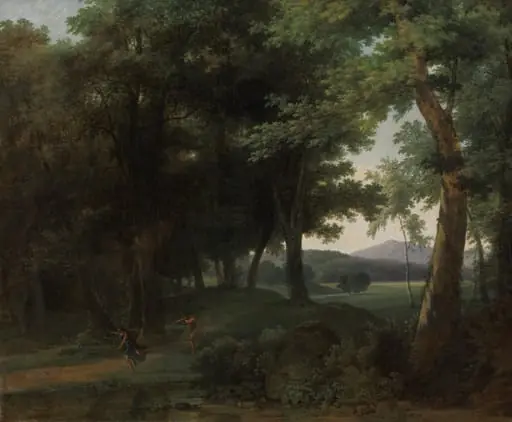 A Forest with Apollo and Daphne
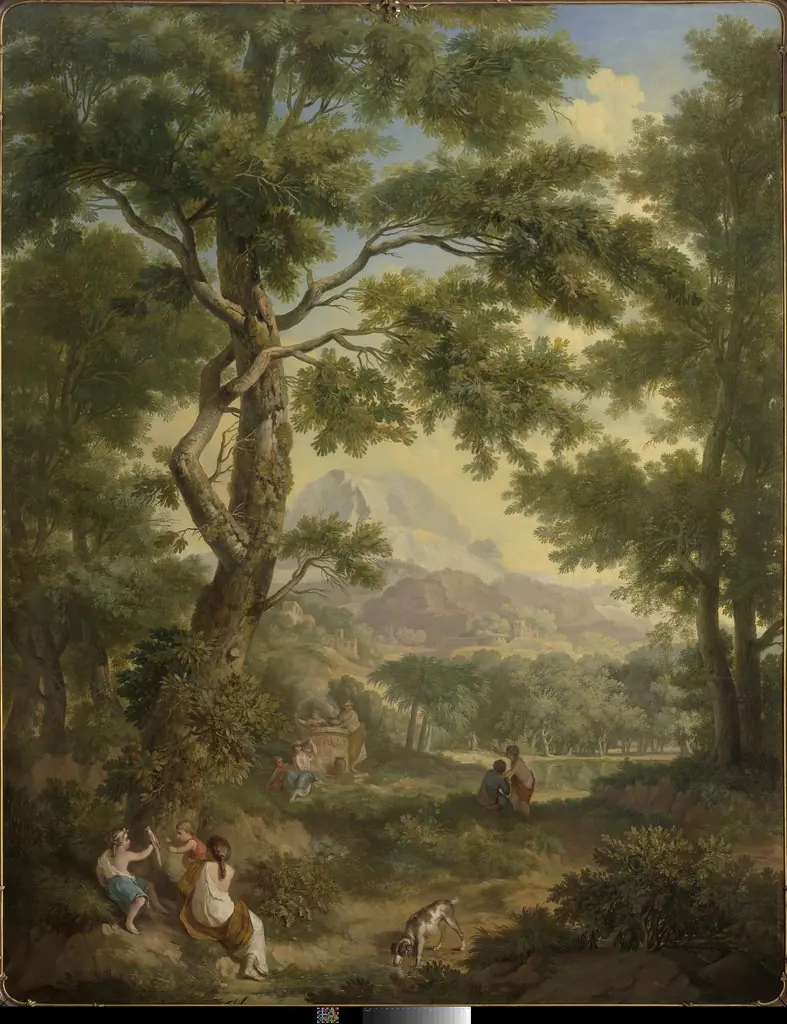 Arcadisch landschap met linksvoor kinderen met een vogel en een hond
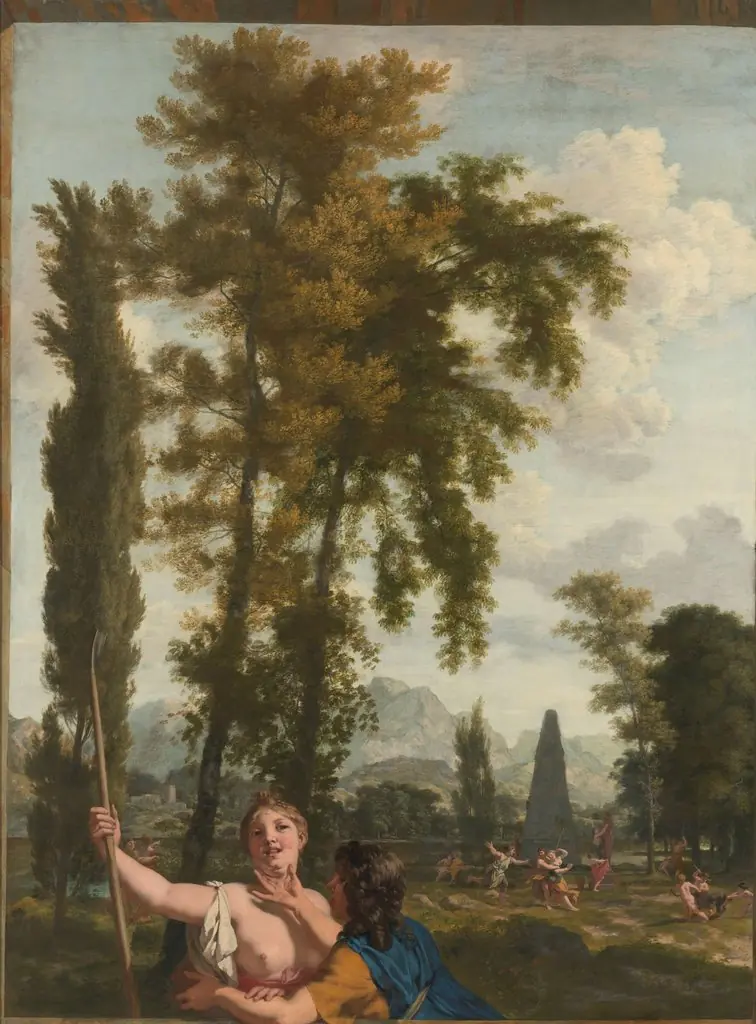 Italian landscape with shepherd and shepherdess
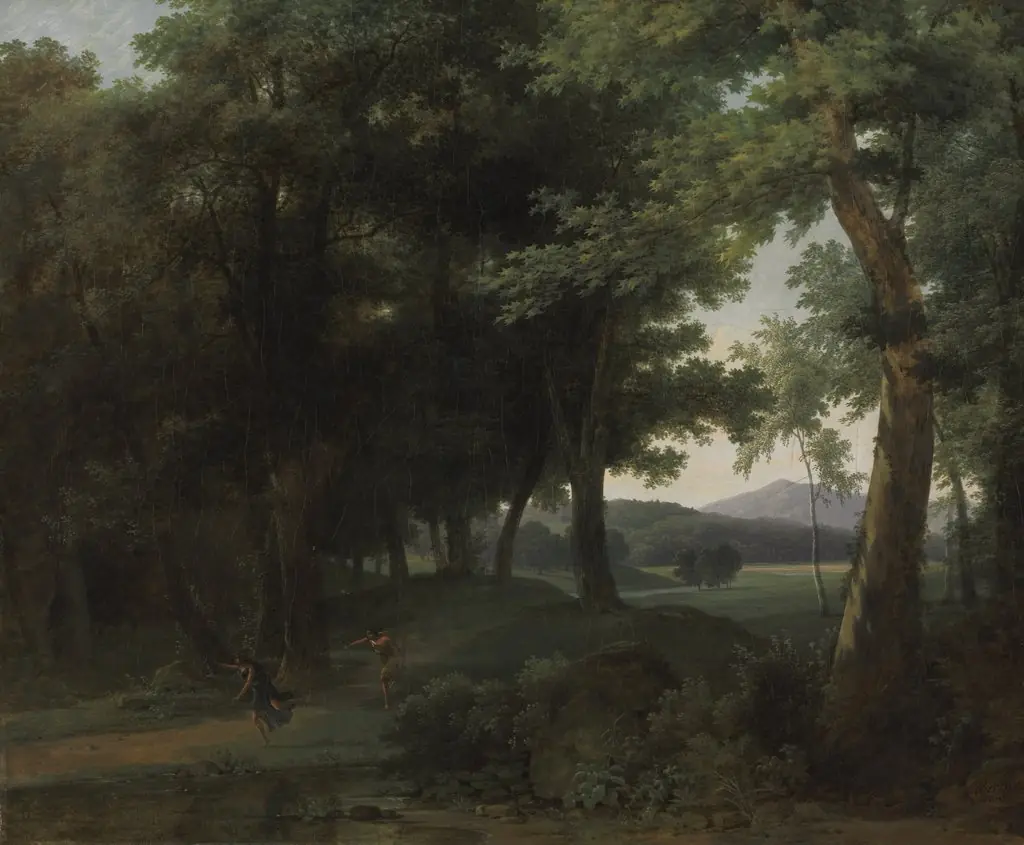 A Forest with Apollo and Daphne
 Waldlandschaft mit Gewässer rechts
 Landscape with the Education of Bacchus
 Arcadisch landschap met musicerende en dansende herders