Artwork
Beheading of John the Baptist
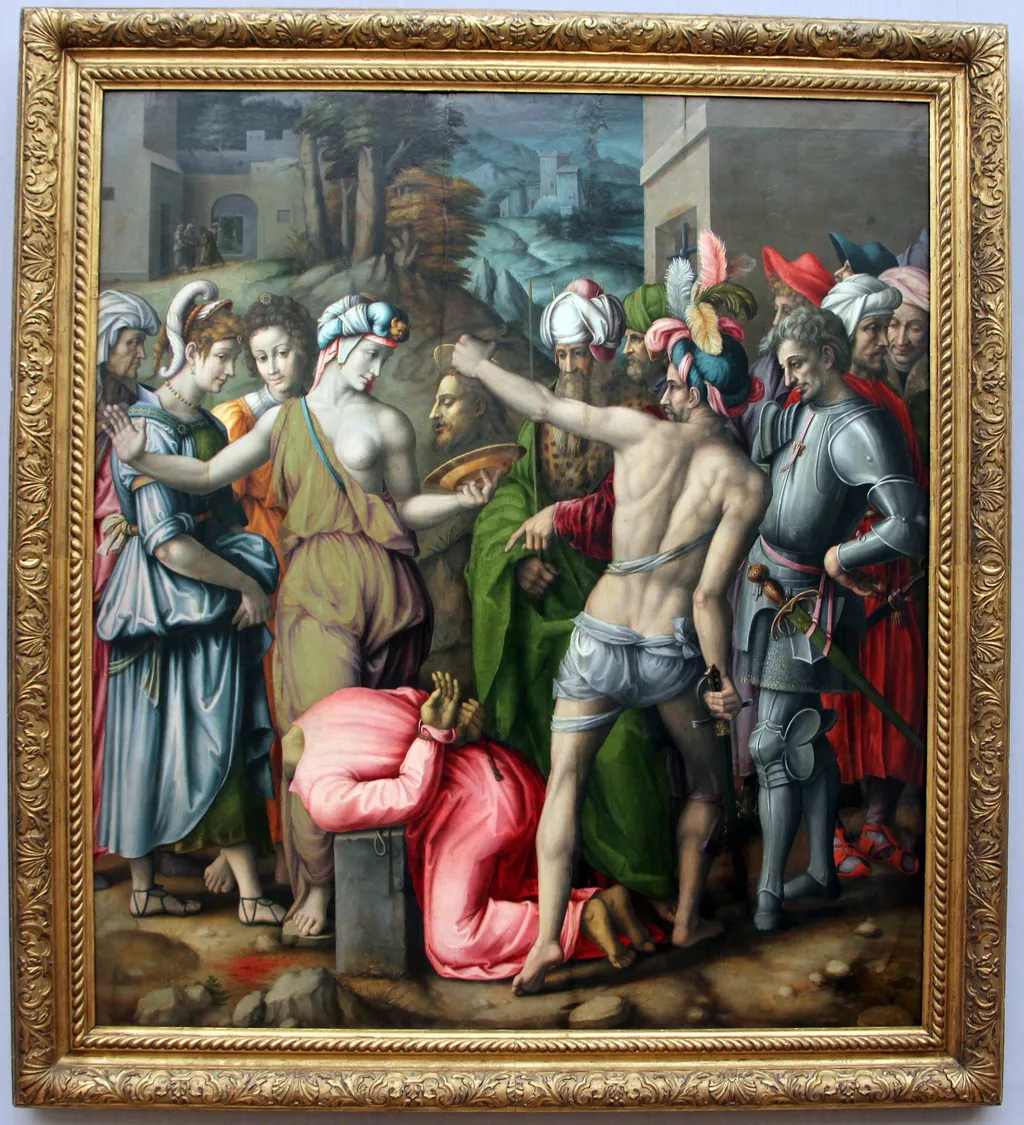
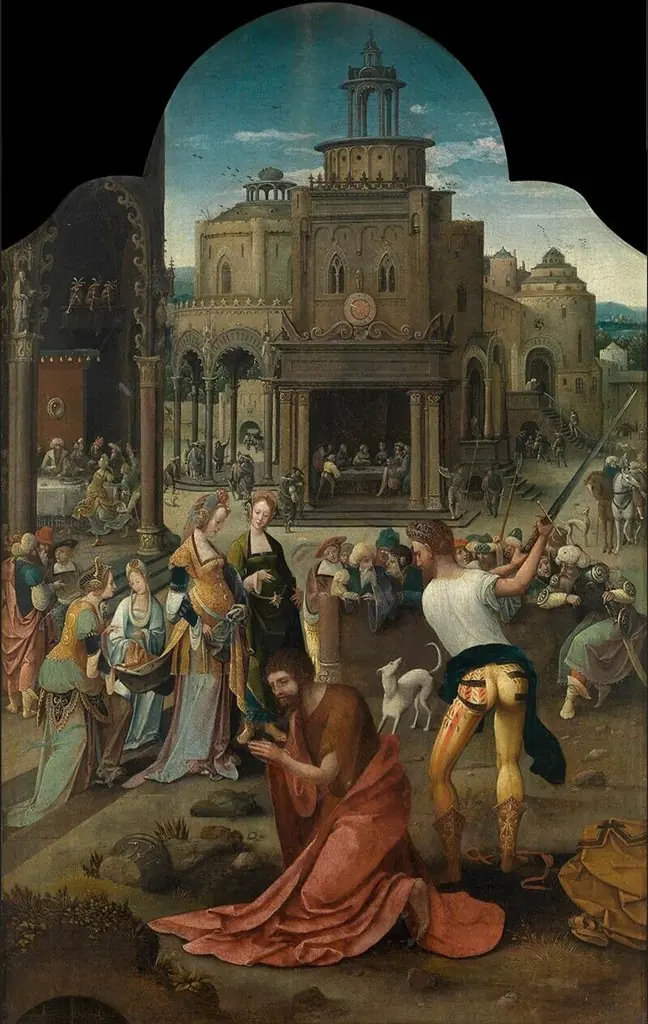
Beheading of John the Baptist is a paint painting by the Early Renaissance artist Francesco Bacchiacca. It dates from 1535 and is held in the collection of the Gemäldegalerie Berlin.
About this work
Overview
Francesco Bacchiacca’s Beheading of John the Baptist dates to roughly 1535 and belongs to the Florentine Mannerist current of the Italian Renaissance. Executed in paint, the work portrays a violent biblical episode and is part of the Gemäldegalerie Berlin’s collection.
Subject & Meaning
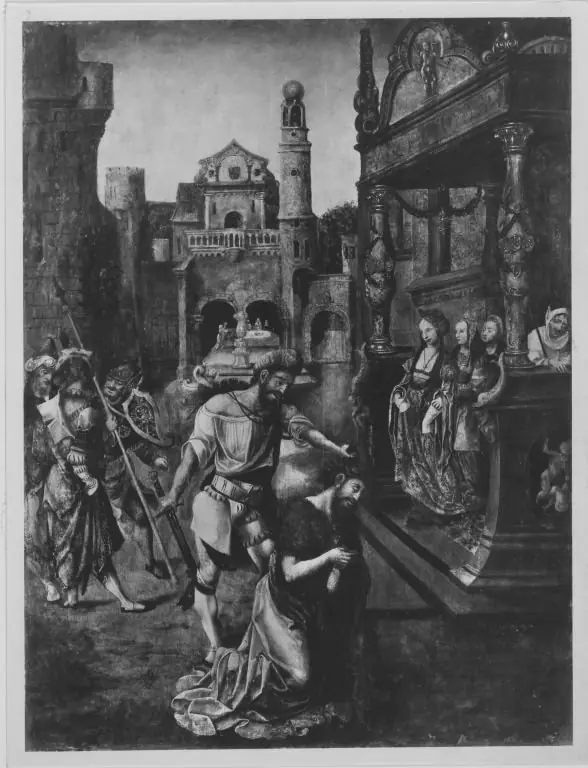
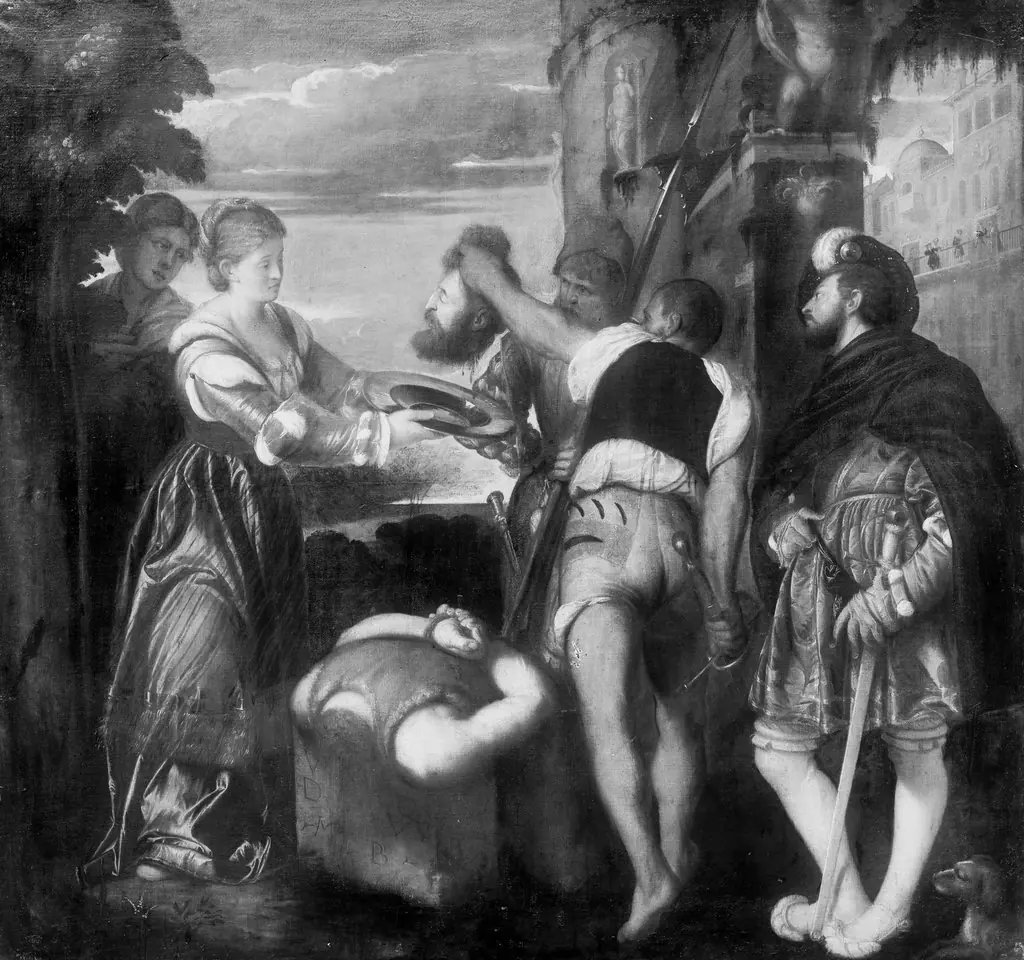
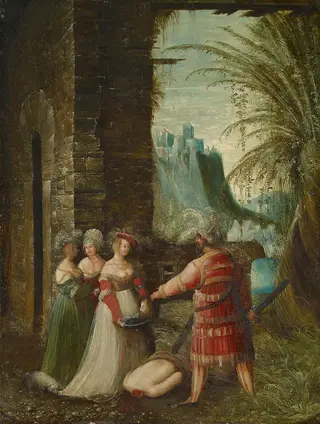
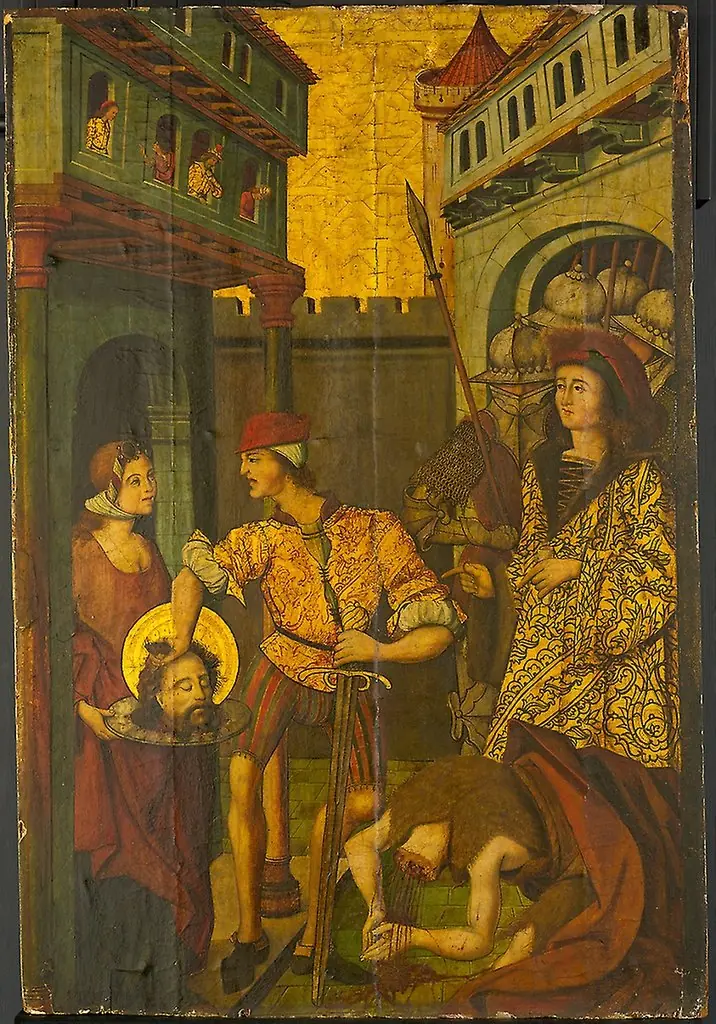
The composition captures the moment of John the Baptist’s execution. A kneeling figure with bound hands represents the prophet, while a woman bearing a plate and a sword‑wielding man draw attention to the imminent beheading. A small crowd of onlookers, positioned among craggy rocks, underscores the public nature of the martyrdom.
Technique & Style
Bacchiacca employs pronounced chiaroscuro, using strong contrasts of light and shadow to model the figures and give the scene a three‑dimensional quality. The figures are rendered with elongated proportions and elegant drapery, hallmarks of the Mannerist aesthetic that followed the High Renaissance.
History & Provenance
Created in the early 16th century, the painting entered the German capital’s Gemäldegalerie Berlin at an unspecified date, where it remains on display. Its presence in a major European museum reflects the continued interest in Bacchiacca’s religious narratives and the diffusion of Florentine art beyond Italy.
Own this work as a print
Artist & collection
Artist
Francesco d'Ubertino Verdi, called Bachiacca (say "bah ki ah cka"). He is also known as Francesco Ubertini, il Bacchiacca (1494–1557). He was an Italian painter of the Renaissance whose work is characteristic of the…