Artwork
The Arsenal, Venice
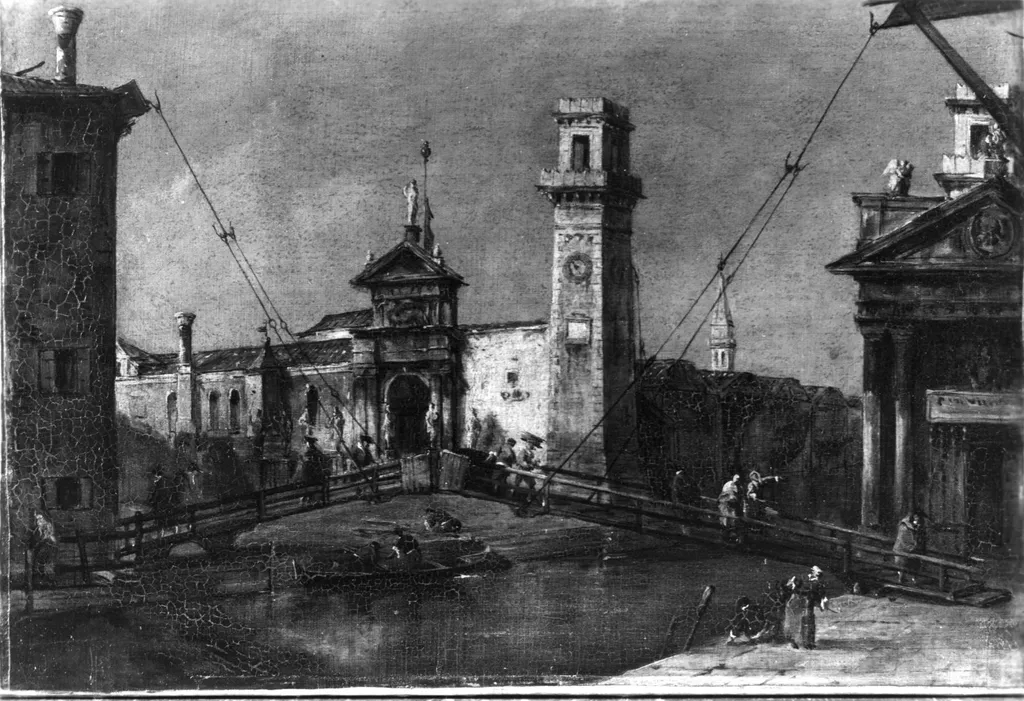
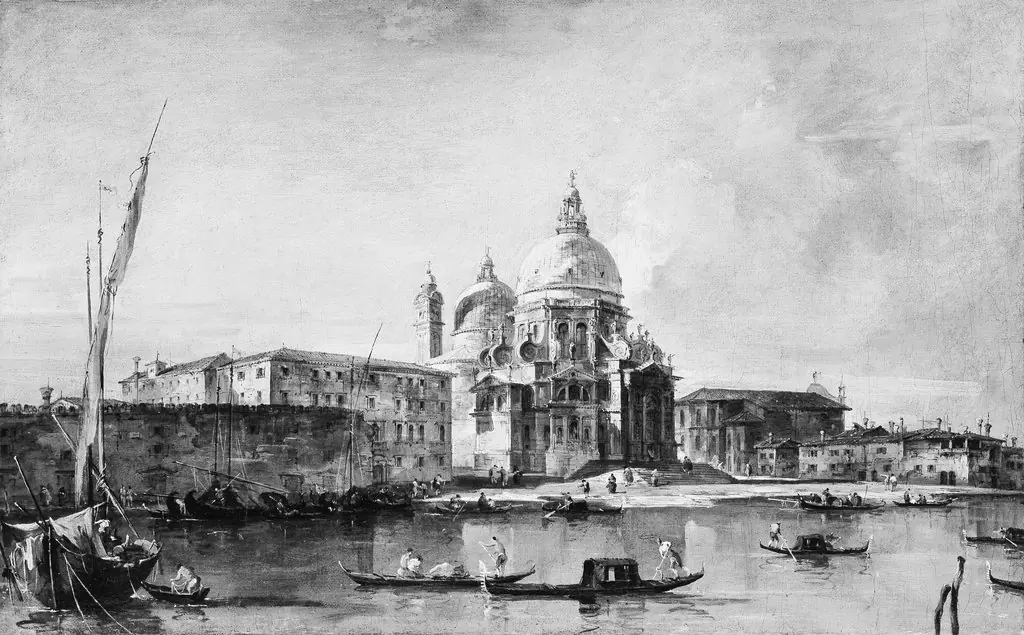
The Arsenal, Venice is an oil painting by the Rococo painting artist Francesco Guardi. It dates from 1750 and is held in the collection of the Walters Art Museum.
About this work
Overview
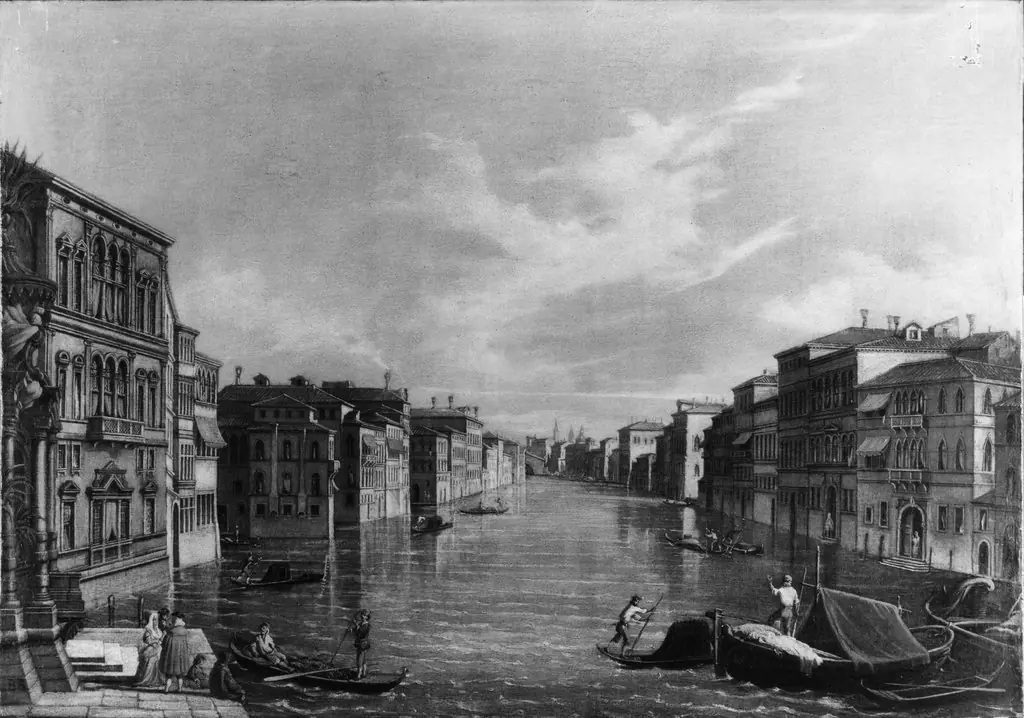
Painted around 1750 by Francesco Guardi, The Arsenal, Venice is an oil-on-canvas veduta that captures a quiet moment along a Venetian waterway.
Painted around 1750 by Francesco Guardi, The Arsenal, Venice is an oil-on-canvas veduta that captures a quiet moment along a Venetian waterway. Though Guardi later became known for his loose, atmospheric cityscapes, this work already shows a departure from the rigid precision of earlier topographical painting, favoring a more impressionistic handling of light and form. It resides today in the Walters Art Museum, part of a broader body of work documenting Venice’s urban fabric.
Subject & Meaning
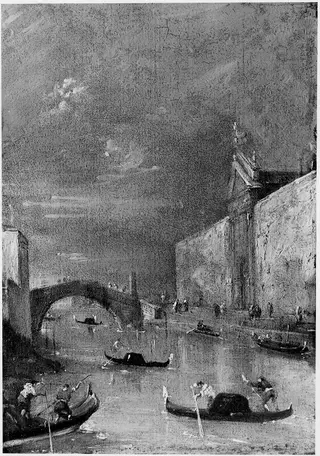
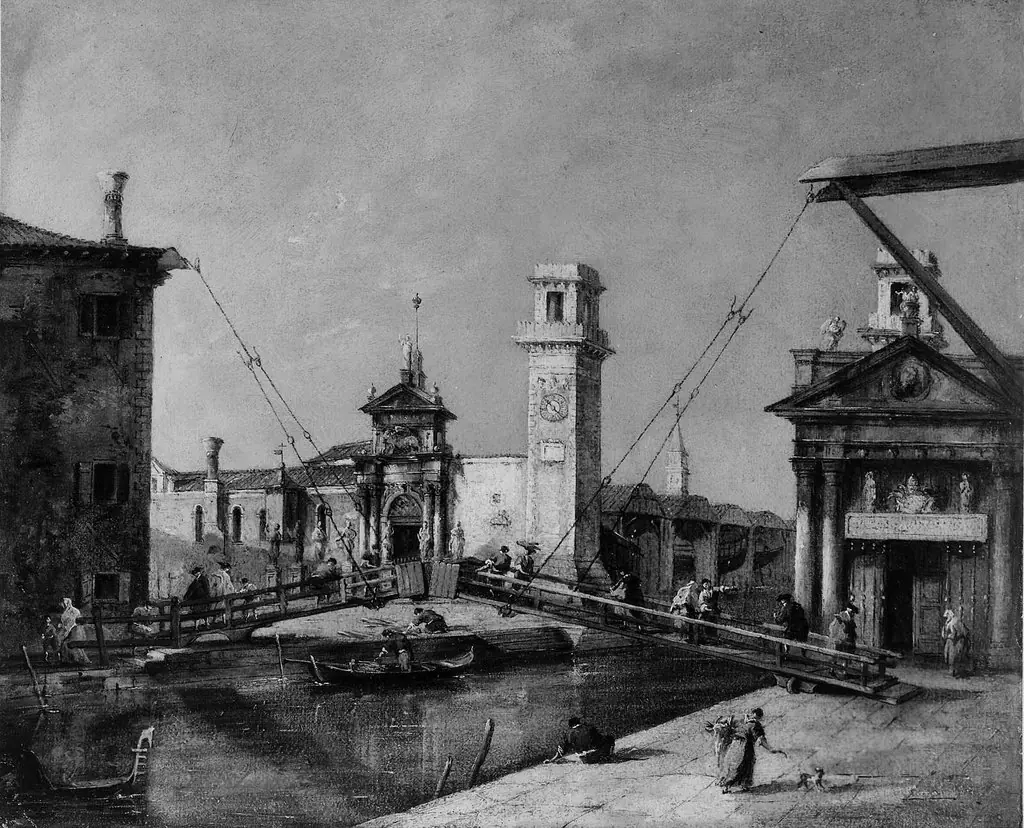
The painting portrays the Venetian Arsenal, a historic shipyard and military complex, viewed from the water. Boats and figures in the foreground suggest daily activity without emphasizing grandeur. The scene avoids spectacle, instead conveying the quiet rhythm of the city’s maritime life. The Arsenal’s presence is acknowledged, not celebrated, a subtle commentary on Venice’s enduring, if fading, naval identity.
Technique & Style
Guardi employs loose, visible brushwork to suggest rather than define forms, particularly in the water and sky. Cool blues and grays dominate, with soft transitions between light and shadow creating atmospheric depth. Unlike the sharp detail of contemporaries like Canaletto, Guardi’s method prioritizes mood over architectural accuracy, using texture and tone to evoke the city’s humid, reflective ambiance.
History & Provenance
Created before Guardi fully transitioned to vedute, this painting bridges his early religious commissions and later focus on Venetian views. It entered the Walters Art Museum’s collection in the 20th century, following a lineage typical of 18th-century Venetian works acquired by European and American collectors drawn to the city’s romanticized imagery. Its survival reflects the enduring interest in Venice’s visual culture beyond its tourist appeal.
Context
In mid-18th century Venice, the Arsenal had lost much of its former military significance but remained a potent symbol of the Republic’s maritime past. Guardi’s contemporaries often depicted the city as a stage for spectacle; he instead recorded its quieter corners. This painting aligns with a growing trend among Venetian artists to portray everyday life with emotional nuance, responding to a shifting cultural landscape.
Legacy
Guardi’s approach in The Arsenal, Venice influenced later generations of landscape painters who valued atmosphere over precision. His expressive brushwork prefigured Impressionist concerns with light and perception. Though not widely celebrated in his lifetime, his work is now recognized for its subtle emotional resonance and its role in redefining how urban environments could be visually interpreted.
Own this work as a print
Artist & collection

Artist
Francesco Lazzaro Guardi (Italian pronunciation:; 5 October 1712 – 1 January 1793) was an Italian painter, nobleman, and a member of the Venetian School.