Artwork
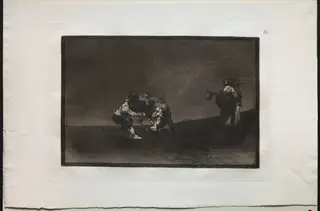
Bullfights: The Moors Make a Different Play in the Ring Calling the Bull with the Burnous
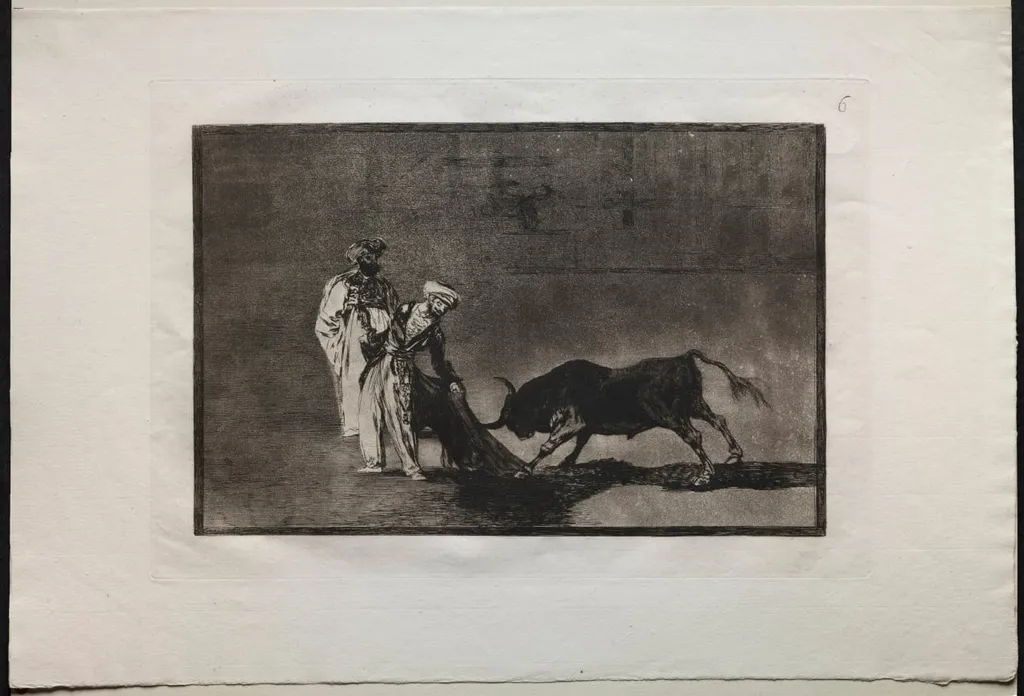
Bullfights: The Moors Make a Different Play in the Ring Calling the Bull with the Burnous is a print by the Romanticist artist Francisco de Goya. It dates from 1816 and is held in the collection of the Cleveland Museum of Art.
- Accession no.
- 1923.545
- Credit line
- Charles W. Harkness Endowment Fund
About this work
Overview
It serves as plate 13 within the series La Tauromaquia, a collection of thirty-three prints documenting the history and techniques of Spanish bullfighting.
Bullfights: The Moors Make a Different Play in the Ring Calling the Bull with the Burnous is an engraving created by Francisco de Goya in 1816. It serves as plate 13 within the series La Tauromaquia, a collection of thirty-three prints documenting the history and techniques of Spanish bullfighting. The work depicts a specific historical or theatrical variation of the corrida where figures dressed in North African attire, specifically burnouses, engage the bull.
In the composition, two men stand on the left; one wears a long white robe and holds an object, while the other is clad in dark robes with a white head covering. A bull charges from the right, reacting to their presence. Goya executed this print during a period of political turmoil in Spain, yet the series focuses on the spectacle and ritual of the bullring rather than contemporary social commentary.
The image illustrates Goya's mastery of etching and aquatint, utilizing strong contrasts of light and shadow to convey the tension of the moment. This work contributes to the artist's broader exploration of Spanish cultural identity and the dramatic dynamics between human and animal, distinguishing itself within La Tauromaquia by focusing on the exoticized 'Moorish' style of bullfighting rather than standard Spanish techniques.
Subject & Meaning
The image shows two men on the left, one in a flowing white robe clutching a small object, the other in a dark garment topped with a white head covering, confronting a bull that lunges forward with its head lowered and horns aimed outward. The composition suggests a ritualized challenge, highlighting the tension between human bravado and animal force within a Moorish bull‑fighting tradition.
Technique & Style
Executed as a print, the piece employs strong chiaroscuro, with a dark background that isolates the figures and the animal in stark relief. The contrast of light and shadow intensifies the sense of movement and danger, while the linear clarity of the figures reflects Goya’s late Romantic sensibility, emphasizing emotion over precise naturalism.
History & Provenance
Created in 1816, the work entered the holdings of the Cleveland Museum of Art, where it remains on display. Its acquisition reflects the museum’s broader effort to represent European printmaking of the early nineteenth century, and it contributes to the institution’s documentation of Goya’s varied output beyond his more widely known paintings.
Artist & collection
Artist
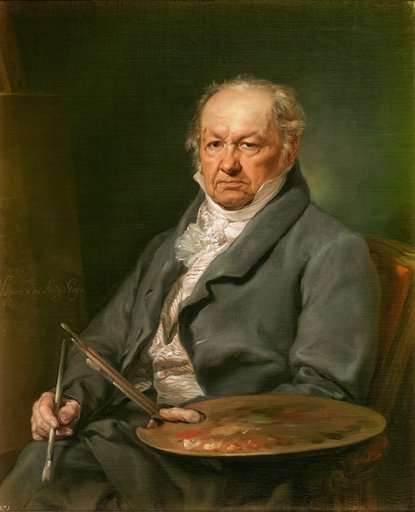
Francisco José de Goya y Lucientes was a Spanish romantic painter and printmaker.

- Bullfights: A Moor Caught by a Bull in the Ring
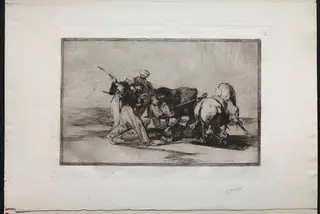 Bullfights: The Moors Settled in Spain, Giving Up the Superstitions of the Qur’an, Adopted this Art of Hunting, and Spear a Bull in the Open
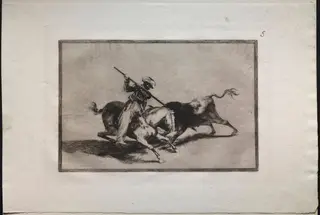 Bullfights: The Spirited Moor Gazul is the First to Fight According to the Rules
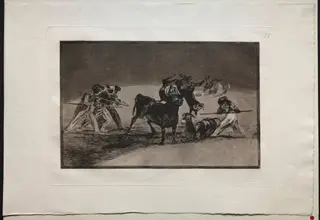 Bullfights: The Moors Use Donkeys as a Barrier to Defend Themselves Against the Bull Whose Horns Have Been Tipped with Balls
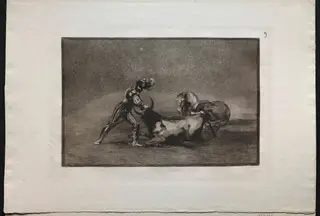 Bullfights: A Spanish Knight Kills the Bull After Having Lost His Horse
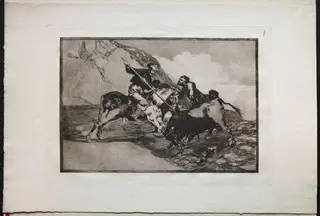 Bullfights: The Way in Which the Ancient Spaniards Hunted Bulls on Horseback in the Open Country
 Bullfights: The Same Man Throws a Bull in the Ring at Madrid
 Bullfights: El Cid Campeador Spearing Another Bull