Artwork
The Chinchillas, Plate 50
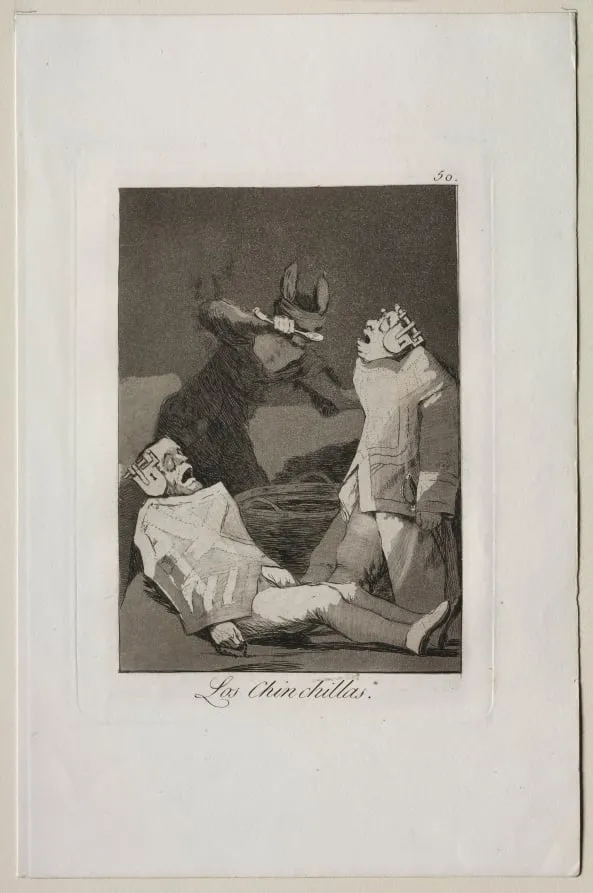
The Chinchillas, Plate 50 is a print by the Romanticist artist Francisco de Goya. It dates from 1799 and is held in the collection of the Cleveland Museum of Art.
- Accession no.
- 1922.645
- Credit line
- Dudley P. Allen Fund
About this work
Overview
The Chinchillas, Plate 50 is an etching from Francisco de Goya’s series Los Caprichos, produced around 1799. It is one of eighty prints in the set, each offering a satirical or critical view of Spanish society. The work is held in the collection of The Cleveland Museum of Art and exemplifies Goya’s shift toward darker, more introspective themes in his later career.
Subject & Meaning
The imagery suggests institutional or social oppression, possibly alluding to the Inquisition or arbitrary authority.
The scene portrays three figures in a moment of coercion: one man is restrained on the ground, another presses him down in a dark robe, and a third stands with raised hands, possibly observing or awaiting his turn. The imagery suggests institutional or social oppression, possibly alluding to the Inquisition or arbitrary authority. The lack of clear narrative context invites interpretation, reinforcing the work’s ambiguous, unsettling tone.
Technique & Style
Goya employed etching and aquatint to achieve deep shadows and textured gradations of gray. The figures are rendered with sharp, angular lines, contrasting against the murky, indistinct background. The heavy use of ink and atmospheric darkness heightens emotional tension, moving beyond mere illustration toward psychological expression, a hallmark of his late graphic work.
History & Provenance
Created during Goya’s tenure as court painter, the print was part of a privately circulated series that critiqued superstition, corruption, and power. Though initially sold by subscription, the series was withdrawn after public backlash. The Cleveland Museum of Art acquired its copy through established collection pathways, preserving one of the original print runs from the late 18th century.
Context
Los Caprichos emerged amid Enlightenment ideals and rising tensions in Spain, where religious authority and aristocratic privilege faced growing scrutiny. Goya’s prints reflect his disillusionment with societal norms, influenced by personal illness and political unrest. The series was not publicly exhibited in his lifetime, functioning instead as a coded commentary accessible only to discerning viewers.
Legacy
The Chinchillas and the broader Caprichos series influenced later artists seeking to use printmaking for social critique. Goya’s unflinching imagery and emotional depth prefigured 19th-century realism and expressionism. Though not widely known in his time, the series gained recognition in the 20th century as a pivotal moment in the evolution of modern graphic art.
Artist & collection
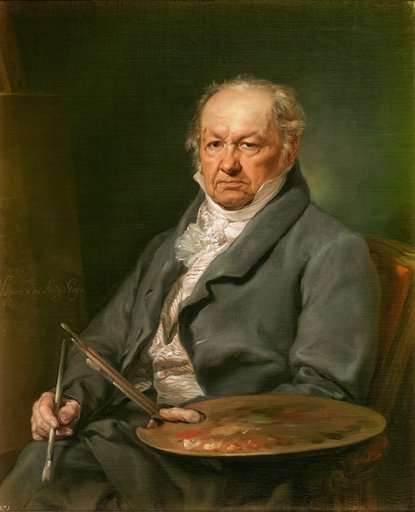
Artist
Francisco José de Goya y Lucientes was a Spanish romantic painter and printmaker.

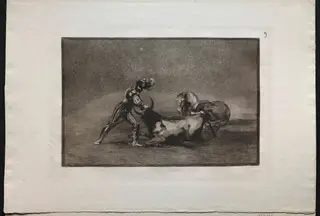 Bullfights: A Spanish Knight Kills the Bull After Having Lost His Horse
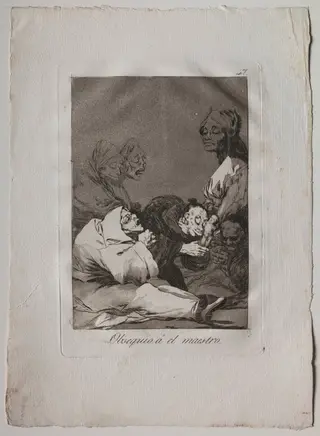 A Gift for the Master, Plate 47
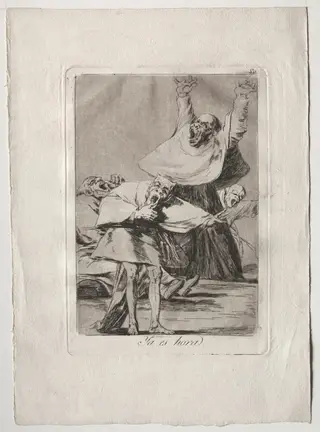 It is Time, Plate 80
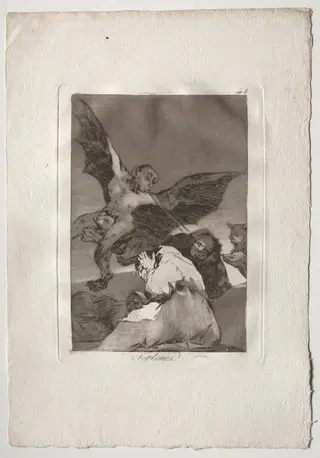 Tale-Bearers - Blasts of Wind, Plate 48
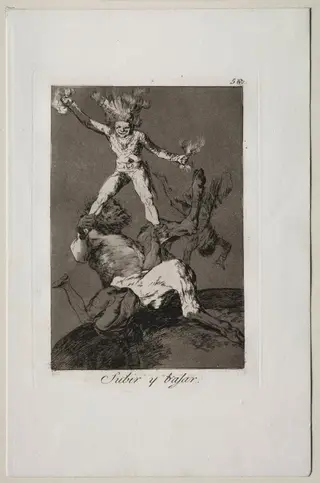 To Rise and to Fall, Plate 56
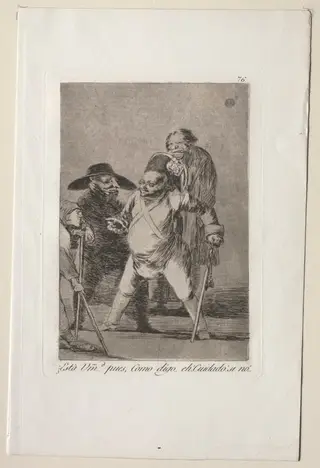 You understand?...Well, as I say...eh! Look out! Otherwise..., Plate 76
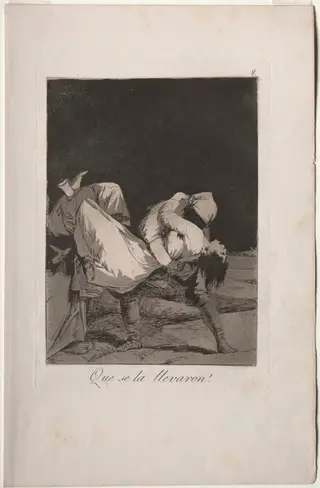 They Carried Her Off!, Plate 8
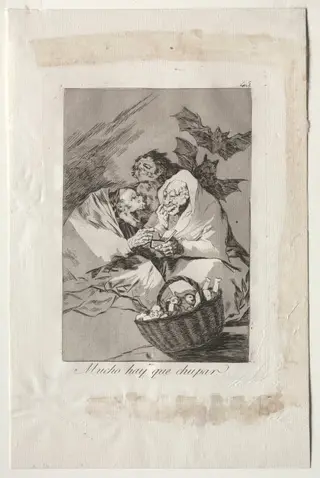 There is Plenty to Suck, Plate 45