Artwork
Charles IV in Court Dress
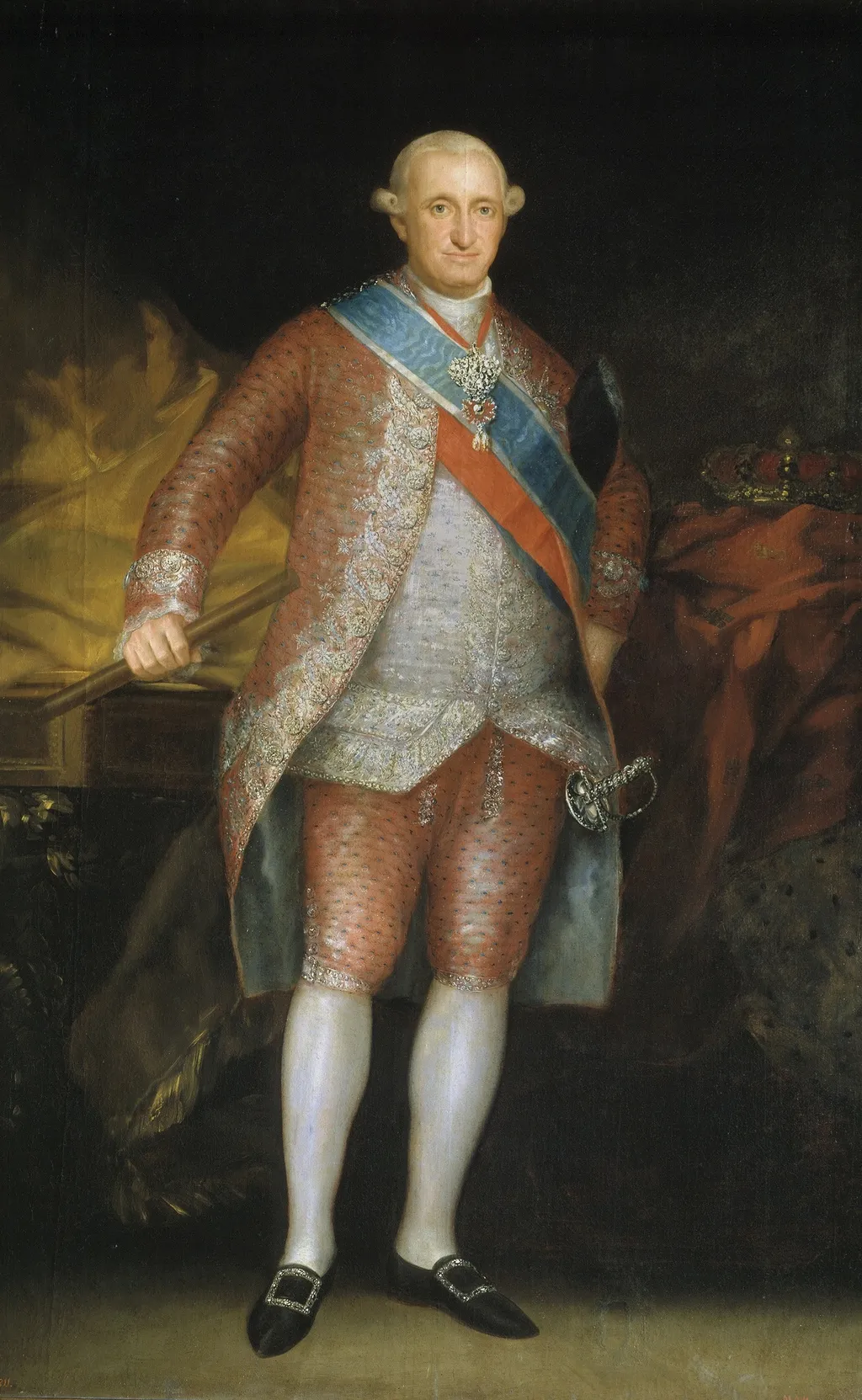
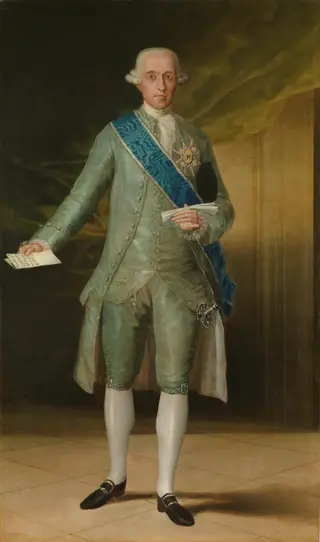
Charles IV in Court Dress is an oil painting by the Rococo painting artist Francisco de Goya. It dates from 1795 and is held in the collection of the Museo del Prado. Francisco Goya’s 1795 oil portrait presents King Charles IV of Spain in full court attire.
About this work
Technique & Style
The formal composition places the monarch upright, with subtle attributes such as a crown and a red mantle lined with ermine positioned discreetly to the right.
The portrait is executed in oil paint on canvas, measuring 203 cm by 137 cm. Goya rendered the full‑length figure of Charles IV in court dress with meticulous attention to the textures of silk breeches, a red‑decorated waistcoat, and the richly embroidered insignia of several orders, including the Order of Carlos III and the Order of the Golden Fleece. The formal composition places the monarch upright, with subtle attributes such as a crown and a red mantle lined with ermine positioned discreetly to the right. These stylistic choices reflect the ceremonial gravity of the Spanish court and Goya’s skill in combining portrait realism with symbolic regalia.
History & Provenance
Created in 1789 as a court portrait commissioned by the Spanish monarch Charles IV upon his accession, the oil painting was executed by Francisco Goya while the artist served as court painter. It entered the collection of the Museo del Prado shortly after its completion and has remained in that institution's custody. The work was produced to mark Charles IV's formal assumption of the throne following the death of his father, Charles III, and reflects the ceremonial attire and orders associated with the new reign.
Context
The painting has been recognized as a key example of Goya’s role in documenting the Spanish monarchy’s visual culture, particularly in how court portraiture reinforced royal legitimacy during political transition. Scholarship emphasizes its precise rendering of Charles IV’s ceremonial attire, reflecting Enlightenment-era ideals of order and hierarchy. The work’s placement in the Museo del Prado collection underscores its significance within institutional narratives of Spanish art history, where it is studied alongside Goya’s other royal commissions to trace the evolution of portraiture from Baroque formalism to neoclassical symbolism.
Its pendant pairing with the queen’s portrait highlights contemporary practices of dual representation to project dynastic stability, a theme central to art historical analyses of 18th-century Iberian visual politics.
Overview
Francisco Goya’s 1795 oil portrait presents King Charles IV of Spain in full court attire. The monarch is rendered in a formal pose, facing the viewer, against a dimly lit backdrop that hints at gilded furnishings and a heavy curtain. The painting measures roughly a life‑size figure and is part of the Prado Museum’s collection in Madrid.
Subject & Meaning
The work records the sovereign’s official regalia: a red and silver coat richly embroidered with medals, a blue sash edged in gold, white stockings, and a powdered wig. The king’s expression is severe, his pale complexion and sharp features emphasizing the authority and solemnity expected of a ruler during the late eighteenth‑century Spanish court.
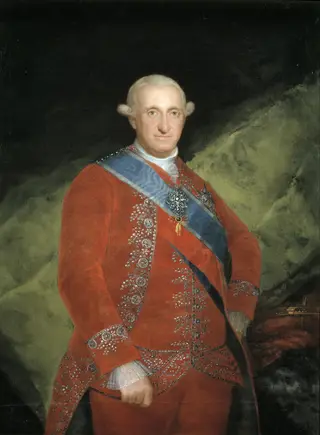
Own this work as a print
Artist & collection
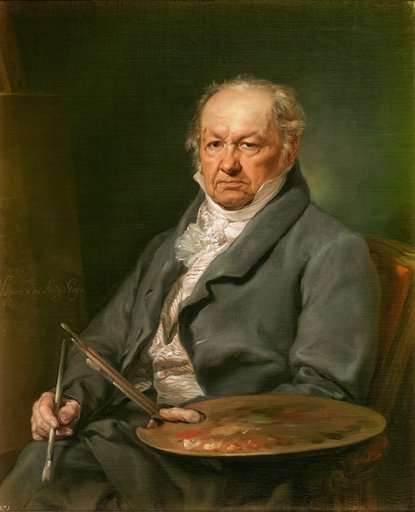
Artist
Francisco José de Goya y Lucientes was a Spanish romantic painter and printmaker.

 José Moñino y Redondo, count de Floridablanca
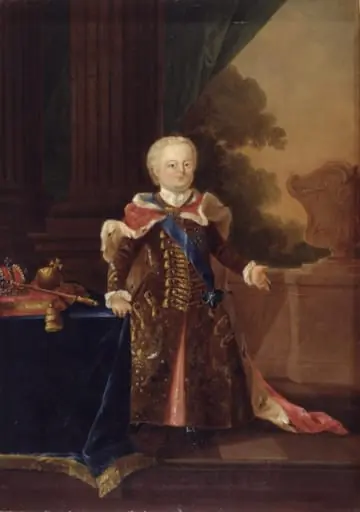 Ivan III or Ivan VI Antonovich. Full-length Portrait
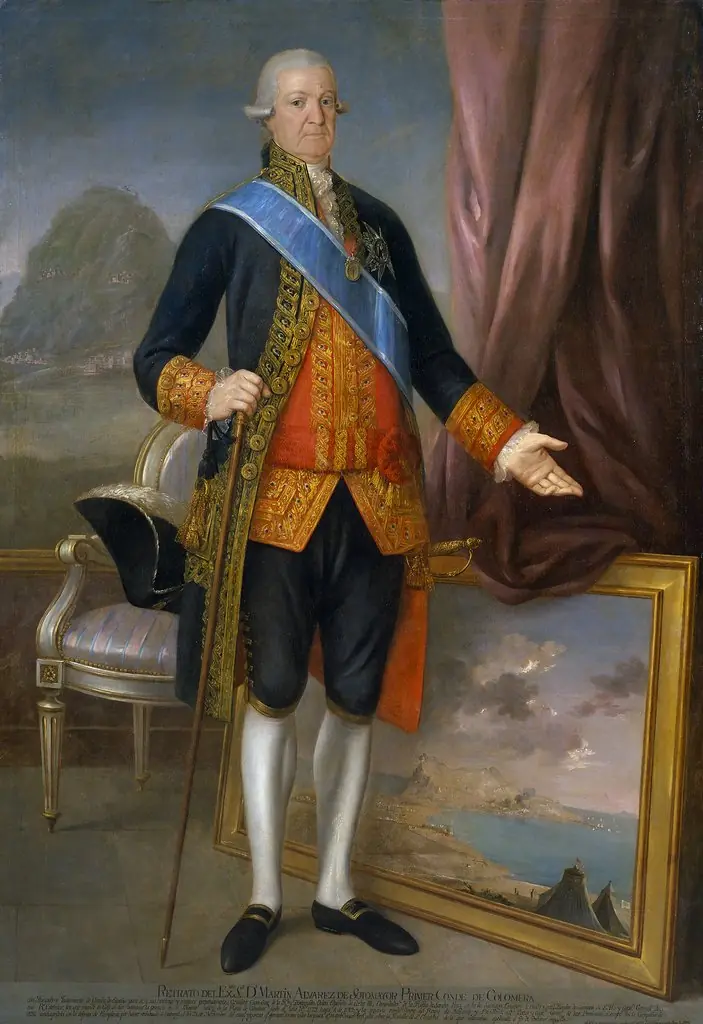 Martín Antonio Álvarez de Sotomayor y Soto-Flores, Count of Colomera
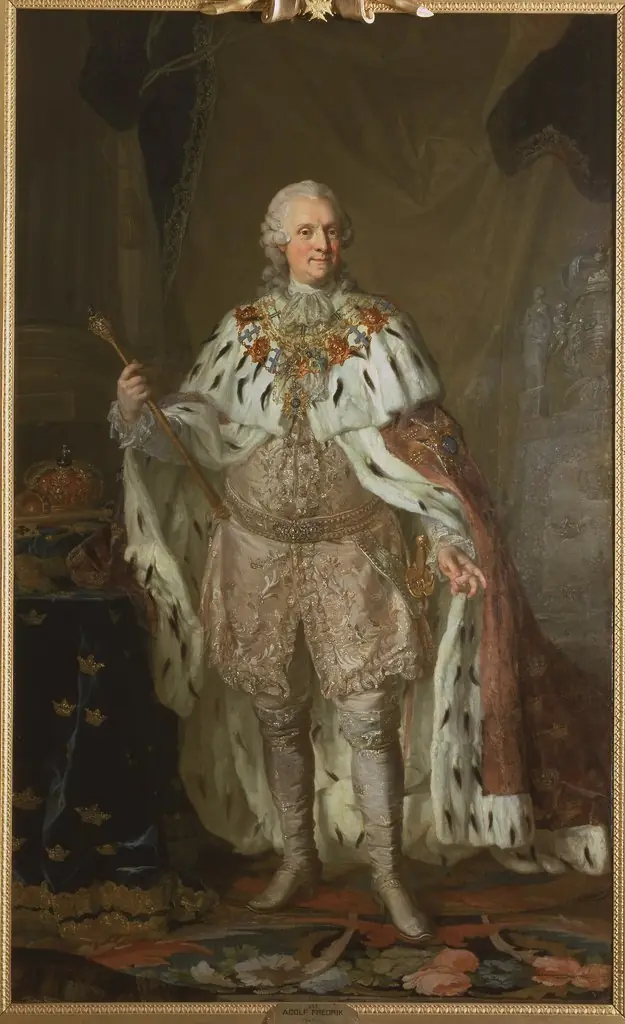 Adolf Fredrik, 1710-1771, konung av Sverige hertig av Holstein-Gottorp
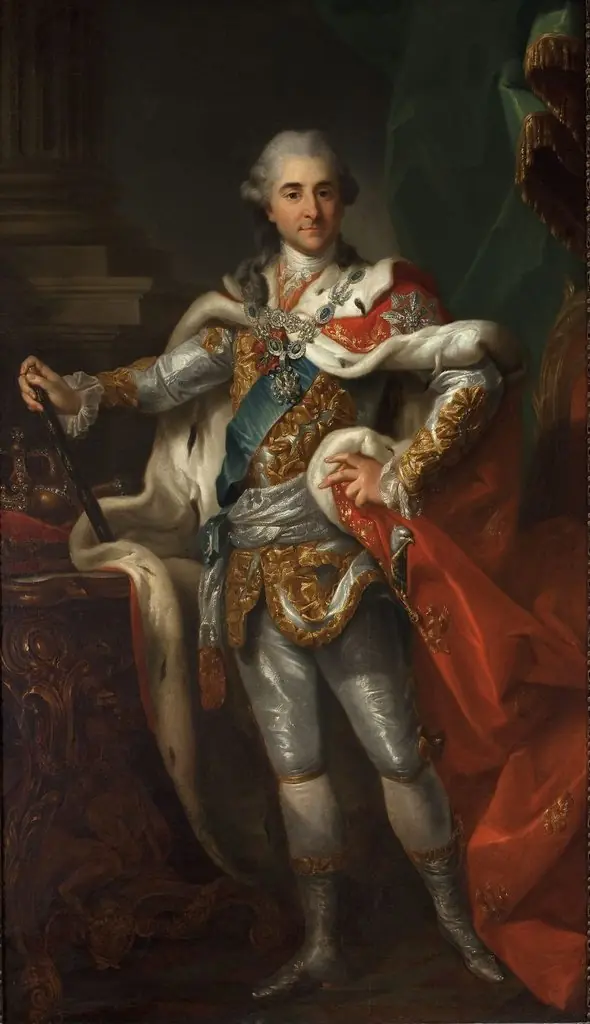 Portrait of Stanisław August Poniatowski in the coronation costume
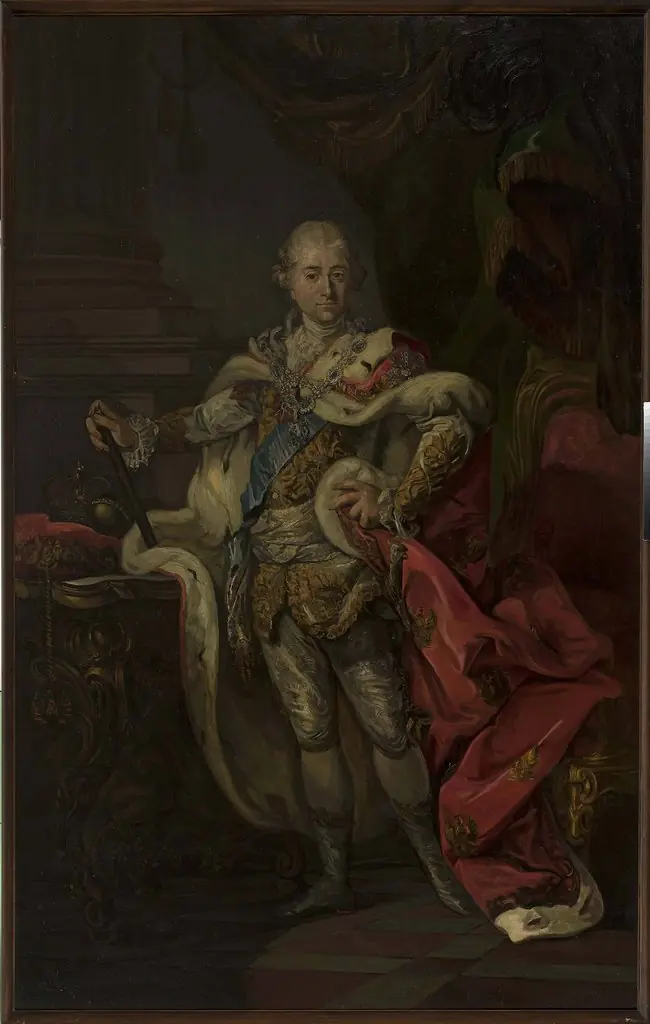 Portrait of Stanisław August in the coronation costume
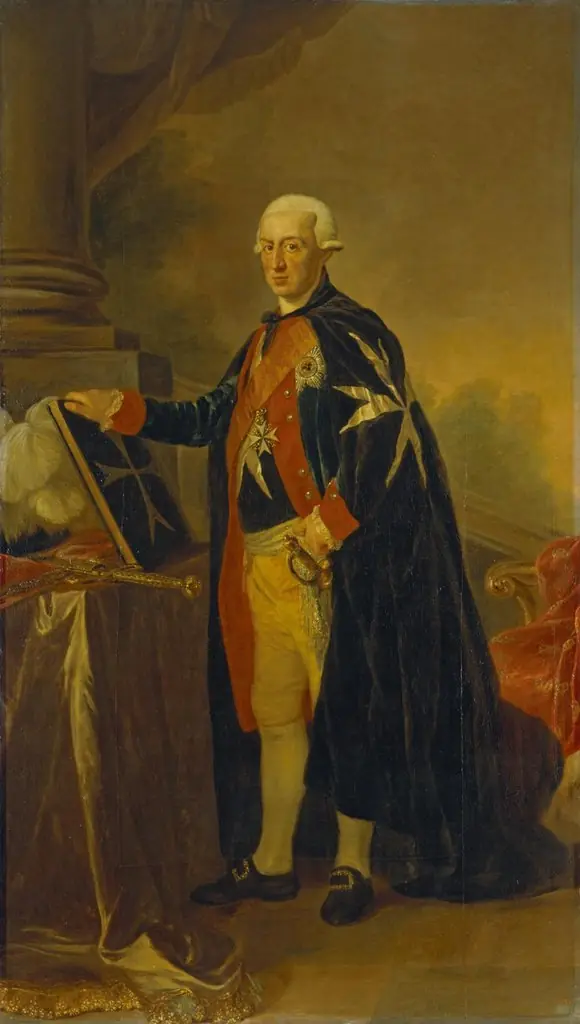 Portrait of Prince Augustus Ferdinand of Prussia
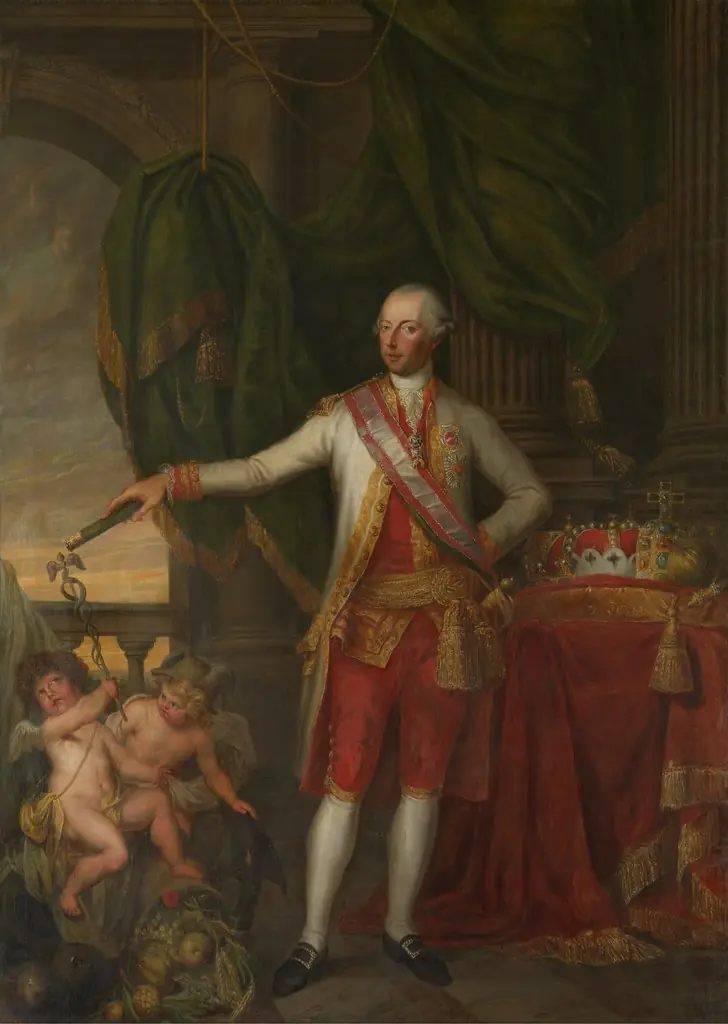 Portrait of the Emperor Joseph II