Artwork
Saturn Devouring His Son
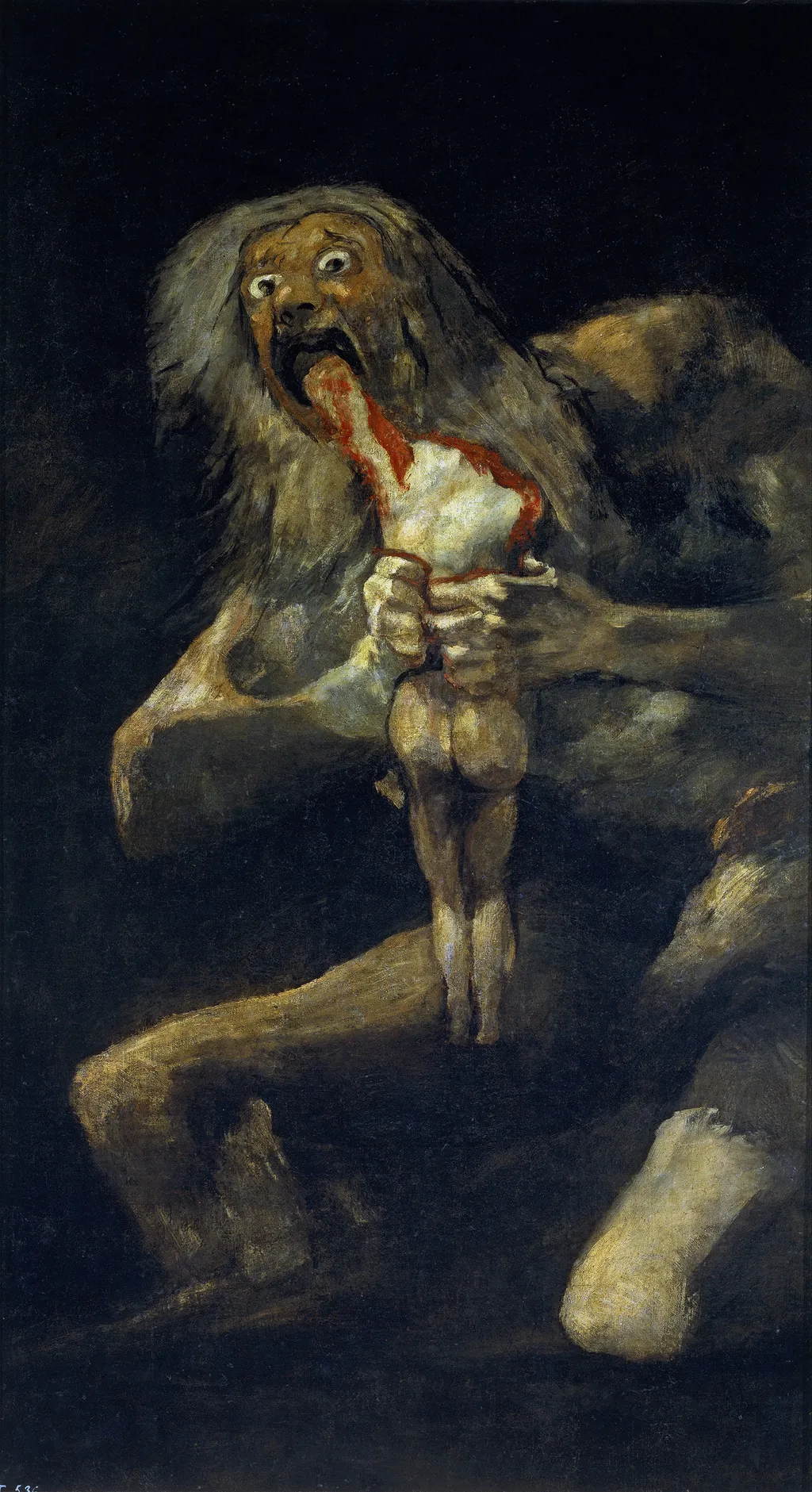
Saturn Devouring His Son is a mixed painting by the Romanticist artist Francisco de Goya. It dates from 1820 and is held in the collection of the Museo del Prado.
About this work
He worked between 1820 and 1823 as part of a group of fourteen murals called the Black Paintings.
Goya painted this dark scene straight onto his wall. No sketching first, just bold, raw strokes. He worked between 1820 and 1823 as part of a group of fourteen murals called the Black Paintings.
The picture shows a desperate act. The artist used thick paint and sharp contrasts to make it feel heavy and urgent. Later, workers peeled it off the wall and moved it to canvas.
This painting lives at the Museo del Prado in Madrid. It’s not a cheerful piece, it’s raw and real.
Look up chiaroscuro.
Subject & Meaning
The work depicts a large, frenzied figure consuming a smaller human form, traditionally identified as the Roman god Saturn (Greek Cronus) eating his child to prevent a prophecy of overthrow. Unlike conventional mythological representations where the god swallows infants whole, Goya portrays a violent act of cannibalism involving an adult-sized victim with missing limbs and exposed flesh. The figure lacks standard iconographic attributes like a scythe or hourglass, leading some scholars to question the traditional title and suggest the image may represent madness, the destructive passage of time, or a political allegory of Spain consuming its own people during civil strife.
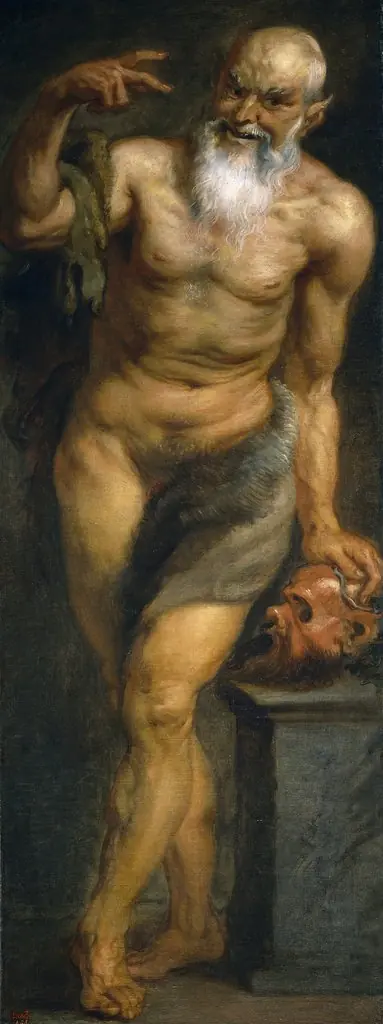
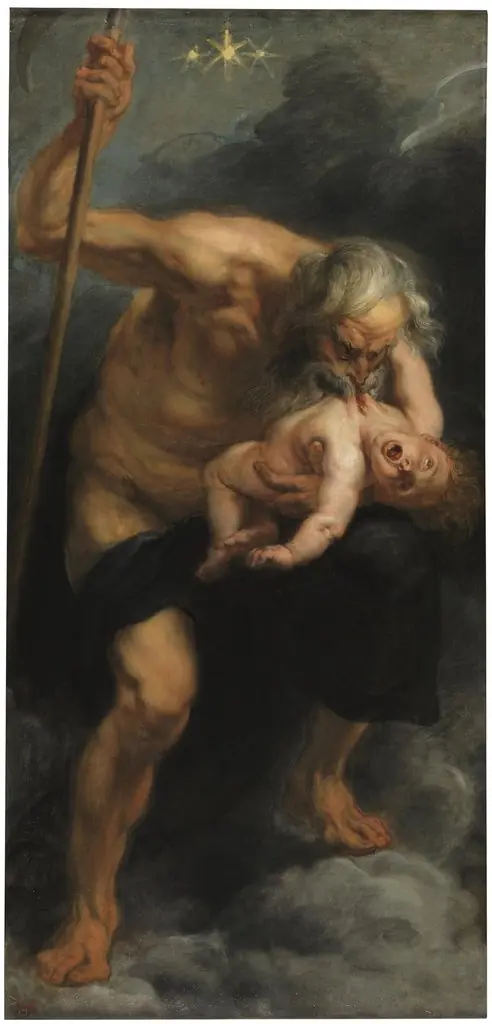
Other interpretations view the scene as a reflection of Goya's personal fears regarding aging, his relationship with his surviving son, or an inversion of antisemitic blood libel imagery. The composition emphasizes raw energy and horror over calculated reason, distinguishing it from earlier depictions of the myth by artists such as Rubens.
Technique & Style
Saturn Devouring His Son was executed in oil paint on the plaster wall of Goya’s Quinta del Sordo, using a mixed technique typical of the Black Paintings (3,4,5,6). After the artist’s death the mural was detached and transferred to canvas via the strappo method, a procedure necessitated by decades of exposure that had left the wall paint severely deteriorated (3,4,5,6). The work now resides on canvas, its support changed from wall to fabric (3,4,5,6).
Goya’s handling is characterized by bold, rapid, loose brushstrokes and thick impasto that create a dramatic chiaroscuro (5,6). The palette is limited to whites and blacks, punctuated by ochre flesh tones and vivid red blood (6). Stylistically, the painting belongs to the Black Paintings, reflects Romanticism, and prefigures Expressionism through its emotive, almost violent execution (2,3,6).
History & Provenance
Saturn Devouring His Son is currently held by the Museo del Prado in Madrid, Spain. Originally painted directly onto the plaster walls of the Quinta del Sordo between 1819 and 1823, the work was transferred to canvas in 1874 under the supervision of Prado curator Salvador Martínez Cubells. This delicate operation was commissioned by the French banker Émile d’Erlanger, who had acquired the property in 1873 to preserve the deteriorating murals.
Following the transfer, the painting was exhibited at the Exposition Universelle in Paris in 1878. D’Erlanger subsequently donated the work to the Spanish State in 1881, and it officially entered the Prado's collection, where it has been on public display since 1889.
Legacy
The painting entered the public eye only after its transfer from Goya’s Quinta del Sordo walls to canvas in the 1870s, when the Prado acquired it, establishing its status as a cornerstone of the Black Paintings series. Its stark, brutal rendering of a mythic cannibal has been cited as a precursor to modern expressionist horror and has inspired numerous reinterpretations that link the scene to contemporary anxieties about power, time, and violence. Critics have debated its iconography, yet the work’s reputation as a vivid symbol of irrational destruction has endured, influencing later artists and cultural references, including film and scholarly discourse.
Overview
Francisco Goya's "Saturn Devouring His Son" is a powerful mural, originally painted directly onto the walls of the artist's home between 1820 and 1823. It belongs to a series of fourteen works known as the Black Paintings, characterized by their dark themes and intense emotional content. This particular work exemplifies the raw, unvarnished expression that defines this late period of Goya's career.
Artist & collection
Artist
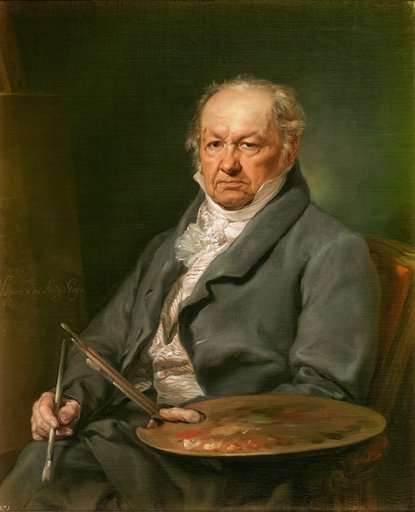
Francisco José de Goya y Lucientes was a Spanish romantic painter and printmaker.