Artwork
The Third of May 1808
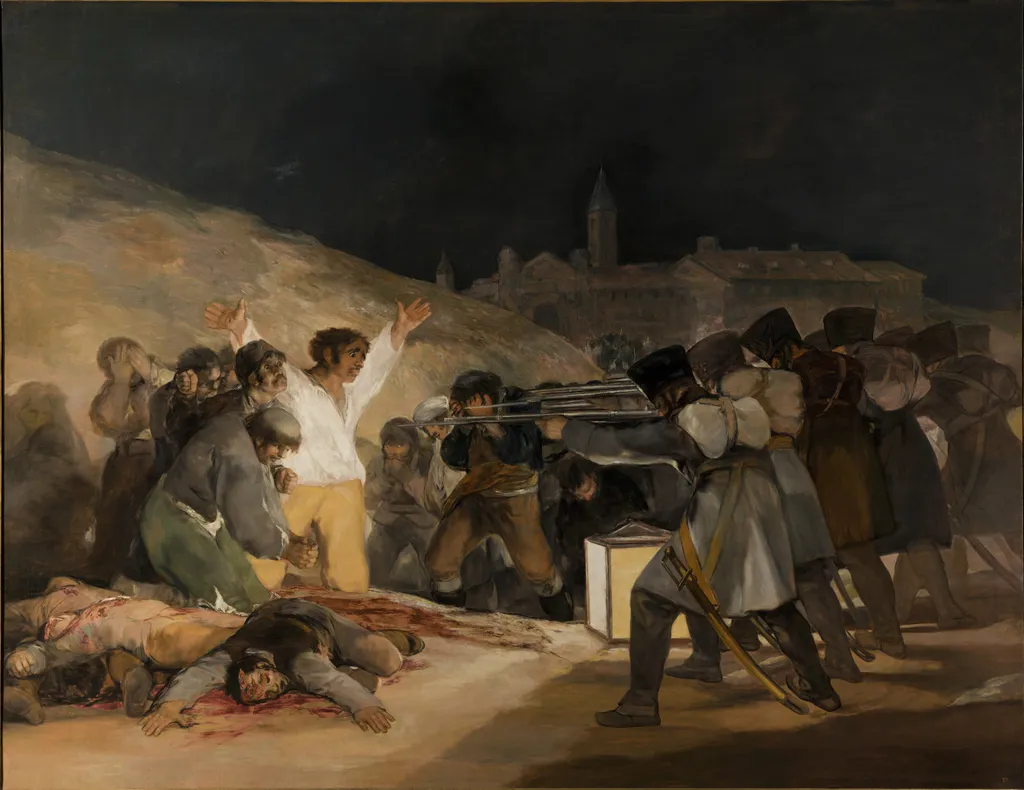
The Third of May 1808 is an oil painting by the Romanticist artist Francisco de Goya. It dates from 1814 and is held in the collection of the Museo del Prado.
About this work
Subject & Meaning
A faceless firing squad of eight French infantry, turned away from the viewer and forming a wall of rifles, faces a huddled group of terrified civilians.
The painting depicts the execution of Spanish rebels by French soldiers during the night of May 2–3, 1808, as reprisals for the Dos de Mayo Uprising against Napoleon's occupying forces in Madrid. Goya presents the scene on the hill of Príncipe Pío, where around 45 of roughly 400 captured Spaniards were shot. A faceless firing squad of eight French infantry, turned away from the viewer and forming a wall of rifles, faces a huddled group of terrified civilians.
The composition deliberately inverts the heroic traditions of history painting: the condemned are shown not as noble leaders but as ordinary, frightened people begging for their lives.
At the center, a kneeling man in a brilliant white shirt raises his arms toward the squad, illuminated by a large lantern on the ground. His right hand bears a stigmata-like wound, and the source explicitly links this pose to Christ on the cross, casting the rebels as martyrs. The stark contrast between the dark, mechanized executioners and the brightly lit victim gives the scene an almost religious intensity, transforming a contemporary atrocity into an icon of martyrdom and a powerful indictment of military violence.
Technique & Style
Executed in oil on canvas in 1814, the work measures 268 cm in height and 347 cm in width. Goya employs a deliberately raw, high-contrast handling, organizing the scene around a single lantern’s harsh beam that isolates the central, white-shirted figure in a Christ-like pose, his outstretched hands echoing stigmata. The firing squad is rendered as a faceless, rhythmic row of bayonets and dark uniforms, while the condemned appear as a jagged cluster of terrified individuals, their brushwork loose yet incisive.
The composition abandons classicizing order, favoring stark chiaroscuro and asymmetrical groupings that amplify the mechanical violence of execution. The paint surface shows the characteristic craquelure of aged oil on canvas, with localized abrasion along high impasto passages, especially in the lantern’s glow and the central figure’s shirt.
History & Provenance
The Third of May 1808 was completed in 1814 by Francisco Goya. The work was commissioned by the provisional government of Spain at Goya's own suggestion, shortly after the expulsion of French forces and the restoration of King Ferdinand VII. Along with its companion piece, The Second of May 1808, the painting was intended to commemorate Spanish resistance during the Peninsular War.
Although the events depicted occurred in May 1808, the artwork was not created as a spontaneous reaction but rather six years later. The painting is currently held in the collection of the Museo del Prado in Madrid.
The Third of May 1808 is held by the Museo del Prado in Madrid, where it remains part of the museum's collection along with its companion piece, The Second of May 1808. The painting measures 268 cm in height by 347 cm in width and is executed in oil on canvas.
The work's documented exhibition history includes its inclusion in the Europeana 280 program. It has been displayed at the Museo del Prado since its acquisition, and the painting is accessible through the Prado's online gallery.
No specific Prado inventory or accession number is recorded in the available sources.
Context
Critical reception of The Third of May 1808 has consistently emphasized its revolutionary character. Art historian Kenneth Clark described it as the first major work that is revolutionary in style, subject, and intention, marking a decisive break from Neoclassical conventions. Scholars note its radical composition, which abandons heroic narratives in favor of raw, human suffering, thereby establishing a new pictorial language for representing war’s brutality.
The painting’s stark lighting, asymmetrical arrangement, and unidealized figures have been repeatedly cited as foundational to modern depictions of conflict.
In Goya’s broader context, the work reflects his shifting stance during the Peninsular War. Initially sympathetic to French Enlightenment ideals, he later distanced himself from collaborators while maintaining his role as court painter under Joseph Bonaparte. Commissioned by Spain’s provisional government after the restoration of Ferdinand VII, the painting transcends immediate propaganda to become a universal indictment of state violence.
Its influence is traced across later avant-garde movements, inspiring Manet’s Execution of Maximilian and Picasso’s Massacre in Korea and Guernica.
Legacy
The Third of May 1808 is regarded as a ground‑breaking, archetypal image of war’s horrors, its emotional force securing its status as a seminal work. Art historian Kenneth Clark called it ‘the first great picture which can be called revolutionary in every sense of the word, in style, in subject, and in intention’. Its composition has been repeatedly echoed: Édouard Manet adopted it for his series on the Execution of Emperor Maximilian (1867–1868); Otto Dix incorporated the layout in his 1927 painting Straßenkampf; Pablo Picasso drew on Goya’s structure for Massacre in Korea (1951) and, partially, for Guernica; Yue Minjun referenced it in his 1995 oil The Execution; and contemporary artist Badiucao produced a neon‑light reinterpretation. The work also inspired Gerald Holtom’s peace‑sign design.
Overview
The Third of May 1808, an oil painting completed by Francisco Goya in 1814, is housed in the Museo del Prado, Madrid. This artwork commemorates the Spanish populace's resistance against Napoleon's invading forces during the 1808 occupation of Madrid, which initiated the Peninsular War. It stands as a powerful depiction of wartime atrocities, often cited as a foundational piece in the development of modern art due to its stark realism and emotional intensity.
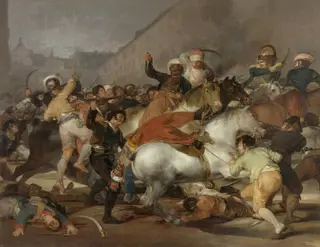
Own this work as a print
Artist & collection
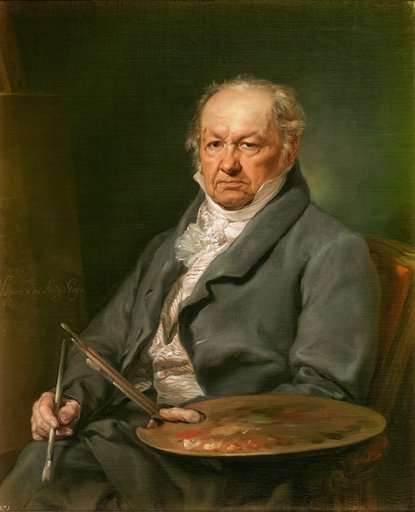
Artist
Francisco José de Goya y Lucientes was a Spanish romantic painter and printmaker.

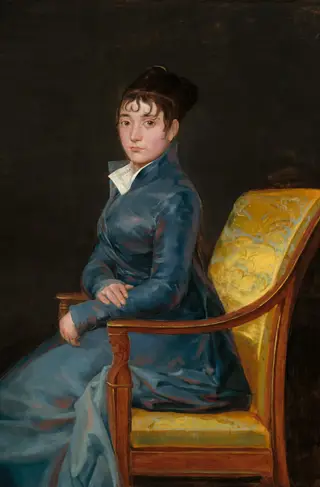
 War Scene
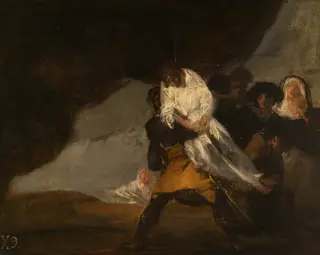 The Hanged Monk
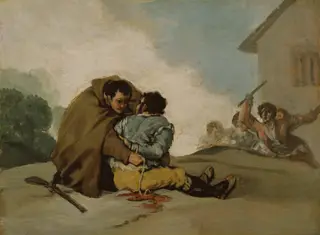 Friar Pedro Binds El Maragato with a Rope
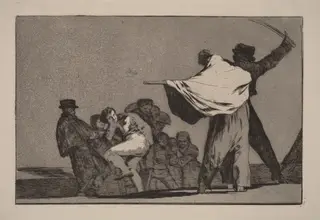 Disparate conocido (Well-Known Folly)
 The Hanged Monk
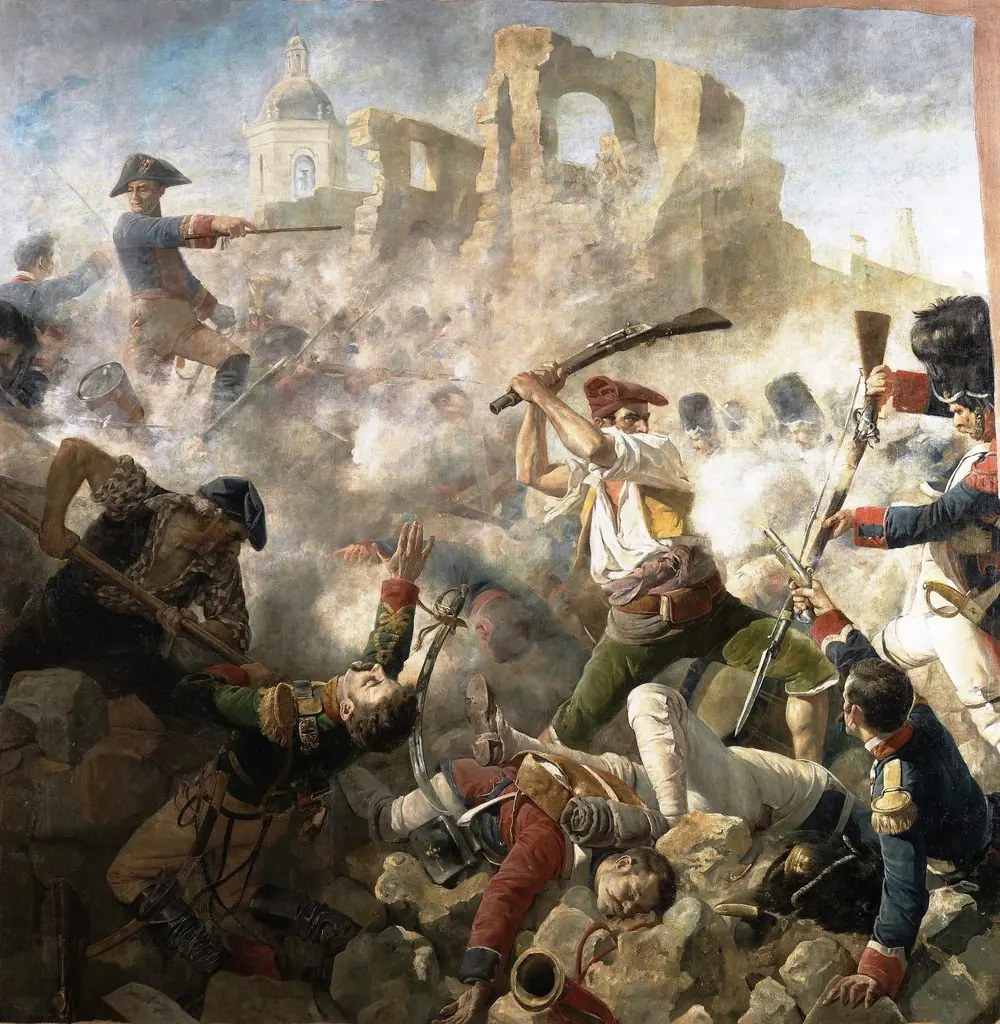 El gran día de Gerona (19 septiembre de 1809)
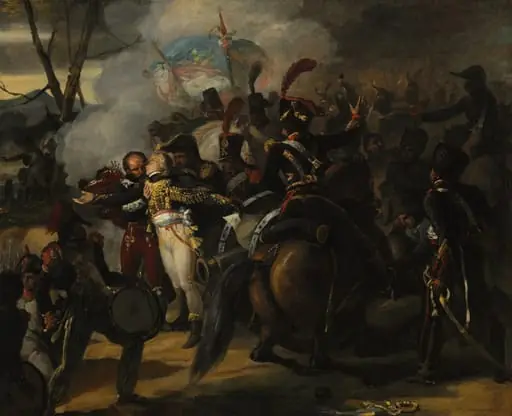 The Death of General Colbert
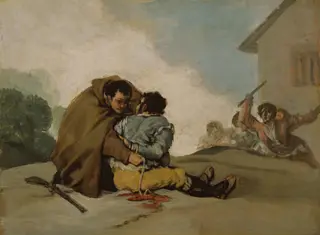 Friar Pedro Binds El Maragato with a Rope
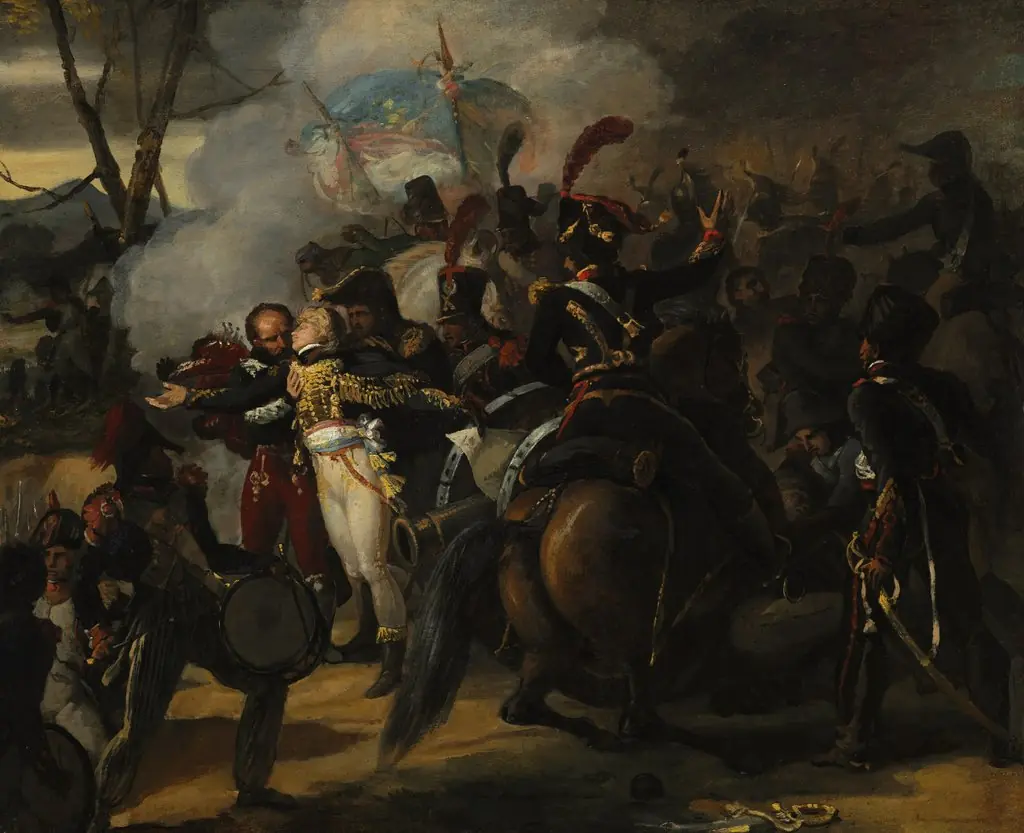 The Death of General Colbert
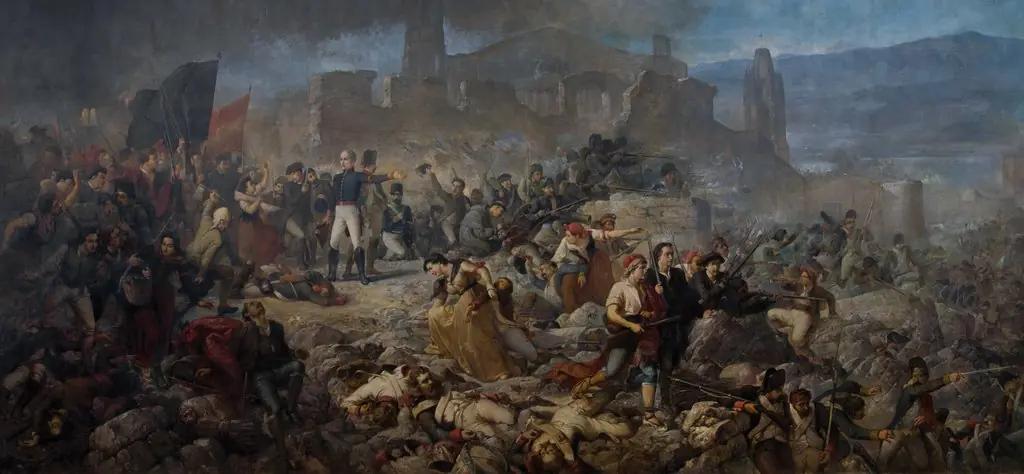 The Great Day of Girona
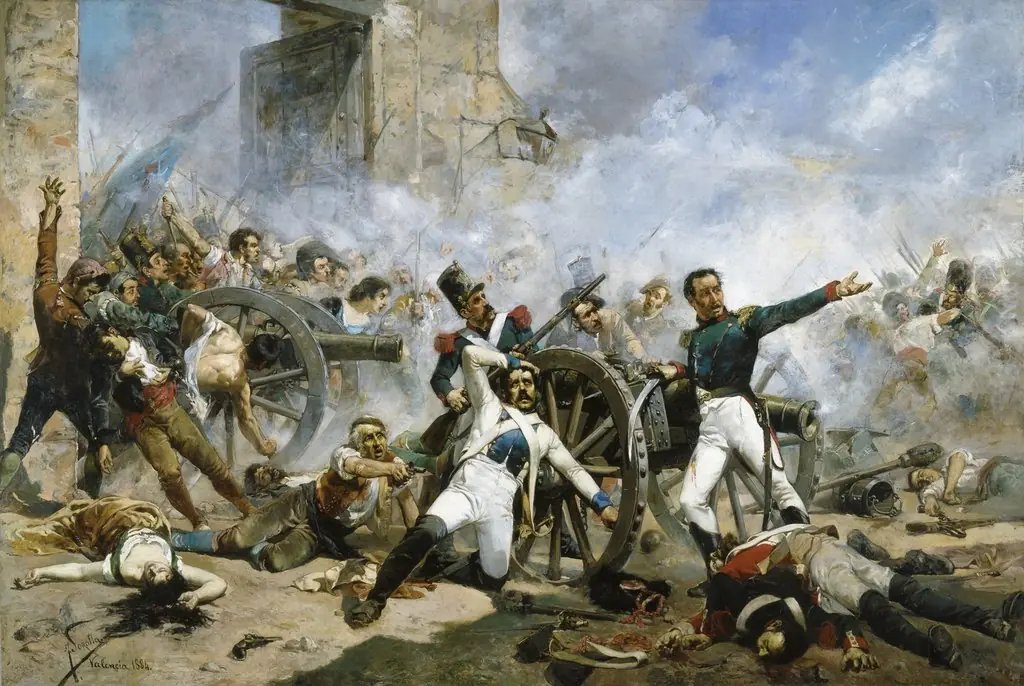 The death of Pedro Velarde y Santillán during the defence of the Monteleon Artillery Barracks.
- The Second of May 1808