Artwork
Portrait of Claes Duyst van Voorhout
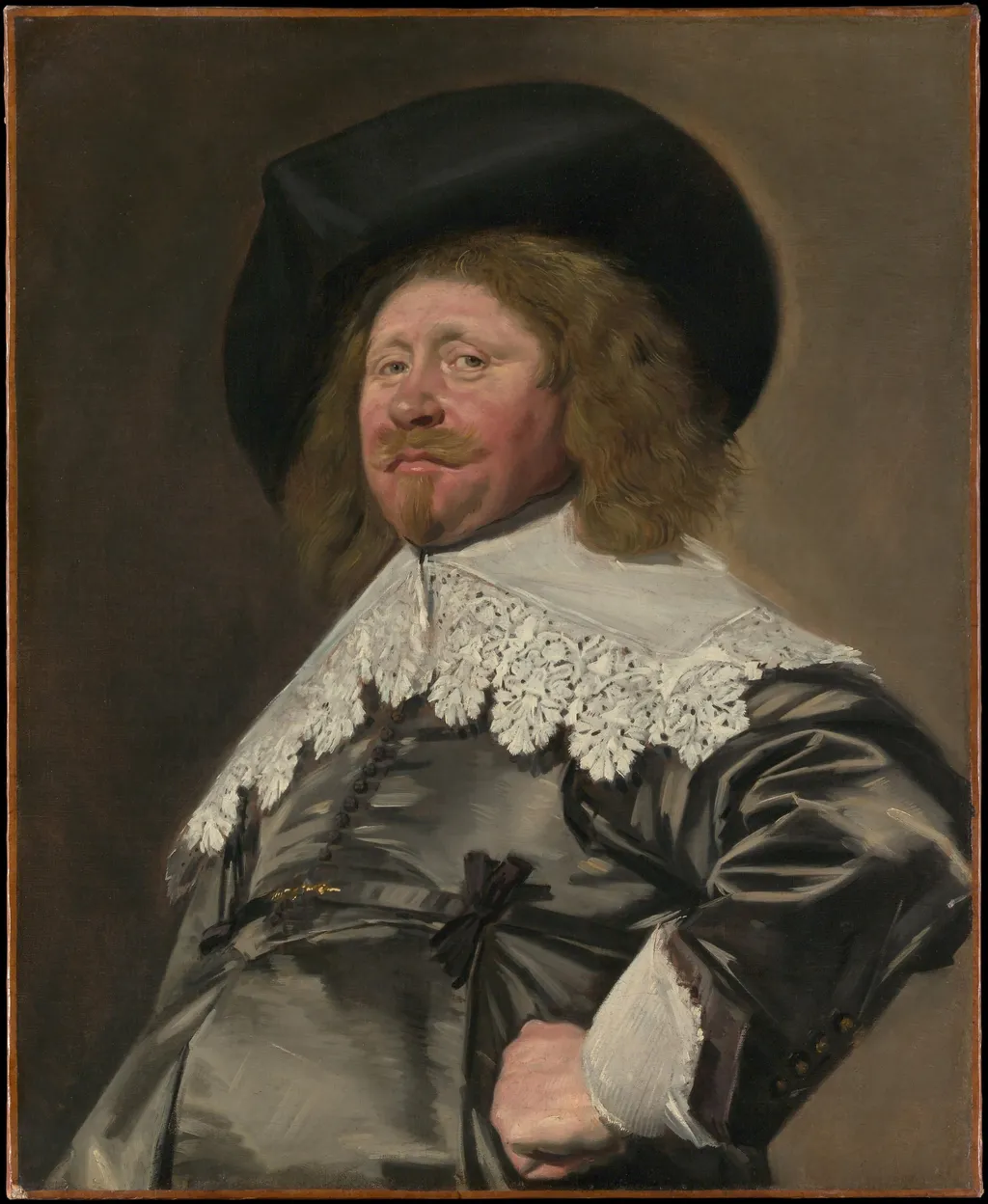
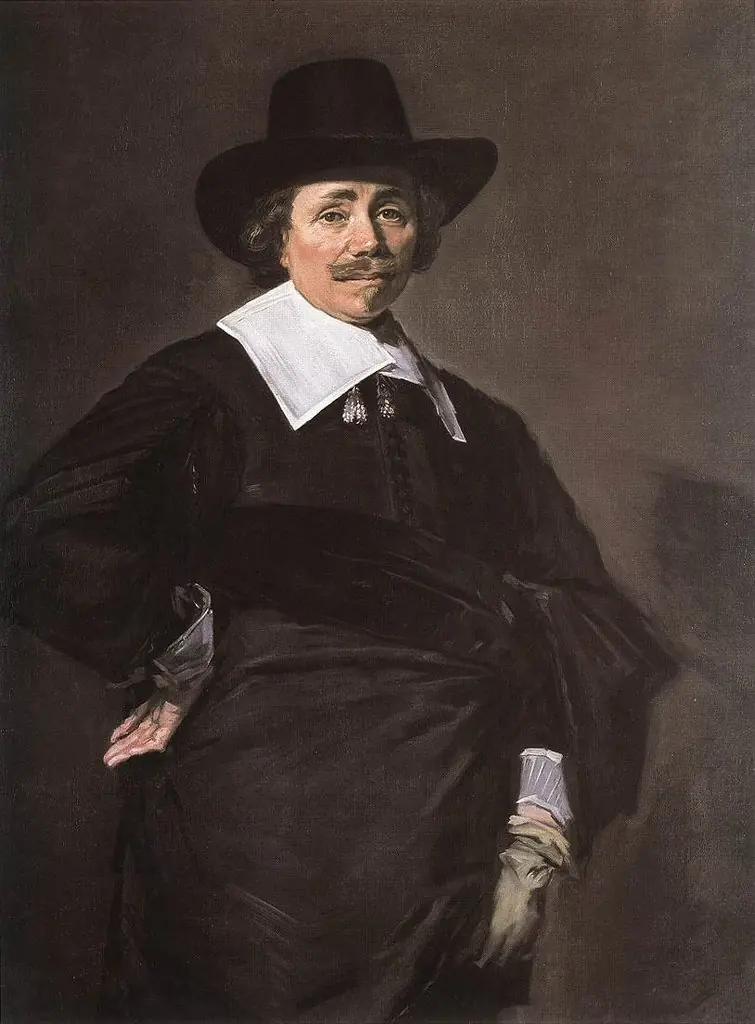
Portrait of Claes Duyst van Voorhout is an oil painting by the Dutch Golden Age artist Frans Hals. It dates from 1638 and is held in the collection of the Metropolitan Museum of Art.
About this work
Subject & Meaning
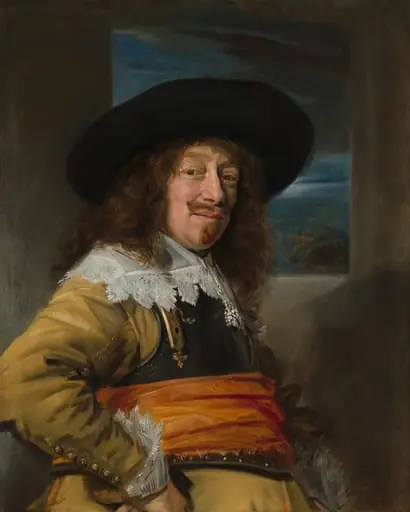
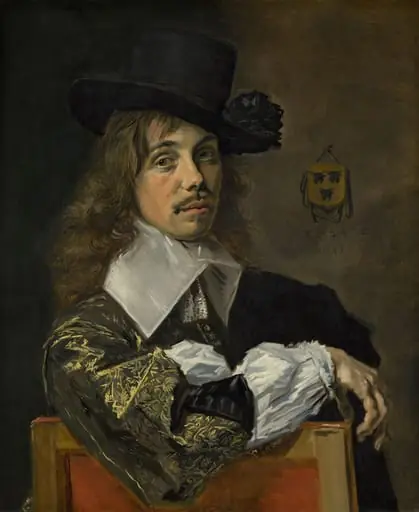
Portrait of Claes Duyst van Voorhout depicts a young Haarlem brewer identified by his floppy hat and hand‑on‑hip pose typical of Frans Hals.
Portrait of Claes Duyst van Voorhout depicts a young Haarlem brewer identified by his floppy hat and hand‑on‑hip pose typical of Frans Hals. The sitter’s professional attire signals his occupation, while the absence of his name from local militia records distinguishes him from other brewers Hals painted. Scholars suggest the work was not a wedding pendant but likely commissioned for display in the brewery or a hofje, or as a pendant to a business associate, serving to make the owner recognizable to employees and visitors.
Documentation of an old label naming the sitter as brewer of “De Zwaanschel” and archival evidence that Nicolaes Pietersz Duyst van Voorhout owned the “Swaenshals” brewery in 1629 support this functional interpretation.
Technique & Style
Portrait of Claes Duyst van Voorhout is an oil‑on‑canvas portrait painted in 1638 and now housed in the Metropolitan Museum of Art. The work is executed in oil paint on a canvas support and measures roughly 80.6 × 66 cm. Frans Hals employs his characteristic loose brushwork and dramatic left‑hand illumination, rendering the sitter in a relaxed pose with a floppy hat and hand on hip, exemplifying the formal portrait style of the Dutch Golden Age. The painting’s composition, attire, and handling of light reflect Hals’s signature stylistic traits, while the canvas and varnish remain largely intact.
History & Provenance
Painted in 1638 by Frans Hals in Haarlem, this oil-on-canvas portrait depicts Claes Duyst van Voorhout, a local brewer. The specific occasion for the commission remains unknown; scholars suggest it may have been intended to decorate the subject's brewery, known as the "Swaenshals," or to serve as a business pendant rather than a marital one. Archival evidence confirms Nicolaes Pietersz Duyst van Voorhout owned this brewery and was 29 years old in 1629, aligning with the 1638 date.
The work was first documented in 1854 by Gustav Friedrich Waagen as part of the collection of George Wyndham, 3rd Earl of Egremont, at Petworth House. Subsequent 20th-century scholarship by Wilhelm von Bode, Ernst Wilhelm Moes, and others consistently attributed the piece to Hals. An old label on the canvas's reverse, cited in Seymour Slive's 1989 exhibition catalog, explicitly identifies the sitter. The painting eventually entered the collection of the Metropolitan Museum of Art.
The painting is held by the Metropolitan Museum of Art in New York City. According to Wikidata, it was previously owned by Jules Bache before entering the museum's collection. The work is among the best-documented in Hals's oeuvre, first recorded by Gustav Friedrich Waagen in 1854 in his description of the paintings of George Wyndham, 1st Baron Leconfield at Petworth House.
It subsequently appeared in scholarly discussions by Wilhelm von Bode (1883), Ernst Wilhelm Moes (1909), Hofstede de Groot (1910), W.R. Valentiner (1923), Trivas (1941), and Gerrit David Gratama (1946). The Metropolitan Museum's records list various sale entries from the period of George Wyndham, 3rd Earl of Egremont through to the museum's acquisition. In Seymour Slive's 1989 catalog for the international Frans Hals exhibition, he discussed an old label on the reverse identifying the sitter as Claes Duyst van Voorhout, brewer at "De Zwaanschel."
Context
The Portrait of Claes Duyst van Voorhout (1638) is widely recognized as one of the best-documented works in Frans Hals's oeuvre. Its attribution to Hals is unanimously supported by major scholars, including Seymour Slive and Claus Grimm. The painting exemplifies Hals's characteristic style, featuring a subject in a distinctive pose with a hand on the hip, while simultaneously illustrating the artist's engagement with Haarlem's brewing community.
Although the sitter, a brewer, does not appear in local militia records unlike other subjects Hals portrayed, archival research confirms his identity as Nicolaes Pietersz Duyst van Voorhout, owner of the 'Swaenshals' brewery. The work's scholarly significance is further anchored by a continuous chain of documentation dating back to Gustav Friedrich Waagen's 1854 catalog, followed by studies from Wilhelm von Bode, Ernst Wilhelm Moes, and others. Its potential function as a pendant to a business partner's portrait, rather than a spousal match, offers insight into Hals's flexibility in commission types.
Legacy
The portrait of Claes Duyst van Voorhout is among the most thoroughly documented works by Frans Hals, a fact that has shaped scholarly understanding of the artist’s late portraiture and pendant conventions. Its early provenance, traced from 19th‑century sales to 20th‑century catalogues, was recorded by Waagen, Bode, Moes, Hofstede de Groot, Valentiner, Trivas and Gratama, and later confirmed by Slive and Grimm. The painting’s inclusion in the 1989 international Frans Hals exhibition highlighted its role in redefining notions of brewer portraiture and pendant pairings.
Today it remains on public view at the Metropolitan Museum of Art, reinforcing Hals’s reputation as a master of lively group and individual portraiture.
Overview
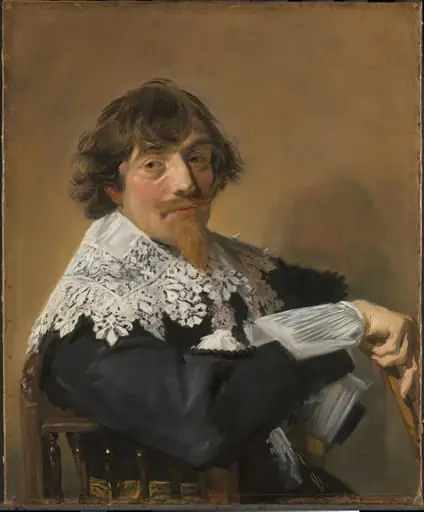
Painted in 1638, Frans Hals's Portrait of Claes Duyst van Voorhout captures the Dutch merchant in a half-length format, seated in profile while directing his gaze squarely at the viewer. The composition relies on Hals's characteristic loose, visible brushwork to render the sitter's attire, specifically the voluminous white lace collar and the crisp white handkerchief tucked into his dark doublet. These bright elements contrast sharply against the somber tones of the black hat and jacket, creating a focal point on the upper torso and face.
The background is a flat, unadorned dark plane, a convention that isolates the figure and emphasizes the psychological presence of the subject. This work exemplifies Hals's mature style during the 1630s, where he moved beyond the exuberant group portraits of earlier decades to create more intimate, individualized character studies. The painting demonstrates the artist's mastery in depicting texture and light without sacrificing the immediacy of the sitter's expression, cementing his reputation as a leading figure of the Dutch Golden Age.
Own this work as a print
Artist & collection
Artist
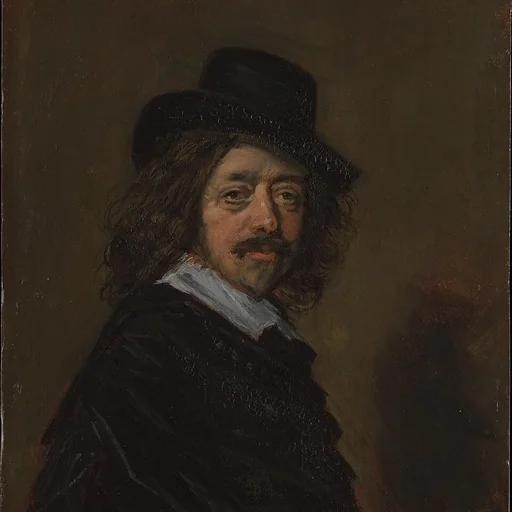
Frans Hals the Elder (UK: US:; Dutch:; c. 1582 – 26 August 1666) was a Dutch Golden Age painter. He lived and worked in Haarlem, a city in which the local authority of the day frowned on religious painting in places of…

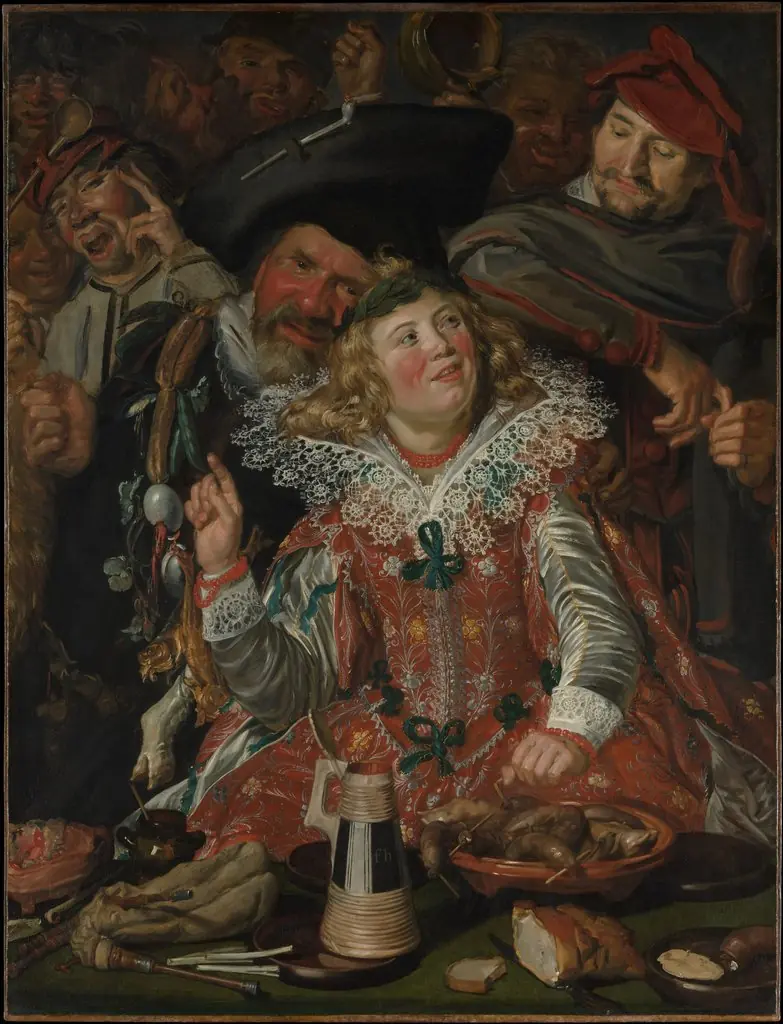
- Portrait of Isaak Abrahamsz. Massa
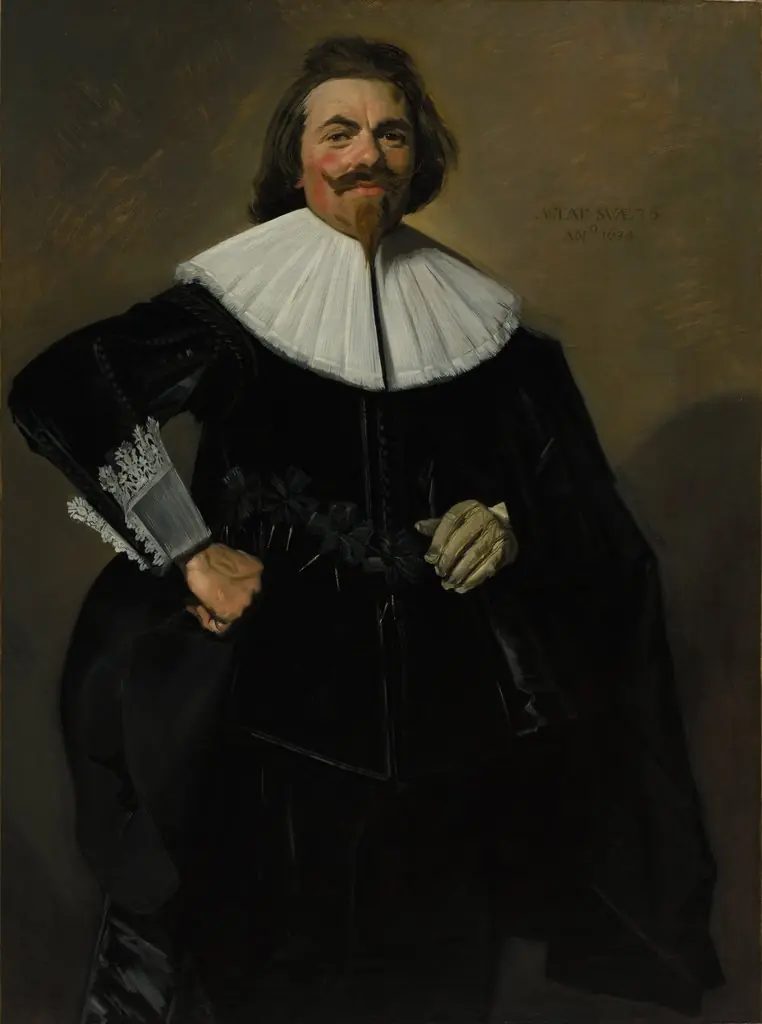 Portrait of Tieleman Roosterman
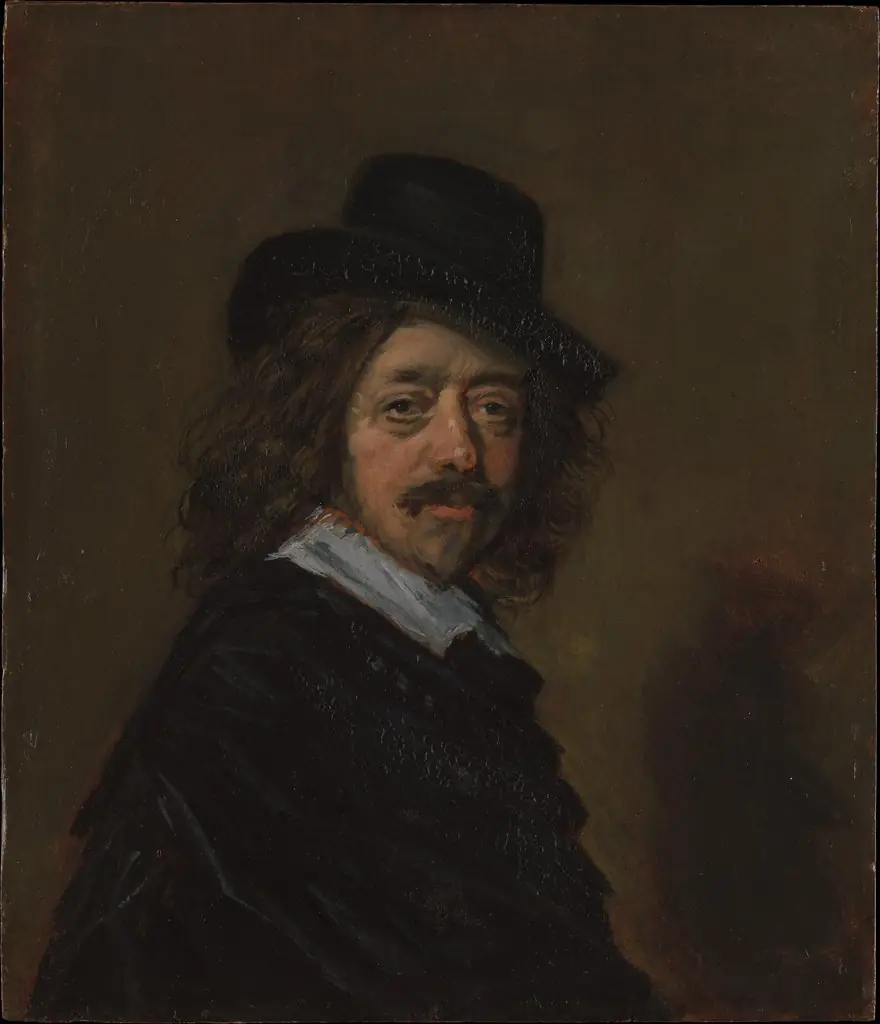 Frans Hals (1582/83–1666)
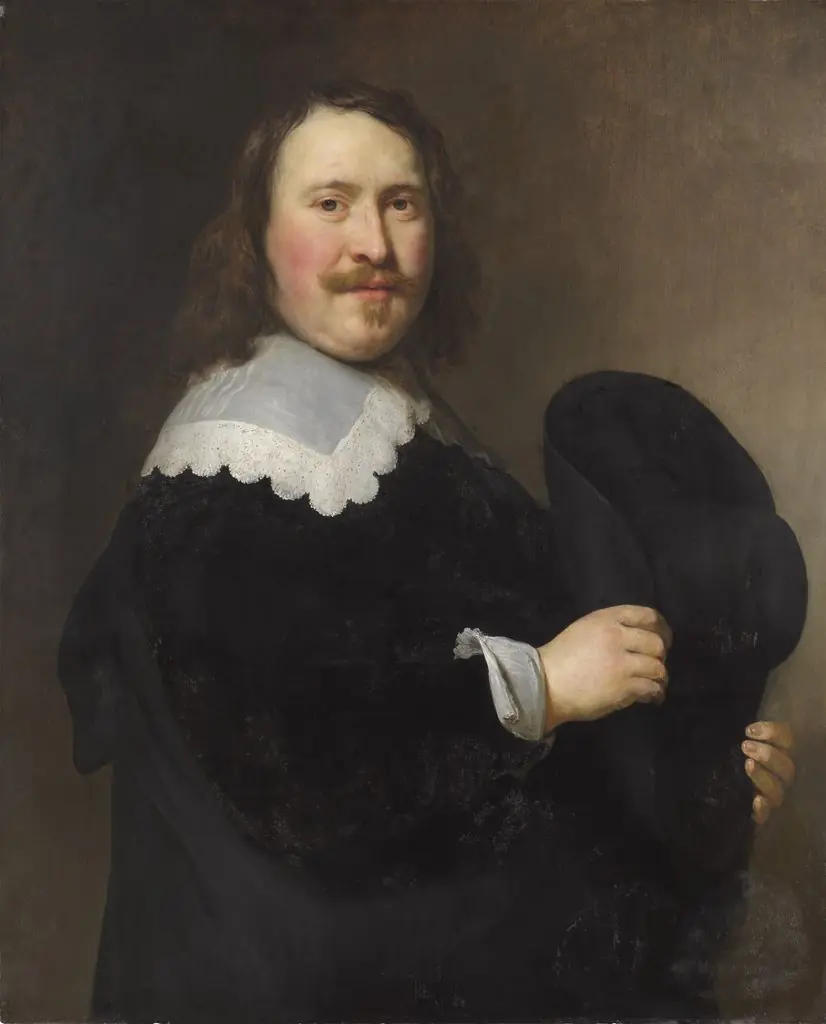 Portrait of a Man with a Hat
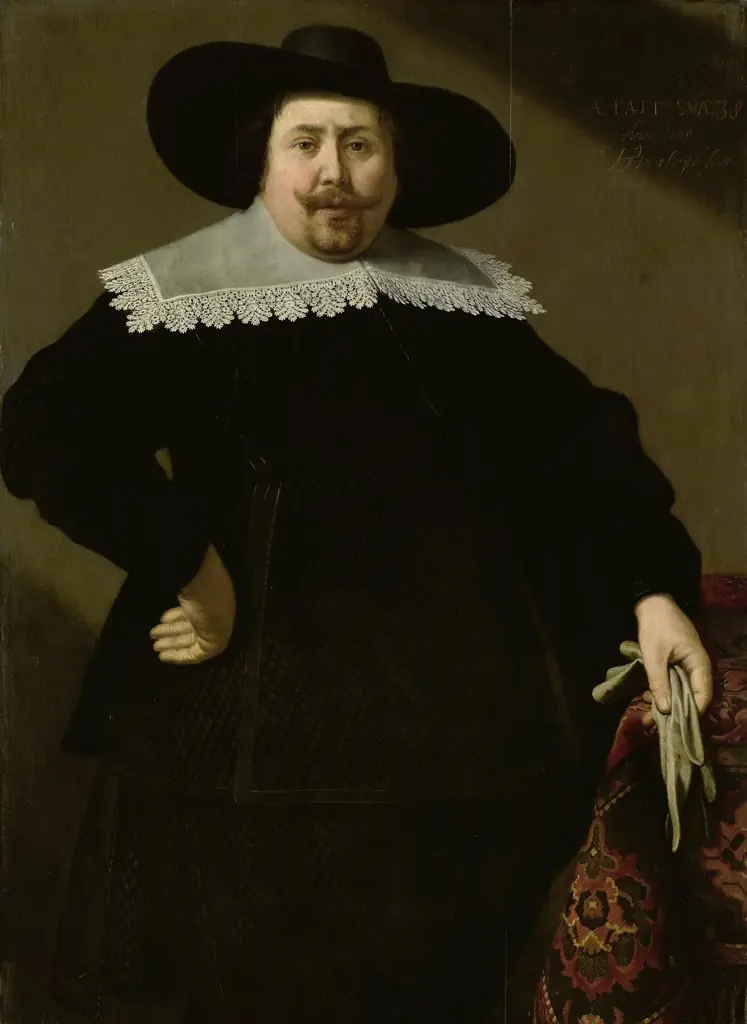 Portrait of Philips Denijs (1604-66)
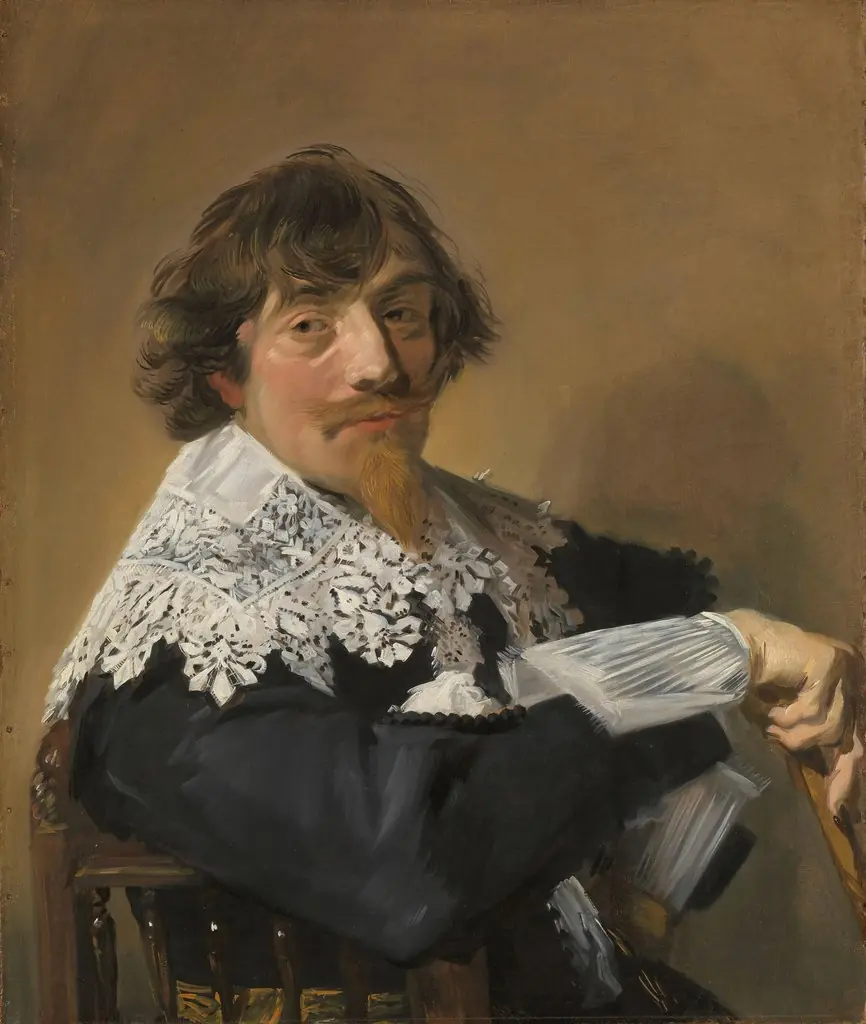 Portrait of Nicolaes Hasselaer (1593-1635)
 Portrait of Jan van de Poll (1597-1678)
 Portrait of a man with a hat
 Portrait of a man
 Portrait of a man with tassle collar and floppy hat
 Portrait of a man