Artwork
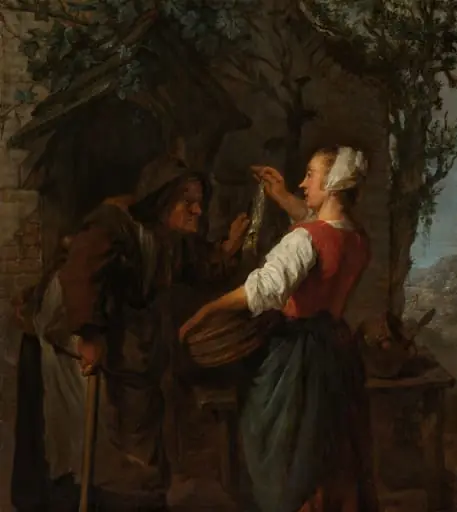
Woman selling herring
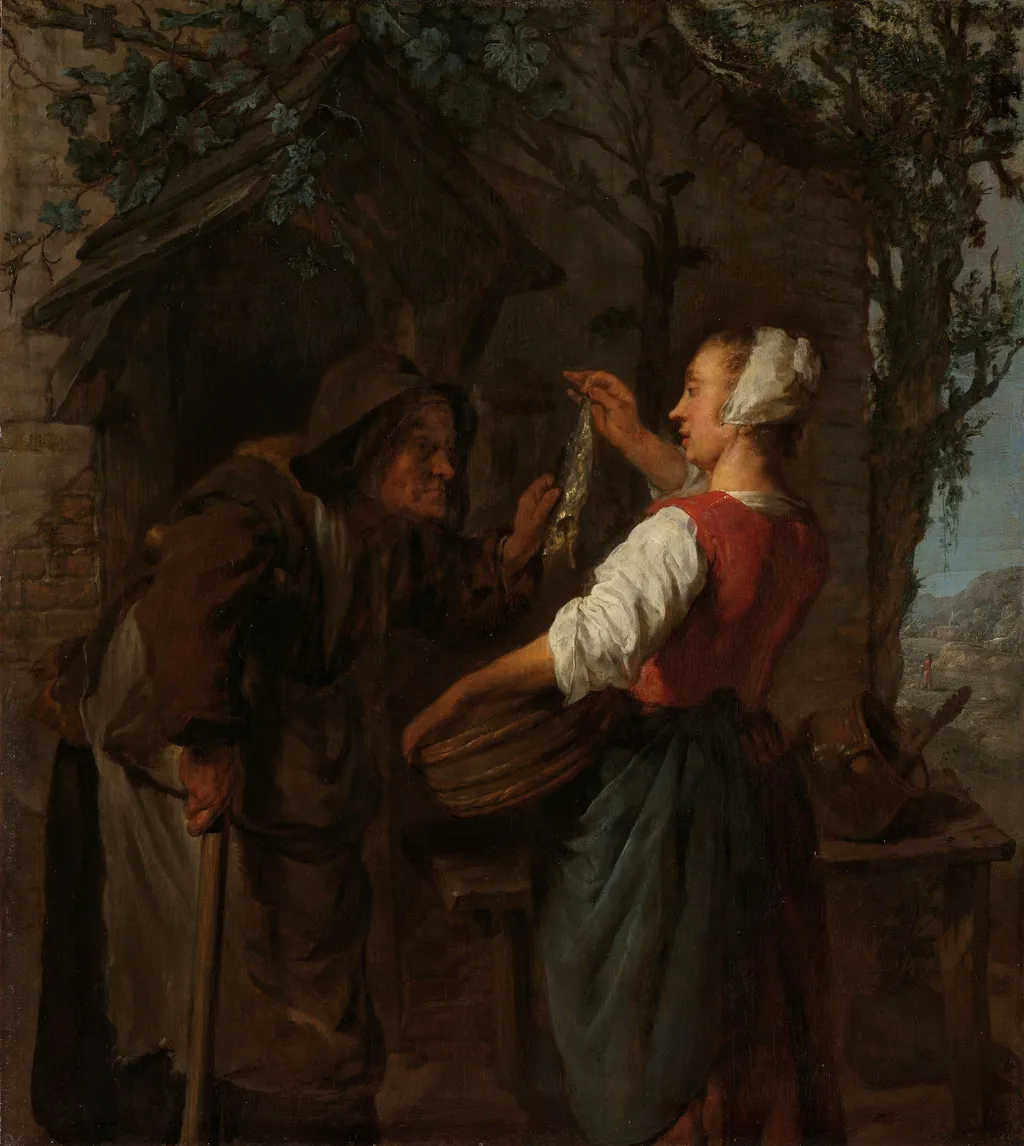
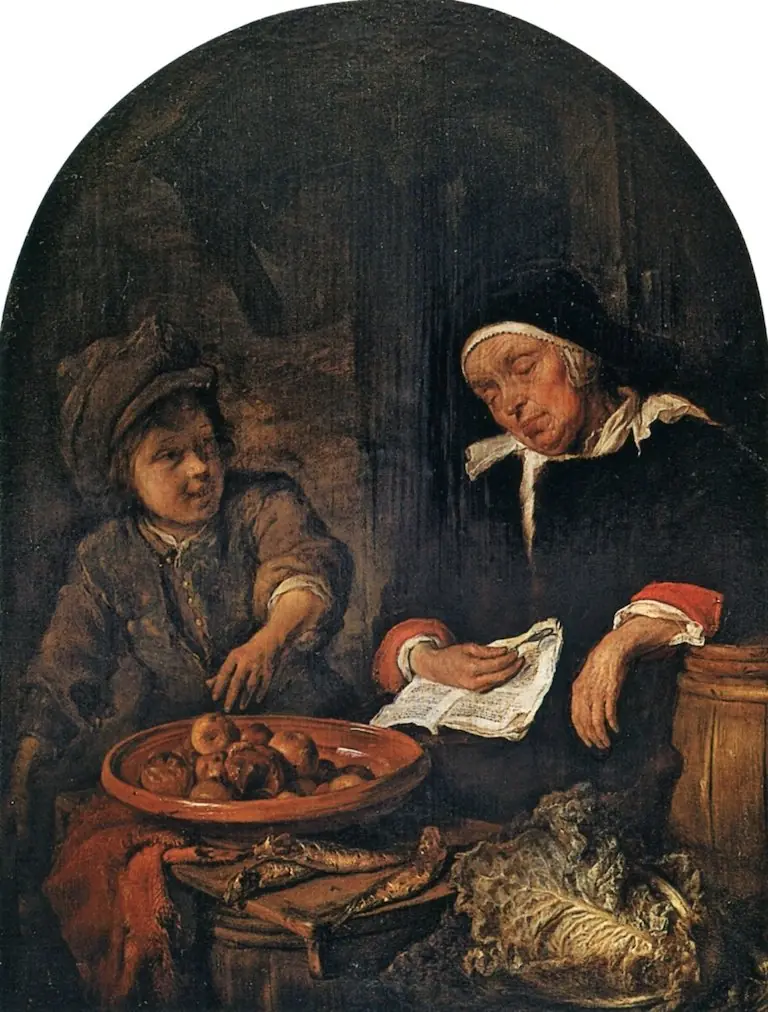
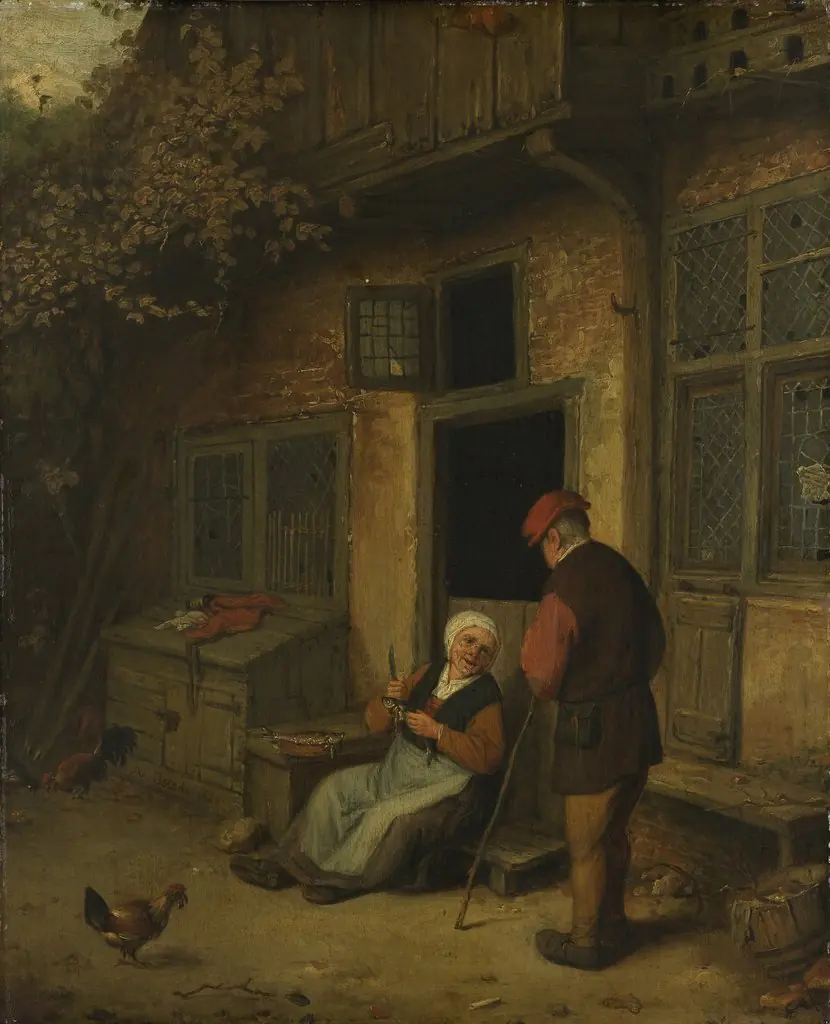
Woman selling herring is an oil painting by the Dutch Golden Age artist Gabriel Metsu. It dates from 1661 and is held in the collection of the Rijksmuseum.
About this work
Subject & Meaning
Metsu’s work captures a moment of exchange, reflecting the economic and social dynamics of the Dutch Golden Age.
The painting depicts a fishwife selling herring, a common scene in 17th-century Dutch market life. The woman, shown with her wares, embodies the everyday commerce of the lower classes. The herring itself, a staple food in the Netherlands, may carry symbolic associations with fertility or the transience of earthly goods, typical of genre scenes that blend realism with moralizing undertones.
Metsu’s work captures a moment of exchange, reflecting the economic and social dynamics of the Dutch Golden Age.
Technique & Style
The work is executed in oil paint on a wooden panel support, measuring 37 cm in height and 33 cm in width. Metsu’s handling emphasizes fine, controlled brushwork to render textures, from the glistening silver of the herring to the crisp linen of the woman’s cap and the coarse weave of her apron. The composition balances naturalistic detail with a quiet, intimate atmosphere, focusing on the seller’s hands and the fish while the background recedes into soft, neutral tones.
Light and shadow are subtly modulated to define form without dramatic contrast, a hallmark of mid-seventeenth-century Dutch genre practice.
History & Provenance
Gabriel Metsu created the oil-on-panel painting Woman selling herring in 1661. The work's documented ownership chain begins with Pieter Locquet, followed by Gerrit Braamcamp and Jeronimo de Vries. In the late 18th century, the painting entered the collection of Pieter de Smeth and subsequently passed to Lucretia Johanna van Winter.
The Six family later acquired the piece, with ownership recorded passing through Hendrik Six van Hillegom, Jan Pieter Six VI, Pieter Hendrik Six van Vromade, and Jan Six van Vromade. The painting currently resides in the collection of the Rijksmuseum.
The painting is held by the Rijksmuseum, Amsterdam, inventoried as SK-C-1715.
It was included in the 1808 exhibition ‘Teekeningen en Kunstwerken der Nederlandsche Meesters’ at the Amsterdam Trippenhuis, organized by the Koninklijk Nederlandsch Instituut.
It appeared again in the 1887 ‘Nederlandsche Meesters uit de XVIIe Eeuw’ exhibition at the Rijksmuseum, Amsterdam.
Overview
Woman selling herring, painted in 1661 by Gabriël Metsu, is a genre scene from the Dutch Golden Age, depicting everyday life through the interaction of two women in a rustic setting.
Context
Created during the Dutch Golden Age, the work aligns with the era's artistic trends, highlighting everyday activities and the commonality of herring as a food staple in 17th-century Dutch life.
Own this work as a print
Artist & collection

Artist
Gabriël Metsu (1629–1667) was a Dutch painter of history paintings, still lifes, portraits, and genre works.