Artwork
A woman gutting herring in front of her house
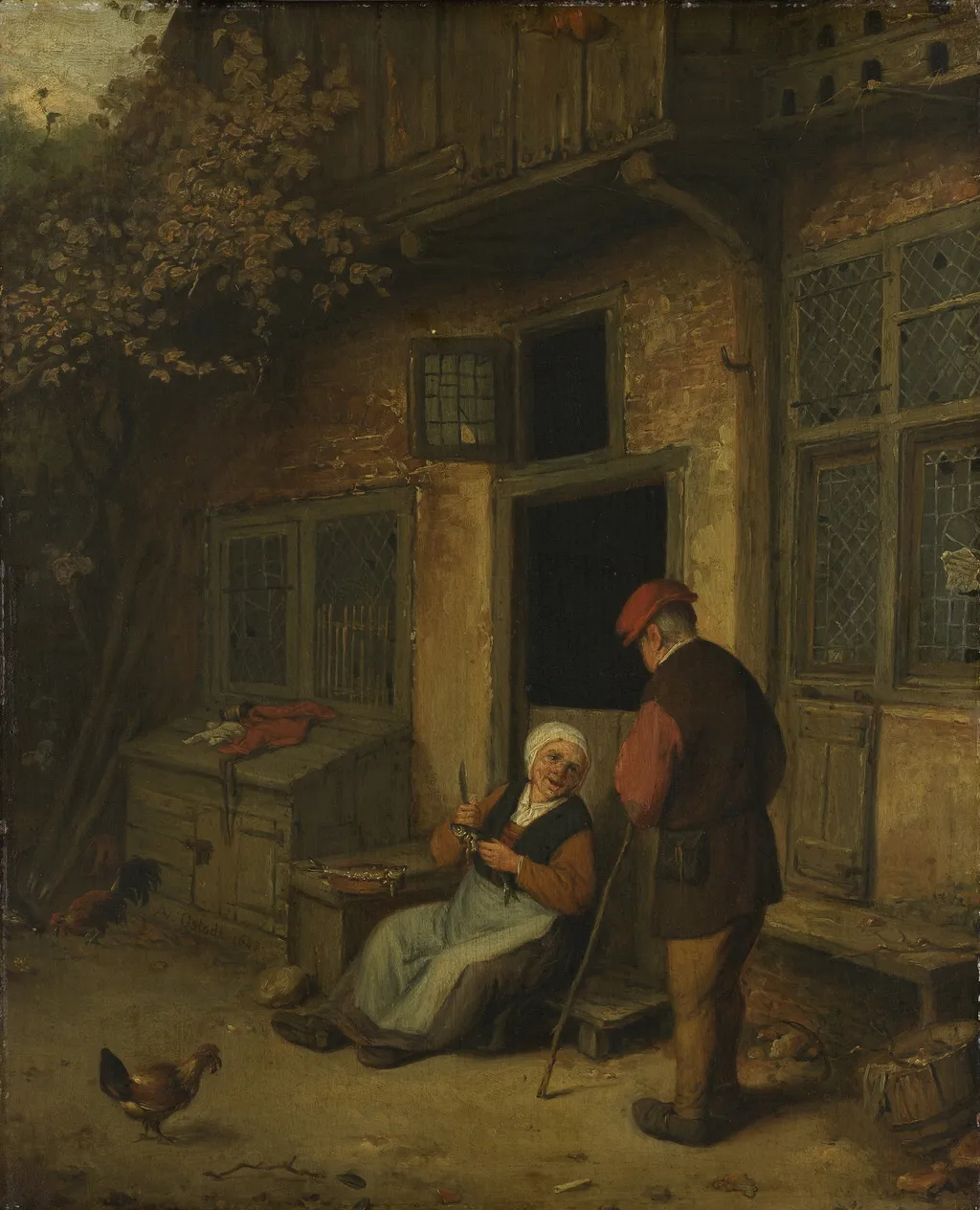
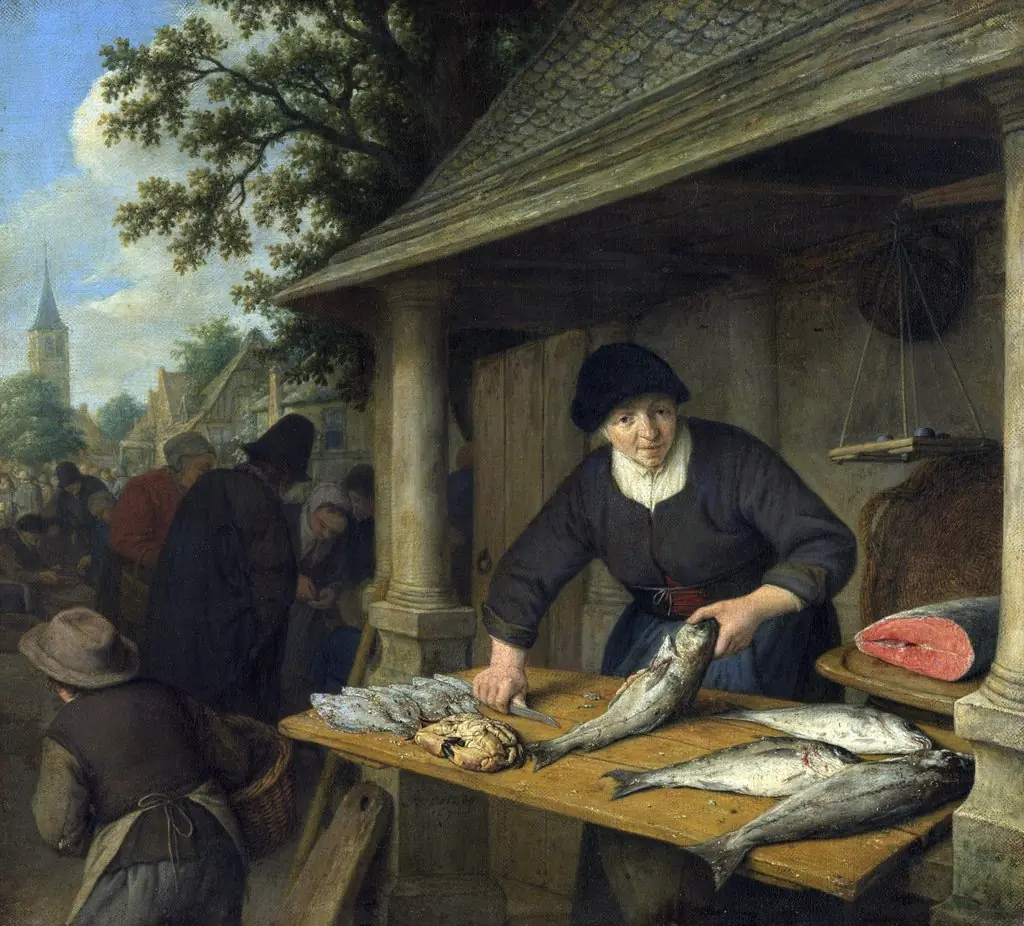
A woman gutting herring in front of her house is an oil painting by the Dutch Golden Age artist Adriaen van Ostade. It dates from 1675 and is held in the collection of the Rijksmuseum.
About this work
Subject & Meaning
The work is part of Ostade’s genre‑painting tradition, which often depicted rural and domestic scenes with a keen eye for detail and narrative clarity.
The painting shows a domestic interior where a woman prepares herring, a common activity in 17th‑century Dutch households. Ostade renders the scene with a focus on everyday labor, emphasizing the modest domestic setting and the practical aspects of food preparation. The composition underscores themes of household routine and the economic activities of women in the Dutch Golden Age, reflecting broader social attitudes toward gendered labor and domestic management.
The work is part of Ostade’s genre‑painting tradition, which often depicted rural and domestic scenes with a keen eye for detail and narrative clarity. Its presence in the Rijksmuseum and Amsterdam Museum collections, owned by Seger Tierens, highlights its significance within Dutch genre art and its representation of contemporary household tasks.
Symbolically, the act of gutting herring can be read as an illustration of subsistence and the labor involved in sustaining a household, reinforcing the importance of food preparation within the domestic sphere.
Technique & Style
The painting was executed in oil paint on a wooden panel in 1675. It depicts a domestic interior scene featuring a woman engaged in the act of gutting herring, reflecting typical 17th‑century genre painting conventions. Formal qualities include modest composition, restrained coloration, and a focus on everyday activity rendered with observational detail.
History & Provenance
A woman gutting herring in front of her house was created by Adriaen van Ostade in 1675, executed in oil paint as a genre scene. The work is documented as part of the holdings of the Rijksmuseum and Amsterdam Museum collections, and is recorded as having been owned by Seger Tierens. No further details regarding its commission, earlier provenance, or chain of ownership are provided in the available sources.
The work is held in the Rijksmuseum, Amsterdam Museum, and was owned by Seger Tierens. Its inventory number is not specified in the provided sources. The painting was created in 1675 and has been part of the Rijksmuseum's collection since its acquisition.
Legacy
Adriaen van Ostade's 1675 oil painting depicting a woman gutting herring in front of her house has been recognized as a significant example of Dutch Golden Age genre painting. The work, housed in the Rijksmuseum and Amsterdam Museum collections, exemplifies the artist's focus on everyday rural life and domestic scenes. Its composition and subject matter influenced later genre painters who explored similar themes of household activities and working-class subjects, contributing to the development of narrative realism in 17th-century Dutch art.
The painting's provenance through Seger Tierens and its presence in major Amsterdam collections have cemented its reputation as an important piece within van Ostade's oeuvre, frequently cited in studies of genre painting's evolution.
Overview
Painted in 1675, Adriaen van Ostade's 'A woman gutting herring in front of her house' is a quintessential example of Dutch Golden Age genre painting. The work depicts a domestic scene set before a rustic dwelling, where a woman sits on a low stool, intently cleaning a herring with a knife. Beside her, a man wearing a red hat leans casually on a walking stick, observing her labor.
The composition is anchored by the architectural details of the house, which features wooden doors fitted with diamond-patterned leaded glass, and is enlivened by a rooster standing in the foreground. Executed in oil paint, the piece demonstrates Ostade's mature style, characterized by a warm, earthy palette and a focus on the textures of everyday life. Created during the later phase of his career, this work reflects the artist's enduring interest in the lives of the rural poor, capturing a moment of mundane activity with a sense of quiet dignity and narrative specificity.
The painting serves as a testament to Ostade's ability to elevate common subjects into enduring artistic statements, maintaining the observational rigor that defined his contribution to 17th-century Dutch art.
Own this work as a print
Artist & collection

Artist
Adriaen van Ostade (baptized as Adriaen Jansz Hendricx 10 December 1610 – buried 2 May 1685) was a Dutch Golden Age painter of genre works, showing the everyday life of ordinary men and women.

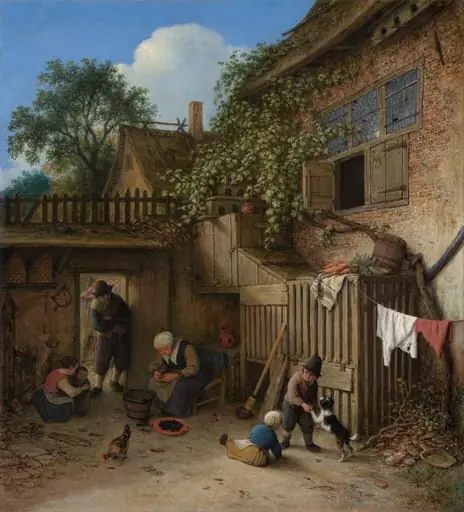
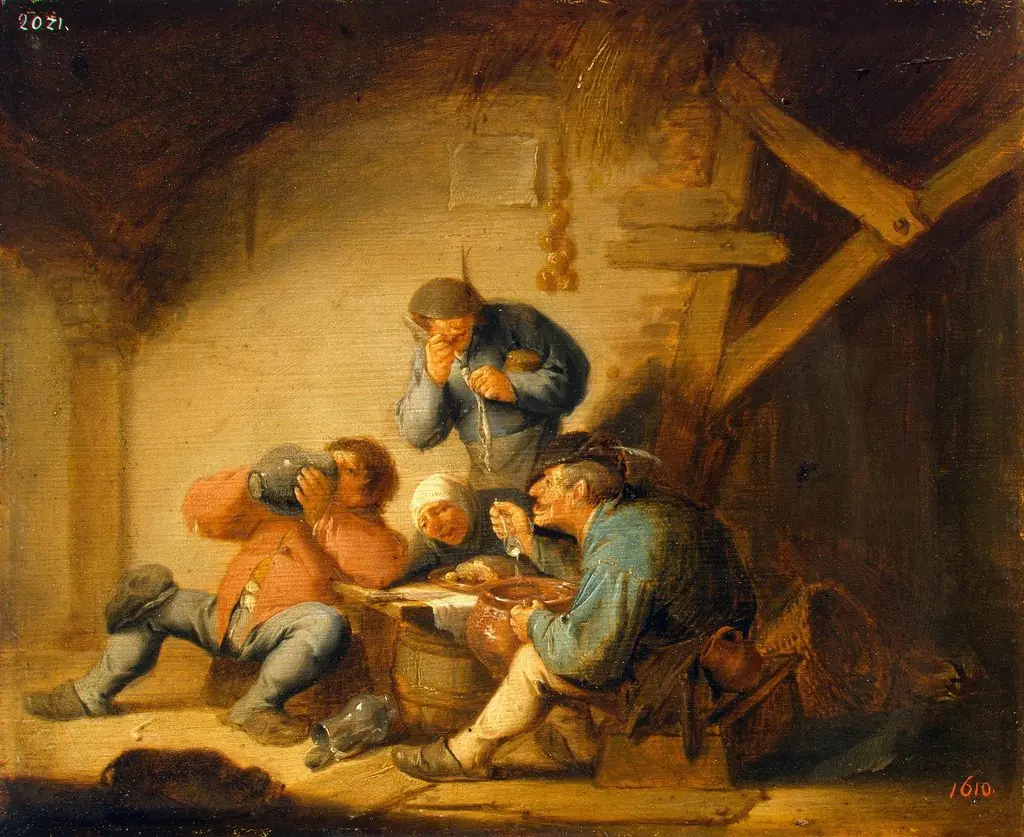
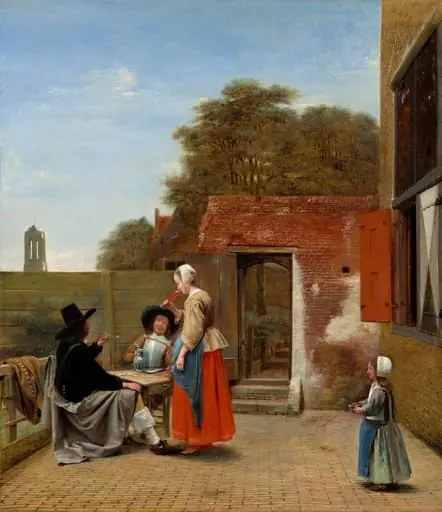 A Dutch Courtyard
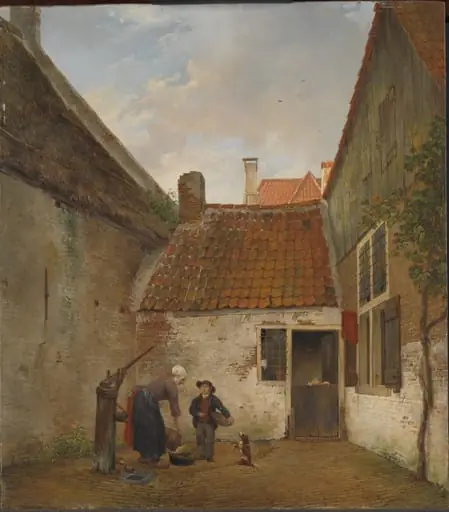 Inner Courtyard
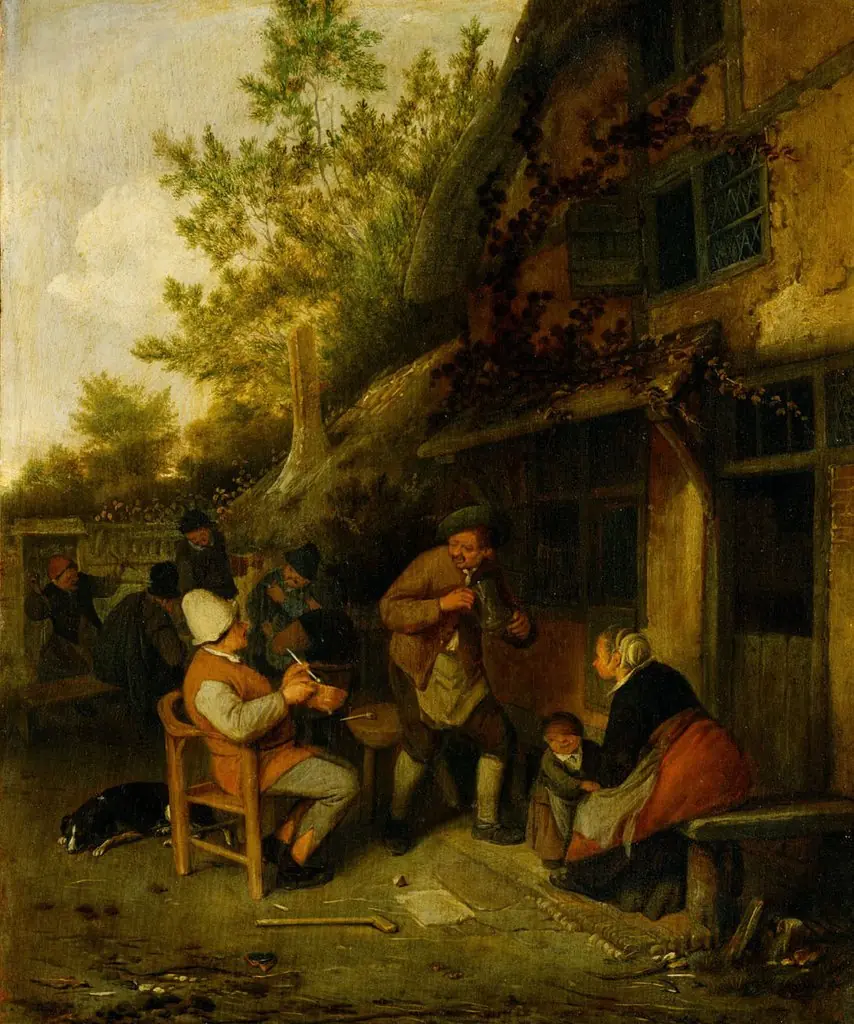 Bauern vor einem Wirtshaus
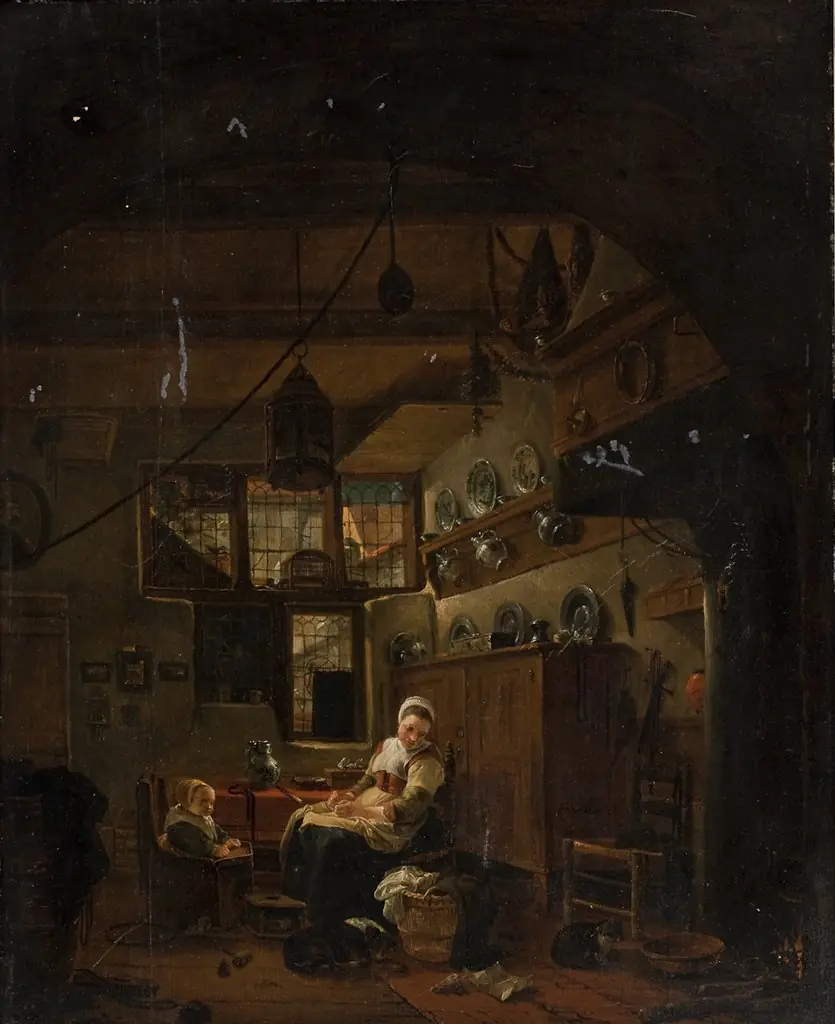 Interior of a Dutch Farm Cottage
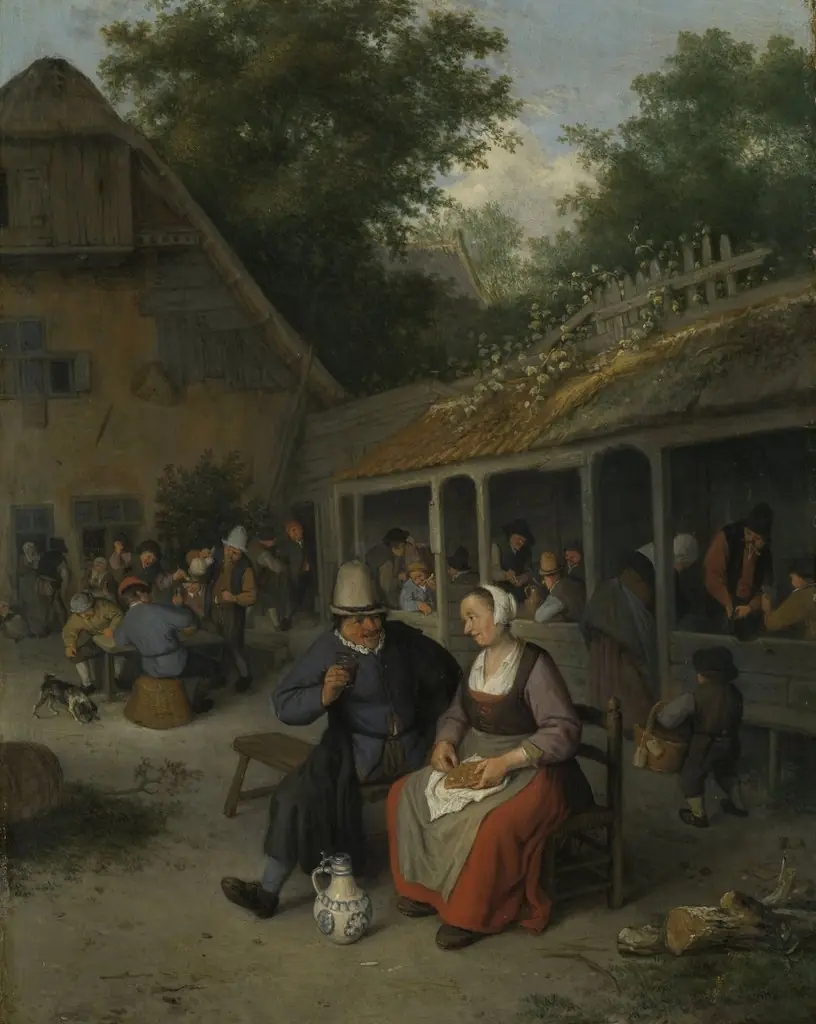 Village inn
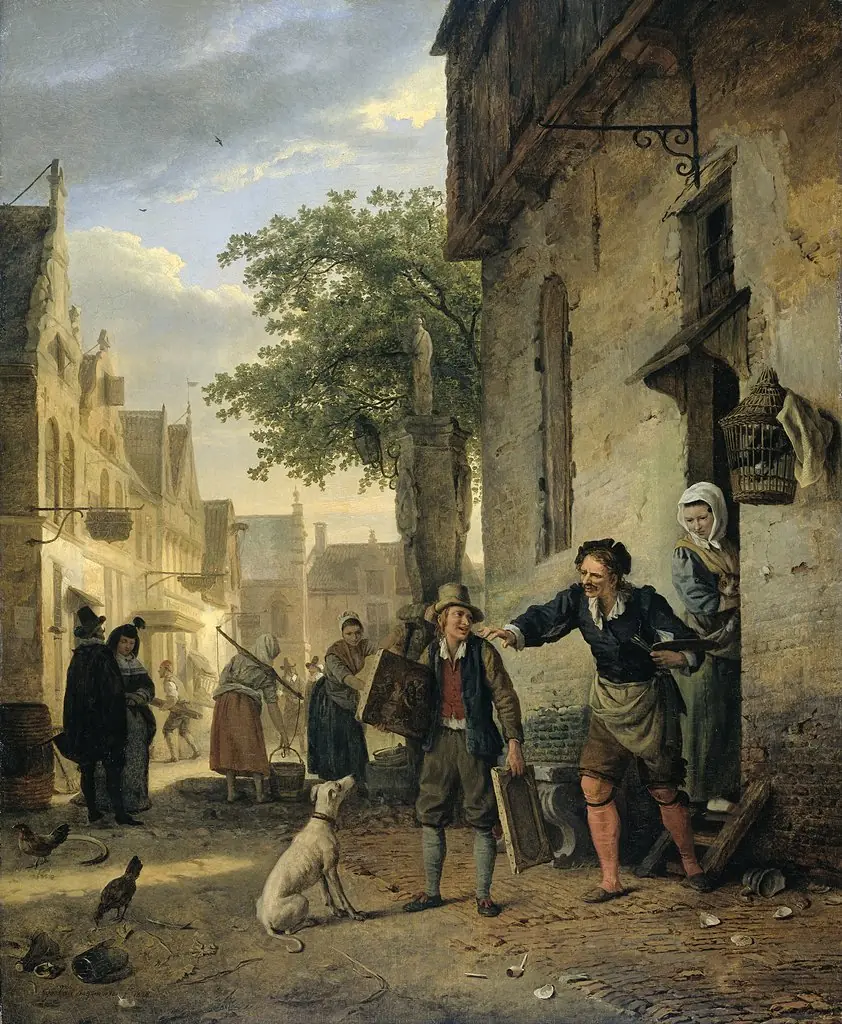 Jan Steen Sends his Son to the Streets to Exchange Paintings for Beer and Wine
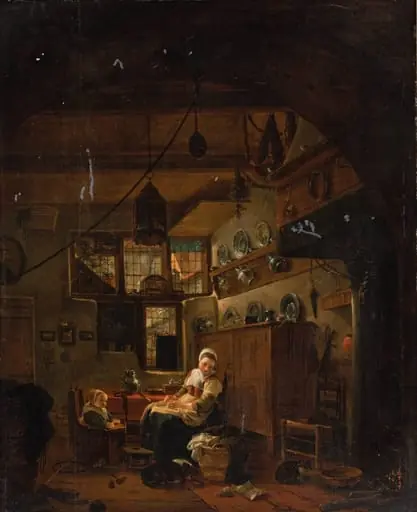 Interior of a Dutch Farm Cottage
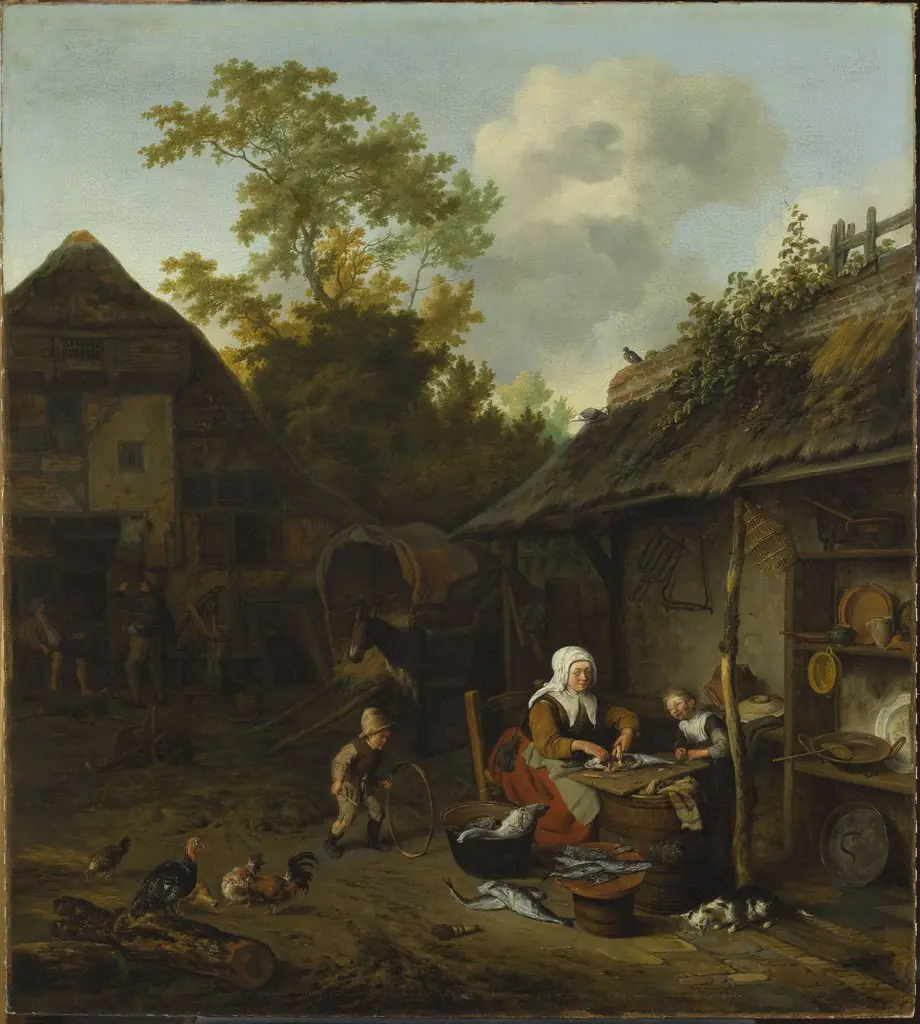 Fish scraping
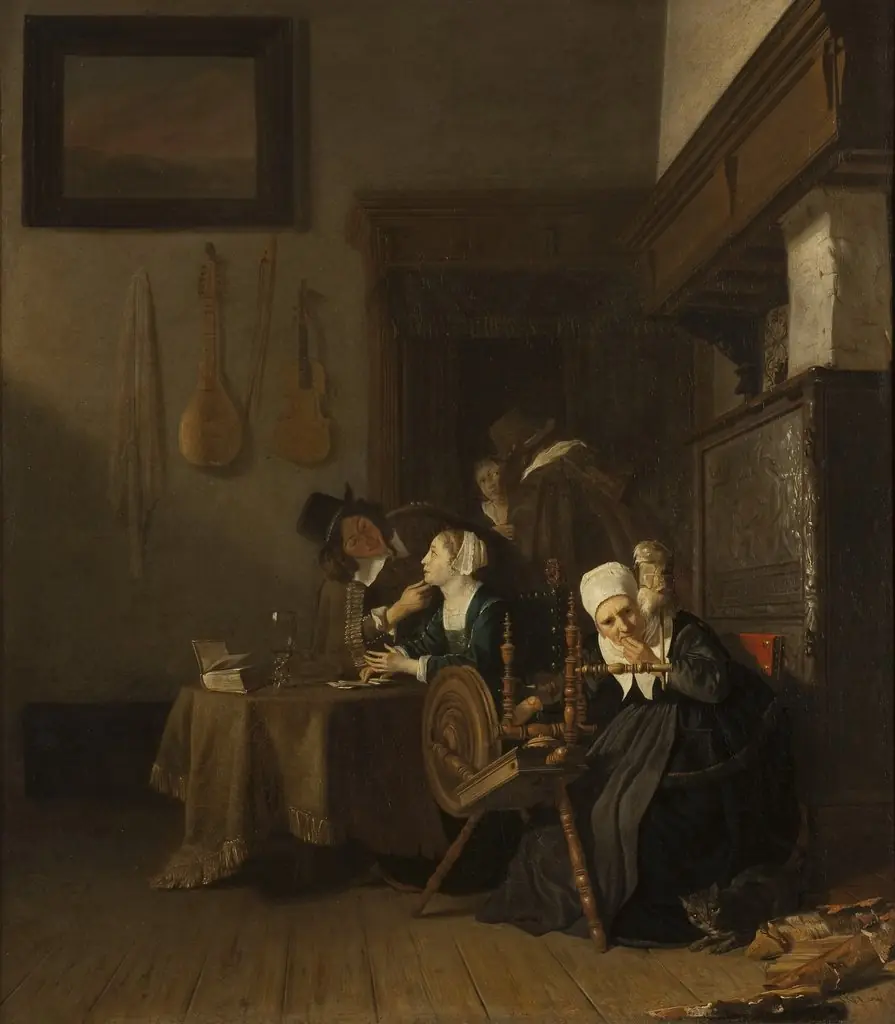 Indulgent Old Lady
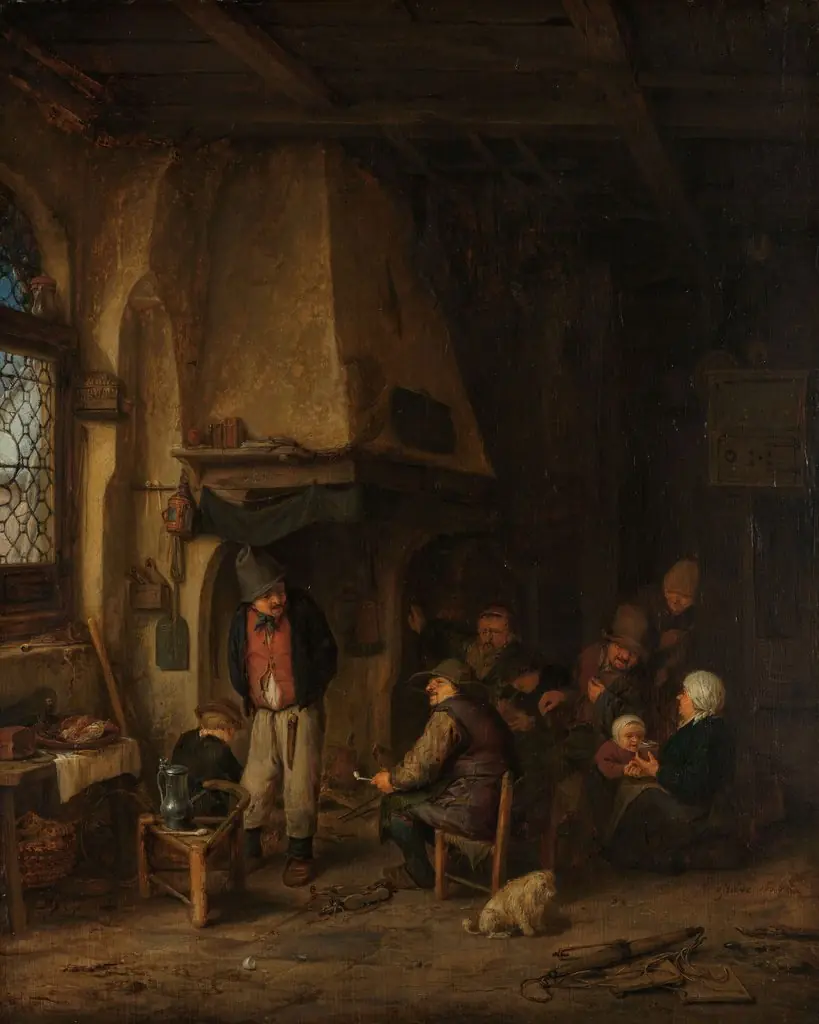 ‘The Skaters’: Peasants in an Interior
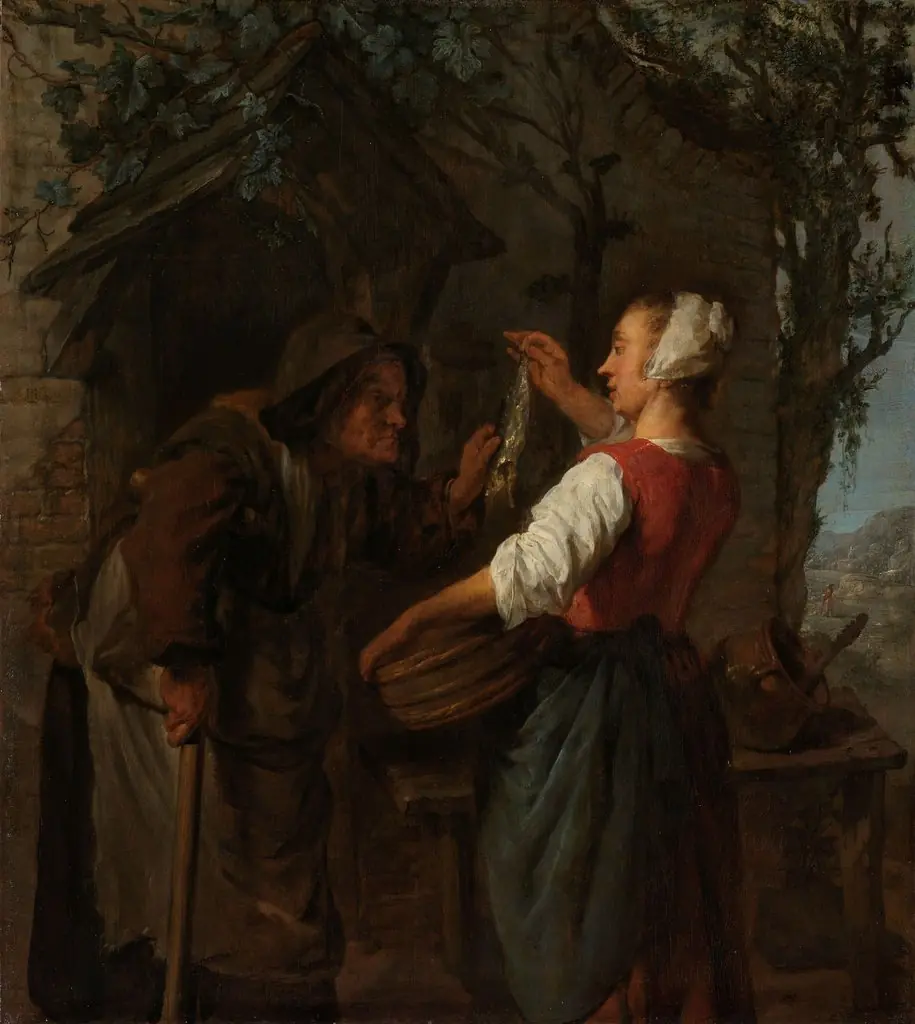
- Woman selling herring