Artwork
Stoning of St. Stephen
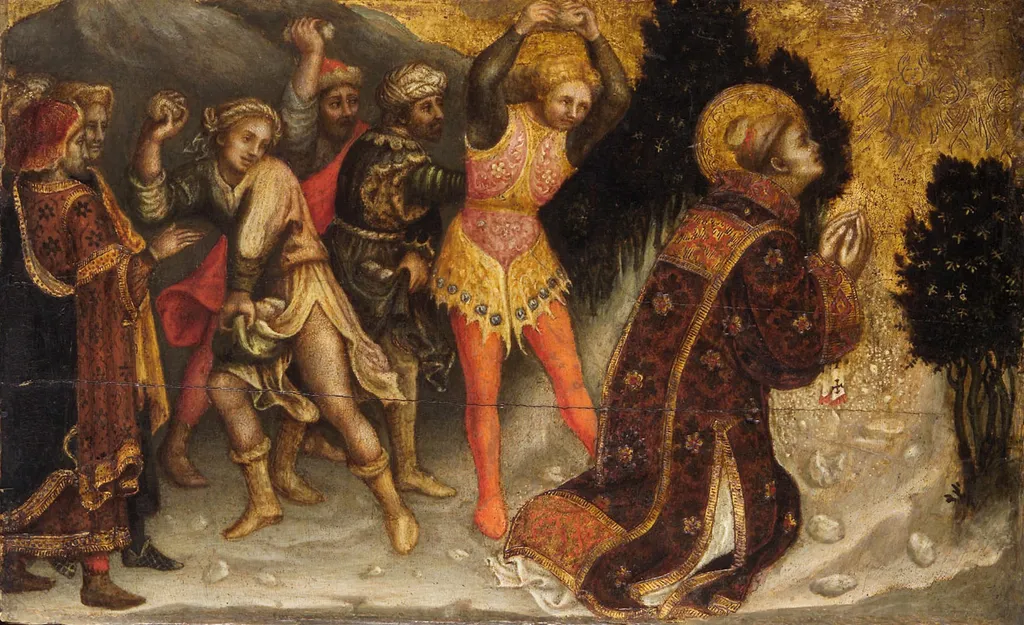
Stoning of St. Stephen is a tempera painting by the Early Renaissance artist Gentile da Fabriano. It dates from 1423 and is held in the collection of the Kunsthistorisches Museum. The Stoning of St.
About this work
Overview
Long dismissed as a forgery, the painting was only reintegrated into Gentile's accepted corpus in recent decades.
The Stoning of St. Stephen is a small tempera and gold painting on panel by the Italian artist Gentile da Fabriano, dated to 1423 and held in the Kunsthistorisches Museum in Vienna. Measuring approximately 16.5 by 27 centimeters, the work depicts the martyrdom of Saint Stephen, the first Christian martyr. Long dismissed as a forgery, the painting was only reintegrated into Gentile's accepted corpus in recent decades. It is now recognized as a significant example of International Gothic painting from the artist's Florentine period, distinguished by its refined goldwork, elegant figure poses, and sophisticated decorative surface.
Subject & Meaning
The painting depicts the biblical martyrdom of Saint Stephen, as recounted in the Acts of the Apostles. At right, the kneeling saint appears in profile with hands clasped in prayer, wearing an ornate dark red dalmatic with gold trim and floral patterns, his head encircled by a golden halo. To the left, four executioners twist in rhythmic, almost balletic poses as they hurl stones, while two additional figures observe impassively, one directing the operation with a gesture of his hand. The upper portion of the panel, now mutilated, originally contained a divine apparition in a cloud of cherubini, rendered solely through incised gold, a highly refined technique characteristic of Gentile's artistry. The scattered stones on the pale ground and the raised arms of the aggressors emphasize the violence of the scene, while Stephen's composure underscores his spiritual transcendence. The iconography draws upon established Florentine traditions, with precedents in works by Bernardo Daddi and Gherardo Starnina, as well as sculptural sources such as Lorenzo Ghiberti's north door for the Florence Baptistery.
Technique & Style
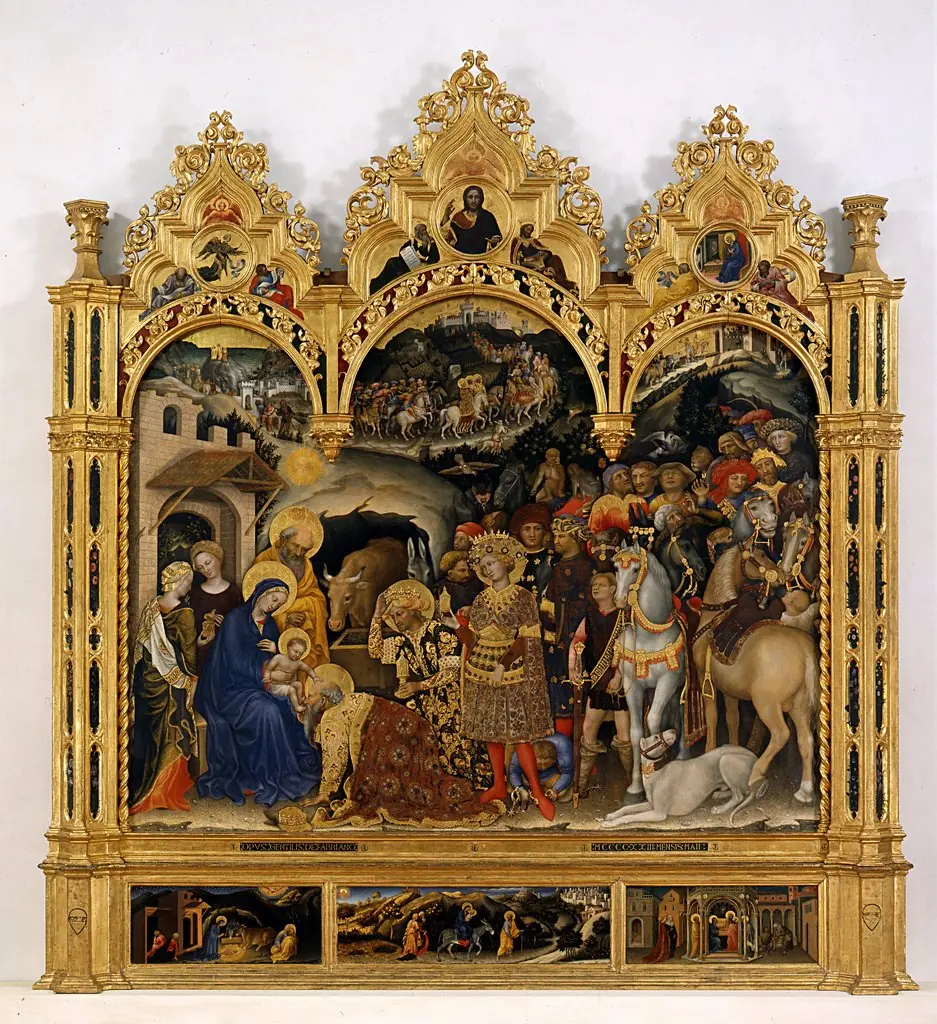
The work is executed in tempera with gold on panel, a medium that allows for the smooth, meticulous brushwork and lavish decorative effects for which Gentile was renowned. The palette is dominated by deep reds, gold, yellow, and dark browns, set against a luminous burnished gold sky with faint decorative tooling visible in the upper right corner. Light falls from the upper right, illuminating Stephen's halo and face, creating a dramatic focus on the martyr. The artist's careful attention to patterned textiles and decorative details on garments recalls the opulence of the Strozzi Altarpiece. The surface exhibits fine craquelure and a visible horizontal crack running across the panel. The poses of the figures are studiedly elegant, with an exuberant decorative quality that defines Gentile's International Gothic style. The gold background, with its tooled and incised details, demonstrates the sophisticated manipulation of precious materials that distinguished the artist's technique.
History & Provenance
The painting is generally dated to 1423, during Gentile da Fabriano's Florentine period, with some scholars extending the range to 1423-1425. It likely functioned as a compartment of a predella for a small altarpiece. The work suffered mutilation to its upper portion, which originally contained additional imagery. For a considerable period, the panel was regarded as a forgery and excluded from Gentile's authentic oeuvre. It was only reintegrated into the artist's catalog following more recent scholarly reassessment. The painting is now in the collection of the Kunsthistorisches Museum in Vienna, where it is accessible through the museum's online database.
Context
Gentile da Fabriano was a leading exponent of the International Gothic style, whose work bridged late medieval and early Renaissance artistic developments. The Stoning of St. Stephen reflects the cultural environment of early fifteenth-century Florence, where religious narratives remained central to artistic production and where the Catholic Church continued to commission works designed to inspire faith and devotion. The painting's stylistic affinities with the Strozzi Altarpiece and its echoes of Ghiberti's sculptural compositions place it within a network of Florentine artistic innovation. The rhythmic, choreographed poses of the executioners demonstrate Gentile's engagement with contemporary figurative conventions, while his distinctive emphasis on decorative splendor and refined goldwork set him apart from contemporaries who pursued greater naturalism. The panel's small scale suggests it was intended for private devotion rather than public liturgical display, indicating the expanding market for intimate religious images in this period.
Legacy
The rehabilitation of the Stoning of St. Stephen from dismissed forgery to accepted autograph work represents a significant episode in Gentile da Fabriano scholarship, reflecting evolving methodologies of attribution and the ongoing reassessment of early Renaissance painting. The panel now serves as an important document of the artist's Florentine period and his mastery of the International Gothic idiom. Its presence in the Kunsthistorisches Museum ensures continued scholarly attention and public access. The work contributes to understanding how Gentile adapted established iconographic programs to his distinctive decorative and narrative sensibility, and it remains a touchstone for studies of predella painting and the material culture of early fifteenth-century Italian art. The painting's trajectory from obscurity to canonical status underscores the dynamic nature of art historical interpretation and the enduring importance of technical and stylistic analysis in establishing artistic attribution.
Artist & collection

Artist
Gentile da Fabriano was a traveler who followed the money. Around 1420 he landed in Florence chasing richer patrons than his Umbrian hometown could offer. He liked gold leaf more than gold coins, his paintings shimmer…



- The Betrayal of Christ
 Martyrdom of St Stephen, division of Martinengo Altarpiece
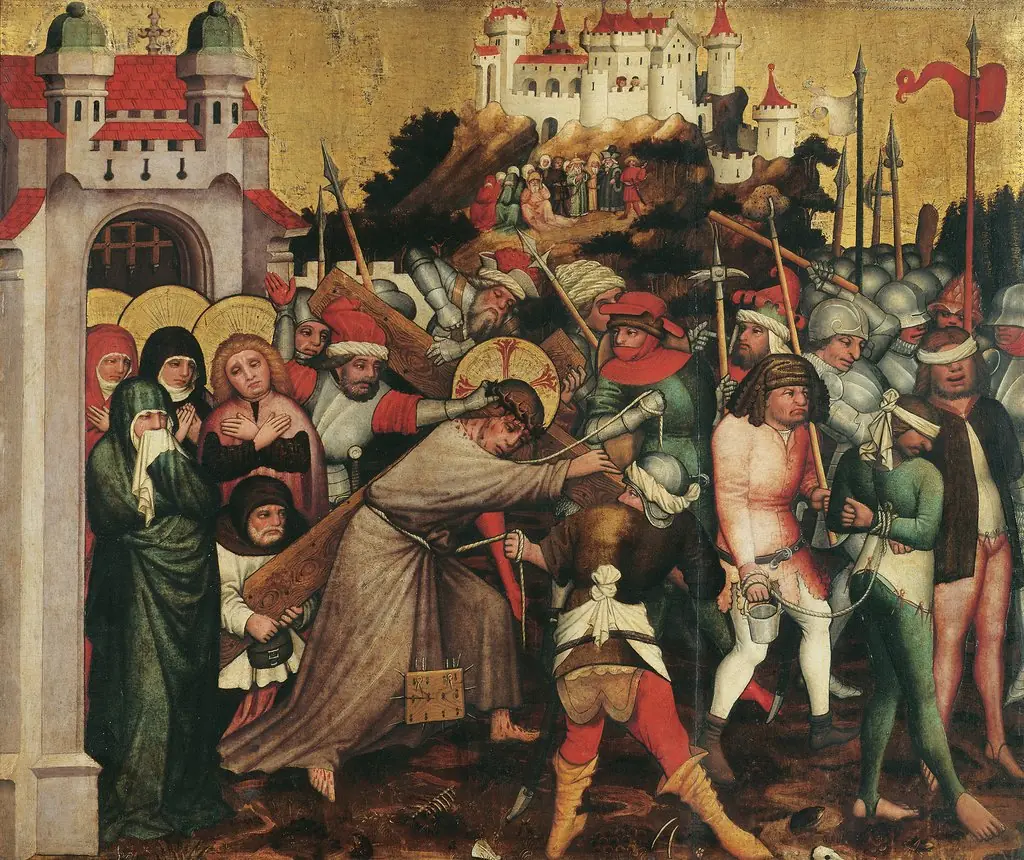 Christ carrying the cross
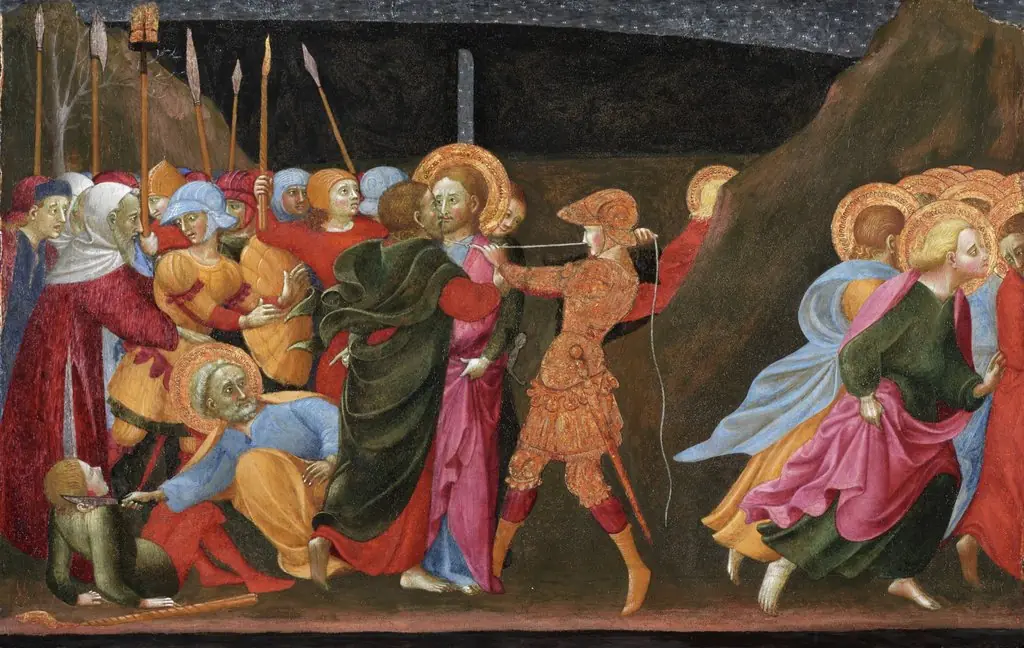
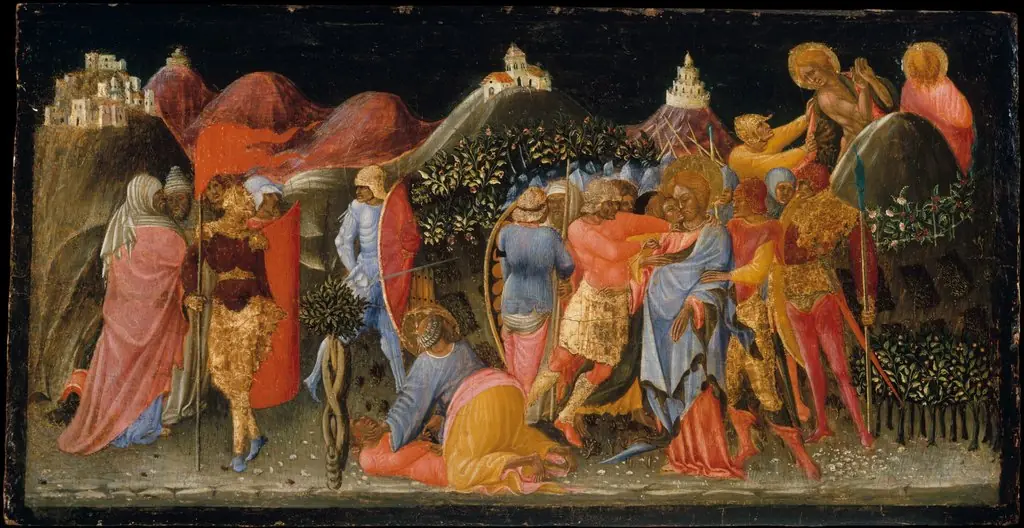 The Betrayal of Christ
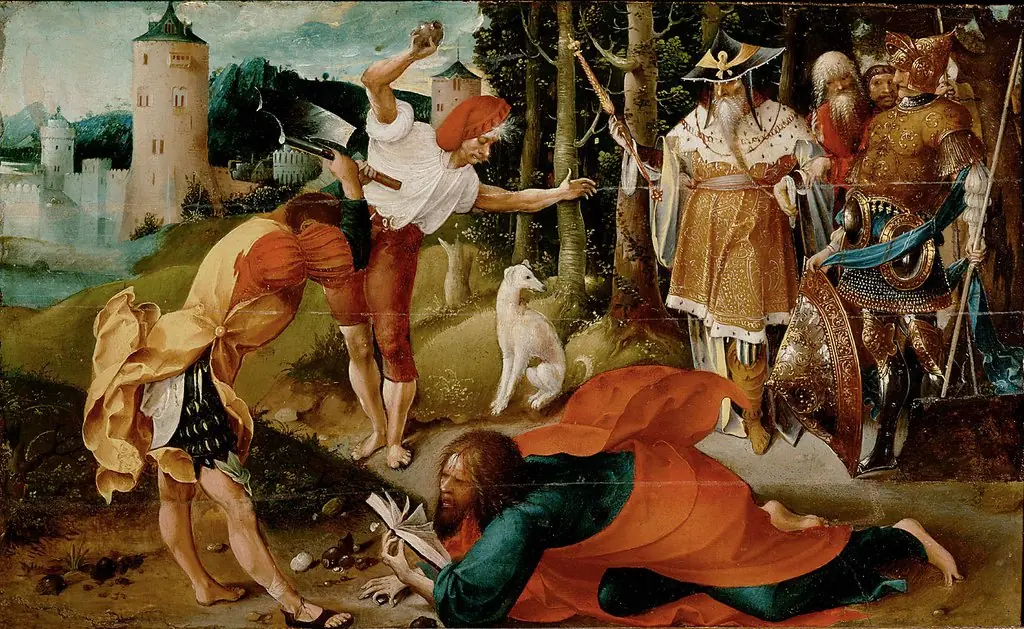 Marter des Apostels Matthias
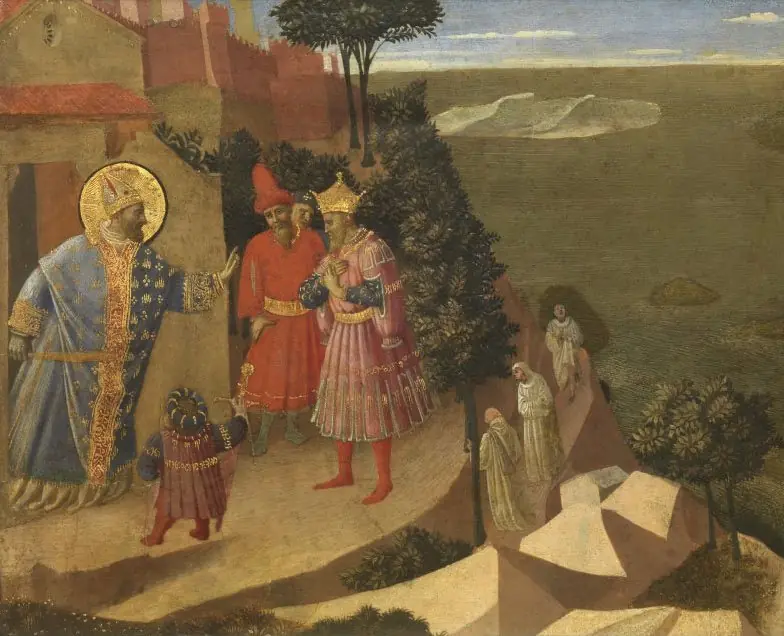 Saint Romuald Forbidding Entry to the Monastery to Emperor Otton III
 The Adoration of the Magi
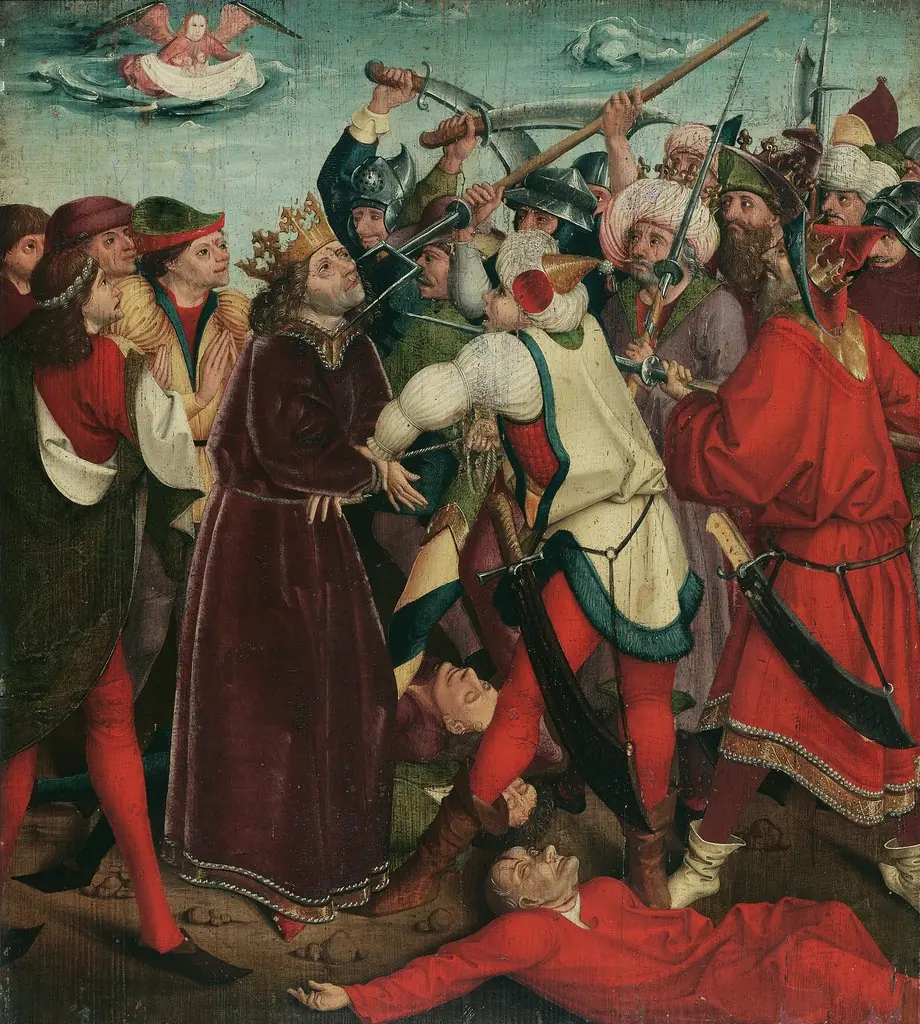 Martyrium des hl. Oswald in der Schlacht
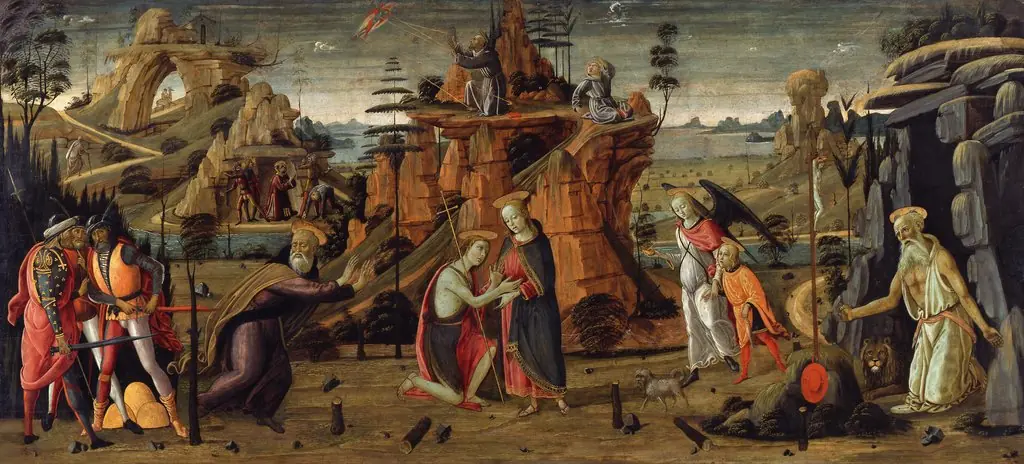 Landscape with biblical scenes and scenes from the legends of saints
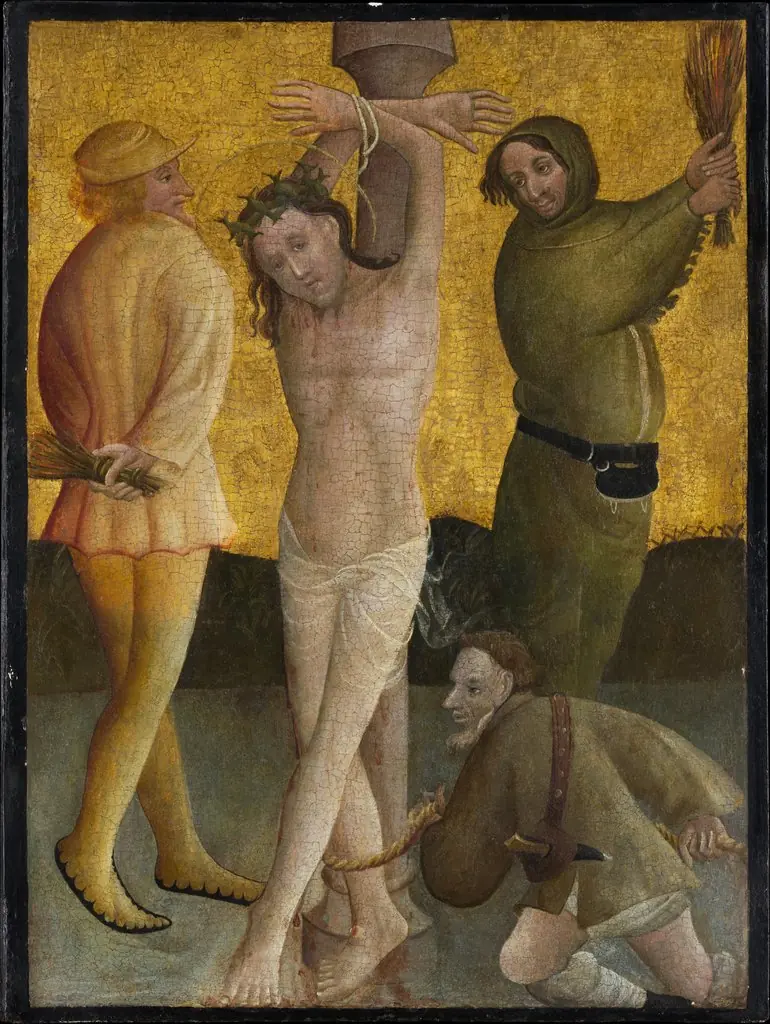 The Flagellation