Artwork
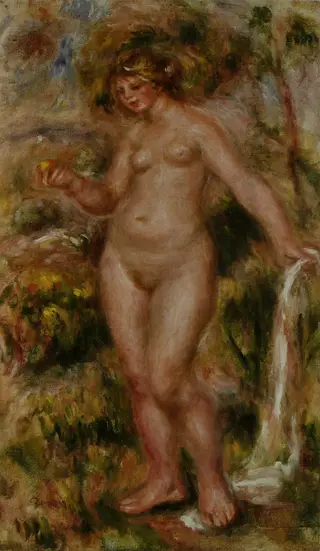
Daphne's Bath
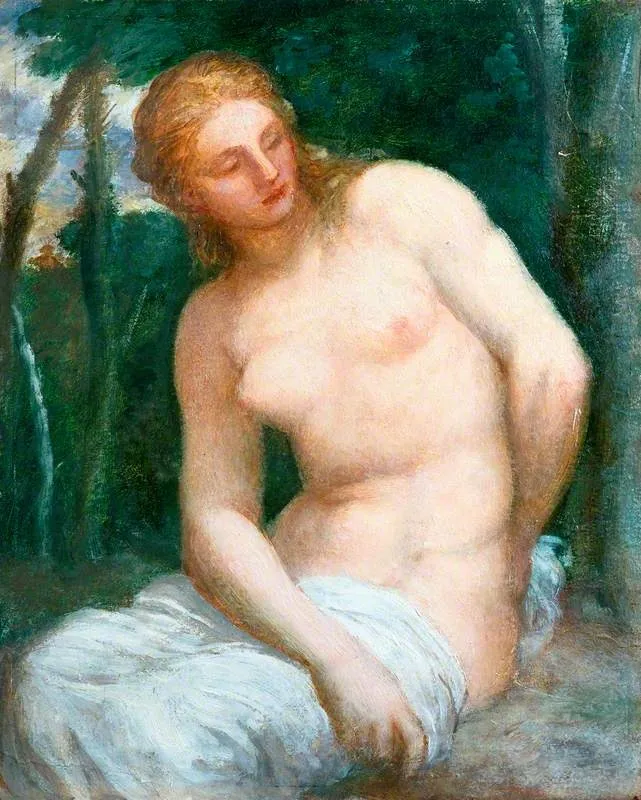
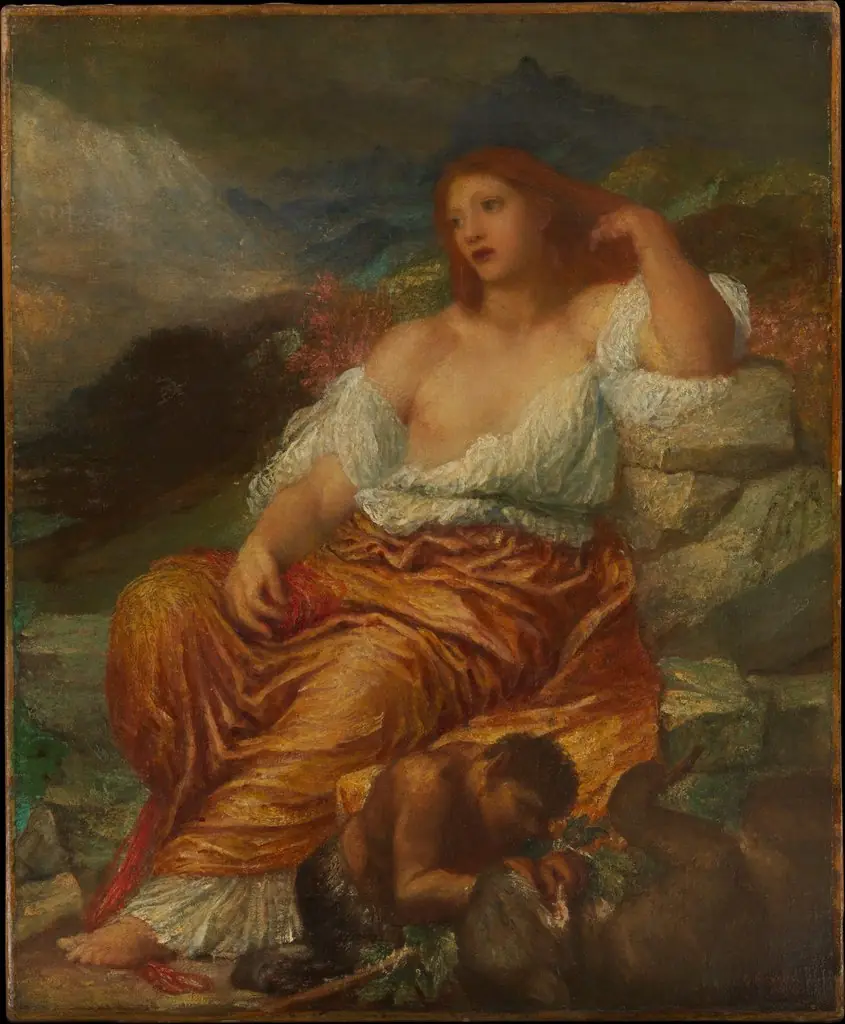
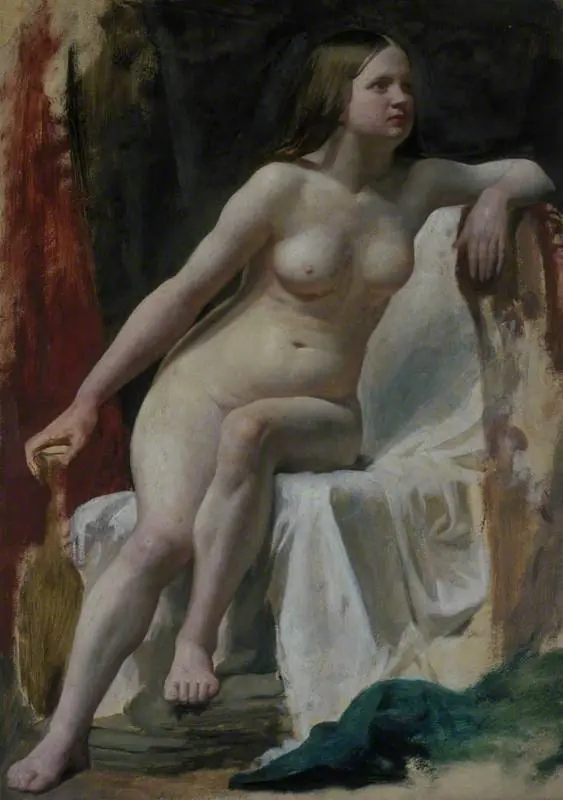
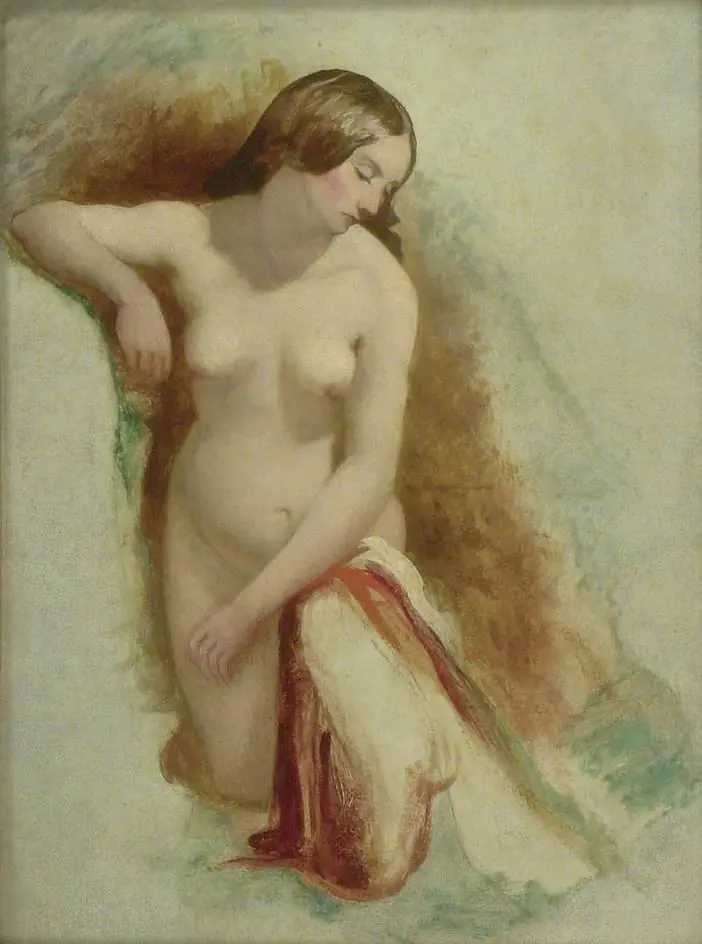
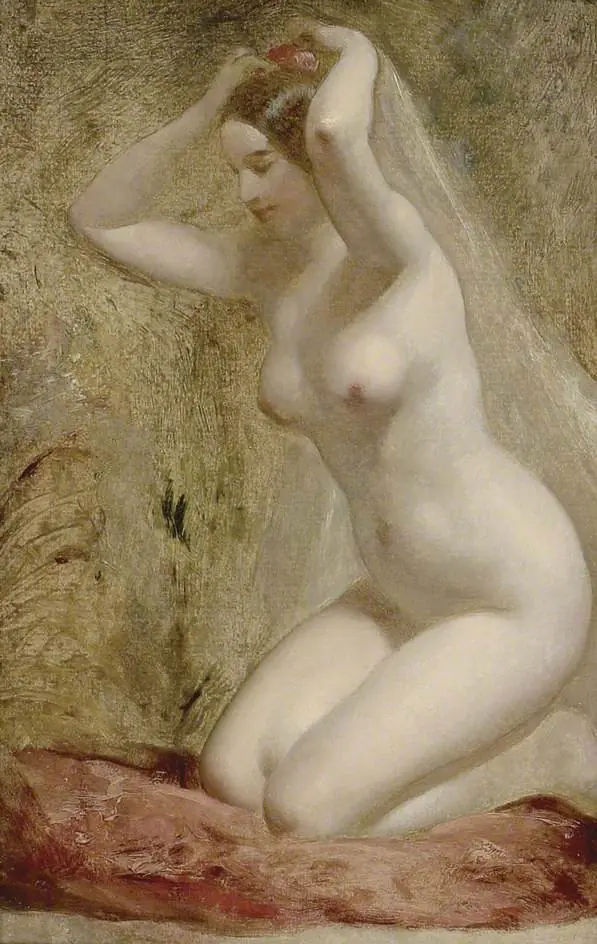
Daphne's Bath is an unspecified painting by the Aestheticist artist George Frederic Watts. It dates from 1867 and is held in the collection of the Victoria and Albert Museum.
About this work
Overview
Daphne's Bath, painted by George Frederic Watts around 1867, is a work associated with both the Symbolist and Aesthetic movements. It features a nude female figure in a serene, contemplative setting.
Subject & Meaning
The painting depicts Daphne, a figure from classical mythology, sitting nude in a bath, partially covered by a white cloth. Her long, red hair cascades down her back, set against a dark, shadowy background with subtle green and blue tones.
Technique & Style
Watts employs chiaroscuro to create depth and dimensionality, contrasting soft, gentle curves of the figure with a more abstract, impressionistic background. This juxtaposition enhances the overall sense of serenity and introspection.
History & Provenance
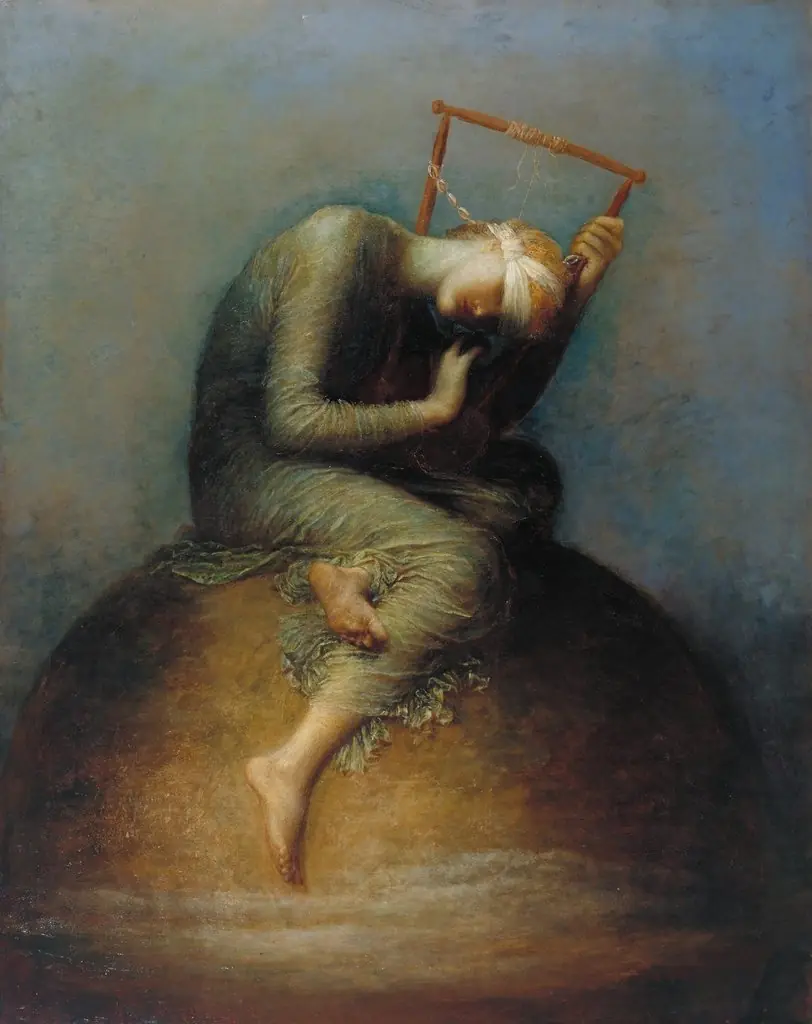
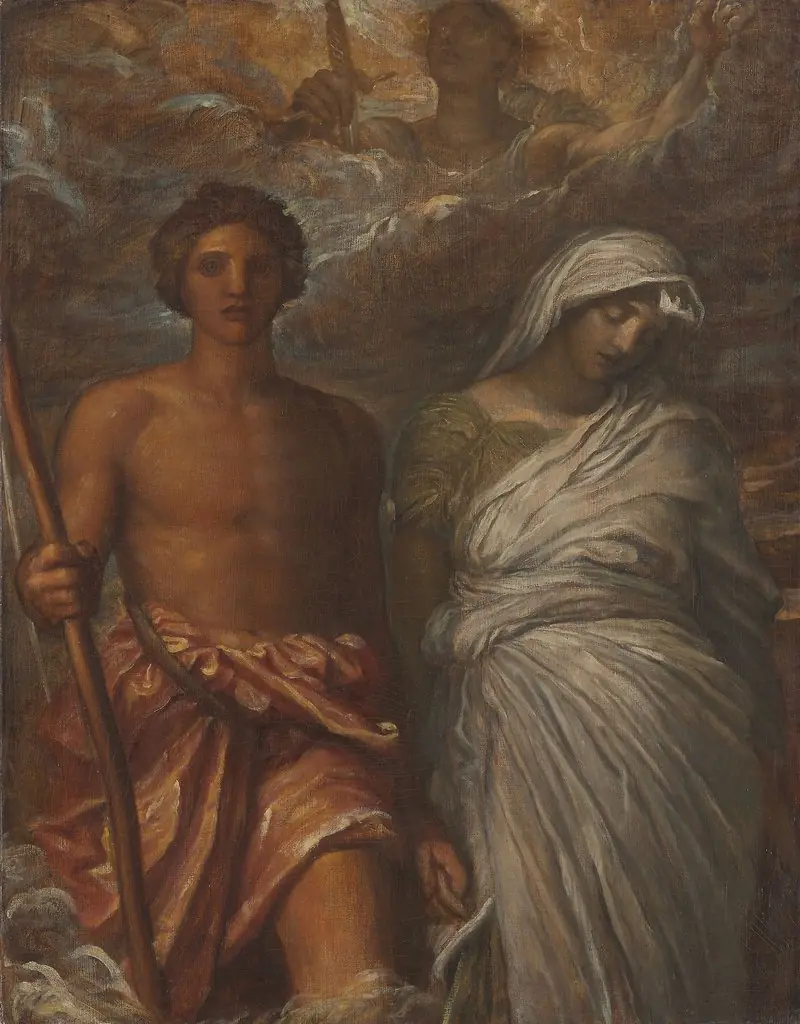
Part of Watts' broader thematic explorations, Daphne's Bath aligns with his allegorical works like Hope and Love and Life, conceived as part of his symbolic cycle, the 'House of Life'.
Context
Created during the late 19th century, the piece reflects the Aesthetic movement's emphasis on beauty and Symbolism's exploration of deeper meanings, positioning Watts among contemporaries exploring new expressive modes.
Legacy
Daphne's Bath contributes to Watts' legacy as a versatile artist who bridged Symbolism and Aestheticism, influencing subsequent artistic movements with its unique blend of symbolism and sensory detail.
Artist & collection
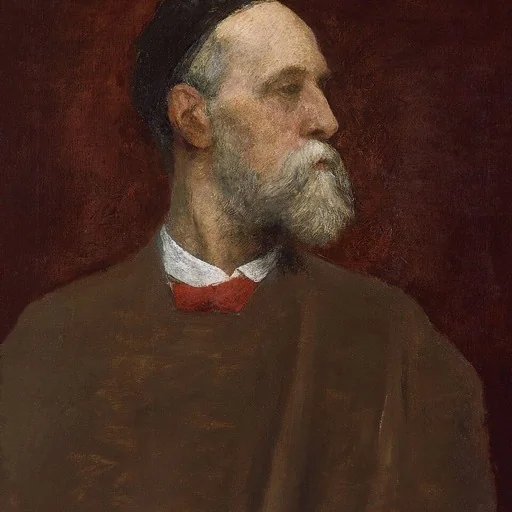
Artist
George Frederic Watts (23 February 1817 – 1 July 1904) was a British painter and sculptor associated with the Symbolist movement.