Artwork
Foot Combat with Daggers
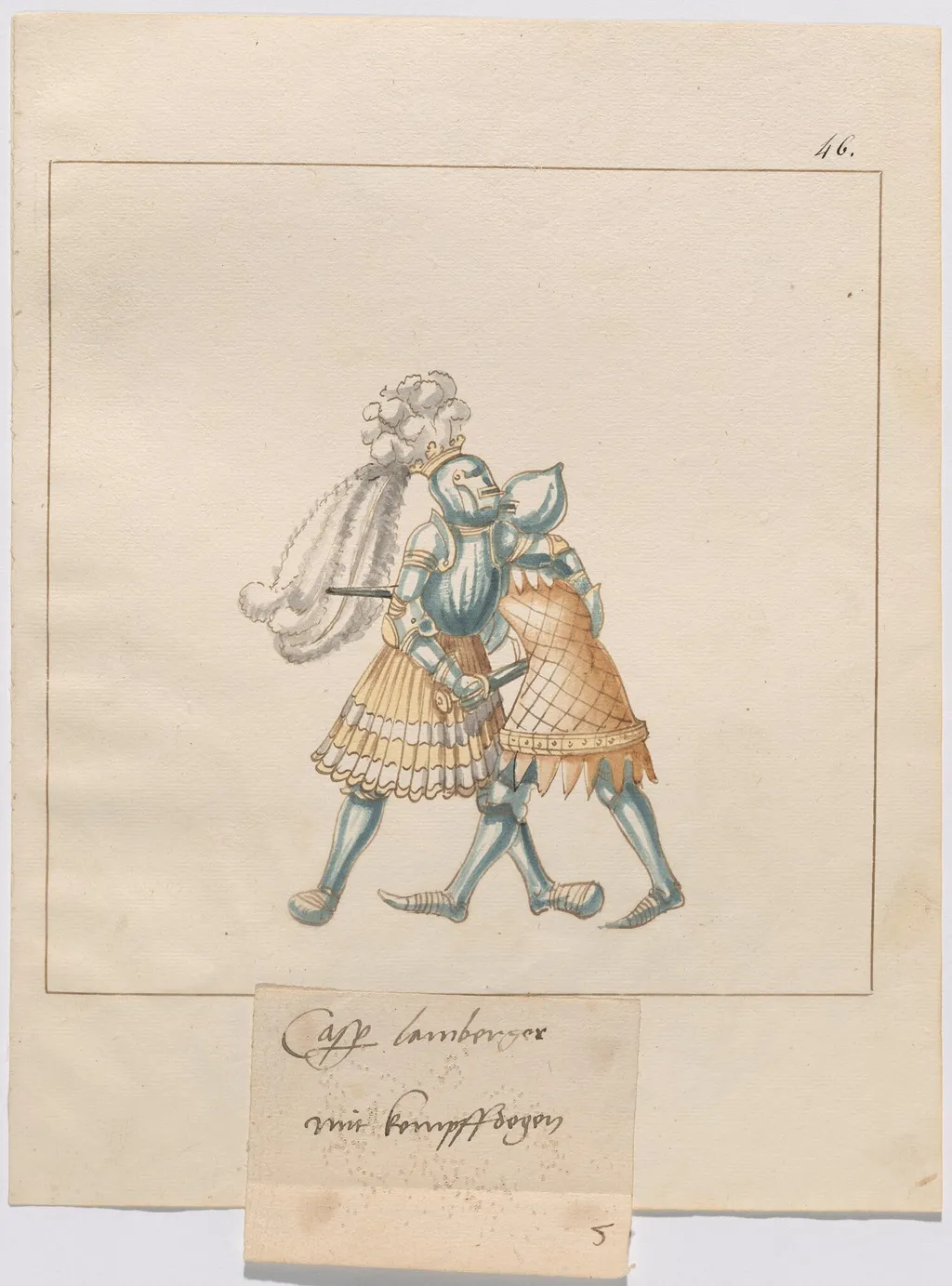
Foot Combat with Daggers is an ink drawing by the Renaissance artist German 16th Century. It dates from 1514 and is held in the collection of the National Gallery of Art.
- Inscription
- Inscribed:lower center by unknown hand in brown ink on separate paper laid down: Casper Lamberger / Mit kempffdegen / 5; upper left by unknown hand in black ink: 46; lower left on mount in black ink: 52; lower right on mount in black ink: A 87
About this work
Overview
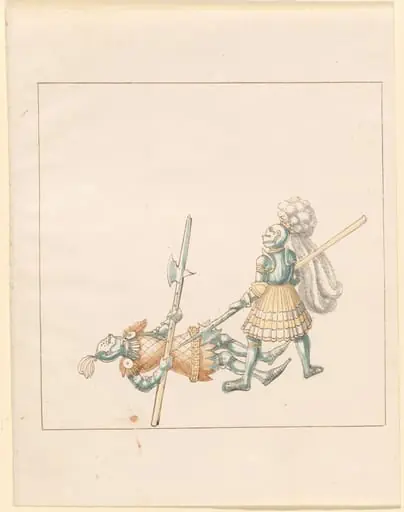
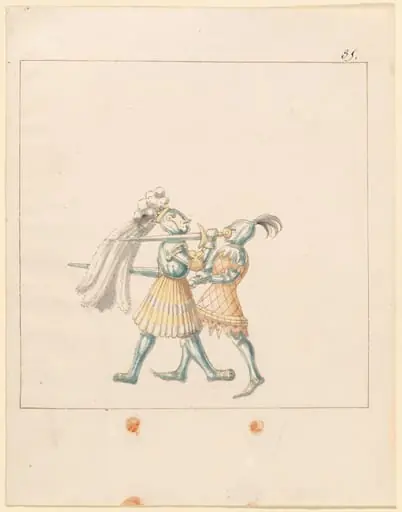
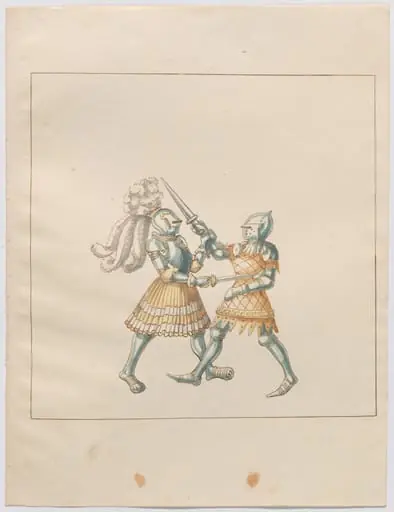
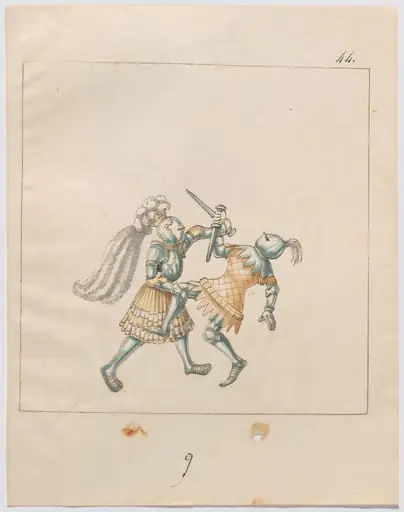
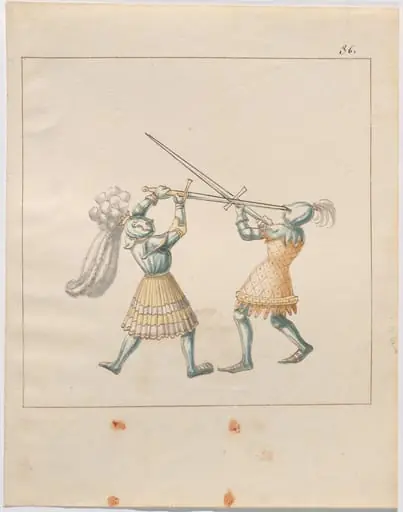
Foot Combat with Daggers is a 16th-century German drawing that depicts two armored figures engaged in a fierce battle with daggers.
Subject & Meaning
The drawing highlights the techniques of close-quarters combat, showcasing the use of daggers in martial arts during the era. The armored figures are captured in a dynamic pose, emphasizing the intensity of the fight.
Technique & Style
Executed in pen and black ink with watercolor on laid paper, the artwork demonstrates a detailed and dynamic representation of the fighting scene. The use of watercolor adds a layer of depth to the drawing.
Artist & collection

Artist
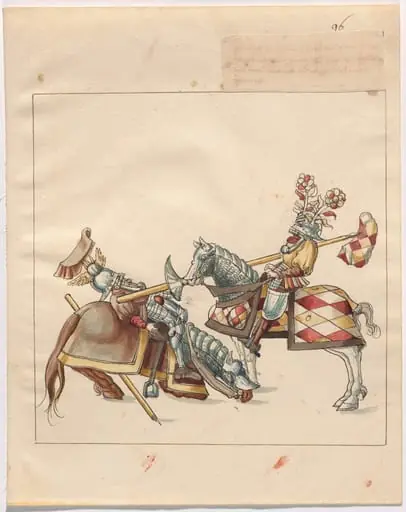
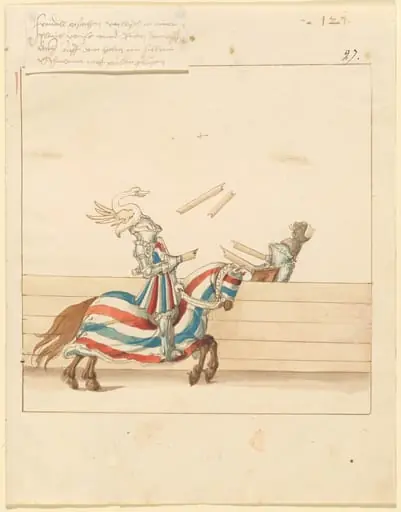
A German artist of the late 1500s drew knights clashing in parades and mock battles, filling sheets with detailed ink colored lightly in watercolor: soldiers mid-joust, shields flying, foot soldiers sparring with spears.




![Abraham Entertaining the Angels [verso], by German 16th Century](https://artifactworldgallery.com/img/german-16th-century--abraham-entertaining-the-angels-verso--69d1b25f4eba0a53-w320.webp)